

The blacksmithing craft is always so alluring and enchanting! The strikes of the hammer, the showers of sparks, the heat of the forge. And at the end of the whole process, we are greeted with a wonderful blade, capable of cutting through mountains, shining with its magnificence. Or, it might fall apart after the first strike against something hard — it all depends on which part of your body your hands grow from!
The appeal and satisfaction of making your own knives
And the most wonderful thing is that anyone can make knife by himself right now, according to their own design! It’s up to you how it will turn out. Maybe you’ll become the new James Bowie and create something revolutionary and groundbreaking, but even if not, that’s okay — because what could be more beautiful than the creative process itself! So, how to make knife?

Tools and Materials Needed
It all starts with acquiring the equipment and some knife making accessories, so be prepared to shell out some money!
Essential Tools for Knife Making
Forge or Heat Source (for forging)
- Gas Forge: The most common choice for heating steel. It uses propane or natural gas to reach the necessary temperatures for forging.
- Coal Forge: A traditional method that uses coal as the fuel source.
- Oxy-Acetylene Torch: Can be used for heating specific areas of the steel for localized forging or annealing.
- Electric Furnace: Used by some professionals for more precise heat control.
Anvil
- A sturdy anvil is one of the essential knife making tools! It is for shaping the steel once it’s heated. A good anvil provides a solid, flat surface to hammer and shape the steel.
- Weight: 50-100 lbs is generally enough for most home shop knife makers.
Hammers
- Cross Peen Hammer: One of the most important knife making supplies, ideal for shaping and drawing out the steel.
- Ball Peen Hammer: Useful for detailing work.
- Claw Hammer: Can be used for lighter hammering tasks.
Tongs
- Tongs are used to hold and manipulate the hot metal while forging. Various types of tongs are available, but basic ones are used to grasp the steel and move it around the forge or anvil.
Angle Grinder
- An angle grinder is used for rough shaping, beveling, and polishing the blade. A high-quality grinder with multiple grit sanding discs is essential.
- Flap Discs: Useful for grinding the shape of the blade and smoothing rough edges.
Knife making belt grinders
- A belt grinder (often a 2×72″ model) is one of the most important tools for knife making! It’s used to refine the blade shape, grind bevels, and shape the handle.
- A disc grinder (typically with a 6″ or 8″ disk) is useful for fine-tuning, shaping, and polishing.
Drill Press
- A drill press helps create accurate holes in the handle material and, if needed, the blade itself for rivets or pins.
- It can also be used to drill into the tang for mounting the handle.
Files and Rasps
- Files are great for fine-tuning shapes, cleaning up bevels, and smoothing out rough edges on your blade or handle.
- Needle files are excellent for precision work on smaller details.
Quenching Tank
- A quenching tank (typically filled with oil or water) is needed for hardening the blade. The blade is rapidly cooled after reaching the desired heat for hardening.
Heat Treating Oven (Optional but Useful)
- This is used to control the heating and cooling process when tempering the blade. It allows for more precise control of temperature compared to a forge.
Polishing and Finishing Tools
- Buffing Wheel: Used for polishing and giving the blade a final mirror finish.
- Sandpaper: Various grits from 220 to 2000 for finishing your blade.
Safety Gear
Always use personal protective equipment (PPE), including:
- Safety glasses/goggles
- Hearing protection (earmuffs or earplugs)
- Respirator or dust mask (for grinding)
- Gloves (to protect hands during shaping and finishing)
- Apron (to protect from sparks and heat)

Choosing the Right Materials
Knife making steels is the most important factor in your future knife — its properties and purpose will depend on it! So choose wisely:
Steel
High Carbon Steel: Known for its ability to harden and hold an edge well, but it can rust easily. Examples include 1095, 5160, and 1084.
- Pros: Easy to forge, good edge retention.
- Cons: Prone to rust, requires maintenance.
Stainless Steel: These steels contain chromium and are resistant to rust and staining. Examples include 440C, D2, and CPM-S30V.
- Pros: Rust-resistant, durable.
- Cons: Can be more difficult to heat treat and grind.
Tool Steels: These are high-carbon steels with alloying elements designed for specific uses, such as cutting tools. Examples include O1, A2, and S7.
- Pros: Excellent edge retention, toughness.
- Cons: Higher cost, more challenging to heat treat.
Damascus Steel: Made by folding and welding different types of steel together. It creates a beautiful, patterned look but requires skill to create and control.
- Pros: Aesthetic appeal, strong.
- Cons: Difficult and time-consuming to forge.
Handle Materials
Wood: Traditional and aesthetic, wood is often used for handles. Popular types include walnut, oak, rosewood, and micarta.
- Pros: Classic look, can be shaped easily.
- Cons: Can absorb moisture, less durable than synthetic materials.
Micarta: A composite material made from layers of fabric or paper impregnated with resin. It’s durable and can come in various colors and patterns.
- Pros: Extremely tough, water-resistant.
- Cons: Can be harder to work with.
G-10: A high-pressure fiberglass laminate that is durable, water-resistant, and offers excellent grip.
- Pros: Tough, lightweight, non-slip.
- Cons: Can be hard on tools while shaping.
Bone, Antler, or Horn: These natural materials offer unique textures and aesthetic appeal.
- Pros: Beautiful, traditional appearance.
- Cons: Harder to work with, prone to cracking.
Pins, Rivets, and Bolts
These are used to attach the handle to the tang of the knife. Stainless steel is a common choice for durability and corrosion resistance.
- Pins: Generally round or mosaic, used to secure the handle material.
- Rivets: Can be used similarly to pins but are often larger and have a head on both sides.
- Bolts: Used for removable handle designs.
Leather for Sheaths
Leather is commonly used to make custom sheaths for knives. It can be cut, sewn, and dyed to fit the specific shape of the knife.
- Pros: Durable, traditional appearance.
- Cons: Needs care to avoid drying out or cracking.
Understanding Knife Design
A well-designed knife is a balance of form and function, ensuring both the blade performs efficiently and the handle provides comfort and control. In knife design, every aspect is crucial—whether you’re using it for everyday carry (EDC), cooking, hunting, or any other specialized task. Let’s break down the key elements of blade design and profile and handle design and comfort:
Blade Design and Profile
The blade is arguably the most important part of any knife, and its design determines how well it performs its intended function. The profile of the blade refers to its shape when viewed from the side (the edge view), and it can impact the way the knife cuts, handles, and feels during use. Key profiles include:
- Flat Grind: The blade tapers evenly from the spine (top) to the edge, providing a good balance of strength and sharpness. It’s common in utility knives, kitchen knives, and some outdoor knives.
- Hollow Grind: The edge of the blade has a concave curve, making it thinner and sharper, typically used for precision cutting tasks. Common in hunting knives and certain kitchen knives (like paring knives).
- Convex Grind: The blade curves outward, creating a thicker spine that tapers toward the edge. This is used for tough, heavy-duty tasks (like axes or choppers) and provides durability, but can make the knife harder to sharpen.
- Scandi Grind: The entire blade edge is made of a single bevel, making sharpening easy, with a very strong edge. This is popular in Scandinavian-style outdoor knives and bushcraft knives.
- Saber Grind: This grind is typically flat from the spine to a midpoint, then it transitions into a secondary edge grind. It’s common in combat and survival knives, offering a good balance of durability and cutting performance.
Blade Types
The blade shape often varies depending on the knife’s intended use:
- Drop Point: A versatile design with a slightly curved spine and a strong point. Common in EDC knives and hunting knives.
- Clip Point: A blade with a concave clip at the spine near the tip, offering a more pointed profile, ideal for piercing. Used in many tactical knives.
- Sheepsfoot: A blade with a rounded tip and straight edge, good for slicing tasks and safety-focused applications. Used often in rescue or utility knives.
- Tanto: A blade with a strong angular tip and a flat cutting edge. Known for piercing strength and used in tactical knives.
Blade Material
The material of the blade determines its durability, edge retention, and how well it resists rust and corrosion. Common materials include:
- Carbon Steel: Holds an edge very well but is prone to rust if not maintained.
- Stainless Steel: More resistant to rust but typically requires more frequent sharpening as it doesn’t hold an edge as well as carbon steel.
- Damascus Steel: Layers of different metals folded together, combining aesthetic appeal with functionality, though it requires more maintenance.

Handle Design and Comfort
The handle should be comfortable, ergonomic, and non-slip, as it ensures comfort and ease of use while handling the knife!
The handle material affects the grip, weight, and durability of the knife:
- Wood (e.g., walnut, oak or ash wood): Provides a traditional, warm feel and often looks beautiful, but can be prone to wear if not maintained.
- Plastic (e.g., ABS): Lightweight and durable, often used in utility or survival knives for a budget-friendly option.
- Rubber or Kraton: Offers superior grip, especially in wet conditions, making it ideal for outdoor knives.
- Metal (e.g., aluminum, titanium): Strong and durable, but can be slippery unless textured, and it adds weight.
- Synthetic Materials (e.g., G-10, Carbon Fiber): These are engineered for maximum durability and grip. G-10 is very popular in tactical and survival knives due to its strength and water resistance.
Ergonomics
An ergonomic handle reduces fatigue and provides better control during extended use. Consider the following design elements:
- Contoured Shape: Handles with a natural curve that fit comfortably in the hand prevent hotspots and hand fatigue. This is common in most modern knives.
- Texturing/Grip Pattern: Textured surfaces (like scales, ridges, or patterns) improve grip, especially in wet conditions. However, too aggressive a texture can cause discomfort with prolonged use.
- Finger Guards: A finger guard (or finger choil) is a raised section of the handle or tang that prevents the hand from slipping onto the blade. This is especially important in knives used for heavy tasks or in wet conditions.
Handle Size and Shape
- Handle Length: A handle that’s too long or too short can cause discomfort or lack of control. Most handles are designed to fit an average-sized adult hand, but specialized knives may have adjustable or custom-sized handles.
- Width/Thickness: A thicker or more rounded handle may provide more comfort for people with larger hands, whereas a thinner or flat handle might suit smaller hands or those who need more precision.
- Balance and Weight: The overall balance of the knife is crucial. A handle that’s too heavy or too light relative to the blade can cause awkward handling. Ideally, the knife should feel balanced in your hand, with the center of mass close to the point where the blade meets the handle (the “tang”).
Handle Types: Full Tang vs. Partial Tang
- Full Tang: The handle material wraps around the full length of the tang, providing maximum strength and durability. Full tang knives are preferred for hard-use tasks because they’re less likely to break under pressure.
- Partial Tang: The tang doesn’t extend the full length of the handle, making it lighter but potentially weaker for heavy tasks.
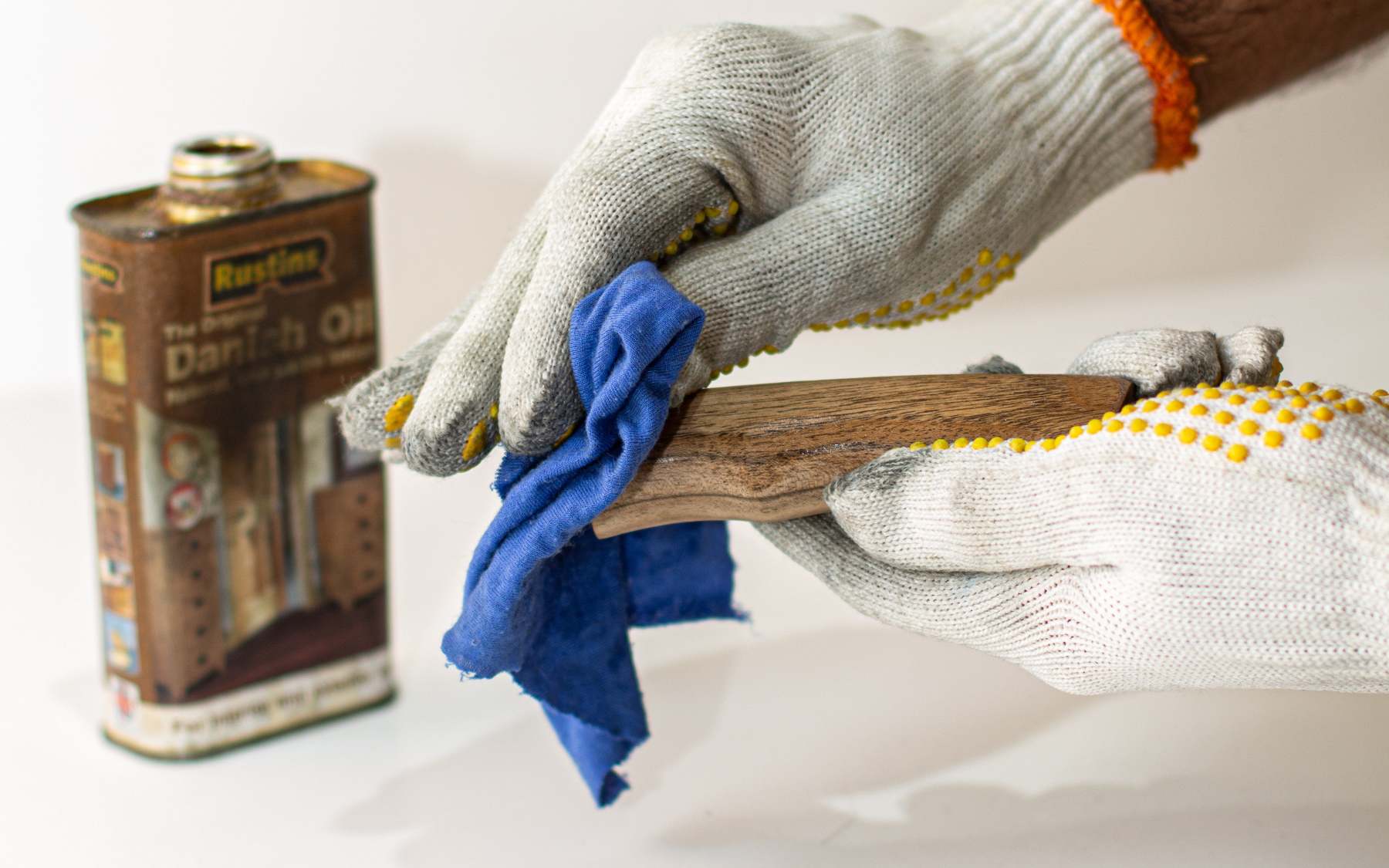
Ready-Made Blanks from BPS Knives
Making a knife is a complex and fascinating process that involves steel melting, forging, handle making, assembling, sharpening and much more. You will need more than a month to master all of this! But what if you don’t have the opportunity or desire to do all of the above and want to try to create your own knife?
Pre-Made Knife Blanks for DIY Projects
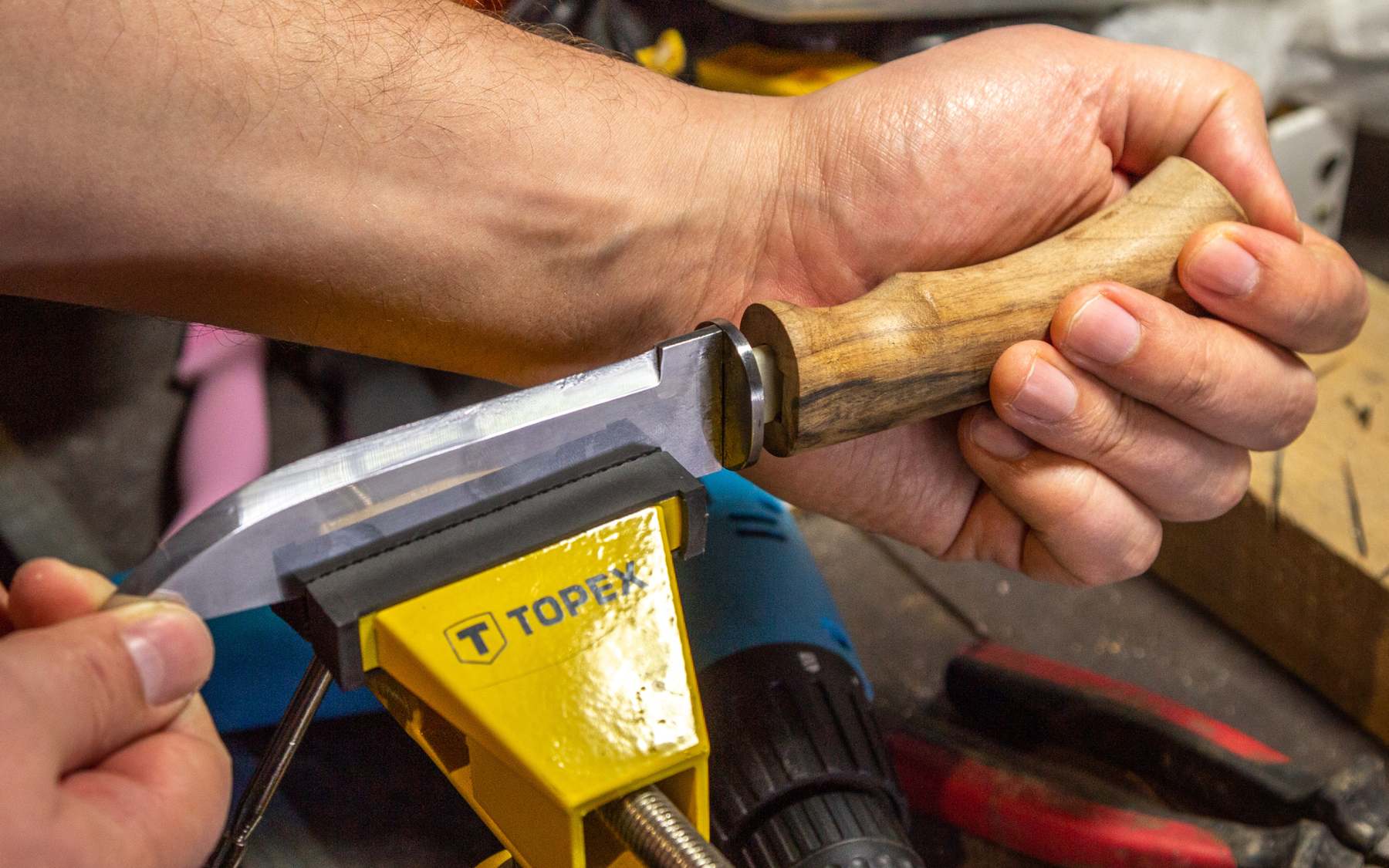
Pre-made knife blanks are an excellent option for DIY enthusiasts who want to craft their own custom knives without starting from scratch. These blanks save time on the shaping and profiling stage, allowing you to focus on handle construction, finishing, and personal touches. Just what you need for beginners who want to take the first step and try what it is like, the art of knife making! And what a great coincidence, we have just made these blanks for you, all you have to do is choose!
Blank01 C – Full Tang blade blank with screws
This knife block DIY is made of 1066 carbon steel, hardened 57-59 HRC. Carbon steel blades are made with a combination of carbon and iron, have full tang construction. This means that a knife made from this blank will be strong and sharp, making it perfect for both food cutting and more specialized tasks like skinning an animal or working with wood. The key is to remember to wash it regularly and apply protective oil, so the blade will last you a lifetime! The set with this blank includes 3 screws for the handle.

Blank06 C – Rat tail tang blank, Bolster included
Another blank made from high-carbon 1066 steel! It differs from the previous option by its rat tail tang design. While this blank may not offer super strength, a knife with this blade will provide accuracy and precision in cutting. It’s an excellent choice for slicing vegetables, fruits, and meat. The set with this blank includes a bolster.

Blank06 C with Walnut wood
Once again, a blank made from high-carbon 1066 steel with a rat tail tang design. However, this time, in addition to the bolster, a walnut wood block is included. You can carve any handle from this block, in any shape and size — the only limit here is your imagination.
Conclusion
As you can see, making your own knives is a fascinating hobby that can become a profitable venture for you in the future! It’s easy to get started – just arm yourself with our blanks and take your first steps, and soon you’ll be close to having your own workshop. Until our next exciting meeting!