

We all like to go hiking from time to time, whether it’s in the mountains or in the woods, it’s a great and healthy pastime. Such trips should not be taken lightly however, as they are about your health, and when you carry a tonne of pans, pots and other utensils on your back, a pleasant walk will quickly become a burden. Smart planning the weight of the gear you take with you will help you pack efficiently and keep your backbone intact. So let’s talk about formula calculate weight gear that can make your life way easier!
Introduction: The Importance of Gear Weight in Long-Distance Hiking
When you are planning a long-distance hike, especially in the wilderness, in addition to being physically fit, you need to plan carefully what you are going to take with you. This will increase the distance you are able to cover before resting and generally improve the quality of your hike. Let’s start by making a list of the gear you need to take with you.
Creating a Gear List
Making a gear list will help you think carefully about the weight of your luggage and not forget anything important. Then we will use the calculating weight of gears formula.
Must-Have Items and Their Typical Weights
First things first – it’s the clothes! Namely:
- Moisture-wicking clothing and socks that will bring your sweat to the surface leaving you dry;
- Special hiking clothes that are lightweight and have special zips that allow you to regulate your temperature;
- Waterproof jacket and pants;
- And most importantly – comfortable and durable boots that will withstand everything you encounter on your path and will not wipe your feet into dust.
Next up we have the backpack and gear:
- A comfortable pack with a capacity suitable for your trip length;
- Map and Compass/GPS and other Navigation tools to help you stay on course and keep you from feeding yourself to, say, wolves or bears;
- First Aid Kit, which includes bandages, antiseptic wipes, painkillers, and any personal medications.
- Don’t forget the knife, for cooking or other various tasks. Check out super lightweight hiking knife from our company BS1FT;
- Headlamp/Flashlight;
- Lightweight tent for sleeping and resting;
- Water and food;
- Cooking equipment such as pans and pots;
- And very importantly, don’t forget the flare gun, if things get crappy, you can be found by the flare rocket fired and evacuated.

Additional Items Depending on Hiking Region and Season
When planning for a hike, especially in varying regions and seasons, it’s crucial to consider additional items beyond the basics to ensure comfort, safety, and preparedness. Let’s start from region:
Desert or Hot Climates:
- Wide-brimmed hat, sunglasses, sunscreen;
- Extra water or hydration pack, electrolyte supplements;
- Gaiters to keep sand out of shoes.
Mountainous or High Altitude:
- Additional fleece, down jacket for sudden temperature drops;
- Rock climbing equipment;
- Additional medicine for consideration of altitude sickness prevention (e.g., acetazolamide).
Forest or Wooded Areas:
- Insect repellent, mosquito netting, long-sleeve clothing;
- Detailed trail maps, understanding of local flora and fauna;
- Tarp or lightweight tent in case of unexpected overnight stays.
Seasons:
Spring/Fall (Transitional Seasons):
- Moisture-wicking base layers, insulating mid-layers, waterproof outer layers;
- Waterproof or water-resistant hiking boots.
Summer:
- High-SPF sunscreen, lightweight long-sleeve clothing for sun protection;
- Consider electrolyte replacement due to increased sweating;
- Check local fire regulations, consider a fire starter or stove if camping.
Winter:
- Insulated jacket, thermal underwear, hat, gloves, and scarf;
- Crampons or traction devices for icy trails;
- Avalanche beacon (if applicable), emergency shelter rated for cold temperatures.

Calculating Total Gear Weight with Formula
Gear calculations formula typically involves adding up the weights of each piece of gear you’re carrying. There’s a great way to calculate it – “20% rule”:
- Determine 20% of the carrier’s body weight. For instance, if someone weighs 50 kilograms, their backpack ideally should not exceed 10 kilograms.
- Pack only what is necessary for the day to reduce unnecessary weight. Consider leaving non-essential items at home or in a locker if possible.
- Use all compartments of the backpack to evenly distribute weight. Place heavier items closer to the center of the back and lighter items towards the outside.
- Ensure the backpack is worn correctly with both shoulder straps in use and adjusted so the pack rests comfortably on the back.
Following the 20% rule can help prevent back and shoulder problems caused by excessive backpack weight, promoting better posture and overall spinal health, especially in young people. It’s a practical guideline aimed at maintaining comfort and reducing the risk of injury associated with heavy backpacks.
For a better understanding of the application of the “20% rule”, please refer to this table:

This table will help you find a starting point depending on your body weight and type of hiking. Remember, however, that this table is only a rough guide, individual needs may vary. It is a nice formula for hiking gear men.
Techniques for organizing and tracking gear weight
In order to take everything you need with you and clearly understand how much weight you will be carrying, there are several methods:
- Create a detailed spreadsheet or use a specialized app (such as GearGrams, LighterPack, or GearTrack) to list all your gear items. Include weights for each item, and categorize them (e.g., shelter, sleeping, clothing) for easier management;
- Use a digital scale to weigh each piece of gear individually. Record these weights accurately in your spreadsheet or app;
- Calculate your base weight (total weight of all gear excluding consumables like food, water, and fuel). This gives you a baseline to work with and helps in making informed decisions about what to bring;
- Organize your gear list by categories (e.g., clothing, cooking, shelter) and use color coding to visually distinguish different types of items. This makes it easier to quickly assess your packing list;
- Review each item’s weight and consider lighter alternatives if feasible; Prioritize essential items and evaluate the necessity of each piece of gear.
- Create a diagram or checklist for packing your gear, indicating where each item goes (backpack compartments, external pockets). This helps in distributing weight evenly and accessing items quickly;
- Be mindful of weight distribution within your pack. Heavier items should be packed closer to your back and centered, while lighter items can go towards the top and sides.
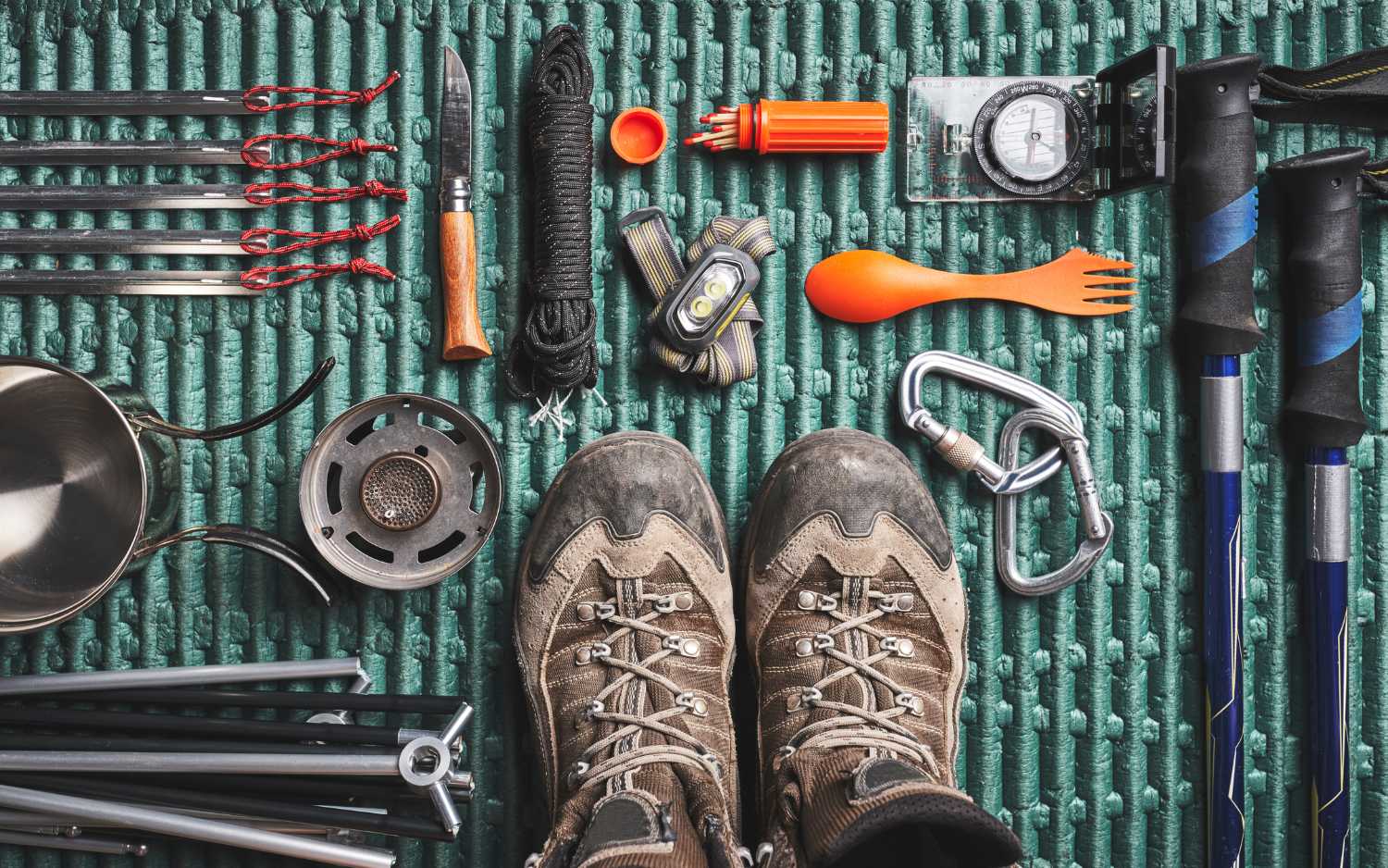
How to Reduce Backpack Weight
The most important advice is to take only hikers gear that you really need! You shouldn’t stuff 5 pots or your grandmother’s tea set into your backpack, it will only slow you down and create a high physical load. Opt for lightweight versions of your essential gear. This includes tents, sleeping bags, cooking equipment, and clothing made from lightweight materials like silnylon, titanium, or down.
Select gear that serves multiple functions. For example, a multi-tool can replace several individual tools. Carry a lightweight water filtration system instead of packing excessive water. Refill at natural sources when possible.
Multi-Use Items
Creating a list of multi-use items for hiking is always a great idea! Here are some versatile and lightweight gear for hiking:
- Bandana or Buff. Can be used as a headband, sweatband, face mask, neck gaiter, or even as a water filter.
- Paracord. Useful for setting up a makeshift clothesline, repairing gear, tying items to your pack, or even as an emergency shoelace.
- Multi-tool or Swiss Army Knife. Includes various tools like knives, scissors, screwdrivers, and can openers, invaluable for repairs, food prep, and more.
- Duct Tape. Repairs gear, secures bandages, temporarily patches tents or sleeping bags, and even removes splinters.
- Ziplock Bags. Organize and waterproof smaller items, store snacks, keep electronics dry, or even use as an emergency water carrier.
- Aluminum Foil. Cook meals, fashion a makeshift cup or plate, reflect heat for warmth, or create a windscreen for your stove.
- Trekking Poles. Aid in balance and reduce strain on joints, can double as tent poles or supports for a makeshift shelter.
- Headlamp. Provides illumination at night, can be used as a flashlight, and in emergencies, the strobe function can signal for help.
- Sarong or Large Scarf. Functions as a towel, blanket, sunshade, or even a makeshift bag.
- Hydration Bladder or Water Bottle. Obviously for carrying water, but can also be used as a hot water bottle, emergency cold compress, or to store and carry other items.
- Trash Bags. Keep gear dry, collect trash, serve as a rain poncho or emergency shelter, or even as a waterproof liner for your pack.
- First Aid Kit. Contains essentials for treating injuries, but items like gauze pads, bandages, and tape can also be used for gear repair in a pinch.
These items not only lighten your load by serving multiple functions but also enhance your preparedness and versatility on the trail.

Cutting Non-Essentials
As previously stated, only take what you really need. Don’t bring an extra pair of shoes, ten extra T-shirts, items that are too bulky or items such as chairs, large books, extra electronics.
Conclusion
In conclusion, mastering the art of calculating gear weight is crucial for hikers aiming to optimize their load and enhance their outdoor experience. By utilizing the formula Gear weight = Your weight × 0.2, adventurers can prepare the gear for a new adventure. Remember, every gram counts when traversing rugged terrain or embarking on multi-day hikes. With a clear understanding of how each piece contributes to your pack, you can make informed decisions to lighten your load without compromising safety or comfort, don’t forget to use our lightweight gear list for backpacking. Happy hiking!