
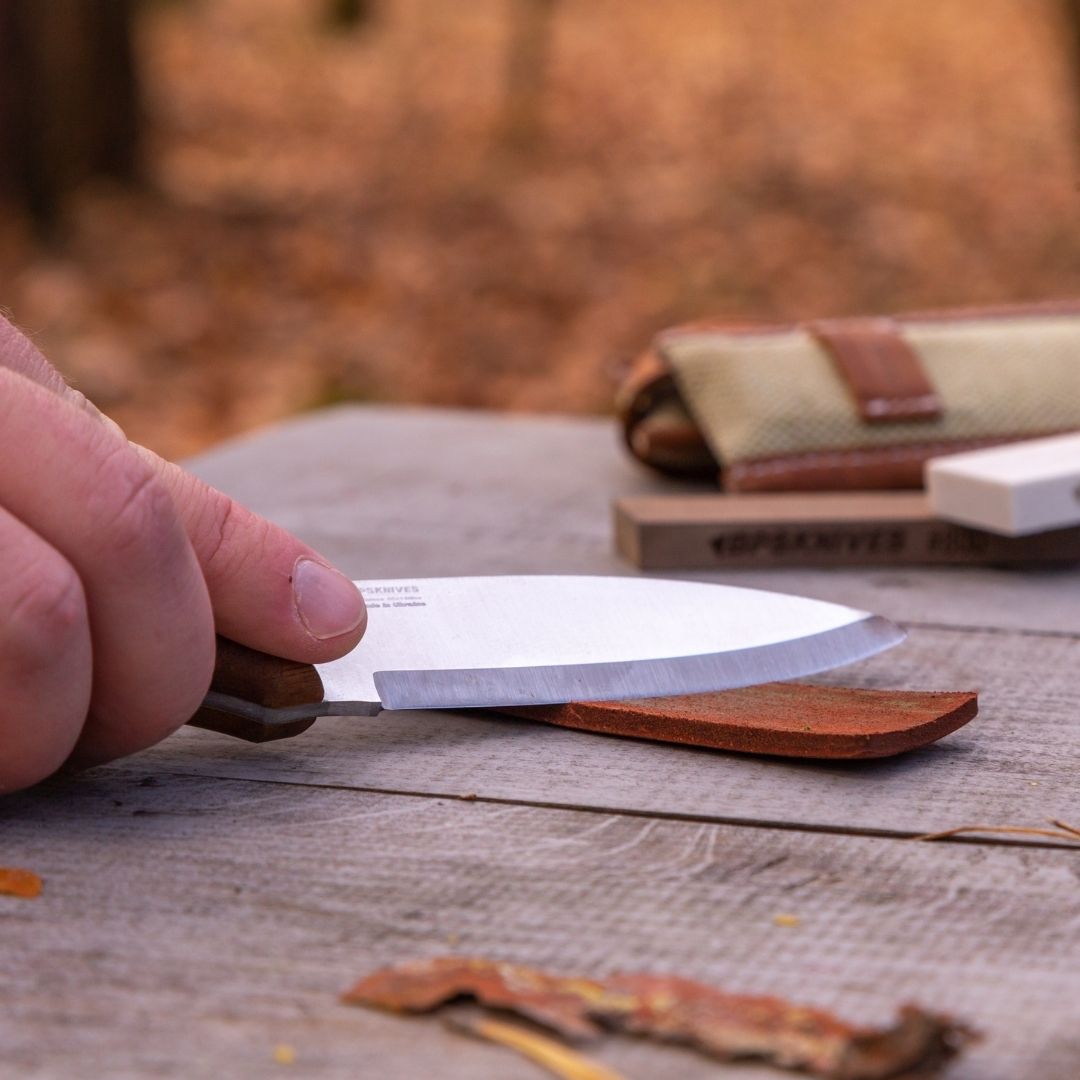

Sharpening is a true art form in itself! The whisper of the blade against the whetstone and the sparks that fly during the process create a meditative, almost calming experience. But the real magic begins when the right sharpening knife paste comes into play — that’s what takes the edge all the way to razor-sharp perfection.
What is sharpening paste? Can you sharpen knives with paste?
Blade sharpening paste is a fine abrasive compound used in the final stages of honing blades, tools, and straight razors. It usually comes in the form of a waxy or oily paste and is applied to strops, wheels, or cloths to refine and polish an edge.
Purpose of sharpening paste
The main goal of sharpening paste is to enhance the sharpness of an already sharpened edge by polishing out micro-burrs and refining the bevel. It smooths the metal surface, making the blade sharper, cleaner, and often more durable.
Paste as a stage of final sharpening
Sharpening paste is not used for shaping or major edge repair — it’s part of the final honing or stropping stage. After sharpening with stones or other abrasives, applying the paste to a leather strop helps bring the edge to a razor-like finish.

How to prepare the surface for the paste
And to achieve results that exceed all expectations, it’s crucial to choose the right surface for applying the honing compound.
Choosing a base – belt, leather, wooden board, felt
Sharpening paste works best when applied to a smooth, slightly flexible surface. Here are common base materials:
- Leather strop – The most popular choice. Offers just enough give and a natural texture to hold the paste and polish the blade.
- Canvas or denim belt – Often used for more aggressive fine sharpening pastes or as a pre-strop. Must be clean and tightly stretched.
- Wooden board – A firm, flat surface that works well for paste-based sharpening, especially with very fine compounds.
- Felt or fabric pads – These offer softness and can be ideal for buffing, but may absorb paste quickly and wear out faster.
Applying paste – how much and how to evenly distribute it
Amount: A little goes a long way. You only need a thin, even layer. Applying too much can cause uneven sharpening or buildup.
How to apply:
- If the paste is solid (like a crayon), rub it gently onto the surface like a wax.
- If it’s a cream or liquid, apply a small dab and spread it evenly using a cloth, your fingers (with gloves), or a plastic spatula.
- Work it into the surface with circular or back-and-forth motions until you have a smooth, uniform coating.
Wait time: Let it sit for a few minutes if needed (especially with leather), so the base absorbs the paste slightly.
What not to do – typical mistakes of beginners
– Using too much paste – More is not better. Excess paste can clog the surface and scratch the blade.
– Mixing different pastes – Avoid applying different grits or sharpening paste types on the same surface. It ruins the consistency of the finish.
– Skipping surface prep – Dirty or uneven surfaces can damage your edge. Always clean and flatten the surface before applying paste.
– Applying paste to the wrong side of a strop – For leather strops, use the suede or rough side for paste, unless the paste is specifically made for smooth leather.
– Not maintaining the paste surface – Over time, the paste can accumulate metal particles. Refresh or clean it as needed.

Knife sharpening techniques paste step-by-step guide
With the surface carefully chosen, it’s now the perfect time to apply the compound!
How do I sharpen a knife?
- Maintain a consistent sharpening angle – usually between 15° and 20° for knives, depending on the blade type.
- How to find the angle: Place the blade flat on the strop or surface, then tilt it slightly until the edge just touches.
- Use two hands if necessary: one for the handle, the other to guide the spine and maintain even pressure.
- Angle matters: Too steep, and you’ll round the edge. Too shallow, and you won’t polish the bevel effectively.
Tip: Some users lightly mark the edge with a permanent marker. As you strop, the marker will disappear if you’re maintaining the correct angle.
How many times to run the blade through the paste?
- Typical passes: 5–15 strokes per side, depending on the level of refinement needed.
- Use light, even pressure – Let the paste do the work; pressing hard can dull or roll the edge.
- Always draw the blade away from the edge – like stropping, not sharpening with a stone.
○ For double-beveled knives: alternate sides with each pass.
○ For single-beveled tools: focus on the bevel side with occasional back-side passes.
Tip: Fewer passes are better than too many. Over-polishing can weaken the edge or make it too thin. That’s how to use sharpening paste!
How to evaluate the result – shine, “razor sharpness”, paper cut
- Visual inspection: A well-polished edge will show a mirror-like shine along the bevel.
- Shaving hair: Gently try shaving a small patch of arm hair – a razor-sharp edge will cut effortlessly.
- Paper test: Slice through standard printer paper. A sharpest knife will glide through without tearing.
- Fingernail test: Gently tap the edge on a fingernail – it should bite slightly without sliding.
What to do after polishing – cleaning, lubricating the blade
- Wipe off residue: Use a clean, soft cloth to remove leftover paste and metal particles from the blade.
- Clean the edge carefully: If needed, use a bit of rubbing alcohol on a cloth to remove stubborn compound traces.
- Apply a light oil: Protect the blade from oxidation, especially if it’s carbon steel.
○ Use food-safe mineral oil for kitchen knives.
○ Use a light machine oil for tools and utility blades.
- Store properly: Keep the blade dry and in a sheath or storage box to maintain the edge.

Common mistakes when using it
It wouldn’t hurt to highlight some of the most common mistakes people make when using honing compound:
Too much pressure – “driving” the chamfer
Applying excessive pressure while using sharpening paste can damage the edge by deforming or “driving” the chamfer. This often leads to a rounded edge rather than a sharp, precise bevel, reducing cutting performance.
Wrong type of paste – too abrasive or vice versa, soft
Using a paste that is too abrasive for the stage of sharpening can remove too much metal and shorten the blade’s life. Conversely, using a paste that’s too soft or fine at an early stage will be ineffective and prolong the process unnecessarily.
Use one surface under different pastes (mixing abrasives)
Applying different types or grits of paste on the same surface without proper cleaning causes abrasive particles to mix. This contamination leads to inconsistent polishing results and may scratch or dull the edge instead of refining it.
Conclusion
And that’s about it! Of course, there are some nuances, but overall, using honing compound is nothing complicated at all. Don’t forget to check out our online store — we offer premium-quality knives and everything you need to care for them, like tool sharpening accessories. And if you have any questions or need help, our team is always ready to assist you and help you find exactly what you need. See you next time!