
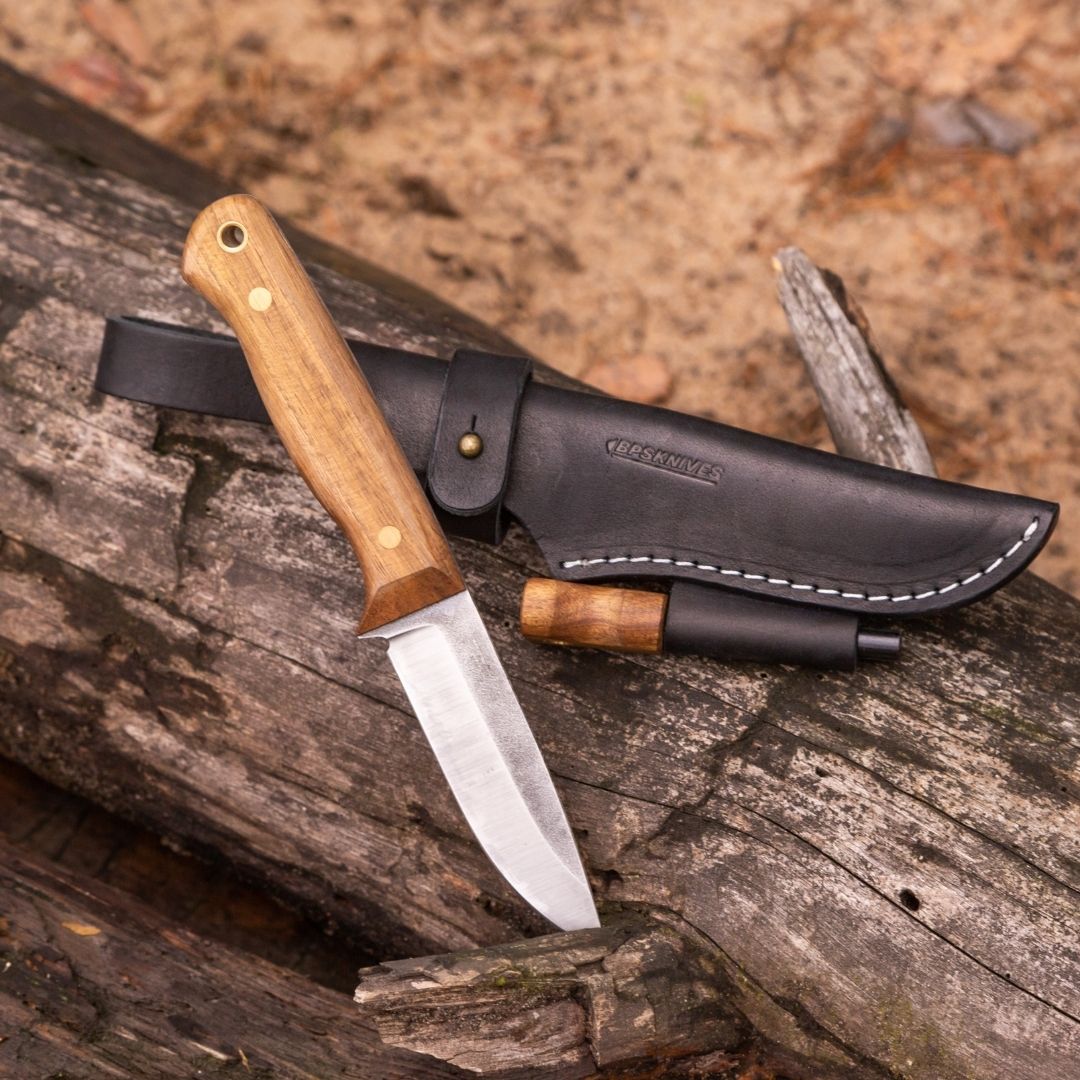
Well, it looks like you’ve binge-watched Bear Grylls, polished it off with everyone’s favorite Dual Survival on Discovery, and now you’re all set to march barefoot across volcanic deserts and glacial peaks like old Cody Lundin — surviving hell on nothing but lichen and sheer willpower!
A knife for bushcraft what is it
It’s a noble pursuit, really. The ability to survive in the wild isn’t just some trendy hobby or a way to show off on social media — it’s a set of genuinely valuable skills that could one day save your life. After all, you never know where fate might throw you tomorrow. Plus, bushcraft is a fantastic form of active recreation and a great way to disconnect, recharge, and challenge yourself. But let’s be honest — surviving in the wild becomes a whole lot tougher without a reliable, durable knife. And that’s exactly what we’re going to talk about today.
Bushcraft where to start? Main tasks in bushcraft
A bushcraft camp knife plays a central role in many core bushcraft tasks, including:
- Wood carving and shaping: Making tools, tent pegs, traps, and other useful items.
- Fire preparation: Creating feather sticks, shaving tinder, or striking a ferro rod for fire-starting.
- Food processing: Cleaning game, filleting fish, or chopping vegetables.
- Shelter building: Cutting cordage, shaping branches, or clearing small brush.
- General camp tasks: Opening packages, slicing materials, or performing basic first aid.
Why is a knife the main survival and bushcraft tool
In survival situations, simplicity and reliability are everything. A knife can perform dozens of critical tasks without needing fuel, batteries, or complicated maintenance. Unlike more specialized tools, a knife is:
- Portable: Easy to carry on your belt or in a pack.
- Multi-purpose: One tool, many jobs — especially when weight and space are limited.
- Durable: A high-quality fixed-blade knife can last for decades with proper care.
- Reliable: When everything else fails, a knife still works.
One knife is good, but a set is better
While a single knife can handle most tasks, carrying a set of knives tailored to different jobs makes bushcraft safer, more efficient, and more enjoyable. For example:
- Full-tang bushcraft knife: Great for heavy-duty tasks like batoning and woodwork.
- Small bushcraft folding knife or multitool: Handy for quick cuts or precision work.
- Small carving knife: Ideal for detail work or crafting.
- Camp knife or machete: Useful for clearing brush or processing large firewood.
Each knife has its strengths. Together, they form a versatile toolkit that prepares you for any challenge the wild throws your way.
Which knife is the main one – the main bushcraft knife
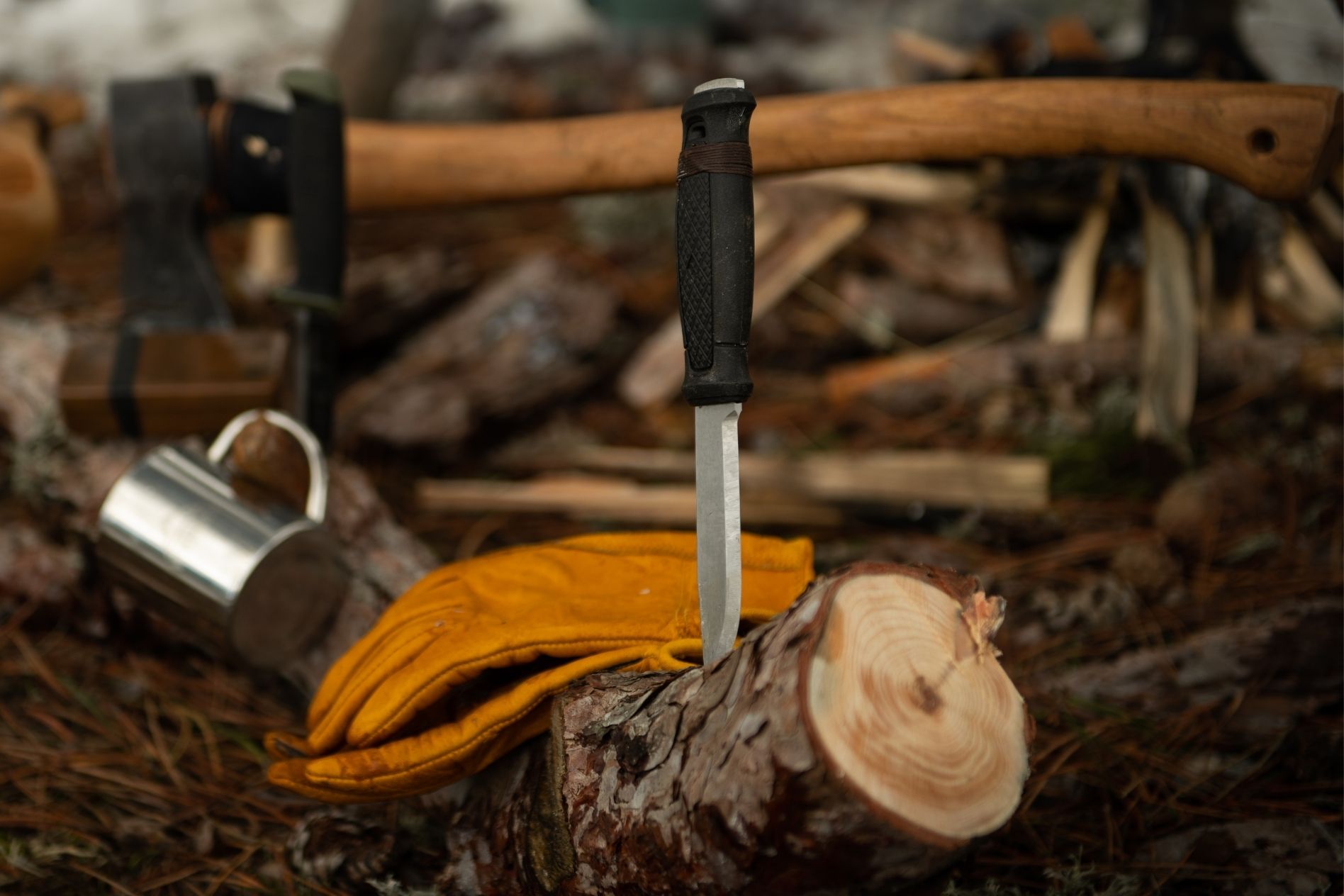
In any bushcraft camping kit list, you’ll have a primary knife — the lead instrument in your orchestra. It will shoulder the bulk of your survival work, so it needs to be tough, dependable, and low-maintenance.
Blade type
There’s only one blade type that really makes sense for a survival knife — full‑tang. No question. You’ll be using this blade to cut branches and strip bark for firewood, process game, baton wood, build shelters, and do countless other heavy tasks that demand exceptional strength and reliability — the kind only a true full‑tang construction can deliver. A full tang bushcraft knife has the steel of the blade (the tang) running the full length of the handle to its end. In other words, the blade and the spine are one continuous strip of metal, enclosed by handle scales (or the handle is carved from a single piece). That continuous metal backbone is exactly what makes a full‑tang knife so tough and perfectly suited for survival and other outdoor extremes.
Steel: carbon or stainless steel – what to choose for a beginner
Choosing between carbon steel and stainless steel for a bushcraft knife is a classic debate. Here are the main pros & cons, and what I’d recommend for someone starting out.
Carbon steel:
Pros:
- Generally easier to sharpen to a very keen edge.
- Good toughness and excellent field performance in many bush‑use cases.
- Many traditional bushcraft knives are carbon steel.
Cons:
- More prone to rust and corrosion. Needs more maintenance (cleaning, drying, maybe oiling).
- In very wet/humid/salt‑water environments you’ll have to work harder to keep it in good condition.
Stainless steel:
Pros:
- Much better corrosion resistance — lower maintenance in damp or wet environments.
- Good for beginners who may not yet want to worry about forming a patina / rust / frequent oiling.
Cons:
- Some stainless steels are harder to sharpen in the field or may not hold as keen an edge as some carbon steels (depending on treatment & grind).
- The trade‑offs in steel mean you often sacrifice one thing (edge retention, ease of sharpening, toughness) for better corrosion resistance. As one chart shows: carbon steel often scores low in rust resistance but high in sharpenability, while stainless trades some of that.
A stainless steel knife is the best option, because in the wild, the blade will often come into contact with moisture and dirt, and resistance to corrosion and rust in such conditions is a priority. A prime example is our HK6 SSH bushcraft knife.
Bushcraft knife designs. Blade shape (Scandi, drop point, etc.) and length
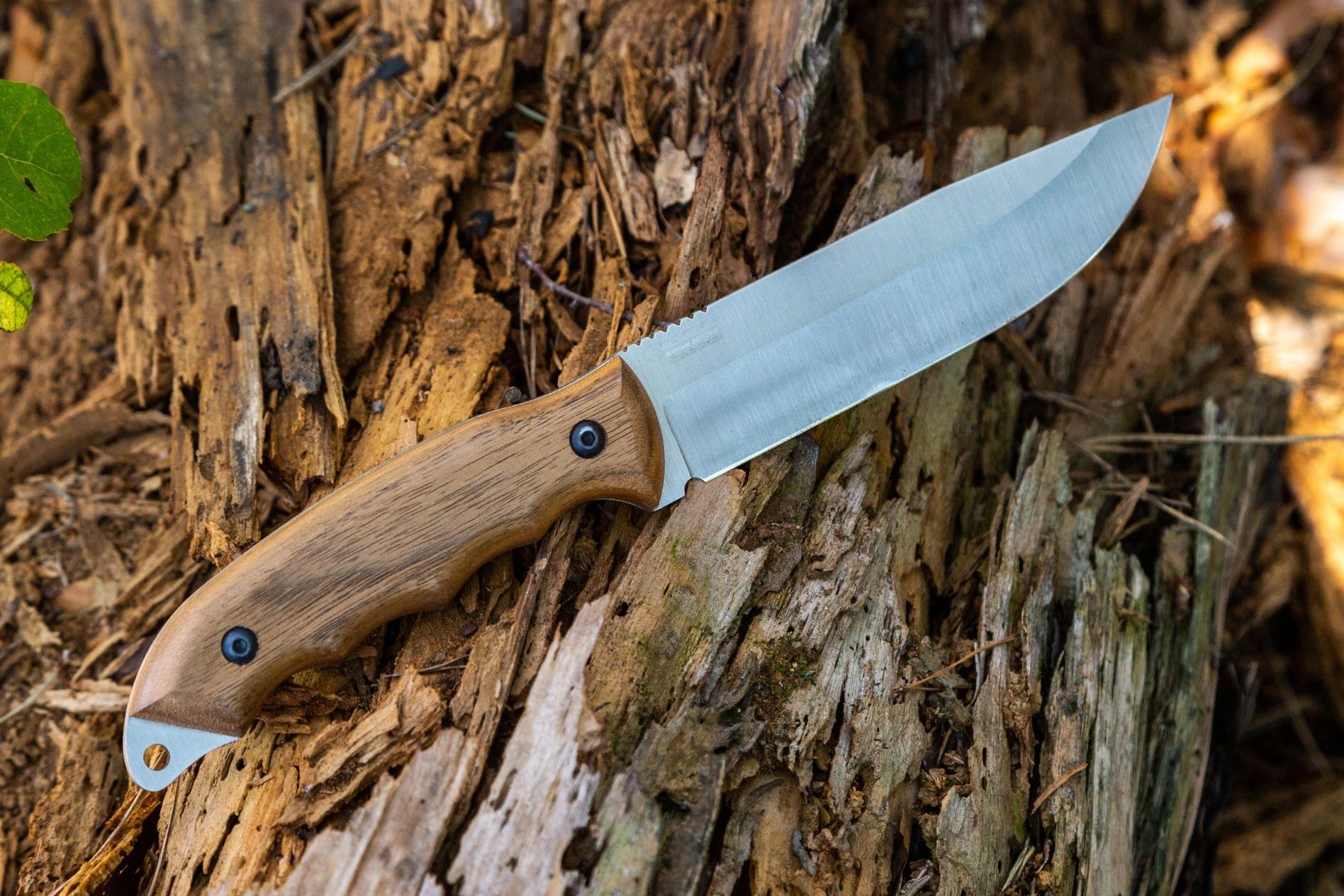
Blade shape affects how the knife performs for different tasks:
Scandi Grind
- A favorite in bushcraft.
- Easy to sharpen and excellent for wood carving.
- Offers great control and bite when cutting.
Drop Point
- A very versatile blade shape.
- Good for general use, skinning, food prep, and carving.
- Strong tip and balanced profile.
Blade Length
- Ideal range: 90mm to 130mm (3.5″ to 5″).
- Short blades offer more control for carving.
- Longer blades give more reach for heavy work.
Avoid blades that are too short (under 80mm) or overly long (over 150mm) for your main knife—those are better for specialized tasks.
Handle
The handle matters just as much as the blade. A good bushcraft knife should feel secure and comfortable in your hand, even after hours of use.
- Material: Micarta, G10, hardwood, or textured rubber are all good. Avoid glossy plastic or smooth finishes.
- Grip: The handle should not slip when wet, sweaty, or dirty.
- Shape: It should fit your hand well without creating hot spots or pressure points.
- Safety: Some handles include a finger guard or palm swell for better control.
A poorly designed handle can lead to fatigue, blisters, or even accidents. Comfort and control are key.

Scabbard – how to wear, what to combine with
A knife is only as useful as how quickly and safely you can access it. That’s where the sheath (scabbard) comes in.
- Material Options:
○ Leather: Classic and durable, but needs maintenance and can absorb moisture.
○ Kydex: Lightweight, waterproof, and provides excellent retention.
○ Nylon or synthetic: Often found on budget knives. Lightweight but can wear out faster.
- Carrying Style:
○ Vertical belt carry: Most common and accessible.
○ Horizontal (scout) carry: Allows sitting or wearing with a backpack.
○ MOLLE-compatible sheaths: Attach to packs or tactical gear.
- Extra Features:
○ Firestarter holder, sharpening stone pocket, or paracord wrap.
○ Some sheaths come with drain holes or retention straps for extra safety.
Make sure the knife locks securely in the sheath and doesn’t rattle or fall out when moving.

Additional knives and tools
Now that we’ve covered your main knife, let’s take a look at what else you might want to bring along to round out your bushcraft blade kit!
Folding knife (as a spare or for small jobs)
A folding knife is a great addition to your bushcraft gear, mainly as a backup or for lighter tasks. While it’s not as strong or reliable as a fixed-blade knife, it shines in areas where a smaller, more compact tool is handy. It’s useful for cutting cordage, preparing food, or doing small carving jobs around camp. Because it’s compact and lightweight, you can keep it in your pocket or pack without even noticing it’s there.
However, folding knives aren’t meant for heavy-duty tasks like batoning wood or prying. The folding mechanism and lock can fail under extreme pressure, making them less suitable as your primary knife. That said, if your main knife is in use, dirty, or unavailable, a folding knife is an excellent tool to have as a reliable backup.

Multitool – a universal assistant (advantages and limitations)
A multitool is a highly versatile addition to any traditional bushcraft kit. It combines several small tools in one compact package—pliers, screwdrivers, small saws, can openers, and more. In a wilderness setting, it can be incredibly helpful for fixing gear, making quick adjustments, and solving unexpected problems, like tightening screws on equipment or repairing broken straps.
While a multitool covers a wide range of minor tasks, it’s not a substitute for a main knife or axe. The tools are generally smaller and not designed for heavy cutting or wood-processing. In addition, multitools can be uncomfortable to use for extended periods because of their compact, foldable design. Still, as a secondary tool, especially for gear maintenance and camp setup, a multitool is an excellent companion.
File or machete – when needed, and when no
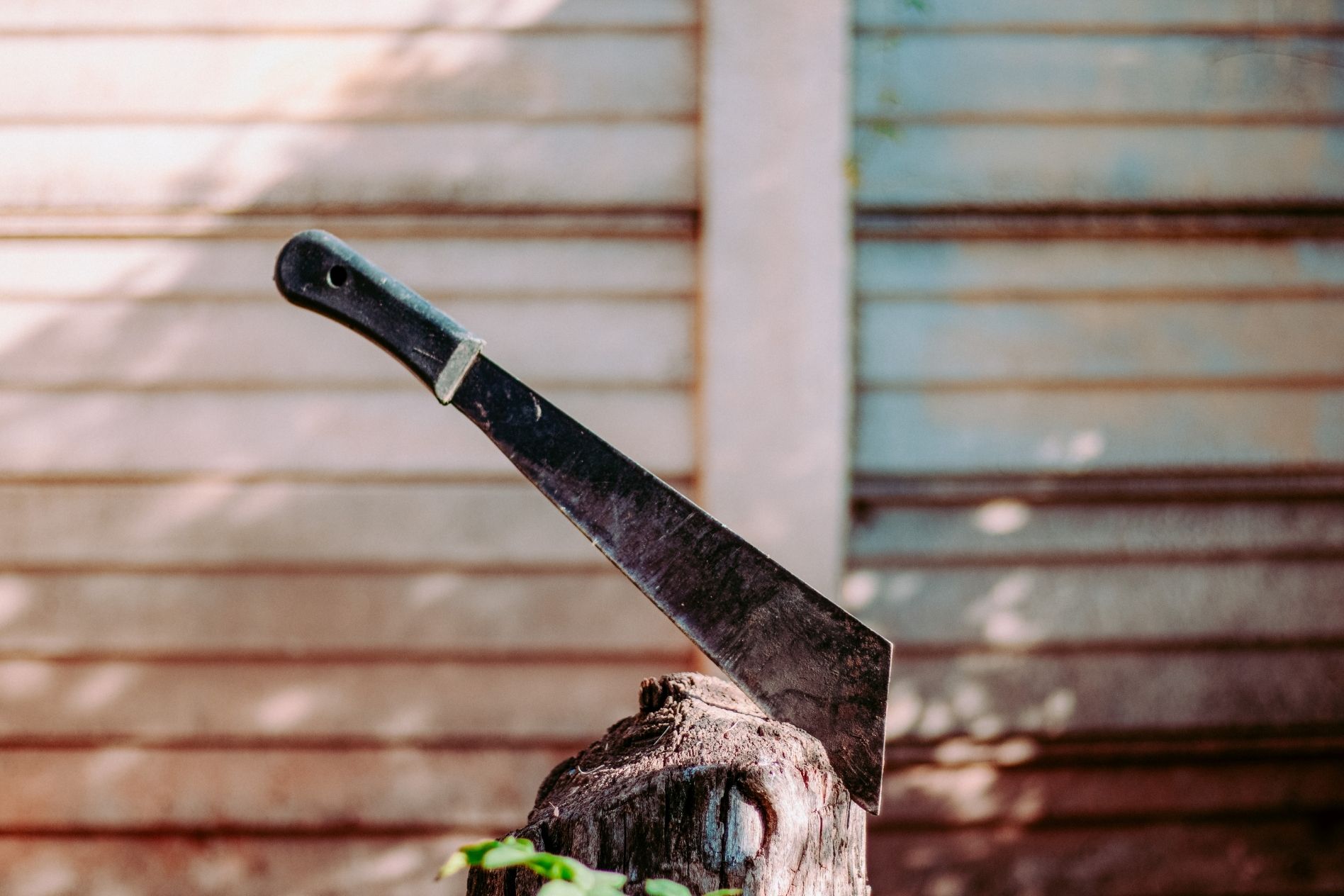
A machete or large chopping tool can be very useful, depending on your environment. In areas with dense vegetation, thick brush, or tall grasses, a machete is extremely effective for clearing paths and processing larger branches. It offers more reach and chopping power than a standard knife, which can save you time and energy in certain situations.
However, a machete is not always necessary. In dense forests with tighter spaces, or when your work involves fine tasks like carving, notching, or food prep, a large blade can become more of a burden than a benefit. It adds weight to your pack and can be harder to control in confined areas.
It’s also worth considering a small sharpening file or stone as part of your gear. Keeping your tools sharp in the field is essential, especially if you’re using them frequently. A dull blade is not only inefficient—it’s also dangerous.
Common mistakes of beginners
Newcomers are usually full of enthusiasm — and often rush headfirst into knife shops, which we fully support, but in all that excitement, it’s easy to make a mistake and walk out with something that’s not exactly what you need.
Buying a tactical knife instead of a field knife
One of the most common mistakes beginners make is buying a tactical-style knife, thinking it will perform well in the field. And sure — they do look cool, with all those aggressive shapes, coated blades, sawbacks, and overly thick spines. But here’s the thing: while they may look like something out of an action movie, these knives are usually built for combat — not for carving wood, preparing food, or building a shelter. A proper bushcraft or field knife is designed with function in mind! It usually has a simpler design, a grind that’s easy to maintain, and a blade shape suited for controlled work. Beginners often regret buying a tactical knife once they realize it’s uncomfortable or ineffective for everyday tasks in nature.
Too many tools without experience using them
Another common error is overloading your gear with knives, multitools, axes, and other equipment—without having any real experience using them. It’s easy to think that having more tools will make you more prepared, but in reality, it often leads to confusion, extra weight, and slower progress. The most useful tools are the ones you know how to handle well. Carrying five knives doesn’t help if you’re not comfortable using even one. For beginners, it’s better to focus on mastering a single good-quality knife before expanding your minimalist bushcraft kit. Learning technique matters far more than owning lots of gear.
Ignoring ergonomics (uncomfortable knife = injury)
Newcomers sometimes choose a knife based on looks or blade steel, without considering how the handle fits in the hand. An uncomfortable or slippery handle might seem like a minor issue at first—but after hours of carving, cutting, or processing wood, it can lead to blisters, fatigue, or even injury. A poorly designed handle can also reduce control, making precision work harder and more dangerous. In wet or cold conditions, the risk of slipping increases. For bushcraft, a secure and ergonomic grip is essential for both comfort and safety. Choosing a knife that feels good in your hand is just as important as selecting the right blade.
Poor fastening / lack of sheath
Lastly, many beginners underestimate the importance of a secure and reliable sheath. A knife without a proper sheath is not only inconvenient—it can also be dangerous. Loose sheaths, poor retention, or awkward carrying systems can cause the knife to fall out or be difficult to access when you need it most. A good sheath keeps your knife safely in place and makes it easy to carry on your belt or pack. It also protects the blade and your gear from damage. Ignoring this part of the setup can lead to lost knives, accidental cuts, or slow response in emergency situations. Every outdoor knife should be paired with a well-fitting sheath that matches your carry style and keeps the tool secure.

Conclusion
Follow our simple tips, and you’ll have a bushcraft survival knife set that’s ready for anything — maybe even your dream setup! And what a coincidence — our online store has everything you need for bushcraft, hunting, fishing, camping, and hiking. From top-tier knives to equally awesome gear and accessories, we’ve got you covered. So gear up — adventure is calling!