

Like any cultists, the cult of outdoor enthusiasts has its own overwhelming number of terms and slang! Bushcraft, camping, hiking, trekking, backpacking. If you’re new to all this, it can be tough to make sense of what’s what and how one thing differs from another. But don’t worry — we’ve got your back and ready to break it all down for you, step by step. Today, we’re starting with camping and bushcraft!
Brief explanation of the terms “camping” and “bushcraft” and their unique aspects
Camping is when you and your buddies pack up your prepped-and-loved tents, tarps, backpacks, cookware, and some beautifully marinated meat for a barbecue, then head out to a cozy clearing near the forest. You set up camp, sing songs by the fire, take walks to the river and just live like that for a few days. It’s an awesome way to spend a weekend!
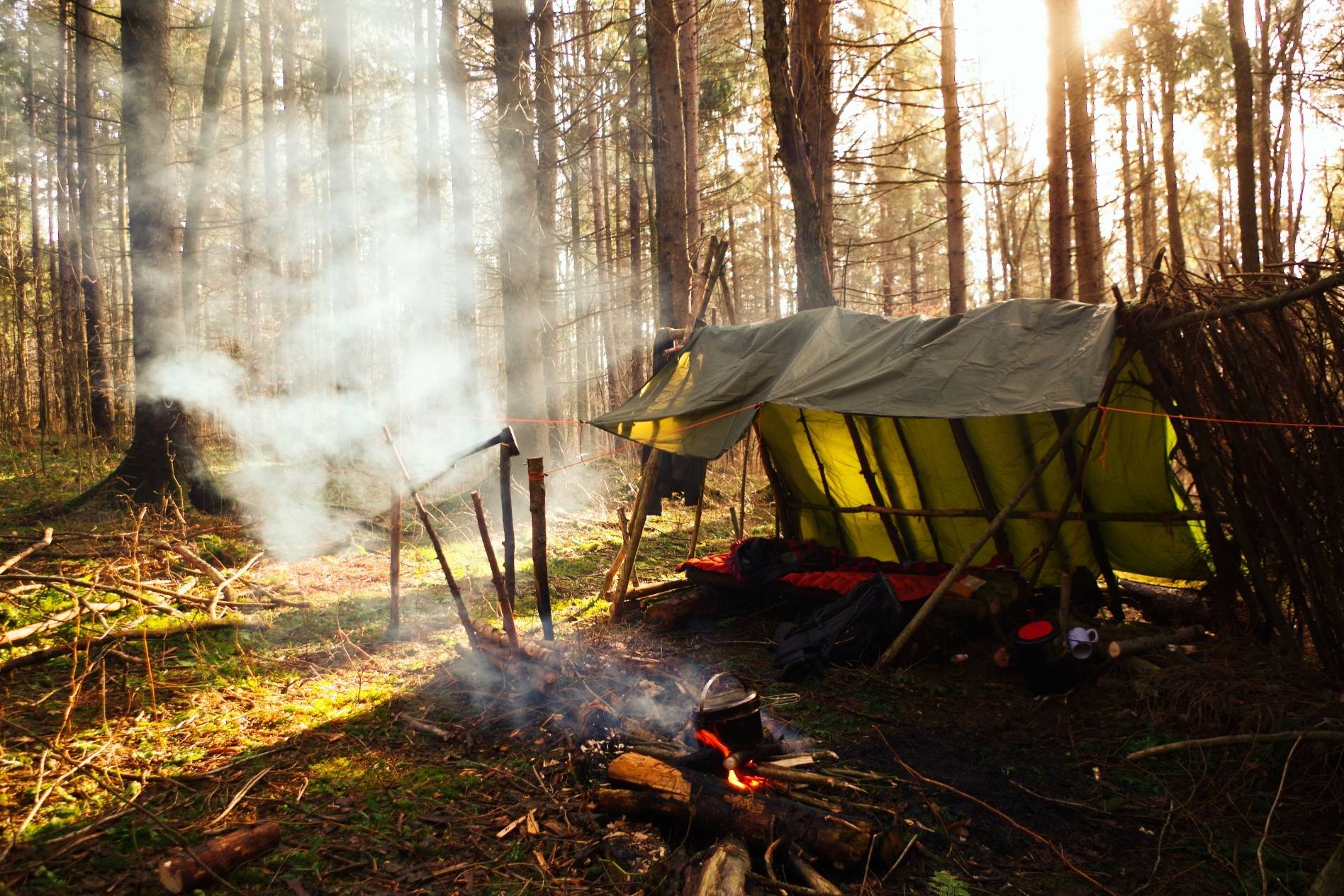
And what is bushcraft? It is a whole different story — and a much wilder one. This is where you and your friends venture deep into the wilderness, more extreme nature-based adventures — forests, steppes, tundras, mountains, jungles — armed with only the bare essentials. Think: a trusty knife, a flashlight, a water flask, water purification tablets, and maybe a couple of emergency rations. That’s it.
You’ll build your shelter from whatever nature provides, start a fire using ancient techniques that have stood the test of time, and source your food through hunting, fishing, or foraging. Why go through all this?
Because it’s incredibly cool and exciting! It’s just you and nature — a raw, immersive experience where you get to feel what life was like for our distant ancestors. Plus, it’s a fantastic way to sharpen your survival skills in real-world conditions. You give yourself just the slightest safety net — a bit of water, a ration pack, a knife — and if fate ever throws you into a true survival situation, you’ll be ready. You’ll come out the other side stronger, smarter, and fully capable. That’s the difference between camping and bushcraft!
Key Differences Between Camping and Bushcraft
As you can probably tell, these two types of outdoor adventures require completely different skill sets — and totally different gear. So let’s break it all down and take a closer look at what you’ll need for each one!
Skills and Knowledge Required
Camping is generally designed to be accessible for people of all experience levels, including families and camping for beginners. The skills required are basic and revolve around comfort, organization, and safety! Outdoor skills comparison:
- Tent Setup and Shelter: Knowing how to pitch a tent correctly, select a flat and safe campsite, and ensure proper weather protection.
- Campfire Safety and Cooking: Ability to build a controlled campfire (where permitted), use a camp stove, and safely cook simple meals outdoors.
- Basic First Aid: Understanding how to treat minor injuries, blisters, insect bites, and knowing when to seek help in emergencies.
- Navigation: Using trail maps, compasses, or GPS apps to follow marked trails and find designated camping areas.
- Leave No Trace Principles: Following outdoor ethics like packing out trash, minimizing campfire impact, and respecting wildlife.
- Weather Awareness: Knowing how to prepare for changes in weather and understanding basic weather patterns.
Camping is more about using prepared resources efficiently than developing deep survival knowledge. Most campers rely on modern tools and pre-planned resources to ensure a comfortable stay in nature.
 Bushcraft techniques is a much more skill-intensive and knowledge-driven activity. It centers around wilderness survival, self-reliance, and a deep relationship with nature.
- Shelter Construction: Building shelters from natural materials such as branches, leaves, and bark, depending on the climate and terrain.
- Firecraft: Starting fires without matches or lighters—using methods like flint and steel, bow drill, or ferro rods. Understanding fire safety and choosing the right wood types.
- Water Sourcing and Purification: Locating water in the wild (springs, rivers, dew) and purifying it using boiling, filtering, or chemical methods.
- Wild Food Identification: Foraging for edible plants, nuts, berries, and fungi while knowing how to distinguish them from toxic species.
- Trapping, Fishing, and Hunting: Basic skills in creating traps or snares, catching fish with primitive methods
- Tool Use and Craftsmanship: Proficiency in using knives, axes, and saws for carving, splitting wood, and crafting items like cooking utensils or shelters.
- Natural Navigation: Navigating using the sun, stars, terrain, and natural markers rather than digital tools.
- Tracking and Awareness: Observing animal tracks, understanding signs of wildlife, and developing situational awareness in the wild.
Bushcraft practitioners must be adaptive and resilient, often learning from experience and traditional knowledge passed down through generations. The focus is on mastering natural systems and surviving with limited or no modern conveniences.
 Equipment and Gear
Camping:
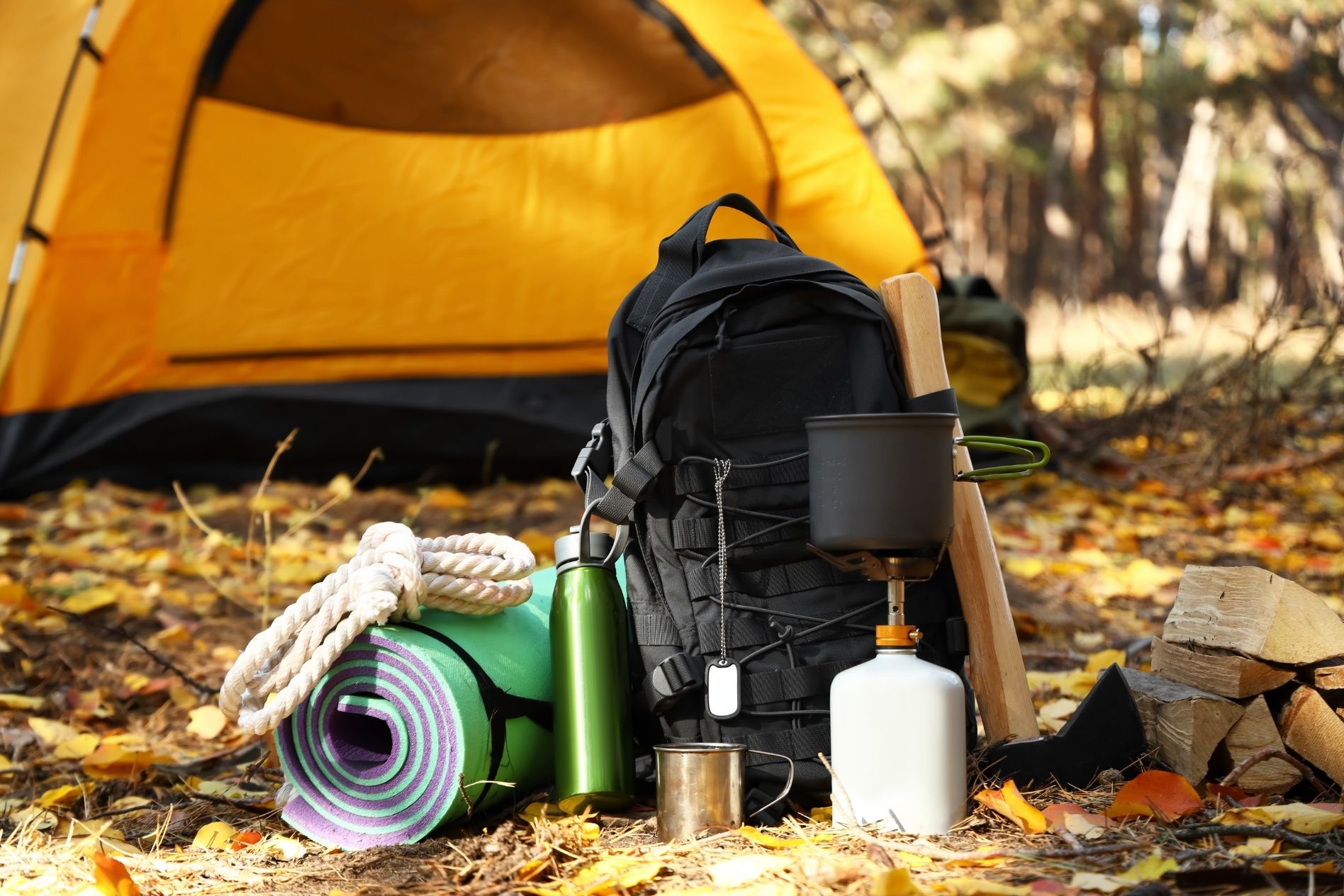
Camping gear is designed to maximize comfort, convenience, and safety while spending time in nature. Most of the equipment is commercially made, easy to set up, and intended for use in managed campsites or relatively mild outdoor environments.
Shelter and Sleeping Gear:
- Tents with rainflies and ground tarps for waterproof protection.
- Sleeping bags rated for specific temperatures and sleeping pads or air mattresses for added comfort.
- Optional gear includes hammocks, cot beds, and canopies for shade.
Cooking and Food Storage:
- Portable stoves (propane or butane), grills, and cookware sets (pots, pans, utensils).
- Coolers or electric fridge boxes to store perishable food items.
- Pre-packaged meals, snacks, and drink mixes are often brought from home.
Lighting and Power:
- LED lanterns, headlamps, and flashlights, often powered by batteries or USB-charged.
- Portable power banks or solar chargers for devices like phones, GPS units, and fans.
Furniture and Comfort Items:
- Camp chairs, folding tables, and even portable showers or toilets.
- Bug nets, sunscreens, and weather-resistant clothing.
- Entertainment items such as books, games, or Bluetooth speakers.
Safety and Navigation:
- First-aid kits, insect repellents, maps, and sometimes GPS devices.
- Bear-proof food containers or hanging systems in wildlife areas.
Overall, camping gear is focused on bringing comfort from home to the outdoors, making it ideal for families, beginners, and recreational travelers.
 Bushcraft:
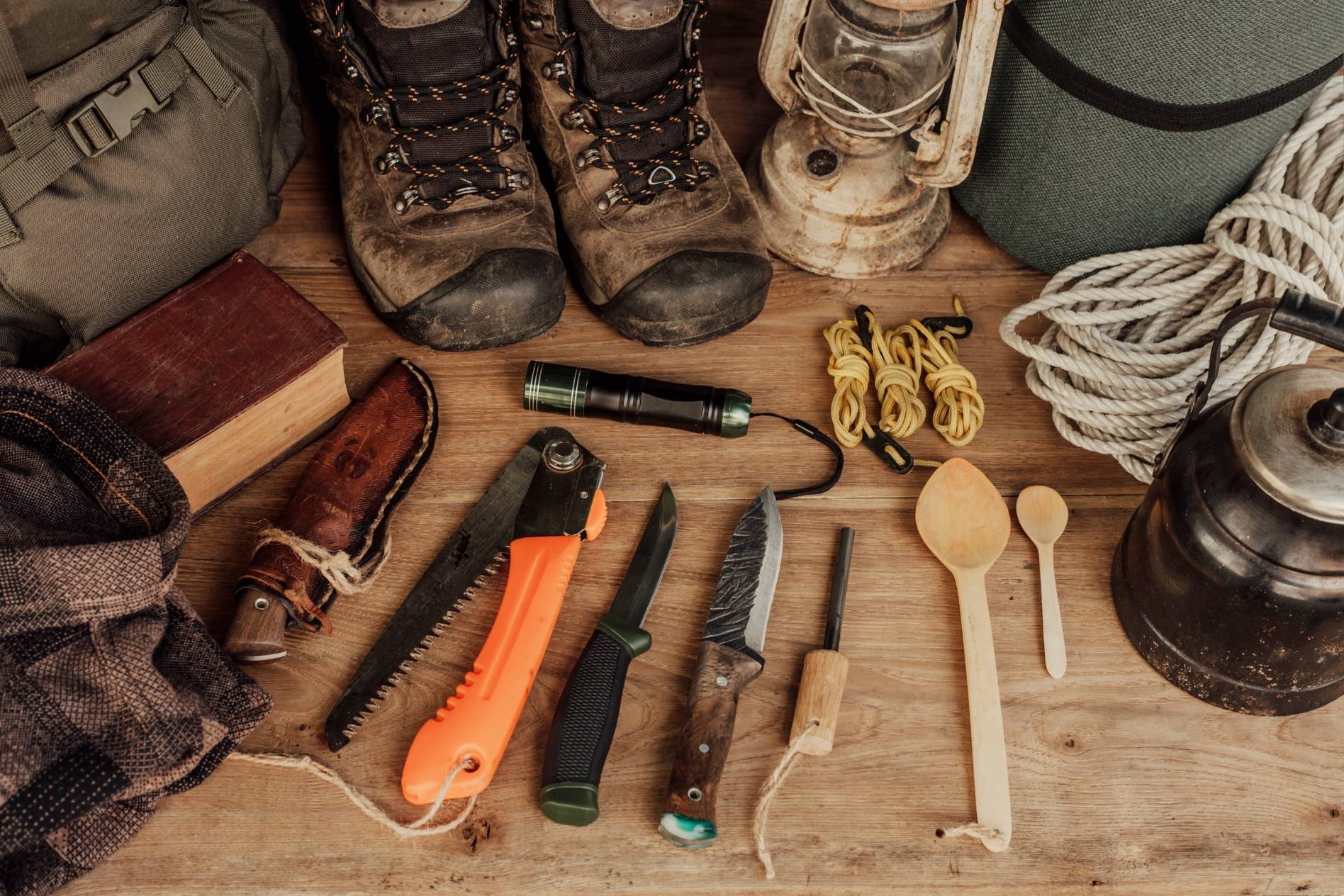
Bushcraft gear list, in contrast, emphasizes functionality, durability, and versatility. Rather than relying on modern luxuries, bushcrafters use tools that enable them to live with the land, not just on it.
Cutting Tools:
- Fixed-blade knives, axes, hatchets, and saws are essential for carving, chopping wood, and general wilderness tasks.
- Multi-tools or bushcraft knives often include features like fire strikers or sharpeners.
Fire-Starting Gear:
- Waterproof containers or pouches to protect tinder and fire-starting tools.
- Ferro rods, flint and steel kits, char cloth, and natural tinder (like birch bark or fatwood).
Shelter Materials:
- Tarps, or natural materials gathered on-site to create primitive shelters.
- Some bushcrafters carry lightweight cordage (e.g., paracord, bank line) for building frames or traps.
Water and Cooking:
- Water filters, purification tablets, or improvised charcoal filters made in the field.
Navigation and Survival Tools:
- Maps and compasses are used instead of electronic navigation tools.
- Signal mirrors and whistles may be carried for survival situations.
Miscellaneous Tools:
- Sharpening stones, needle and thread kits, and tools for crafting items from wood.
- Fishing lines, snares, or trapping wire for acquiring food.
Bushcraft gear is often more minimalist but multi-functional, reflecting the philosophy of relying on skill and nature rather than manufactured solutions.
 The Intersections of Camping and Bushcraft. Choosing the Right Path for You.
To sum it all up, camping is the entry-level stage for anyone looking to enjoy outdoor activities! It’s the perfect starting point for everyone. After spending just a couple of trips in this style, you’ll not only have an amazing time and rest to the fullest, but you’ll also begin to practice and get the hang of the basic survival skills that will come in handy when you venture into the wild. Camping is very forgiving for beginners and those less familiar with survival techniques.
Bushcraft, on the other hand, is a whole different story. Jumping into it without solid skills and experience is not something you should attempt. Not only could you face overwhelming challenges, but you might also seriously injure yourself. The wilderness doesn’t forgive mistakes.
Conclusion
So there you have it. The most important thing is to choose what truly resonates with your heart. Camping is something that suits everyone — it’s a great way to spend time with family and friends. As for bushcraft, well, that’s a different beast. It’s for extreme adventure lovers with finely honed skills. It’s not for everyone, and maybe you don’t need it. Sometimes, simply spending an awesome weekend with your crew is more than enough, and you don’t need to worry about fire-starting with sticks and building shelters out of branches. And as for where to find everything you need for camping or bushcraft — you already know! It’s our marvelous online store. Until next time, for more thrilling adventures!