
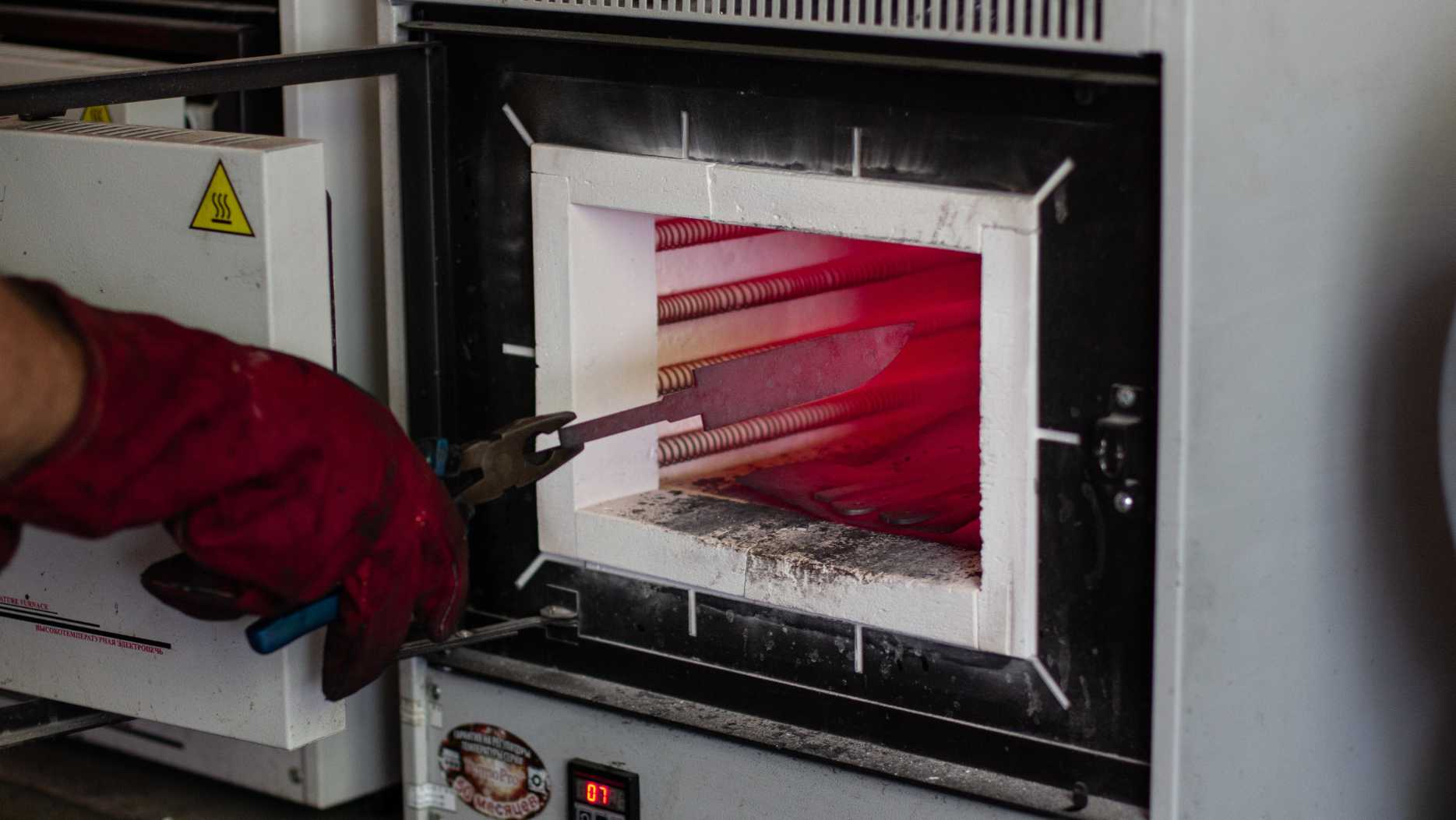
Blacksmithing has always had an aura of romanticism and mysticism. The blows of the hammer, the sparks, the red-hot strip of metal that is gradually transformed into a masterpiece, all of this is incredibly fascinating. Many cycles of heating, processing, then annealing, hardening, sharpening, each knife was unique in the end, knife making was an art that was passed down from generation to generation in the olden days, requiring high skill, patience and strength.
Historical Context of Heat Treatment (Overview of the evolution of heat treatment techniques in knife making)
The first metal knives appeared in Ancient Egypt around 3300 B.C. They were made of bronze, which is an alloy of tin and copper.
Technologies of thermal processing from the early Bronze Age to the late Middle Ages were very primitive, everything was limited to the simplest smelting of ore, then from the molten ore was made an alloy, then this alloy was poured into a mold, which has an approximate form of the future blade, then took from this mold blank knife and proceeded to forging on the anvil.
Forging is the process of treating a red-hot metal blank with hammer blows in order to give the knife the desired shape. This was followed by hardening, i.e. heat treatment of the product to improve its mechanical properties.
Hardening was done in water or oil. Such cooling caused changes in the crystal lattice of the metal, making it harder and more brittle, but at the same time giving the blade sharpness and wear resistance.
Finally, there was the tempering of the billet, which is aimed at reducing internal tensions inside the metal. This was done by heating the blade to a certain temperature and then cooling it slowly.
With the development of science and technology in the 19th and 20th centuries, heat treatment became more precise and scientifically based, approaching the durability of 60 HRC knives. The introduction of specialized steels and the control of temperature and cooling rates made it possible to create knives with specific properties ideal for specific applications, from kitchen knives to survival knives.
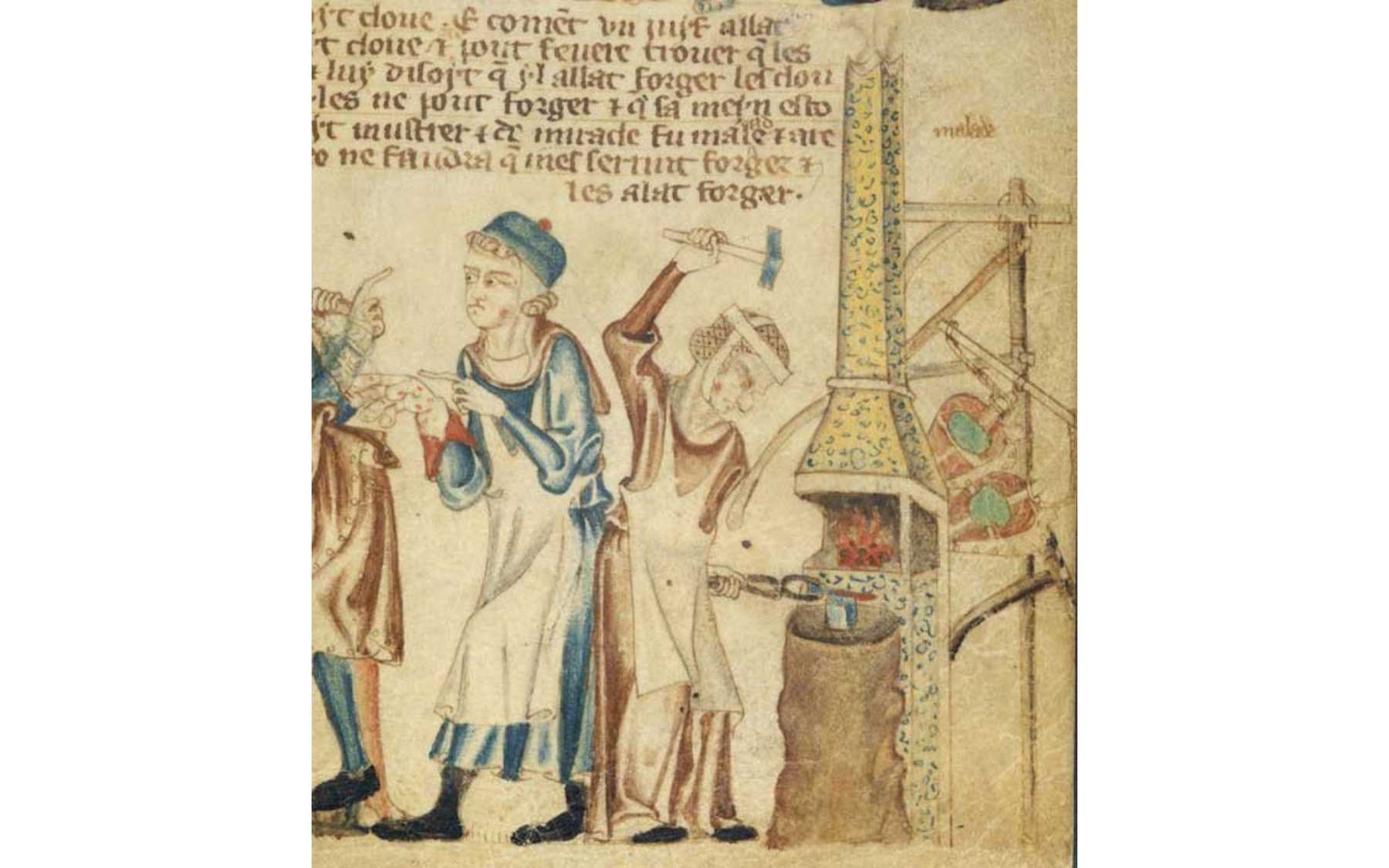
Photo from quora.com
Introduction: The Importance of Heat Treatment in Knife Manufacturing
Heat treatment is a critical step in the production of knives that determines their durability, hardness and resistance to wear. The importance of this process is as follows:
- Heat treatment allows the microstructure of the knife metal to be controlled. It involves the processes of cooling, heating and holding the metal at specific temperatures which is good for a Carbon steel knife for example. Properly selected heat treatment parameters determine the final mechanical properties of the knife, such as hardness, strength and resistance to wear;
- One of the main goals of heat treating knives is to achieve high blade hardness, which allows the knife to retain its sharpness and resistance to abrasion for a long time;
- Proper heat treatment improves the strength characteristics of the knife, making it less susceptible to breaking or deforming under stress;
- The heat treatment process transforms austenite (the primary structure after heating) into martensite, a solid phase that provides high hardness. This process requires precise control of temperature and cooling rate;
- Heat treatment can be customized depending on the specific type of steel and the intended use of the knife (e.g., kitchen knives require different properties compared to tactical knives).
One of the most advanced methods of heat treating a knife are quenching and cryogenic treatment.
Understanding Quenching
Let’s break down everything about the quenching process!
 Photo from thors.com
The Process of Quenching
The process of quenching is a special heat treatment of metal to give the knife the necessary hardness and strength. The basic steps of quenching include:
- Heating. A knife made of steel (usually carbon or stainless steel) is heated to a specific temperature, which can vary depending on the composition of the steel and the desired properties of the knife. This is usually a range of 800 to 1100 degrees Celsius;
- Holding at temperature. Once the desired temperature is reached, the knife is held at that level for a certain amount of time. This step ensures that the entire mass of metal is evenly heated and its structure is stabilized;
- Hardening. The most important stage of the process. The knife is rapidly cooled by placing it in a liquid or gas. This is the critical moment when austenite (austenite is a metastable phase of steel at high temperatures) is transformed into martensite, a structure that provides high hardness;
- Tempering. After quenching, the knife may be too brittle due to the high hardness. To reduce internal stresses and improve machinability, it is heated to a medium temperature (usually around 200-300 degrees Celsius) and held for a certain time. This partially reduces the hardness but maintains the strength.
Advantages of Quenching
Knife quenching is a classic, effective, millennia-old method of heat treating knives. This method is full of positive aspects especially for stainless knives for example. So, advantages of quenching:
- Quenching significantly increases the hardness of a knife’s steel, making it more resistant to wear and tear and retaining its cutting ability for a longer period of time;
- A properly hardened blade has a thinner and sharper edge, making the knife more effective when cutting;
- Hardening improves the strength of the blade, making it less prone to damage and brittleness under stress;
- Partial hardening can improve corrosion resistance by protecting the metal from oxidation and rust;
- The hardening process can also cause the metal to change color (e.g., when hardened in special media), which adds decorative effects.
Disadvantages of Quenching
Here comes our favorite fly in the ointment:
- A knife can become more brittle after quenching, especially if the process is not done correctly or if the wrong temperature or cooling conditions are used;
- Some steels may become more prone to corrosion after quenching due to changes in their microstructure. This may require additional corrosion protection measures.
- Hardened steel becomes much harder, making subsequent machining processes such as sharpening or polishing more difficult.
- Improperly performed hardening can lead to inhomogeneous material structure, which in turn can lead to uneven knife properties.
- Improper cooling or excessive quenching can deform or even crack the knife, especially for thin or complexly shaped blades.
Exploring Cryogenic Treatment
The future is here, and that means it’s time to talk about an advanced type of blade heat treatment, namely cryogenic treatment.
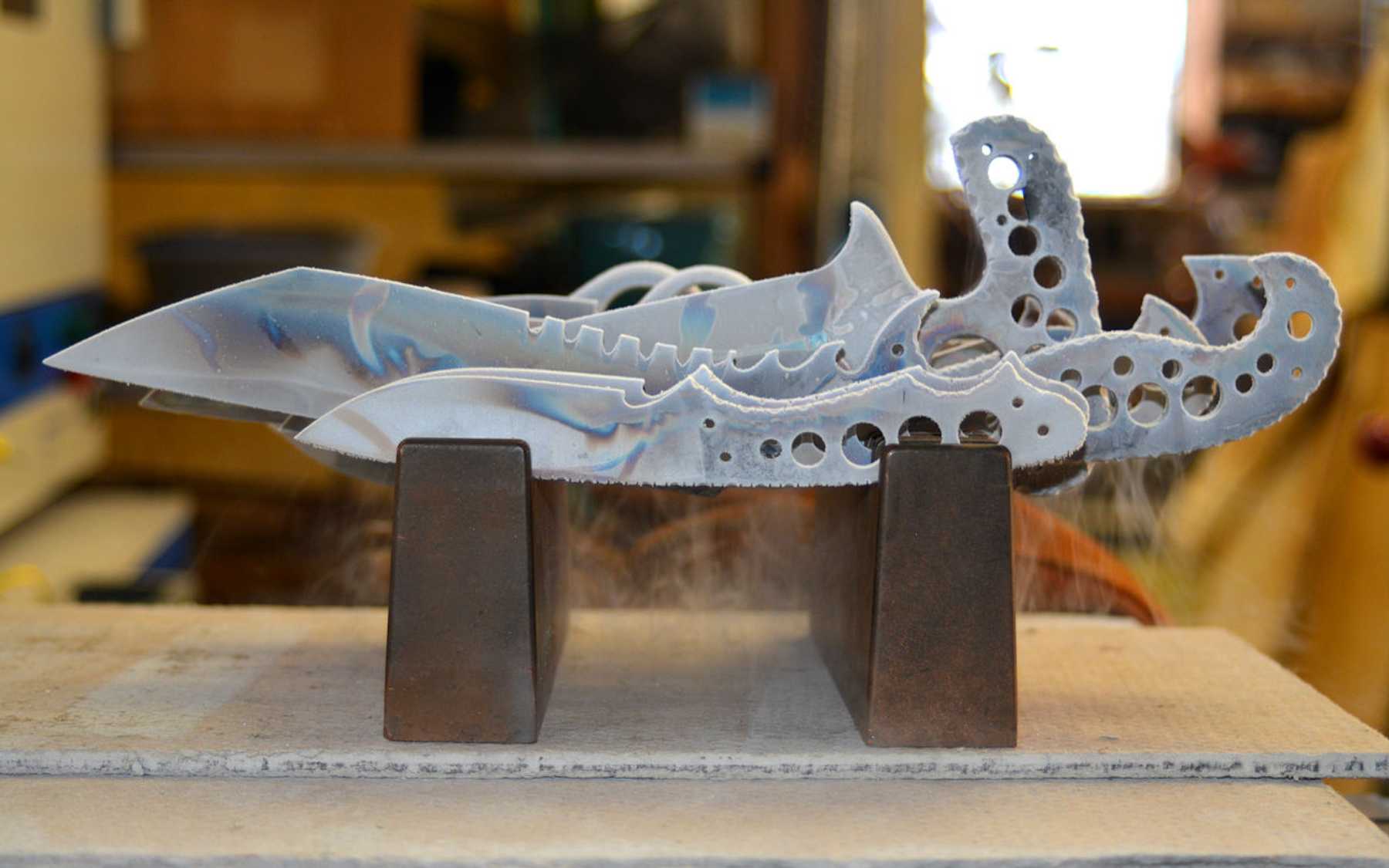
Photo from jayfisher.com
The Process of Cryogenic Treatment
Cryogenic treatment of a knife is the process of cooling and then heating the metal to improve its structure and properties. Here are the basic steps of this process:
- The knife undergoes special preparation, including cleaning of dirt and oxides to ensure uniform exposure of the entire surface, it may increase Rockwell Hardness significantly.
- Then the blade is placed in a special container or chamber where it begins gradual cooling to cryogenic temperatures, typically -185°C or lower. This process can take several hours to reach a stable low temperature.
- Once the target temperature is reached, the knife is left in cryogenic conditions for a certain period of time, which may vary depending on the type of steel and desired results. This may amount to several hours or even days.
- After conditioning under cryogenic conditions, the knife is gradually heated to room temperature. This process may also take several hours to avoid thermal shock, which can damage the structure of the metal.
- After cryogenic treatment, the knife may require additional finishing or sharpening to achieve the desired sharpness and blade shape.
Advantages of Cryogenic Treatment
Advantages of cryogenic treatment of a knife:
- Increased hardness and wear resistance. Cryogenic treatment promotes the conversion of the austenitic phase to the martensitic phase, which increases the hardness of the material and makes it less susceptible to wear, nice option on stainless steel for knives;
- Improved structure and microstructure. The cryogenic treatment process promotes a uniform distribution of carbon and other elements in the metal structure of the knife, which improves its mechanical properties;
- Reduction of internal stresses. Cryogenic treatment reduces internal stresses that may occur in the knife material during manufacturing or after heat treatment;
- Improved corrosion resistance. Processing at low temperatures helps to reduce susceptibility to corrosion due to a more stable material microstructure;
- Improved cutting properties. Improved microstructure and hardness of the material affects the cutting properties of the knife, making it more efficient in operation.
Disadvantages of Cryogenic Treatment
But even this advanced method of heat treatment is not without its disadvantages:
- It’s expensive! The cryogenic treatment process requires specialized equipment and the expense of maintaining low temperatures, which can make this method expensive;
- The process is difficult to control. An improperly set up process can negatively affect the results of the treatment, uncontrolled cryogenic treatment can lead to changes in the size or shape of the knife due to various thermal expansions and contractions of the metal;
- Cryogenic treatment of a knife is not always appropriate. Depending on the type of steel and specific operating conditions, cryogenic treatment may be unnecessary and may not provide significant advantages over traditional hardening and annealing methods.
Other Heat Treatment Technologies
In addition to the above, there are a bunch of other interesting techniques for heat treating a knife:
- Tempering annealing. Heating the knife to a critical point, followed by slow cooling. This process reduces internal stresses, improves ductility, and facilitates subsequent machining operations;
- Isothermal annealing. Heating to a critical point, followed by cooling to a steady state at a constant temperature. This method is used to improve metal structure and uniform carbon distribution;
- Cementation. Heating the blade in the presence of carbon to create a hard outer layer. This improves wear resistance and corrosion resistance;
- Tempering. Heating a hardened knife to a moderate temperature, then cooling it. The purpose is to reduce brittleness, reduce internal stresses, and improve machining;
- Rolling. A process in which a knife is treated at low temperatures to improve its mechanical properties without changing its structure.
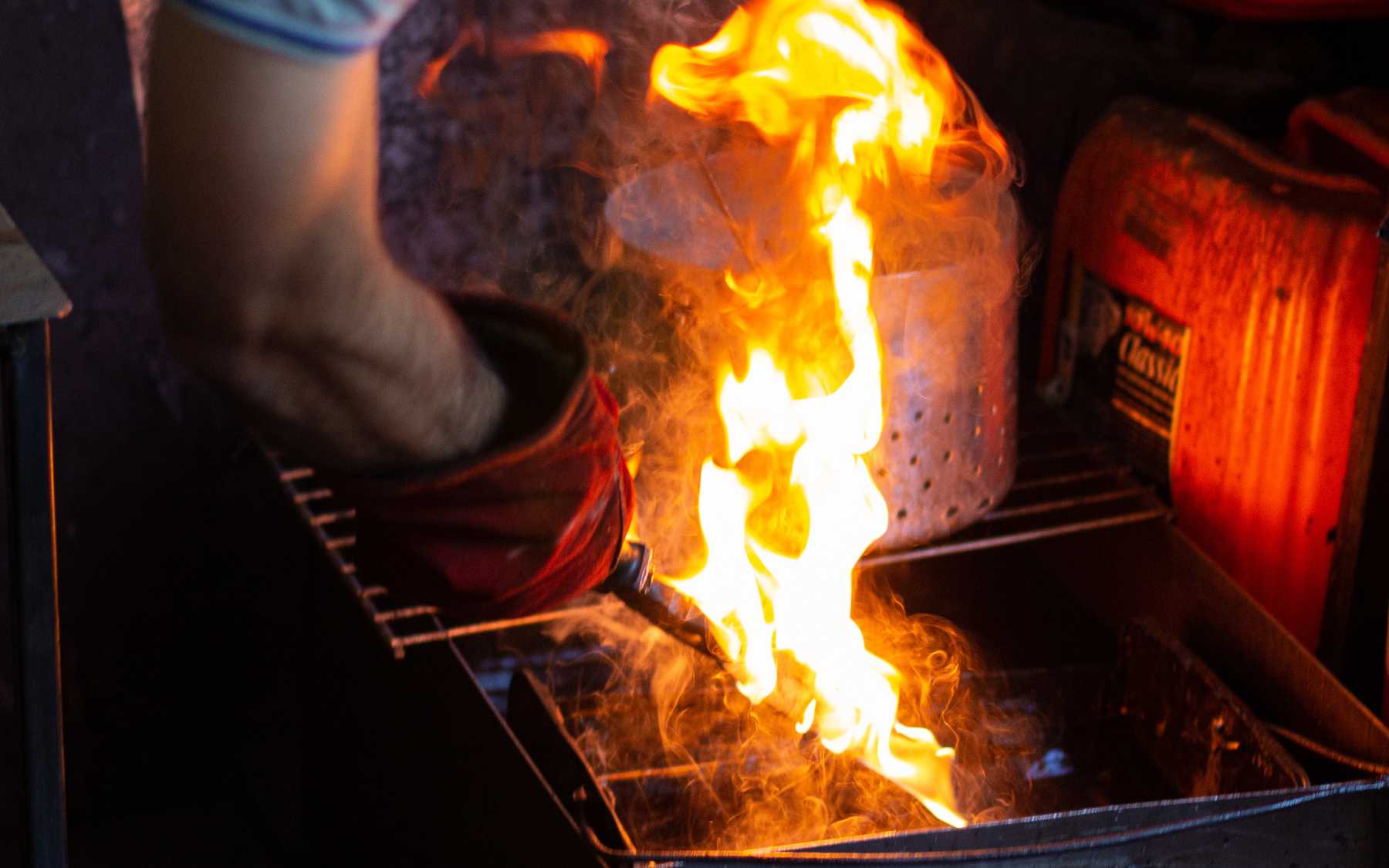
Recommendations on selecting the right heat treatment: For home, For outdoor, For professional use.
So, we have looked in detail at each heat treatment method and how it affects the quality, durability and performance of knives. The case for small now!
You should clearly define what kind of knife you need and for what purpose. For home and kitchen, for hiking or for professional use.
If you need a knife for home and kitchen, the usual quenching will be enough, such a knife will have excellent cutting ability and sufficient strength, and you will save money, as cryogenic treatment is expensive and in this case just does not make sense.
However, when it comes to hiking or professional use, you need additional durabillity, corrosion resistance and cutting ability, in which case it is worth to fork out for cryogenically treating your knife.
Whether in the kitchen, the wilderness, or the workshop, the art and science of heat treatment ensure that knives remain indispensable companions, capable of meeting the demands of their users with precision and reliability.