
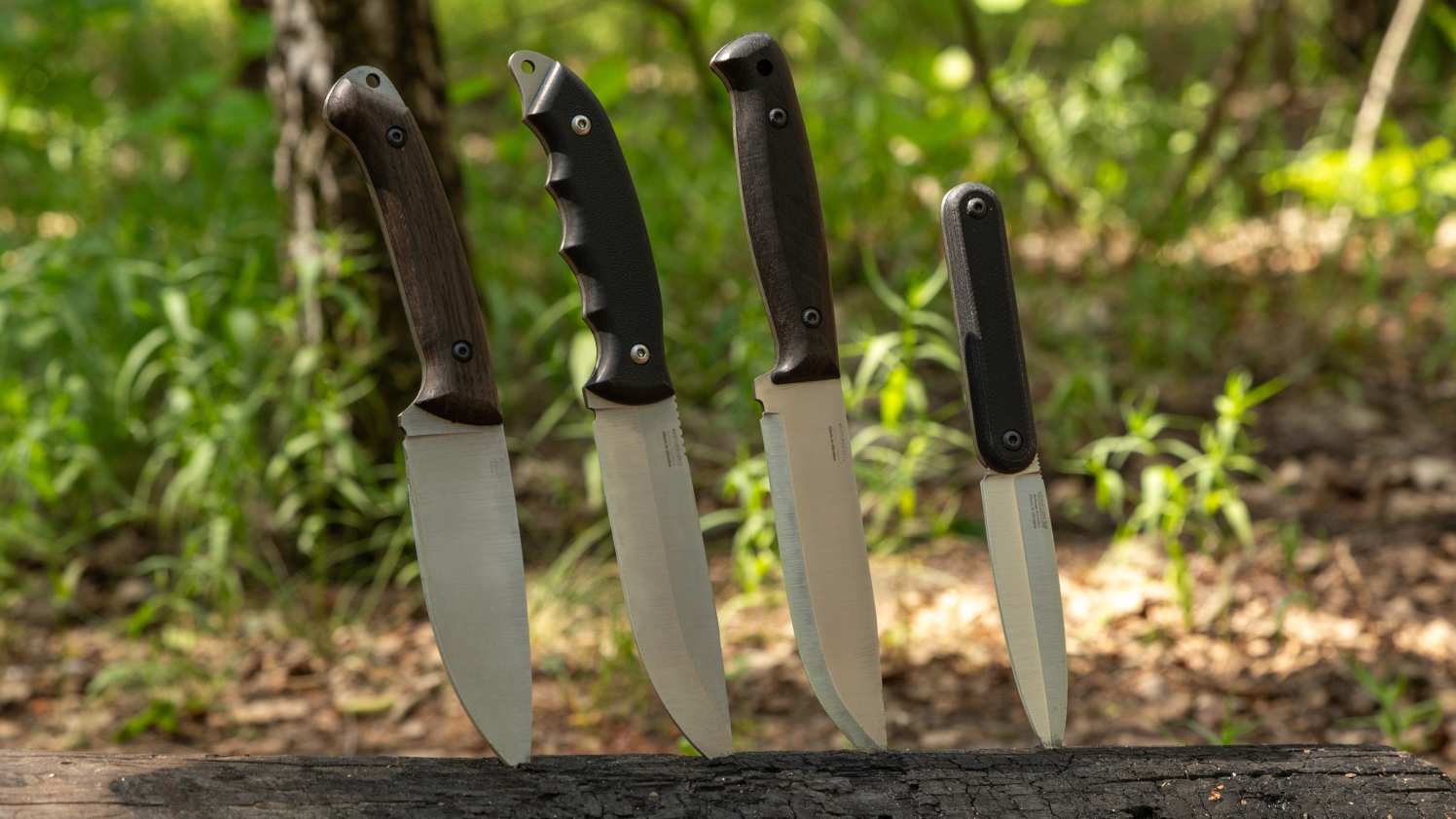
Chemistry is one of the pillars of all things. An invisible, marvellous and wondrous world that builds life itself and gives it great meaning. Take away phenylethylamine and you will lose love emotions, take away serotonin and you won’t get any enjoyment out of life. And if you remove chromium – your knife will do its best to become a rusty piece of junk. Chemistry is a very interesting and fascinating science, not for nothing it was dreamt about by Mendeleev. So let’s dive into the world of chemical elements and see how they influence the knife characteristics.
Introduction to Chemical Composition in Knives
Let’s find out what chemical elements make up our beloved knives. Knife steel chemical composition is:
Carbon
- Found in all steels, carbon content significantly affects hardness and edge retention.
- Low carbon content (0.5% or less) makes the steel softer and easier to sharpen but reduces edge retention.
- High carbon content (up to 2%) increases hardness and edge retention but makes the steel more brittle and harder to sharpen.
Chromium
- Contributes to corrosion resistance and wear resistance.
- Stainless steels typically contain at least 12% chromium to form a passive oxide layer that protects against rust and staining. This is an answer on “how to keep a carbon steel knife from rusting” question.
Vanadium
- Enhances wear resistance, toughness, and edge retention.
- Often found in high-carbon steels and tool steels, where it helps to form hard carbides that improve cutting performance.
Molybdenum
- Improves strength, hardness, and corrosion resistance.
- Commonly used in stainless steels to enhance their toughness and resistance to pitting and crevice corrosion.
Nickel
- Improves toughness, ductility, and corrosion resistance.
- Often used in stainless steels to stabilize the austenitic structure and improve resistance to stress corrosion cracking.
Manganese
- Deoxidises improves hardenability and tensile strength.
- Typically found in medium to high carbon steels to enhance toughness and reduce brittleness.
Silicon
- Improves strength and hardness.
- Found in many steels as a deoxidiser and to improve the steel’s ability to be forged and machined.
Other Elements
- Iron (Fe): Base element in all steels, providing the structural foundation.
- Copper (Cu): Improves corrosion resistance in certain stainless steels. Sometimes used in small amounts for specific applications.
- Nitrogen (N): Increases strength and hardness. Forms nitrides, which can improve wear resistance.
- Sulfur (S) and Phosphorus (P): Generally considered impurities in knife steels. Excessive amounts can reduce toughness and impact resistance.
Why Chemical Composition Matters
After reading the above, there is no doubt in anyone’s mind that chemical composition is very important. What’s more, by combining all these chemical elements, you can produce exactly the blade you want, design it like an engineer. You want more durability? You want more carbon. You want a blade that resists rust better? You need more Chromium.
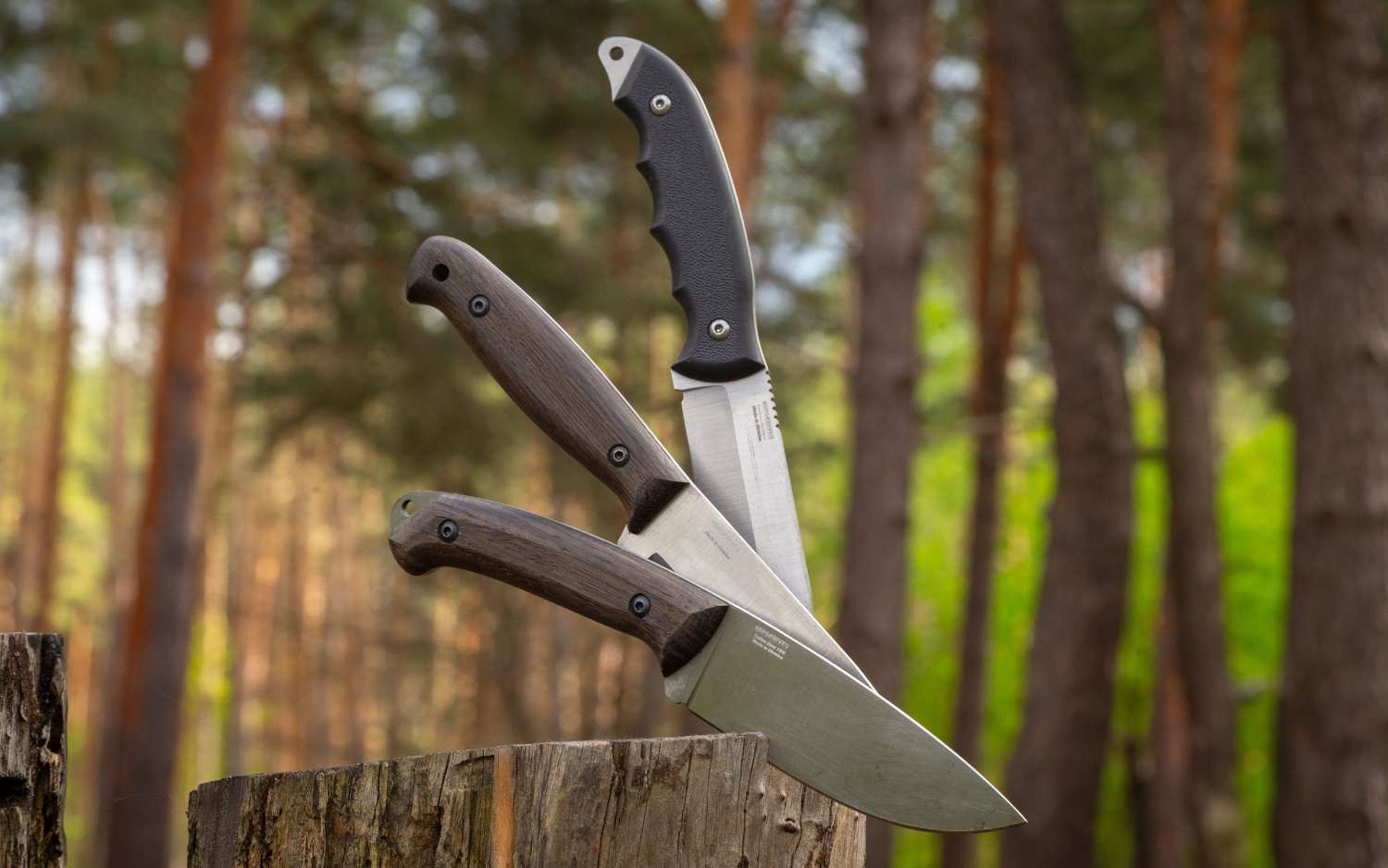
Types of Knife Steel and Their Compositions
Now let’s go through the types of knife steels:
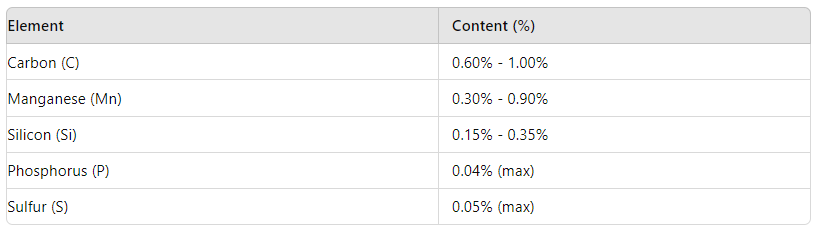
High Carbon Steel
Good old high carbon steel! Knives made of this steel are strong and keep sharp for a long time. Excellent choice for both kitchen and tactical knives. It is what are good knives made of.
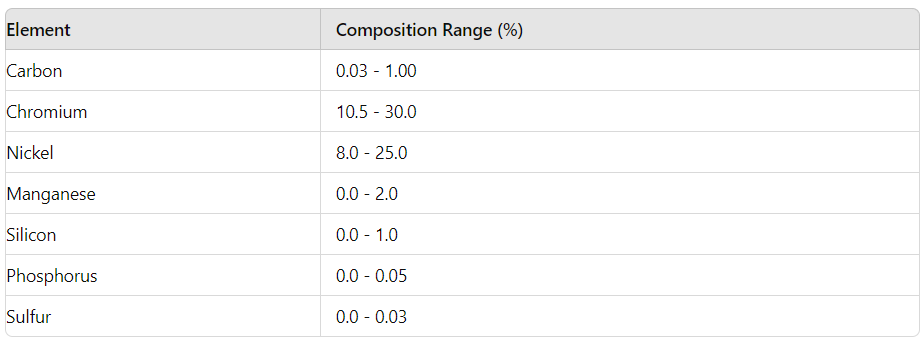
Stainless Steel
If you are a rugged survivalist and love extreme sports, stainless steel is your choice! Thanks to its high chromium content, this blade is excellent at resisting rust and corrosion. Such steel is also perfect for camping knives.
Tool Steel
One of the best steels for knives, excellent wear resistance and strength. Excellent choice for hunting or tactical knives.
Balancing Properties for Different Knife Applications
Knife chemical balancing is just as important as a quality sharpening on the knife compound, when it comes to the knife’s performance and longevity.
Kitchen Knives
A well-balanced kitchen knife will help you slice meat, fish, vegetables and fruit with speed and dexterity, but be careful when slicing, not everyone will be happy with your chopped fingers in the salad.
Your average stainless steel kitchen knife will look like this:

The exact composition can vary widely depending on the manufacturer, the specific type of knife (e.g., chef’s knife, paring knife), and the intended use (e.g., professional kitchen vs. home use). The goal of the composition is to achieve a balance of hardness, corrosion resistance, ease of sharpening, and durability suitable for its intended purpose.
Outdoor and Survival Knives
Survival knives are versatile, so balancing them is a delicate matter, even if it is a stainless steel pocket knife! Here are some key balancing properties to keep in mind:

This composition ensures that the survival knife is durable, resistant to corrosion, and retains its edge well, making it suitable for outdoor and survival situations.
Tactical Knives
And here it is our favourite tactical knives, because everyone is a special forces man at heart! These blades are just cool. When considering the balancing properties of tactical knives for application, several key factors come into play to ensure functionality and effectiveness:
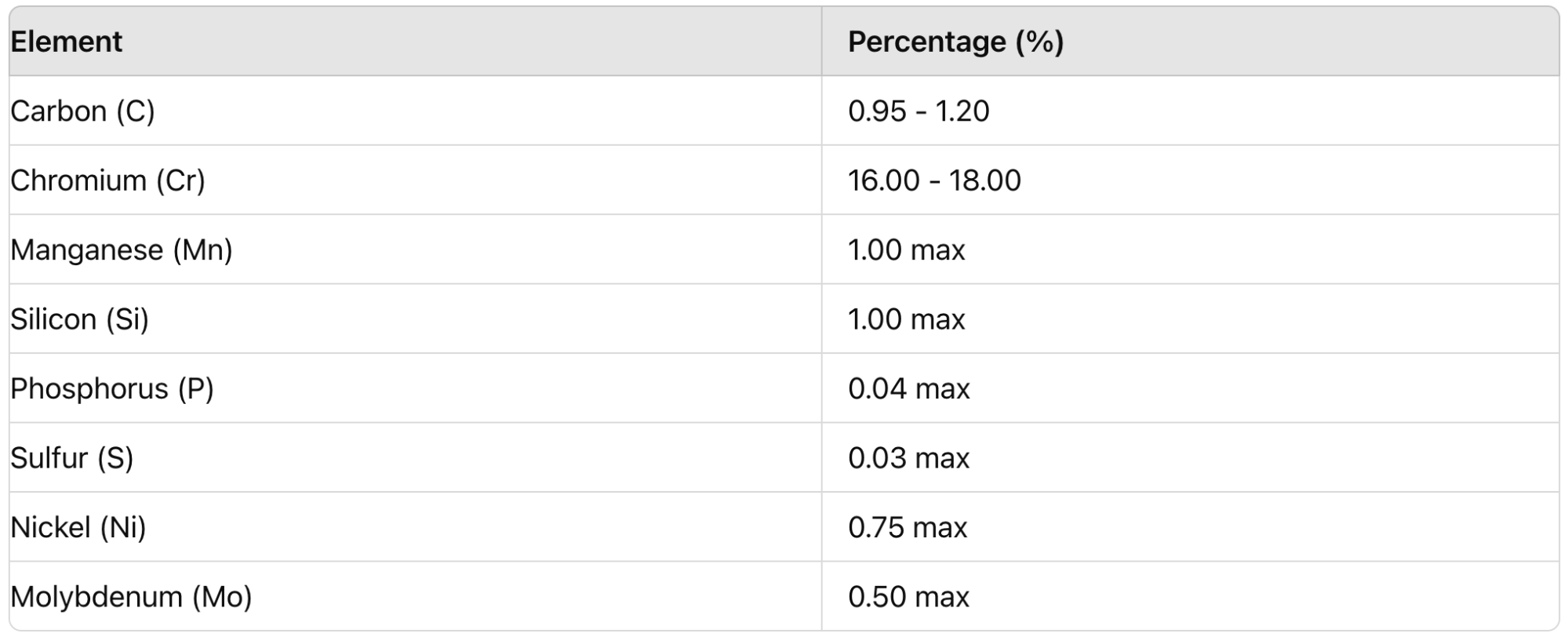
This composition provides a balance of hardness, edge retention, and corrosion resistance, which are crucial properties for tactical knives used in various conditions. Keep in mind that the exact composition can vary between different grades of stainless steel and other types of steel used in tactical knives, such as high-carbon tool steels like D2 or A2 steel, each offering different characteristics suited to different needs.
Collectible and Artistic Knives
Here comes a very interesting category of knives – collectible! Any shape, any size, engraving, inlaid with precious metals, it is no end to the imagination.
The balancing properties take on a different emphasis compared to tactical knives. Here are key considerations for these types of knives:
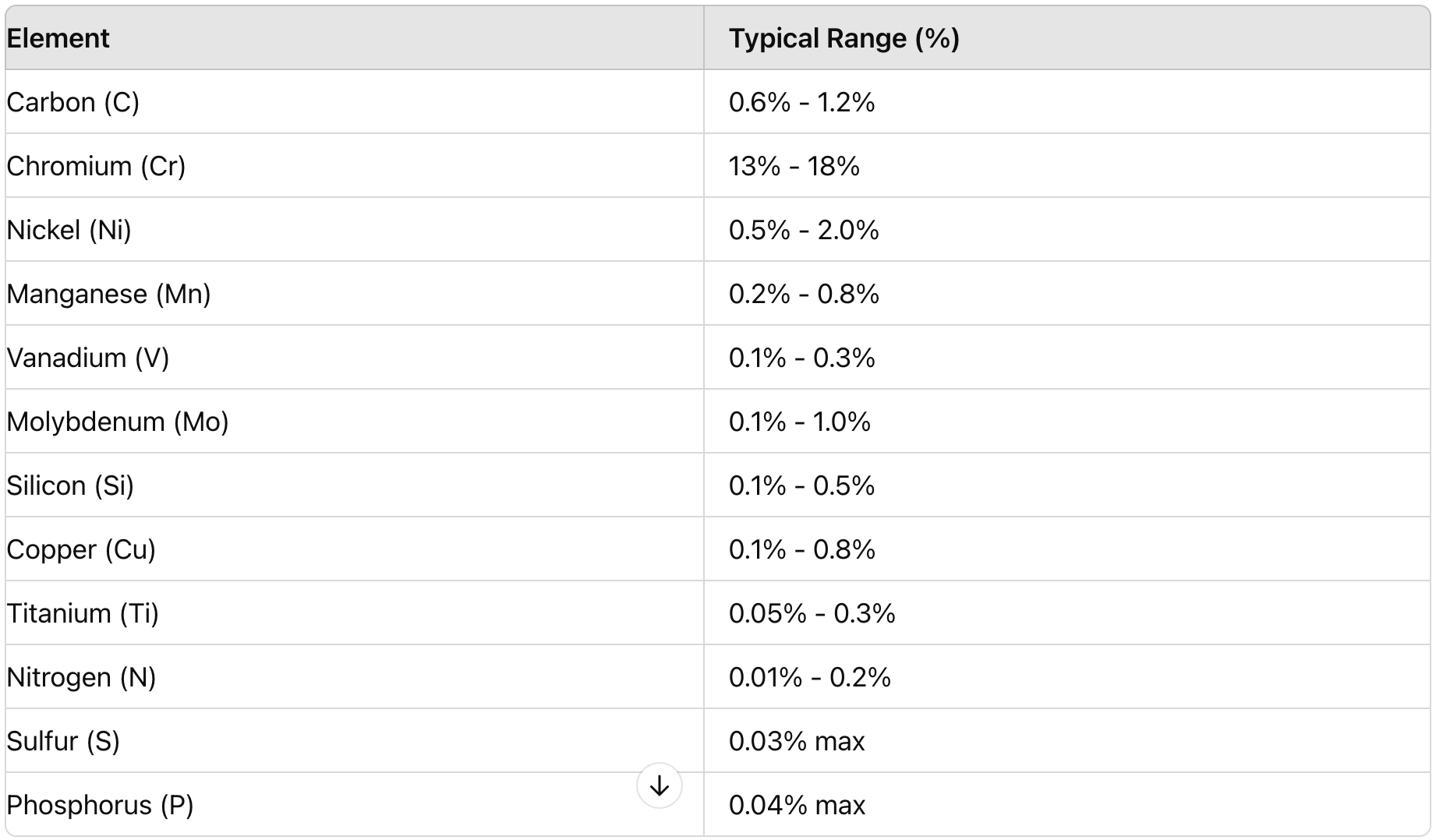
The exact composition can vary widely depending on the specific type of knife, the craftsmanship involved, and the preferences of the maker. Artistic knives often involve traditional techniques like Damascus steel forging, which combines layers of different steels to achieve a distinctive pattern and blend of properties.
Conclusion
We have now come to the end of our longread! Armed with information from our article, you can now choose the knife you need with jewellery precision. May the Force be with you!