
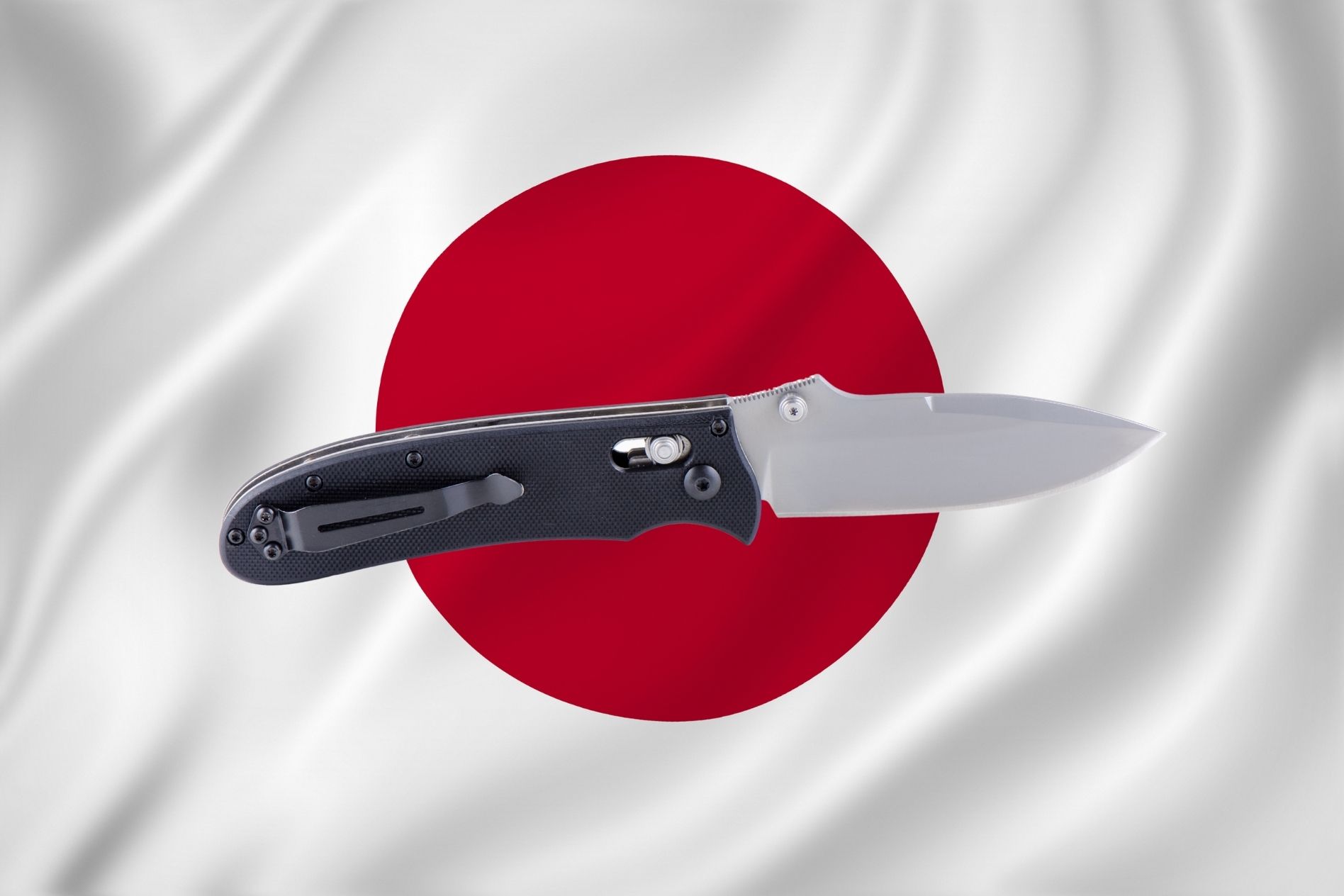
Japan has always been a uniquely original country. Cutting-edge technology coexists alongside archaic and peculiar traditions, while wild eccentricity sits side by side with meticulously precise etiquette. In cities like Tokyo and Osaka, this contrast is taken to an extreme — the people there sometimes feel like they’re from another planet. On the streets, you might come across vending machines selling used women’s underwear, or even places where you can rent a father for an hour to enjoy dinner and deep conversations at a nearby oral pleasure bar! Yes, you understood everything correctly. But it hasn’t always been this wildly entertaining in Japan!
Japan and the knife: history and present. When is edc japan first appear?
Feudal Japan was a rather grim, brutal, and unforgiving place, where the military aristocracy spent centuries practically obsessed with killing each other—and the poor ashigaru—over rice fields! What does that mean? It means they knew a thing or two about cold weapons and metallurgy, including the knives we all love today.
Knife culture in Japan: from the samurai to the present
The very first and most versatile Japanese knife was the Tanto. Its design made it suitable for both battlefield use and everyday practical tasks — and it still holds that versatility today.
Originally, the Tanto served as a weapon carried by samurai — short, sharp, and durable. Over time, as Japanese society evolved and the samurai era came to an end, knives began to take on a more domestic and culinary role. The craftsmanship and techniques used to forge weapons were passed down and adapted for japanese cutlery knives and kitchen tools.
Modern Japanese kitchen knives — such as the Gyuto, Santoku, Nakiri, and Deba — embody centuries of tradition in forging and sharpening. Each knife is designed with a specific purpose: slicing meat, preparing fish, or cutting vegetables. High-carbon steel, unique blade geometry, perfect balance, and exceptional sharpness make Japanese knives some of the most respected in the world.
The culture of knives in Japan is not only about functionality, but also about aesthetics, dedication to craftsmanship, and attention to detail. Today, Japanese knives represent a fusion of ancient heritage and modern performance — appreciated by professional chefs and collectors around the globe.
The evolution of EDC in Japan
The Higonokami folding knife (肥後守) is widely considered the earliest true example of a Japanese EDC (everyday carry) folding knife. It first appeared in 1896 in Miki City, Hyōgo Prefecture, Japan. After the Meiji Restoration, samurai were banned from carrying swords (in 1876), which significantly affected traditional swordsmiths. To survive, many shifted to making utility tools—most notably, the Higonokami folding knife. It quickly gained popularity among the general public as a practical everyday tool. In 1907, a knifemakers’ guild in Miki officially trademarked the name, and production expanded. Unlike modern locking knives, the Higonokami uses a friction folder mechanism. The blade stays open through tension and thumb pressure on the chikiri—a small lever at the base of the blade. Its design is minimalist and functional: usually high-carbon steel, with a single flat grind and no secondary bevel. The handle often features stamped markings of the maker and steel type. The Higonokami remained popular throughout the early to mid-20th century. However, in the 1960s, higonokami folder history meets stricter knife laws in Japan led to a decline in both production and public use. Despite this, the Higonokami endures today as a cultural icon and collector’s item—valued for its simplicity, function, and historical roots.
So, Everyday Carry (EDC) culture in Japan has evolved uniquely, balancing tradition and modern practicality. Unlike Western EDC trends that often emphasize tactical or survival knives, Japanese EDC tends to focus on compact, refined tools—such as folding knives inspired by traditional craftsmanship or multi-functional blades used in culinary and daily tasks. Legal restrictions on carrying knives have also shaped the types of blades people carry, encouraging discreet and highly specialized tools rather than large or tactical knives.
How the approach to knives has changed in modern Japanese society
In contemporary Japan, knives are seen less as weapons and more as tools reflecting lifestyle and craftsmanship. While the samurai-era reverence has transformed, the cultural pride in high-quality knives remains strong, especially in culinary circles where Japanese chefs’ knives are world-renowned. Additionally, the rise of minimalist lifestyles and safety-conscious legislation has influenced knife usage and ownership. Modern Japanese society values knives as precise instruments for cooking, craftsmanship, and everyday tasks, with a careful balance between utility, safety, and respect for tradition.
 The everyday knife in Japanese: what is it?
What is the Japanese EDC knife like today?
What types of knives are popular in EDC: folding, multi-tool, traditional models
When it comes to everyday carry (EDC) fine japanese knives, several types dominate:
- Folding knives: Compact and easy to carry, folding knives are favored for their portability and safety.
- Multi-tools: Though less traditional, multi-tools with knives and additional functions are growing in popularity among urban users.
- Traditional models: The timeless classic, like the Higonokami, remains beloved for its simplicity and historical significance.
Design features: simplicity, strict lines, traditional materials
Knives in japanese often showcase:
- Minimalistic design: Clean, straightforward lines without unnecessary embellishment.
- Functional beauty: Every element, from handle to blade, serves a purpose.
- Materials: Handles crafted from traditional woods or metals, blades made from high-quality steel, often carbon steel, prized for sharpness and ease of sharpening.
Japanese knife Higonokami – a symbol of minimalism
The Higonokami knife is a quintessential example of Japanese japan knife made. Born from necessity and crafted for everyday tasks, it features:
- A simple folding mechanism without a locking blade.
- A folded metal handle that doubles as a sheath.
- An absence of screws or complicated parts.
- A history dating back over a century, maintaining a loyal following among enthusiasts.

Higonokami
The role of handmade and respect for details
In Japanese knife culture, the handmade aspect is revered. Artisans pay meticulous attention to:
- Blade forging techniques, often passed down through generations.
- Finishing touches, such as polishing and handle shaping.
- Balance and ergonomics, ensuring the knife feels natural in hand.
- This respect for detail and craftsmanship transforms everyday tools into objects of cultural pride.
EDC as a Lifestyle: The Japanese Approach
In Japan, Everyday Carry (EDC) isn’t just about utility — it’s a reflection of personal philosophy, craftsmanship, and minimalism. Rooted in cultural values like simplicity and preparedness, Japanese EDC emphasizes not only function but also aesthetic harmony and emotional connection to objects.
Compactness and Lightness as a Mandatory Feature
Space is a true luxury in Japan. Currently, the population stands at around 124 million people, which is insanely high for the tiny piece of land they inhabit. As a result, these poor lads are forced to live practically on top of each other. The majority of the population lives in tiny apartments measuring just 10 to 20 square meters, and in public places like the subway, it can be downright impossible to squeeze through the crowds! As a result, Japanese EDC items are engineered to be small, light, and unobtrusive. Whether it’s a folding knife, a pen, or a multitool, the focus is always on maximum utility in the smallest possible form. Many products are designed with modularity in mind, allowing users to carry only what’s essential without compromising capability.
Traditional Materials in a Modern Format
Japanese EDC beautifully marries ancient materials with modern manufacturing techniques. You’ll find tools made of tamahagane steel, bamboo, or urushi lacquer, crafted with methods passed down through generations. Yet these materials are shaped into sleek, contemporary designs that fit right into a modern urban lifestyle. This blend honors heritage while embracing innovation.
Collecting and Custom Knives
In Japan, knives aren’t just tools — they’re artifacts of craftsmanship. Many EDC enthusiasts take pride in collecting handmade blades from regions like Seki, where blacksmithing traditions date back centuries. Customization is also a key part of the culture, with collectors seeking out unique handle materials, blade patterns, and even personal engravings. For many, each knife carries a story — of the maker, the region, and the user.
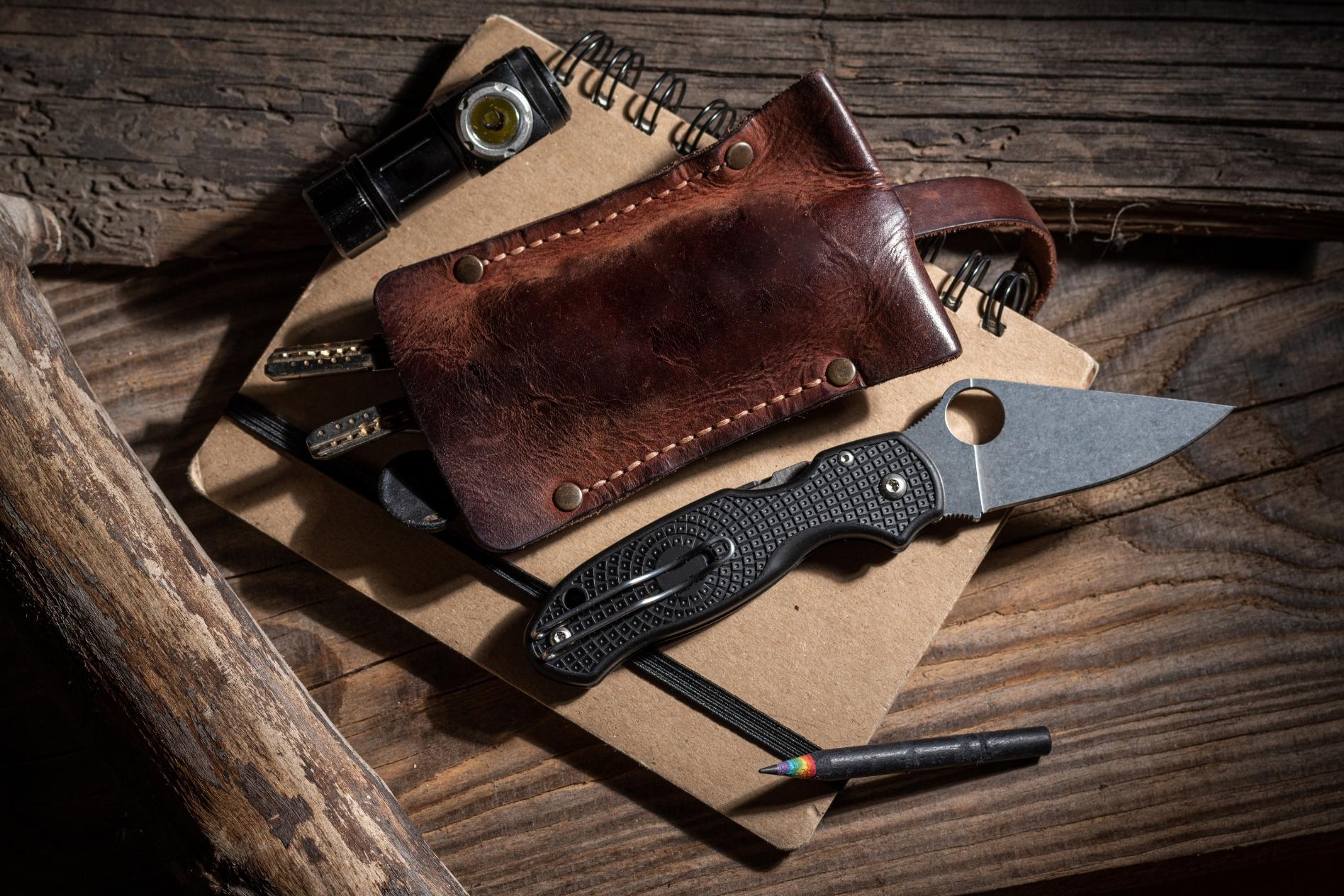 Japan knife laws: is it possible to carry a knife in Japan? Are pocket knives legal in japan?
Under Japan’s Swords and Firearms Control Law, carrying a knife in public generally requires a justifiable reason. Carrying a knife with a blade longer than 6 cm without such a reason is illegal and punishable by imprisonment or fines. Even knives with shorter blades can lead to minor offenses if carried without valid cause.
Main restrictions: blade length, locks, automatic mechanisms
- Blade length over 6 cm: Illegal to carry without justifiable reason.
- Blade length 6 cm or less: Still requires justification; otherwise minor offenses possible.
- Locking knives (folding knives with locks): Often prohibited, even if blade is short.
- Automatic knives, switchblades, butterfly knives, double-edged daggers: Always prohibited regardless of length.
Allowed exceptions
- Knives used for work purposes (e.g., chefs transporting knives to work).
- Knives used for outdoor activities like fishing, camping, or hunting, but must be stored properly, not openly carried.
- Transporting new or sharpened knives in packaging or sealed containers.
Note: Self-defense is not considered a valid reason.
What risks does a tourist take if he carries a knife
- Tourists have been detained for several days or fined for carrying knives that exceed legal limits by just a small margin.
- Even small knives carried for self-defense can lead to arrest.
- Locking blades or folding knives longer than ~5.5 cm are illegal and can result in detention.
- Police questioning, detention, fines, and disruptions to travel plans are real risks.
Conclusion
That’s how it is. The EDC culture in Japan is thriving, but here in Ukraine, we’re doing just as well! Dive into our online store — you’ll find the EDC knife of your dreams, ready to be your trusty companion in all your adventures and misadventures. Grab it now and go — the adventure awaits!