
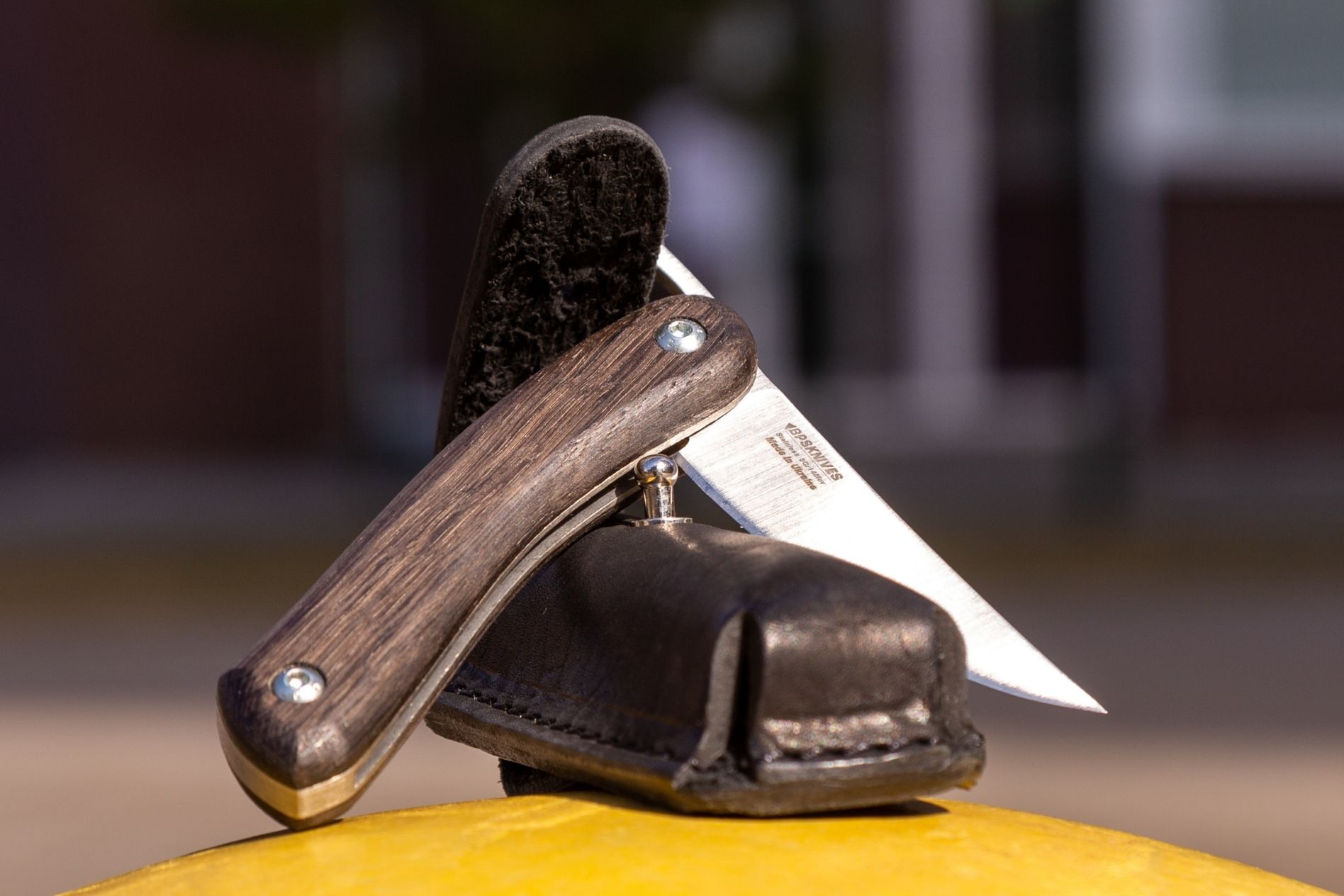
Looks like you’re the proud owner of a folding knife! Congratulations! But don’t forget that even though it is made of steel, it is a bit delicate. It loves cleanliness, lubrication, and attention. And now we will tell you how to properly care for it.
Main problems that arise without care
Let’s start with what’s waiting for you if you completely ignore regular pocket knife care and maintenance:
Wedging when opening
And the first surprise your neglected knife will hit you with? A jammed opening mechanism. Get ready for a whole ritual of cursing, fiddling, and borderline voodoo just to make it work again. Not exactly the smooth flick you were hoping for, huh? Over time, dirt, lint, or dried lubricant can build up around the pivot, causing the knife to stick or resist opening. This not only slows down deployment but can also put stress on internal parts. So you better regularly clean the pivot area with a soft brush or compressed air, and reapply a drop of lubricant suited for knife pivots!
Rust on the blade or axis
Next comes the classic duo: rust and corrosion. Where does it shows up first? The pivot. Sure, you might wipe down the blade from time to time, but the pivot is tucked away inside the handle—out of sight, out of mind. That little blind spot turns into a old rusty knife mess faster than you think.
Why it happens:
- Exposure to water, humidity, or sweat.
- Fingerprints left on the blade (salt and oils from skin accelerate oxidation).
- Improper storage, especially in leather sheaths or damp environments.
Consequences:
- Surface rust that affects aesthetics and edge retention, knife edge maintenance tool needed.
- Deep pitting that weakens the blade or mechanism.
- Seized pivot joints that prevent opening or closing.
Prevention and proper folding knife care:
- Always wipe your knife clean and dry after use, it is edc knife maintenance rule №1!
- Store in a low-humidity environment; consider using a silica gel pack.
- Apply a light coating of protective oil for knife maintenance (such as Tuf-Glide, mineral oil, or gun oil).
- Avoid storing knives in leather sheaths for long periods—they absorb moisture.
And every now and then, take the whole thing apart to clean and lubricate the pivot properly.
Backlash or rubbing
Blade play—looseness in the open or closed position—is a sign of mechanical wear or loose hardware. Over time, screws can loosen, washers can degrade, and the overall fit and finish can suffer. Rubbing during opening is often caused by dirt or uneven contact between the blade and liners.
Why it happens:
- Loose pivot screws or handle screws.
- Worn-out or dirty washers, bearings, or bushings.
- Frame warping due to impact, torque, or over-tightening.
Consequences:
- Loss of precision and stability in use.
- Reduced safety—blade may not lock securely.
- Increased wear on components.
Prevention and care:
- Periodically check and tighten all screws using the correct torx or hex tools.
- If the knife allows for disassembly, inspect the washers or pivot system for wear or grime.
- Knife cleaning and re-lubricate all contact points, then reassemble and adjust pivot tension until the blade opens smoothly with no play.
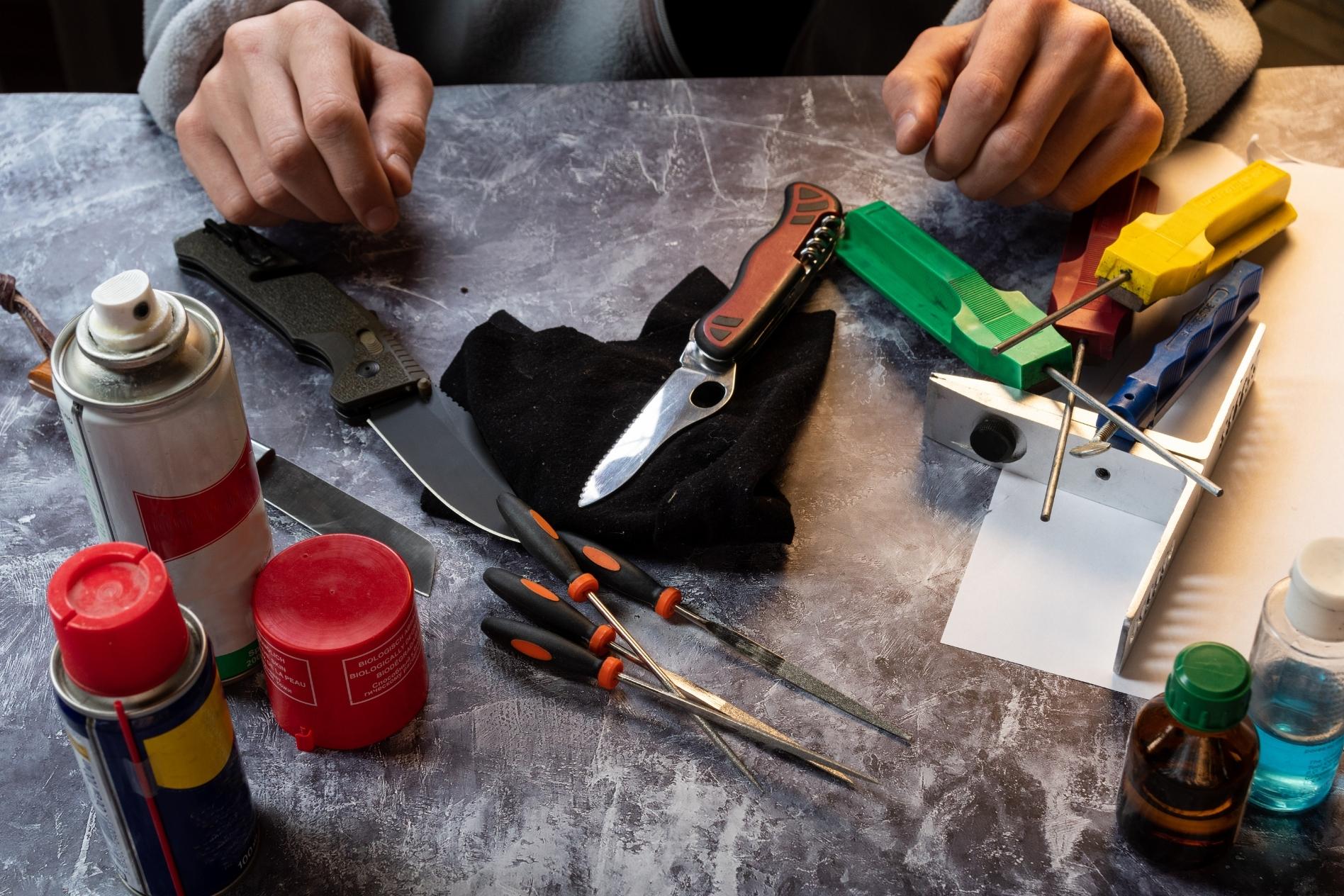 Tips for daily care. How to care for folding knives?
And here’s how you can avoid all of the above:
Wipe the knife after use
Wipe down your knife after every use! Yeah, it sounds basic—almost boring—but it’s honestly one of the smartest things you can do. A quick clean keeps grime, moisture, and future regrets away! Even small particles or moisture can cause long-term issues like staining, corrosion, or gunk buildup in the pivot! This helps remove any dirt, residue, or moisture that may have accumulated on the blade or around the pivot. If you’ve been cutting something wet or sticky, such as fruit, rope, or tape, a quick rinse followed by a thorough dry is especially critical. Leaving organic material on the blade—even something as harmless as a slice of apple—can eventually lead to staining, corrosion, or even dulling of the edge.
Do not store in a case or pocket wet
One of the most common mistakes is putting a poorly dried, wet knife into a case or pocket. That’s basically an invitation for corrosion and rust to set in—perfect conditions for your knife to start falling apart. Before putting the knife back into your pocket, drawer, or storage case, make sure it is completely dry, including the area around the pivot and inside the handle.
When should a knife be cleaned and sanitized? Once a week — minimal prevention
Once a week, thoroughly inspect your blade and opening mechanism for dirt, debris, moisture, or any early signs of rust and corrosion. To make sure you don’t miss a thing, just take your knife completely apart once a week. Wipe everything clean, remove the grime, lubricate all the parts, and reassemble it carefully. Be attentive—don’t lose a tiny screw or spring! Otherwise, the blade might just pop open and fly straight into your facу your very much loved mother-in-law.
Do not cut acidic without washing after
It’s also worth being mindful of what you cut. Acidic substances, such as citrus fruits, tomatoes, or vinegar-soaked materials, can react with metal surfaces—especially on blades made from high-carbon or tool steels. If you’ve used your knife for anything acidic, wash the blade promptly and dry it carefully. A thin coat of protective oil afterward will keep the steel in perfect condition and help it resist future corrosion.
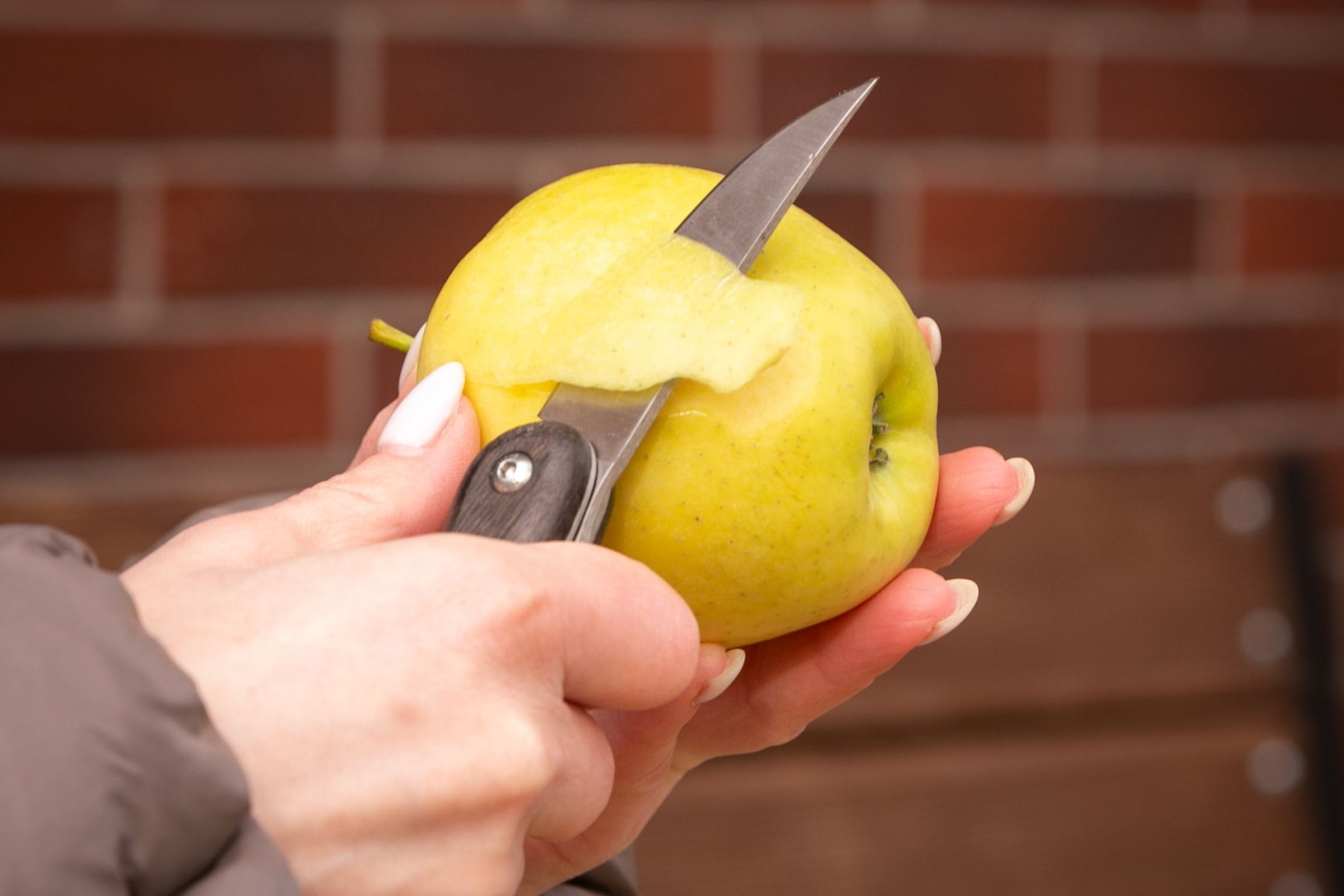 How to store a knife correctly
And finally, proper storage of your folding knife — it’s 50% of the battle!
Dry place, without temperature changes
The first rule of proper storage is to keep your knife in a dry, stable environment. High humidity or sudden temperature swings can lead to condensation forming inside the knife’s pivot or along the blade surface. Over time, this moisture can cause internal rust that is difficult to spot until it’s too late.
For best results, store your knife indoors in a room with consistent temperature and low humidity. Avoid leaving it in places like bathrooms, vehicles, basements, or near windows. A drawer, toolbox, or storage cabinet in a climate-controlled space works well. You can even add silica gel packs or other desiccants to the area to absorb residual moisture.
Separate pocket, sheath or box
Always store your knife separately from any hard objects, no matter where it is — whether in your pocket, sheath, or box. Keep it away from coins, other tools, your phone, keys, and the like. Otherwise, your knife will end up covered in scratches, and the blade may get damaged. So use a dedicated knife pouch, a soft-lined drawer, a hard case, or a knife-specific organizer to keep it protected. If you prefer to use a sheath, make sure it’s clean and dry. For long-term storage, it’s better to avoid leather sheaths unless you’re regularly oiling the blade and checking the condition, as leather can trap moisture and accelerate corrosion.
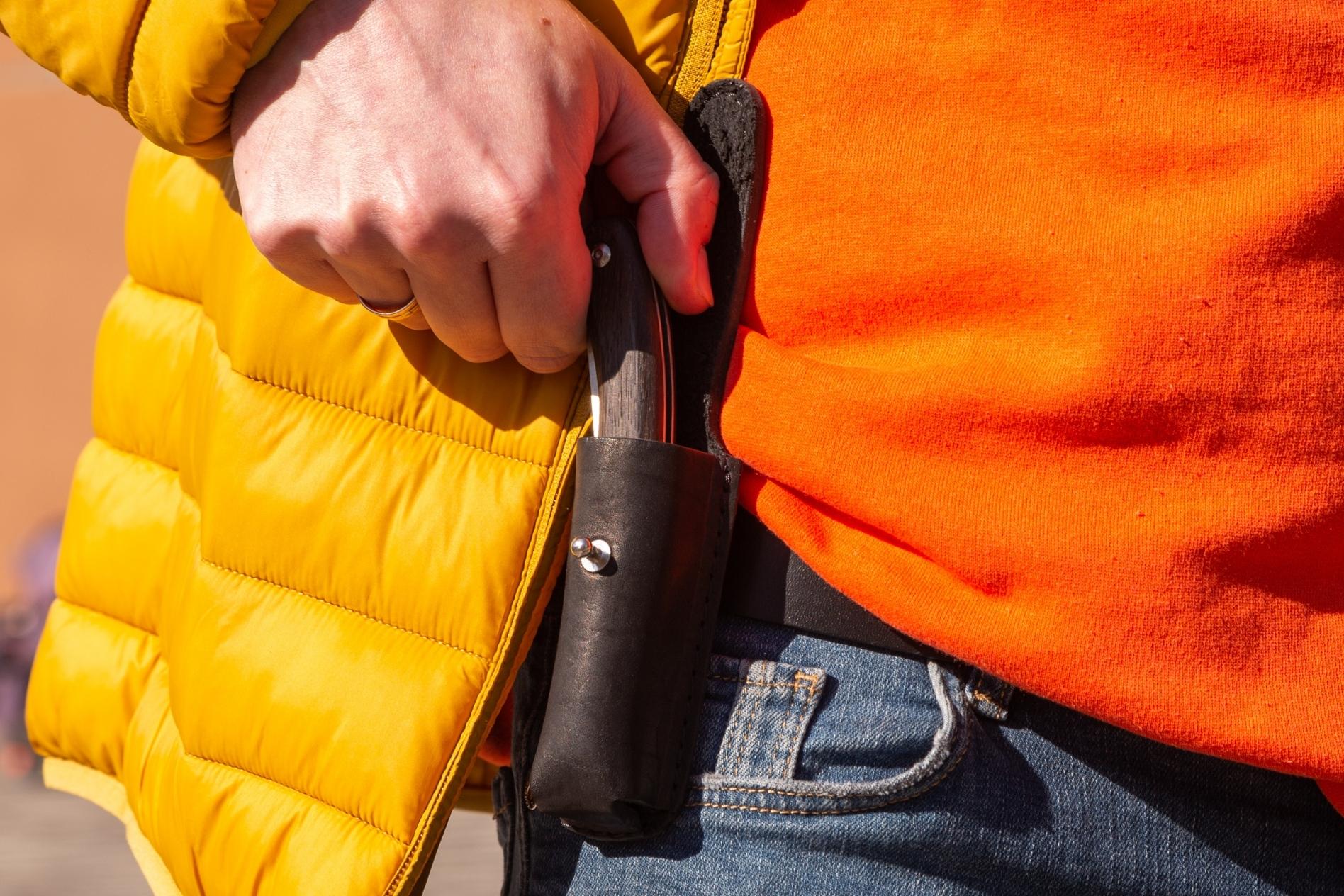 If you do not use it for a long time — it is better to lubricate and not keep it folded
While folding knives are designed to be stored closed, it’s not always ideal for long-term storage. When a knife is tightly folded for a long period, especially in a slightly humid environment, it can trap invisible moisture inside the pivot. If it is safe to do so, it’s better to leave the knife partially or fully open in a secure storage area with no access to children or pets. This allows better airflow and makes future inspection or oiling easier!
Conclusion
That’s it — now your precious bagatelle is safe and sound! By the way, our online store offers quality folding knife care tools, storage solutions, and tons of gear for camping, hiking, and survival. Looking forward to exciting new adventures with you! Bye for now.