
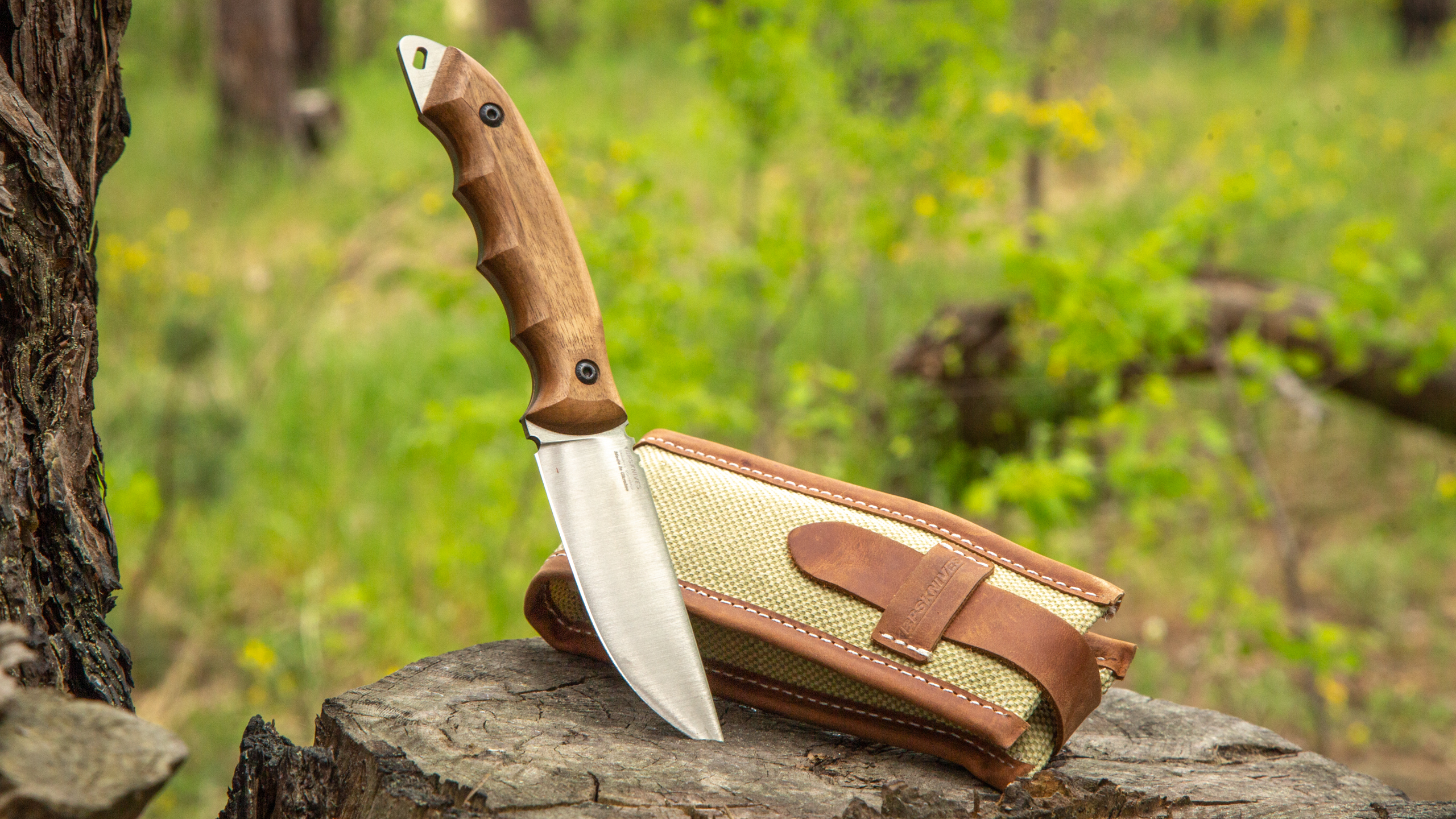
Sharpening a blade is an art that has been honed and sharpened (pun intended) for thousands of years. Once you experience the satisfaction of using a perfectly sharpened knife, you’ll never see this craft as something ordinary again.
Why It’s Important to Own a Knife Sharpener and How It Extends the Life of Your Tool
The blade is the heart of any knife — it’s what slices food, cuts through rope, branches, scoundrels, and, unfortunately, can sometimes catch your fingers at the wrong moment. That’s why owning a proper sharpener isn’t just useful — it’s essential!
Why a dull knife spoils products faster and spoils the impression of work
A dull blade requires more pressure, which crushes rather than slices food. This not only makes cooking less enjoyable but also damages the texture and freshness of the products. For example, vegetables bruise instead of cutting cleanly, and meat fibers tear, leading to uneven cooking and loss of flavor.
How timely sharpening preserves the resource of steel
Regular sharpening ensures you remove only a minimal amount of metal each time. Waiting until a knife becomes completely blunt means you’ll have to grind away more steel to restore its edge, shortening its lifespan. Proper maintenance helps you keep the original geometry of the blade and avoid premature wear.
The impact of proper care on the appearance and functionality of a knife
Sharpening is not just about keeping a blade sharp — it also protects the knife from corrosion, micro-chips, and irregular edges! A well-maintained knife looks cleaner, performs better, and reflects a higher level of craftsmanship and care. Over time, consistent sharpening paired with correct storage and cleaning ensures that even an everyday kitchen knife retains its professional qualities.
 Electric sharpener: fast and effortless
Let’s start with the most modern and simplest sharpening method — the electric one!
How does an electric sharpener work?
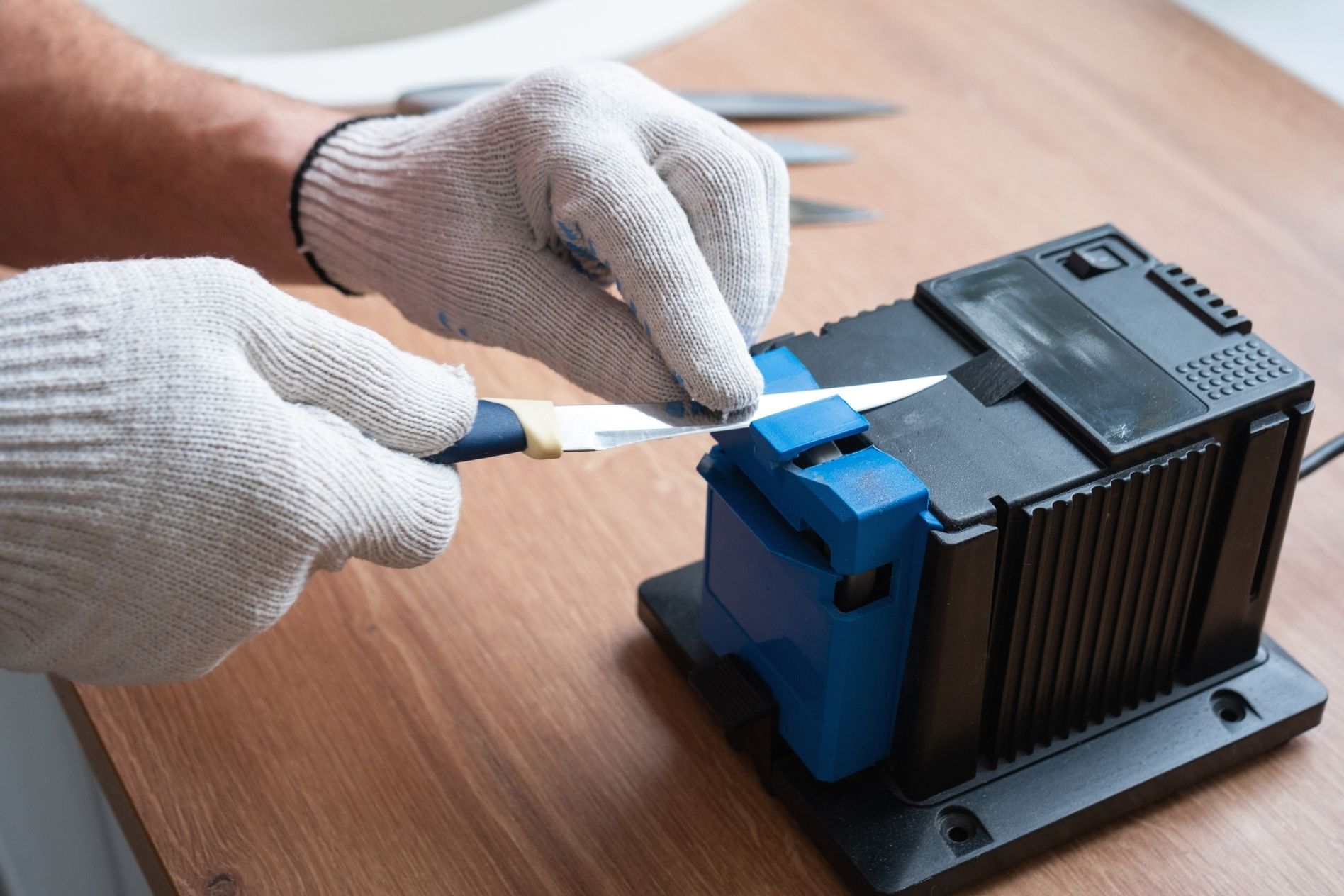
An electric sharpener uses built-in abrasive wheels or rotating discs that spin at high speed. You simply slide the blade through the slot, and the machine automatically sets the correct sharpening angle. And that’s all, then sharpening magic begins! This makes the process quick and requires no special skills. To upgrade your kitchen tools with the diamond knife sharpener electric for effortless precision is always good idea!
When should you choose an electric sharpener?
If you’re not a fan of complicating the sharpening process, an electric sharpener is your best choice! It sharpens knives quickly and efficiently, making it perfect for professional kitchens — for example, in restaurants where knives are in constant use 24/7.
 Advantages and disadvantages of electric sharpeners. Do knife sharpeners really work?
Pros:
- Very fast and requires minimal effort
- Consistent sharpening angle, even for beginners
- Convenient for regular use
Cons:
- Removes more metal compared to stones or manual sharpeners, which shortens the knife’s lifespan
- Work sharp electric knife sharpener can be noisy during operation
- Generally more expensive than other sharpening methods
- Not always suitable for thin or high-end Japanese knives
 Mechanical sharpener: versatility and control
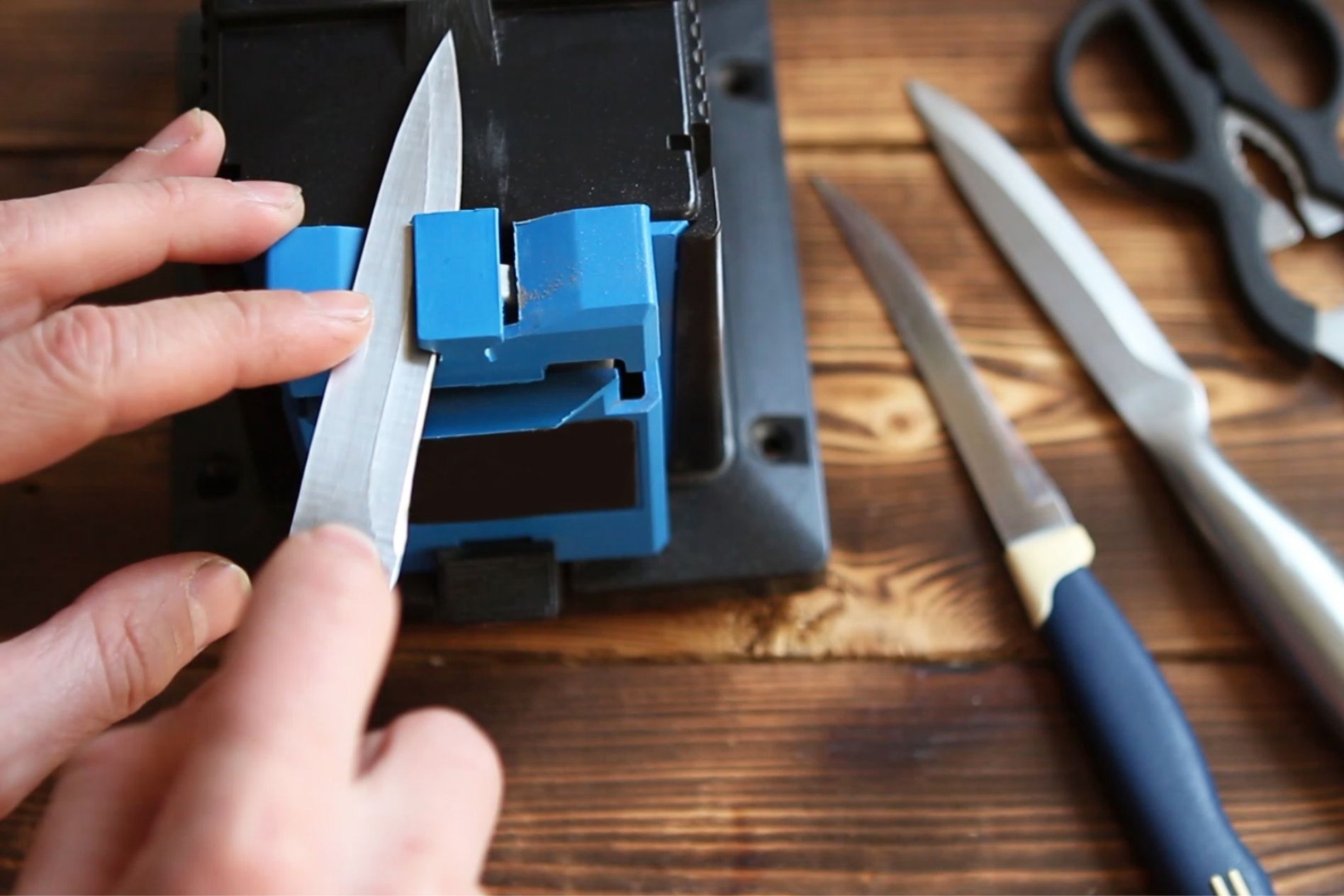
Manual sharpening is ideal for a home kitchen or for knife enthusiasts who prefer more control and precision than a simple sharpening stone can offer. It’s a great choice for those who value versatility and don’t mind investing a bit of time in the process. It’s also a good option for those who own a range of everyday knives and want a reliable, budget-friendly sharpening tool! You can achieve razor-sharp edges with the !
How does a mechanical sharpener work?
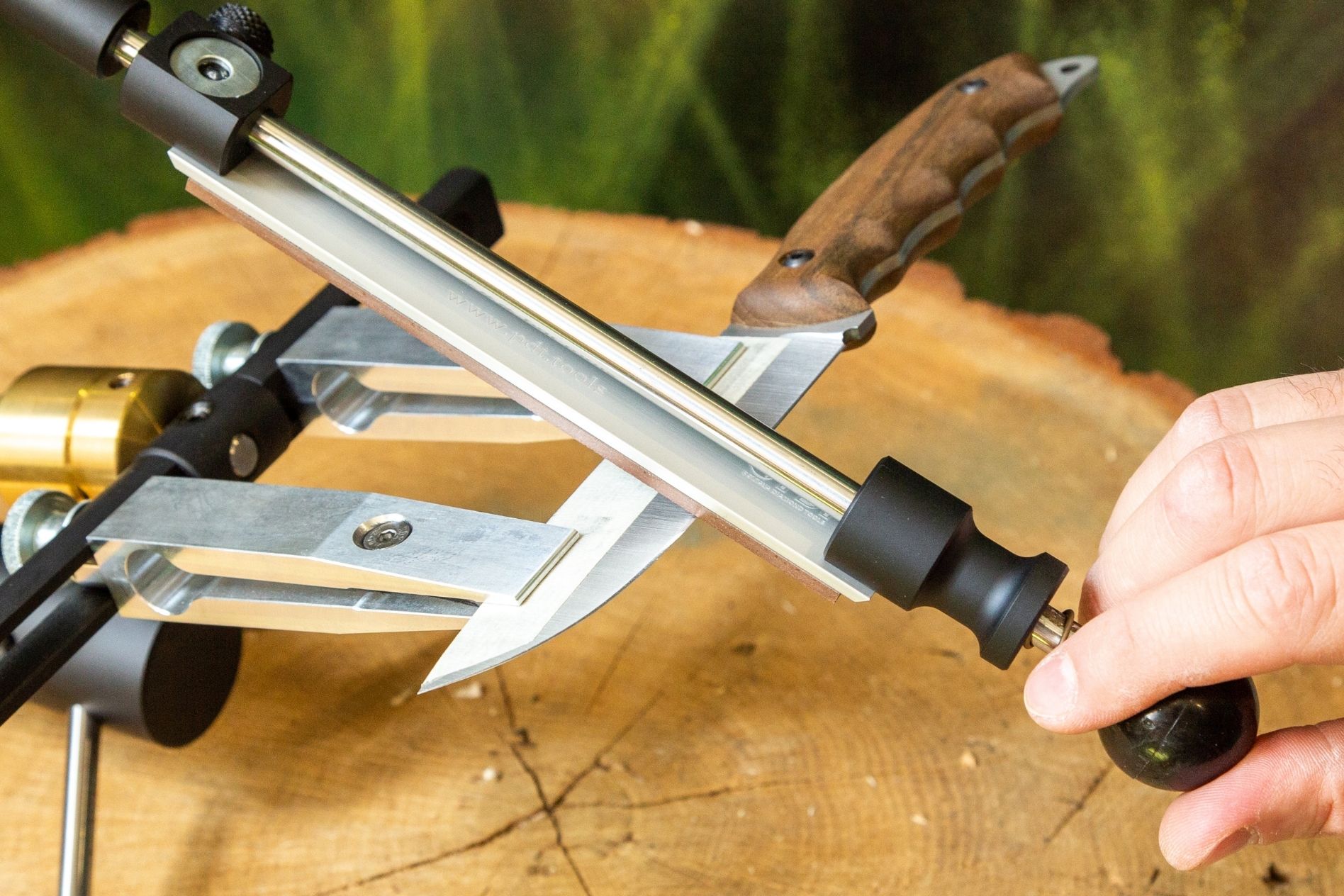
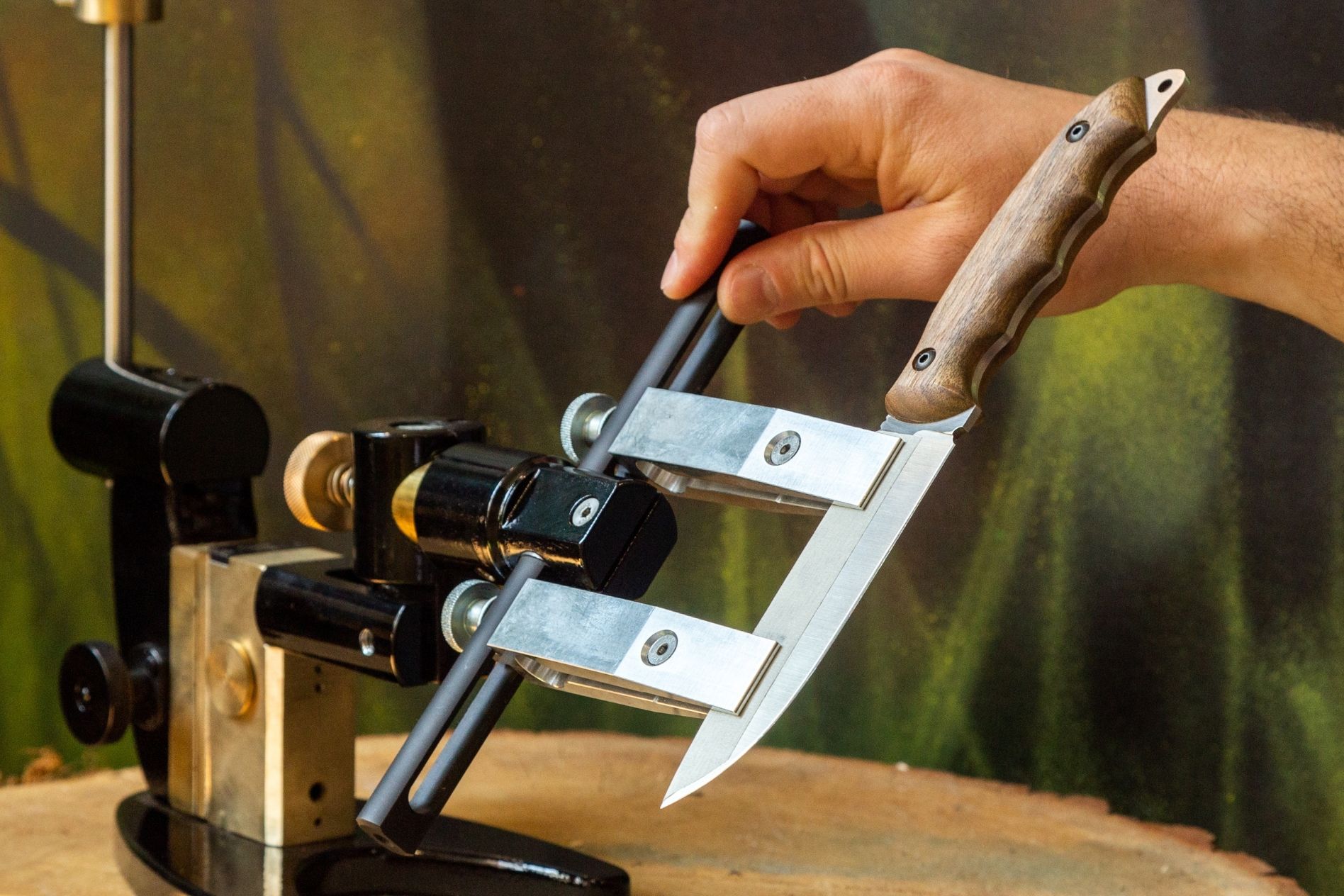
A mechanical sharpener is a manual knife sharpener machine stone that uses fixed-angle slots, ceramic rods, or abrasive surfaces to restore the knife’s edge. Unlike electric sharpeners, it requires hand movement: you pull the blade through the sharpening slot or run it along the abrasive surface. The user controls the pressure and number of passes, which allows for more precision and care compared to fully automated devices.
 Advantages and disadvantages of mechanical sharpeners
Pros:
- Greater control over the sharpening process
- Less aggressive on the blade than most electric sharpeners
- Usually compact, lightweight, and easy to store
- Affordable and widely available
- Suitable for a variety of knife types
Cons:
- Requires more effort and time than an electric sharpener
- The angle may not always be perfectly consistent without practice
- Some models may not handle very hard or specialty steels well
 Sharpening Stone: For Professionals and Those Who Value Precision
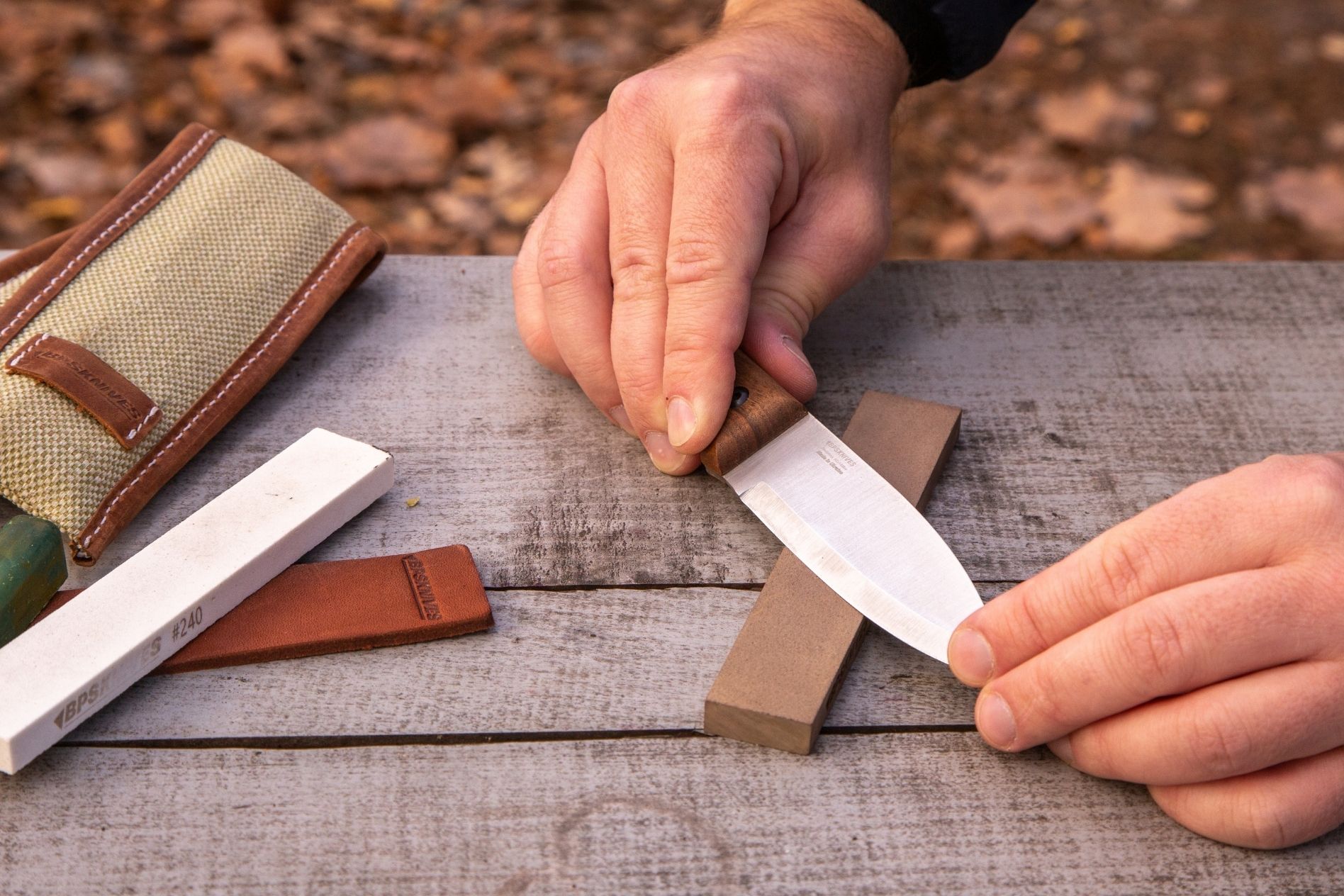
And now we’ve finally reached the good old classic! For centuries, our kind has sat by the fire, accompanied by the meditative, soothing “shhhk-shhhk” of a sharpening stone. The blade is drawn across the surface of the stone at a controlled angle, gradually refining the edge. Stones come in different grit levels — coarse grits restore very dull blades, while fine grits polish the edge to razor sharpness. The process takes more time and skill but allows the user to control every detail of sharpening.
This is the choice of professionals, chefs, and knife enthusiasts at the highest level of dedication. With a sharpening stone, you can achieve the ultimate sharpness from your blade. It’s also the best option for anyone who owns a premium knife and wants to maximize its lifespan.
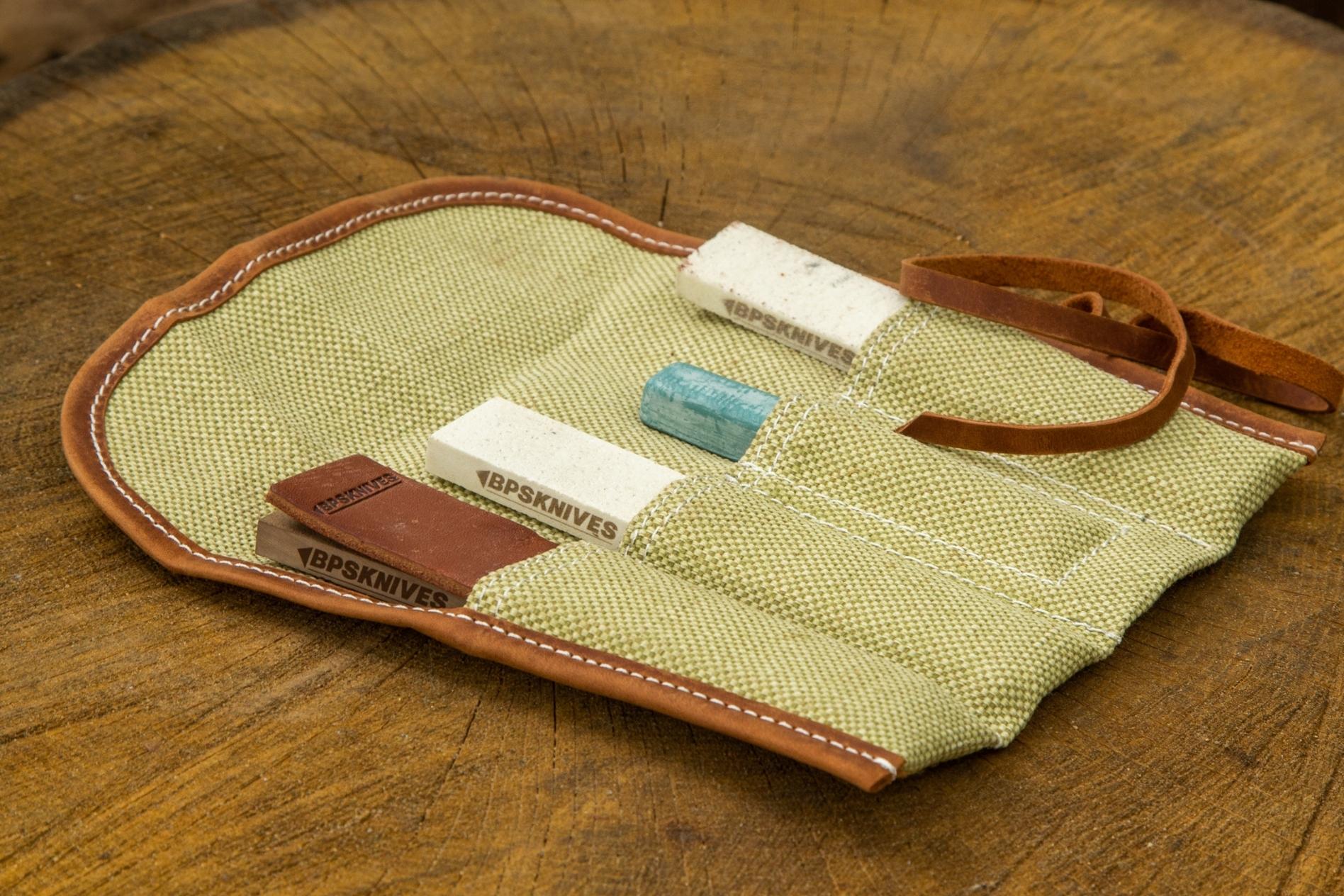
And — surprise, surprise — our craftsmen have created the ultimate sharpening stone set for every situation! We named it STONES3PCS. The set includes stones with grit levels of 80, 240, and 800, a leather strop, a micron polishing compound, and a convenient nylon case. Perfect for kitchen knives, as well as outdoor, camping, and even survival knives. Naturally, it’s also an excellent solution for sharpening tools and scissors. Easily one of the best tools for sharpening knives!
 How Does a Sharpening Stone Work?
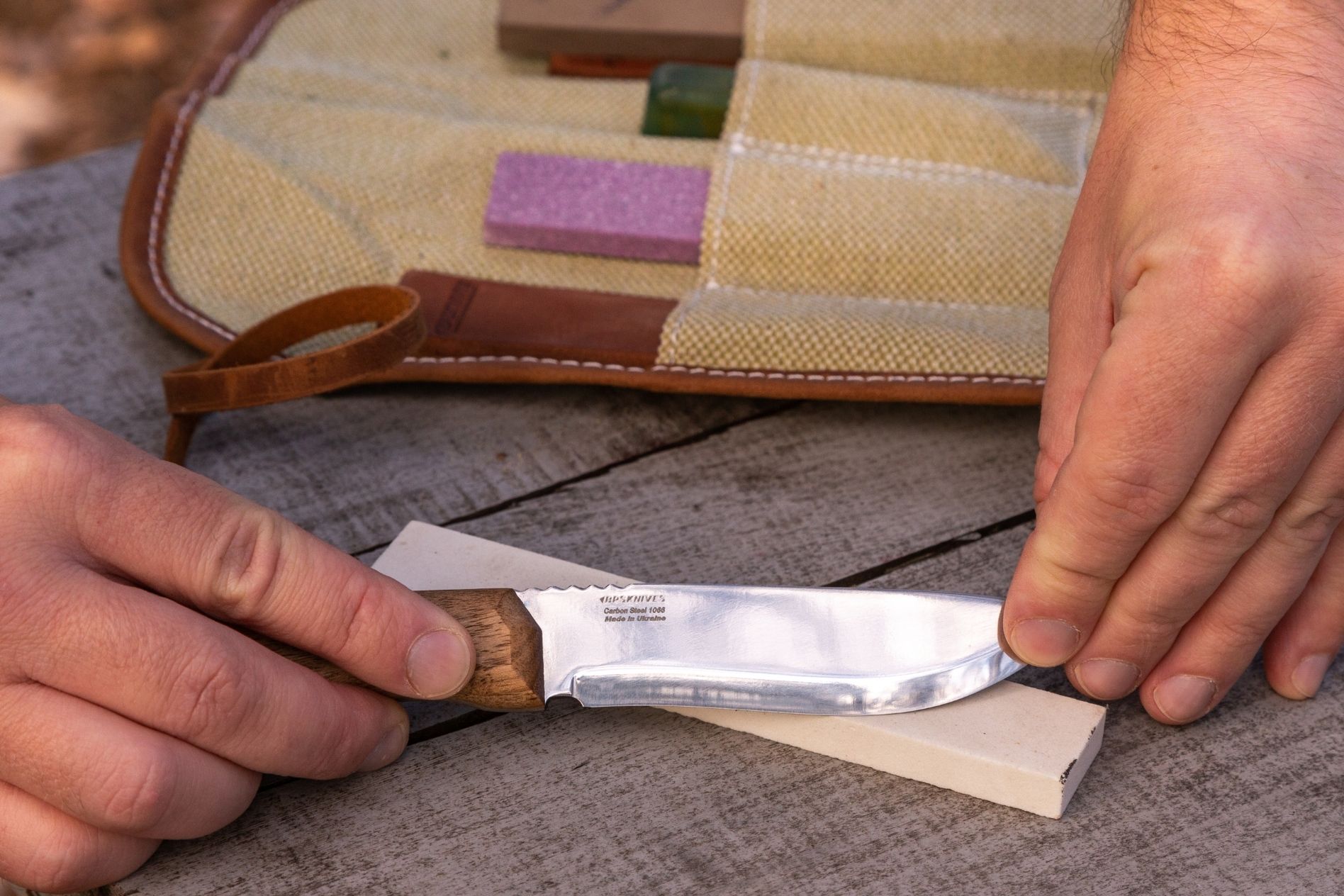
A sharpening stone (or whetstone) is the most traditional and precise method of sharpening knives. The blade is drawn across the surface of the stone at a controlled angle, gradually refining the edge. Stones come in different grit levels — coarse grits restore very dull blades, while fine grits polish the edge to razor sharpness. The process takes more time and skill but allows the user to control every detail of sharpening. You should try and compare a wet stone vs knife sharpener to see which works best for your knives. Using a three stone sharpener is a good idea too, try it for variety!
Advantages and Disadvantages of a Sharpening Stone
Pros:
- Maximum control over the sharpening angle and technique
- Gentle on the blade, removing only as much metal as needed
- Suitable for all types of knives, including high-end Japanese and custom blades
- Diamond knife sharpener stone produces the sharpest, most durable edge possible
- Allows for professional-level maintenance and edge customization
Cons:
- Water stone knife sharpener requires practice and skill to use effectively
- More time-consuming compared to electric or mechanical sharpeners
- Stones need care themselves (flattening, cleaning, sometimes soaking in water)
- Less convenient for quick, everyday touch-ups
 How to Choose a Sharpener Based on Your Needs?
So, what should you choose, my dear friend?
For Kitchen Knives
If you mostly deal with everyday kitchen knives, convenience and speed matter the most. An electric sharpener is the quickest way to restore sharpness when you’re cooking daily. A mechanical sharpener is a good alternative if you want more control and don’t want to risk wearing down your knives too quickly. For higher-end chef’s knives, however, a sharpening stone is the best choice to preserve steel quality and achieve a razor edge.
For Camping Knives
Camping knives — and similar outdoor tools — face much tougher tasks than kitchen knives. Cutting branches for a fire, batoning wood, and other heavy-duty jobs put serious strain on the edge. The best solution for field conditions is, of course, a good set of sharpening stones. At the very least, you can bring along a manual sharpener. They don’t require electricity, are portable, and let you quickly restore your edge right in the field.
For Tactical and Premium Knives
If your knife is truly premium, don’t cut corners — invest in a high-quality sharpening stone! It allows precise control and preserves the unique geometry of the blade, you will receive your knives professionally sharpened! Manual sharpeners can also be a solid option if you’re looking for a balance between control and convenience. But whatever you do, never use an electric sharpener on a premium knife — it will only shorten the life of your expensive blade!
Conclusion
And now, the choice is yours! A well-sharpened knife is not only about efficiency — it’s also about your safety and respect for the blade itself. Take good care of your knife, and it will faithfully serve you for decades — or even centuries. Until next time!