

So here it is, our ABSOLUTE FAVORITE! Trying to light a fire with hands shaking from cold and hunger in a torrential downpour and the unforgettable taste of wolfberries that you mistook for currants. Ah, what a lovely day indeed!
Why a Knife Is the Most Important Survival Tool
Yes, let’s talk about survival today in the wilderness! Of course, all of the above would be downright impossible without a reliable blade at your side! Why? Here’s why:
Key Advantages of a Knife
- It’s versatile! This means it can handle almost any task that many other tools simply can’t. You can cut, chop, dig, carve, and—seriously—even split firewood with it! This kind of versatility is exactly what you need to survive in tough and unpredictable situations!
- It’s also much lighter and more compact than other tools. Unlike larger gear, the best size survival knife is small and easy to carry. Most survival knives are designed to be lightweight, so they don’t add unnecessary bulk to your kit, while still offering incredible functionality.
- Durable and reliable. A well-made knife stands up to moisture, corrosion, and rust, and with proper care, it will live a long, reliable life.
What is the best knife for survival
If you need a survival knife, it’s got to be a fixed full-tang blade—no question about it! A survival fixed blade will easily handle everything. You can even use it for digging, splitting firewood with the batoning technique.
The most important thing is not to skimp on quality. This knife should be made from:
- High-quality stainless steel (such as SV30V), which can withstand extreme stress.
- The handle should be crafted from Micarta, G-10, or rubber for a secure, comfortable grip.
- The sheath must include a flint striker for quick fire-starting in emergencies.
Essential Survival Skills Using a Knife
But buying a survival knife is only half the battle; it’s equally important to know how to use it and possess the necessary skills! What are survival skills? Why do we need survival skills?
Making Fire with a Knife
Making fire continues our top survival skills! One of the most essential skills. Starting a fire can be challenging, but a knife can help you in multiple ways:
- Ferro Rods:
If you’re using a ferrocerium rod to start a fire, you can use the spine of your knife to strike the rod and create sparks. This method works even in wet conditions and is a reliable fire-starting technique. You can find this incredibly useful item in our online store through the link here: [FERRO ROD]. Durable and weather-resistant, it generates sparks that reach temperatures of up to 3,000 ℃! This is what you need to survive in the wild.
- Fire Chips:
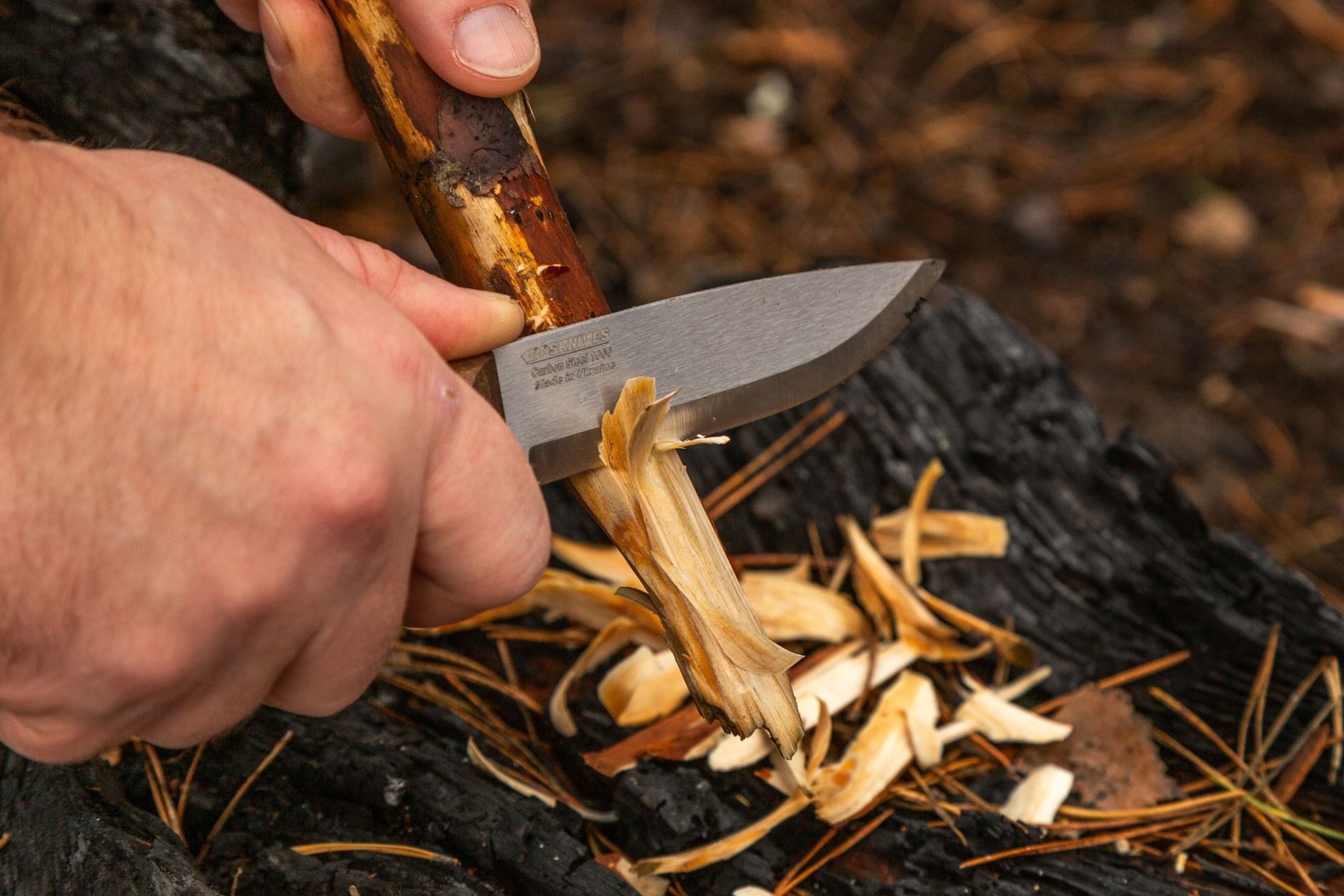
Use a knife to chip thin strips of dry bark, leaves, or wood to create a fire starter. These small, dry chips will catch a spark, allowing you to build a flame.
- Carving and Shaping Fire Kindling:
Once you have your fire going, you’ll need small kindling and larger logs. A knife can help you carve and split wood into the necessary sizes.
And you know what? Our craftsmen have created an outstanding survival knife with firestarter! Allow us to introduce our pride and joy — the [Adventurer CSHF]. The blade is made from 1066 carbon steel, with a hardness of 57-59 HRC and a scandi grind edge. This means you can use it to cut branches, carve wood, and even baton with ease! Plus, it resists moisture, rust, and corrosion incredibly well.
The handle is crafted from wood and coated with Danish oil, offering excellent protection against dirt and moisture. As a bonus, it comes with our signature genuine leather sheath that includes an embedded ferro rod! This means that whether it’s on your belt or backpack, you’ll always have everything you need for quick fire-starting in even the harshest conditions. Isn’t that amazing?
 Building a Simple Shelter with a Knife
A knife is an essential tool when constructing a shelter, whether you’re making a lean-to or simple tarp shelter.
- Cutting Branches for Support:
A knife is perfect for cutting down or trimming branches that you can use as structural supports for your shelter. Whether it’s cutting the main framework or smaller branches for the roof, precision is key.
- Notching Wood:
Use your knife to notch logs and branches. These notches will allow you to fit pieces of wood together more securely, which is vital for a sturdy shelter.
- Carving Tent Pegs:
For tarps or canvas shelters, you can carve tent pegs from branches. A sharp knife will allow you to create pointed stakes to secure your shelter to the ground.
- Making Cordage:
A knife can also help you make primitive cordage by cutting fibers from plants, which can be twisted together into strong ropes for securing shelter materials.
 Crafting Tools and Traps
Knives are invaluable when it comes to crafting tools and creating traps for food or defense. Here are a few more ideas of how to use a survival knife:
- Spear: Sharpen the tip of a long stick to create a simple spear for hunting or defense. You can also use your knife to notch the wood so a stone or other material can be securely attached to the spear tip.
- Fishing Spear: For fishing, you can craft a harpoon-style spear using your knife. Whittle down the tip of a long stick and, if available, use a split or sharpened bone as the point.
- Deadfall Trap: Use your knife to carve sticks and trigger mechanisms for a basic deadfall trap. By notching the wood carefully, you can create a spring-loaded mechanism to capture small game.
Gathering and Processing Edible Plants
A knife is also useful for foraging, allowing you to safely harvest plants and prepare them for consumption.
- Harvesting Edible Plants: Whether you’re looking for wild berries, greens, or tubers, a knife can help you cleanly harvest plants without damaging the edible parts. Use your knife to cut roots, peel bark, or harvest berries and seeds.
- Skinning and Cutting: For plants with tough outer layers, use your knife to peel away the inedible parts. This technique can also be applied to many wild fruits and roots, ensuring you only consume the edible portions.
- Making Tea or Medicinal Remedies: You can also use your knife to chop herbs into smaller pieces for boiling or creating poultices. Many wild plants offer medicinal properties that can be useful for treating wounds or infections.
Tips for Long-Term Survival with Just One Knife
After binge-watching Rambo and The Revenant, you’ve been struck with an irresistible thirst for adventure—no ordinary adventure, but one where you tackle every challenge of the wild with nothing but a single knife. Perfect! Then listen closely.
How to Keep Your Knife Sharp
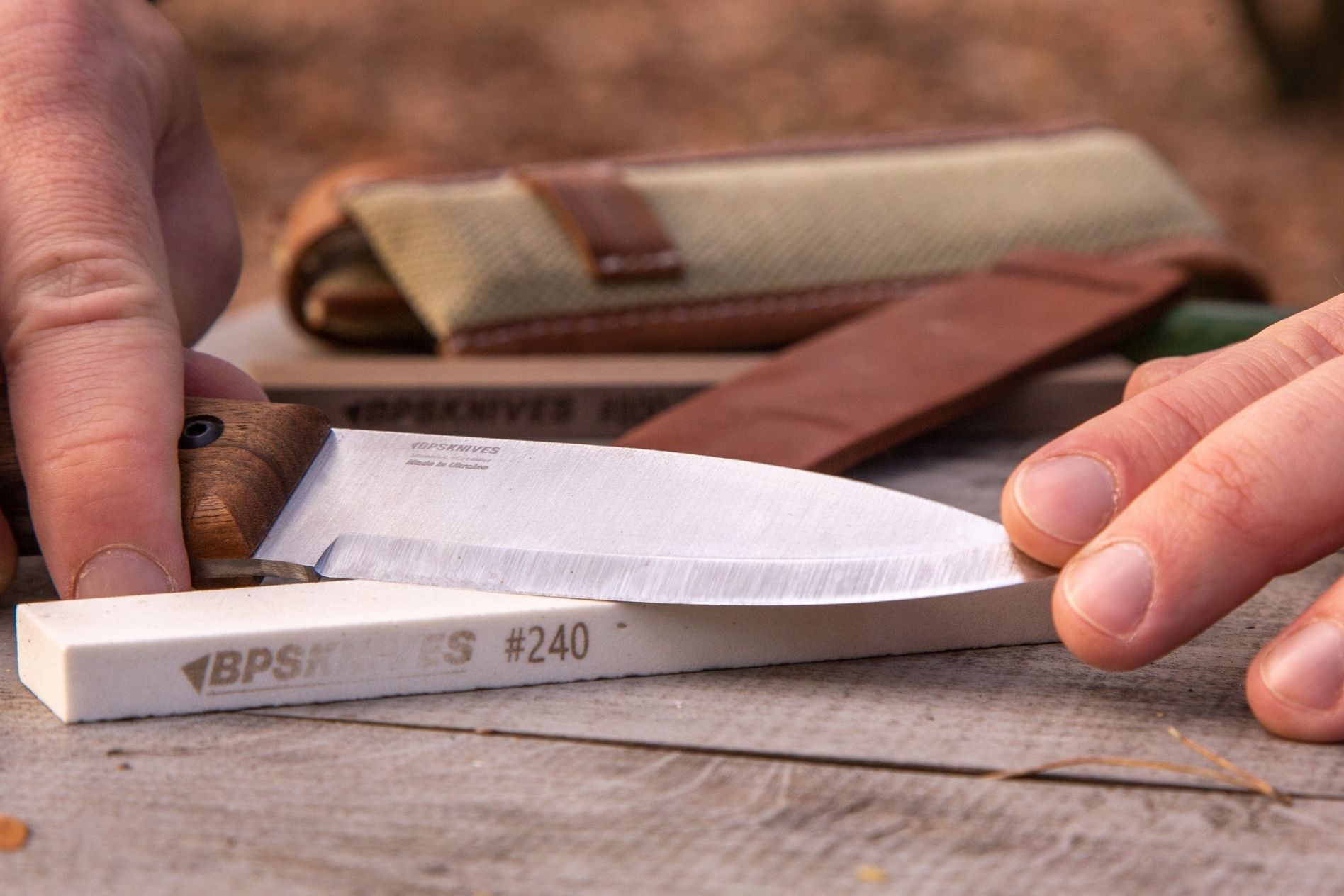
A dull knife is not just frustrating—it can be dangerous. A sharp blade is crucial for tasks like cutting, carving, food preparation. Here’s how to maintain that edge:
1. Sharpening Stones
Use a whetstone or sharpening stone to actually sharpen the blade. Start with a coarse grit to reshape the edge and finish with a fine grit for a polished sharpness. Keep the blade at a consistent angle (usually 20 degrees) while sharpening.
2. Ceramic or Diamond Rods
If you don’t have a whetstone, ceramic or diamond sharpening rods are portable and effective. They’re good for quick touch-ups when you’re out in the field.
3. Use the Right Technique
Keep the blade’s edge at a consistent angle when sharpening (usually between 15-20 degrees). Don’t overdo it, as excessive sharpening will wear down the blade faster.
5. Avoid the Hard Stuff
Don’t use your knife to cut through hard materials like rocks or metal. That will dull the edge rapidly. Instead, use the knife only for appropriate tasks like carving wood or cutting rope.
6. Keep It Clean and Dry
After each use, clean your knife and make sure it’s completely dry. If it’s left wet, it could rust, which would degrade its sharpness over time.
 How to Adapt Your Skills and how can you survive in Different Natural Environments
Your survival knife’s effectiveness depends not just on its maintenance, but also on how you adapt your skills to the environment. Whether you’re in the forest, desert, or jungle, there are key differences to consider.
In the Forest:
- Woodworking and Shelter Building: A forest provides abundant wood. Use your knife to chop small branches, carve tools, or build a shelter. Keep the blade clean and sharp to avoid wasting energy.
- Fire Starting: You can use your knife to create fire by striking flint. Learn how to process tinder and kindling, as this will greatly increase your chances of starting a fire.
In the Desert:
- Water Gathering: The desert can be challenging for finding water. Use your knife to dig for moisture in plants or to create tools for collecting dew.
- Shelter and Shade: There’s little natural shelter in deserts, so use your knife to cut wood or plant materials to create a structure or shade. Your knife can also help you fashion a ground mat to stay off the hot earth.
In the Jungle:
- Cutting Through Dense Vegetation: A sharp knife will help you carve through dense jungle foliage. It’s your best tool for clearing paths, gathering food, and building shelter.
- Foraging and Food Preparation: Use your knife for foraging edible plants, fruits, and roots. It’s also useful for cleaning fish, or preparing coconuts and other natural foods.
- Dealing with Wet Conditions: The humidity in the jungle can cause your knife to rust. Make sure to keep it dry and regularly clean it to avoid corrosion.
Conclusion
And that’s it, this is how to survive in the wild! Of course, this article is just an enticing introduction—learning to survive in the wild can only be done through specialized courses and constant practice. So now’s the perfect time to start heading in that direction! And you won’t forget to check out our online store, right? We’ve got everything you need to survive, even in the most forgotten corner of the world. After that, off you go—adventures await!