
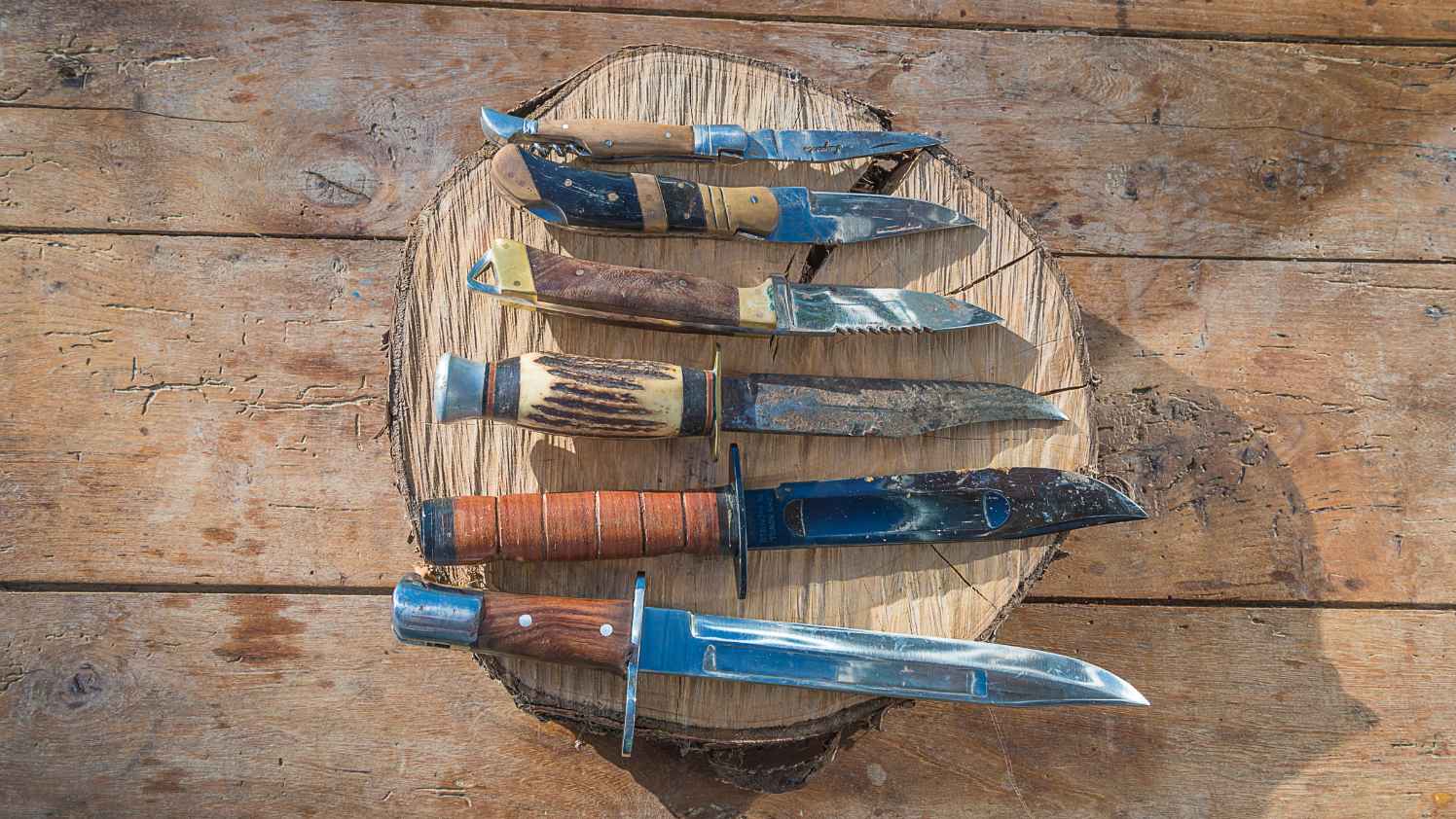
As soon as man emerged from the cave and perceived himself, he picked up a stone and sharpened it, thus giving rise to the most essential tool that mankind hasn’t been able to do without for thousands of years – the knife.
Since the Palaeolithic era, the knife is not just a tool to skin an animal or to protect oneself, it is also the pride of the hunter and warrior, an object that carries the glorious traditions of the peoples of the world, it is a real cultural object that can be used to study historical processes. Let us step into the incredibly awesome world of knives.
The Art of Knife-Making
Knives have come a long way over the millennia of their evolution, and their making has developed many traditions that depend on the mentality of the peoples and nations that invented them. From the snowy wastelands of Greenland to the scalding Sahara, you will not find the same knives, each blade has developed its own traditions and techniques, becoming a true form of Knife-Making art.
Materials Used in Traditional Knife Making
The traditional knife of each nation has not acquired its appearance by chance, it is due to many factors, such as the area of use of the knife, the mentality of the blacksmith, but most importantly, the appearance and functionality of the traditional knife is determined by the locality in which it was created. After all, it is this factor that determines the materials from which such a tool is assembled.
If you will get your hands on Ulu Eskimo knife, you will see the hilt made of moose horn, which is located directly on the bearded blade’s edge, and when you come across a Japanese wakizashi, your perception will be struck by the sharkskin hilt and the skilfully forged blade.
Techniques and Skills in Knife Craftsmanship
Techniques and skills in knife craftsmanship vary from nation to nation. However, in general terms, the forging process consists of:
- Material selection: The choice of material for knife making can range from various types of steel to special alloys or Damascus steel.
- Blade shaping: The blade of the knife can be shaped by hand forging or by machines using grinding tools. Hand forging provides more opportunities to create unique shapes and patterns on the blade.
- Grinding: After shaping the blade, grinding follows to make it sharp. This process can include coarse and fine grinding to achieve the desired sharpness and shape of the blade.
- Hardening: The knife blade undergoes a hardening process where it is heated to a high temperature and then rapidly cooled. This is done to increase strength and improve the cutting edge characteristics.
- Handle finishes: The handle of a knife can be made of various materials such as wood, plastic, bone or metal. It is attached to the blade with glue or rivets and then sanded and finished for comfort and aesthetics.
- Sharpening and finishing: The knife is sharpened to the desired sharpness using sharpening tools. It may then be polished or coated with a special coating to protect it from corrosion and improve its appearance.
- Testing: At the end of the process, the knife is tested for sharpness and durability to ensure it meets quality standards.
Stylistic Elements and Symbolism
Many cultural knives carry special symbolism and aesthetics. They have been used for warrior initiation rites, for vows, for mystic rituals and even for wedding ceremonies.
Iconic Traditional Knives from Around the World
Over the millennia, many traditional knife designs have been created in different parts of the world.
The Japanese Wakizashi
Contrary to popular belief, the samurai is first and foremost a horse archer, not a sword fighter. However, it was not always possible to keep the enemy at a distance, which is why every samurai carried a set of two swords: a katana and a wakizashi, called a “daisyo“ (literal translation is ‘big and small’).
Wakizashi was a weapon of last chance, when the distance of the fight was reduced to the maximum and even the katana could not be used (for example, in small rooms or in a crowd). Inferior in size to the katana, but no less deadly! Its sharply 30-60 cm long honed blade is incredibly dangerous.
A predatory curved blade and a sharkskin handle wrapped in silk cord will leave no one indifferent, it is a true work of art and the embodiment of Japanese weapon traditions.
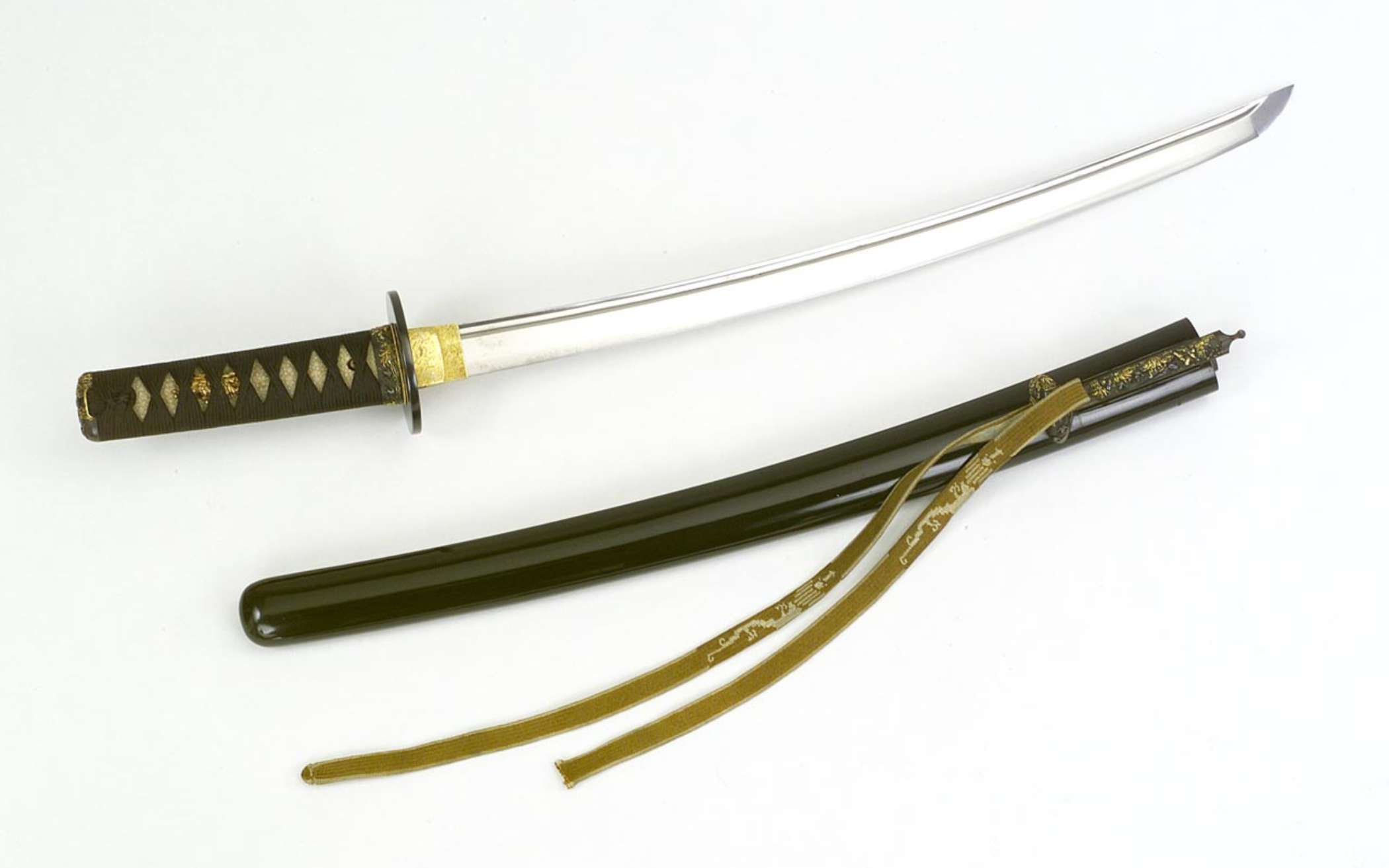
Photo from rmg.co.uk
The Scottish Dirk
Scotland has always been renowned for its rich traditions and culture. Frequent wars with England and inter-clan conflicts led to the need to carry weapons all the time. No Scotsman ever left home without a knife, because outside the house there were constant drunken brawls and robbery attacks – this is the Middle Ages at its finest.
To counteract all these dangers, the famous Scottish dirk appeared in the XIII century as a mobile and light self-defensive weapon. Interesting fact is that these blades were forged mainly from parts of broken swords.
In addition to combat, this knife proved to be an excellent hunting knife, its length perfectly allowed to freshen the animals.This blade has always been a symbol of high status in society, as well as strength and courage.

Photo from noblie.eu
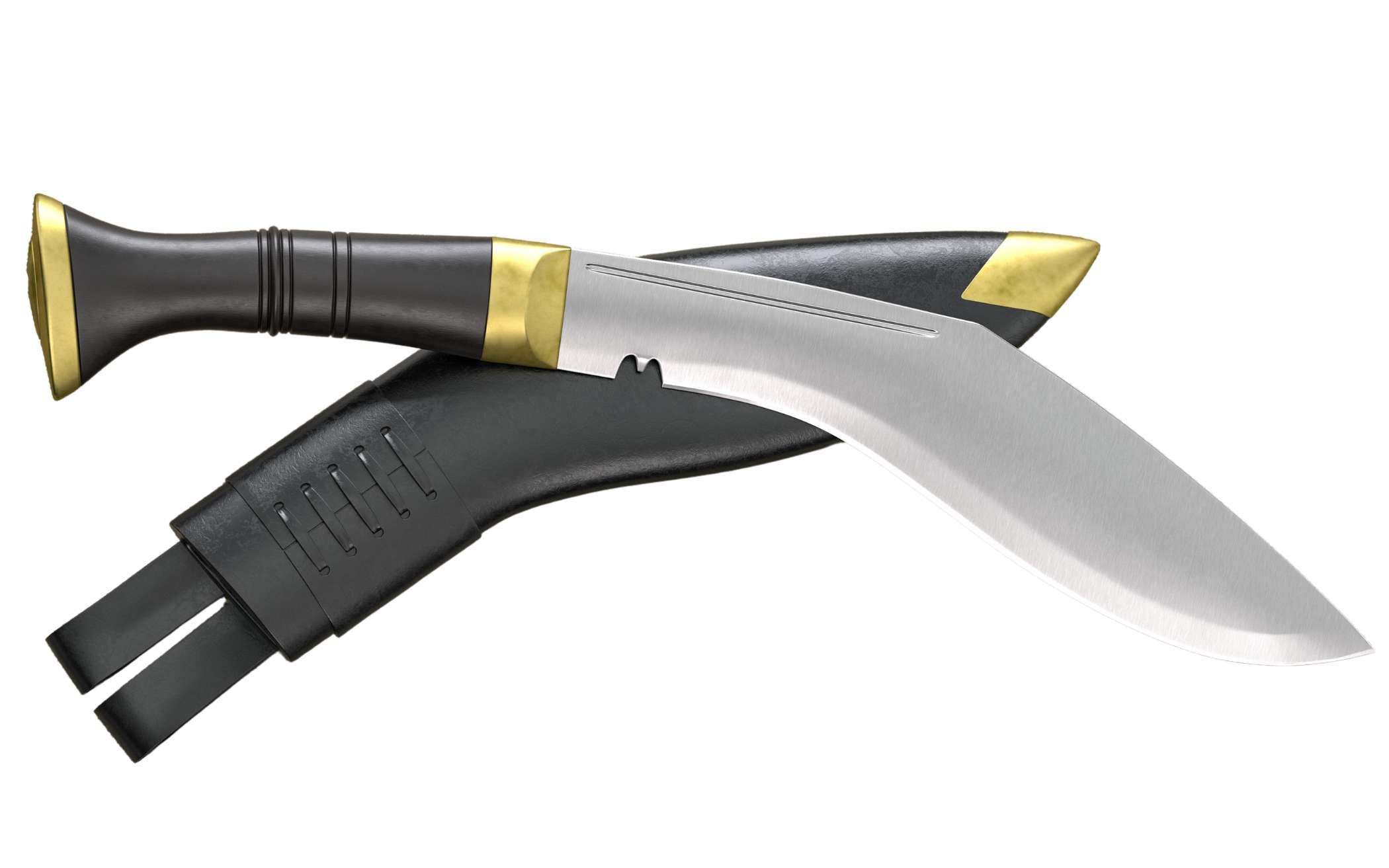
The Nepalese Kukri
The kukri has always been a special sacred pride of Nepalese warriors, being a symbol of courage and strength. Once it was taken out of its sheath, one could not put it back in without staining it with blood. If there was no enemy nearby, Nepali warriors had to sprinkle it with their own blood by cutting their finger or hand, and only then put the kukri back into its sheath.
It is not only a functional tool, but also a part of Nepal’s cultural heritage that continues to be popular in many parts of the world due to its unique shape and effectiveness. Its curved design features allow it to deliver brutal chopping blows.
The American Bowie Knife
This knife was invented by Jameson Bowie in 1830, who sought to create a tool that would be suitable for both hunting and warfare. During the American Civil War it became very popular, becoming the weapon of choice for many soldiers.
Characteristic features of the Bowie knife are a long blade with a curved shape, which usually has a single-sided sharpening. The blade can vary in length, but usually ranges from 6 to 12 inches. The handle is often recessed for better grip and ease of use. The exterior is often decorated with carvings or engraving, making each unit a unique work of art.

Other Notable Traditional Knives
When we talk about traditional knives, we can’t help but think of the Scramasax, which was universally used by the badass seafarers from the North called Vikings.
The Scramasax has a long, single-sided blade, often with a curved tip. The blade of the scramasax is broad and solid, which makes it effective in close combat as well as when cutting meat in the camp. The handle can be made of wood, horn or metal, and sometimes even equipped with a finger guard. These weapons were often decorated with carvings or engravings, reflecting the traditions and cultural characteristics of northern warriors.
 Photo from fabri-armorum.com
In addition to the Scramasax, the Kerambit of Minangkabau also comes to mind. According to legends, the creator was inspired by the claws and fangs of the tiger, when inventing this blade.
The kerambit began its long journey as an agricultural tool and continued as a dangerous close combat weapon. In Indonesia, the kerambit has become an integral part of a traditional martial art called “silat”.
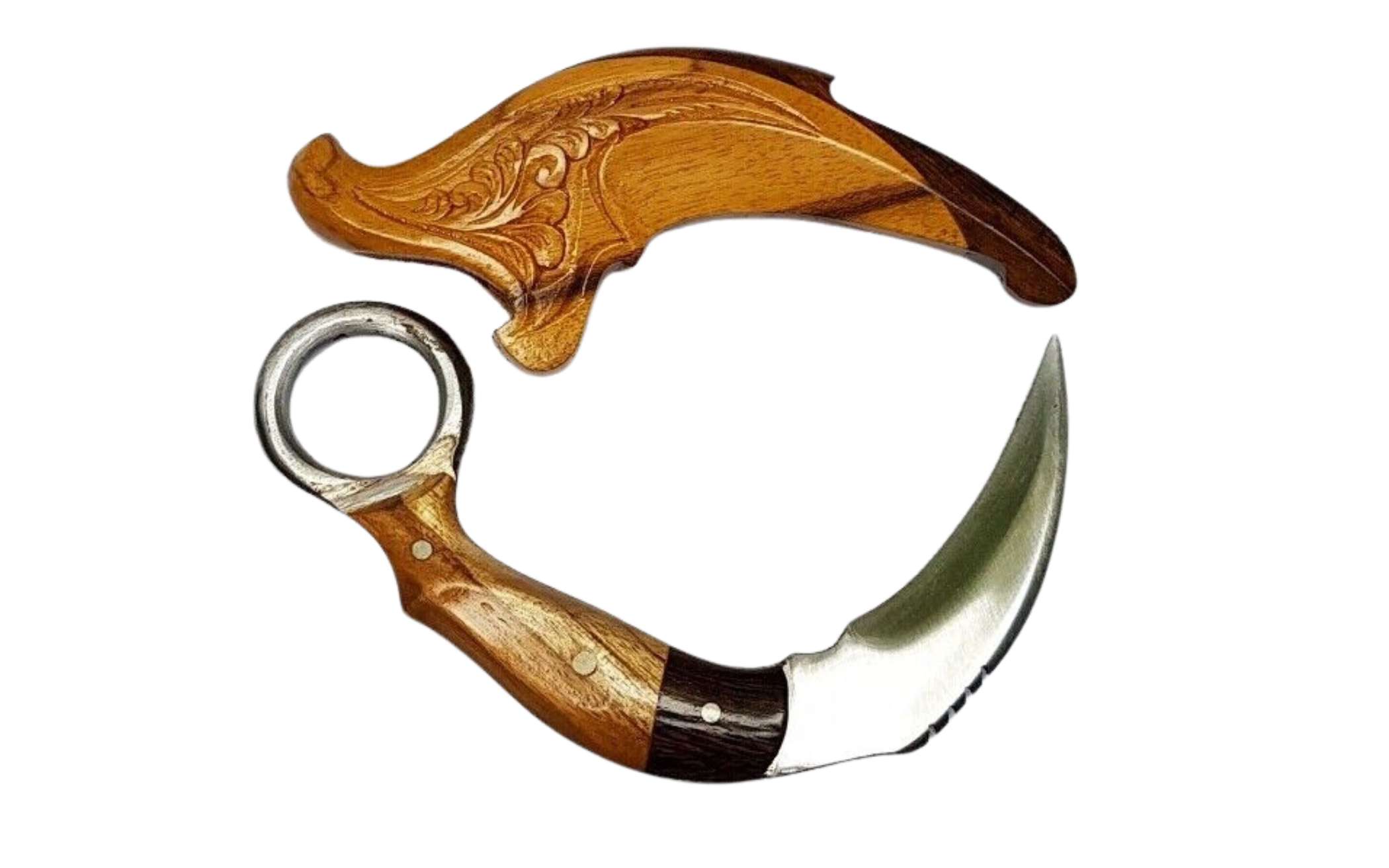
Photo from ebay.co.uk
Traditional Knives in Modern Times
Many traditional knives are still in use for hunting and camping, rather than gathering dust on the shelves of museums and private collections. The Bowie knife skins an animal as well as it did in 1830, and the Nepalese kukri is still used to deliver devastating chopping blows.
The Future of Traditional Knives
Traditional knives will always be highly valued by history buffs as well as people who love timeless classics that have been tried and tested for centuries. And those who find horn or wood handles archaic can always replace them with modern polymer and carbon fibre materials.
Final Thoughts
Today’s knives are the product of hundreds of years of evolution and innovation. From classic folding knives to high-tech kitchen tools, our range of offerings on the market is vast.
Our craftsmen create knives that combine art and functionality, making them collector’s items and objects of admiration.
So what are you waiting for? It is time to find your own knife and start collecting traditional knives! We will gladly help you with it.