
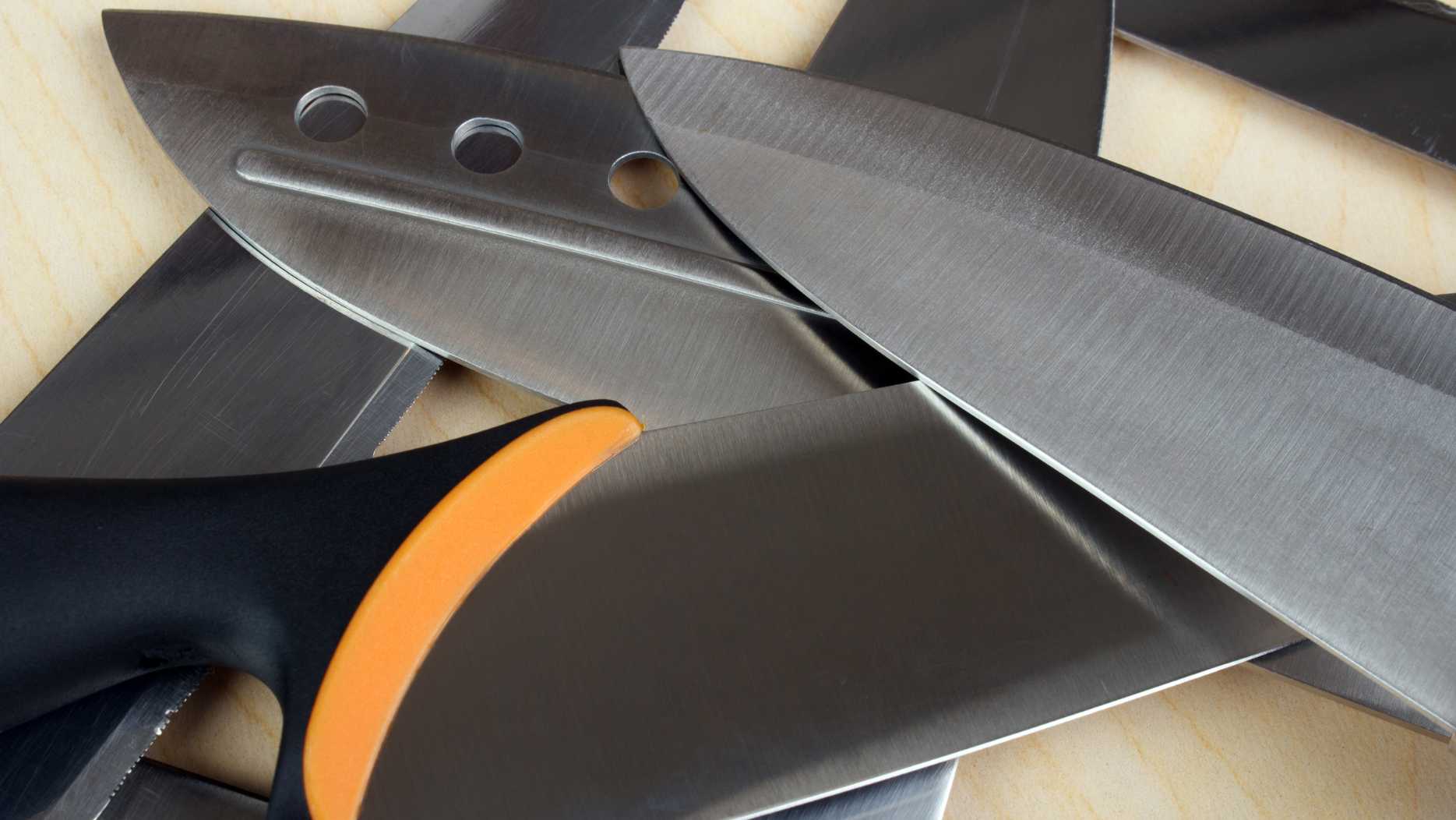
Most steels were invented as a universal material for making anything from train rails to armour plates. But of course the knife fanatics didn’t agree with this arrangement and knife steels were born that were designed exclusively for making knife blades and nothing else!
Overview of why steel is a crucial material in knife making
Steel is a crucial material in knife making due to its unique combination of properties, which are essential for crafting functional, durable, and high carbon steel knife. The main reasons steel is favored for knife making are its strength, hardness, toughness, and ability to hold an edge. These properties, along with the ability to be manipulated and customized during the heat treatment process, make steel an ideal choice for a wide variety of knives, from kitchen knives to outdoor tools.

What Are Knife Steels and its Definition and Composition
So, let’s get to the bottom of what this specialised knife steel is! When it comes to steels specifically formulated for knife making, special knife steels are particularly popular due to their ability to hold a sharp edge, resist corrosion, and maintain durability in demanding conditions. These steels often have a higher amount of carbon and specialized alloying elements that make them suited for cutting tools.
VG-10, AUS, ZDP-189, and ATS-34 are all popular steel grades used in making high-performance knives. Each has distinct properties and advantages, making them suitable for different applications and preferences. Here’s a quick breakdown of each:
1. VG-10
Composition: Awesome option for stainless steel knife, VG-10 is a high-end stainless steel made primarily of carbon, chromium, vanadium, molybdenum, and cobalt.
Properties:
- High edge retention.
- Corrosion-resistant, making it excellent for wet environments.
- Easy to sharpen compared to some other high-performance steels.
- Typically used in premium knives, especially in Japanese knives (e.g., Global, Shun).
Use Case: Great for everyday carry (EDC) knives, kitchen knives, and fixed blades where balance of sharpness, corrosion resistance, and toughness is desired.
2. AUS-8
Composition: AUS-8 is a mid-range stainless steel, often compared to 440C, and consists of carbon, chromium, nickel, molybdenum, and vanadium.
Properties:
- Good corrosion resistance makes it one of the best steel knives options.
- Decent edge retention, but not as high as premium steels like VG-10 or ZDP-189.
- Easier to sharpen, making it a good choice for users who don’t mind frequent sharpening.
- Toughness is fairly high, so it’s less prone to chipping.
Use Case: Common in budget to mid-range knives, especially for tactical and utility knives where toughness and ease of maintenance are important.
3. ZDP-189
Composition: Truly one of the best steel to make a knife, ZDP-189 is a high-performance, high-carbon stainless steel, composed of carbon, chromium, molybdenum, vanadium, and tungsten. It’s known for its high carbon content (about 3%), which gives it excellent edge retention.
Properties:
- Extremely high hardness (HRC 64-66), resulting in very sharp edges.
- Excellent wear resistance, meaning it holds its edge for a long time.
- Prone to being somewhat brittle due to its hardness, so it requires more care to avoid chipping.
- Has excellent corrosion resistance but is less resistant than some other steels (e.g., VG-10) in harsh environments.
Use Case: Ideal for knives that need long-lasting sharpness and cutting power, such as premium folding knives or specialized cutting tools. It’s favored by enthusiasts who don’t mind a bit more maintenance for superior performance.
4. ATS-34
Composition: ATS-34 is a high-carbon stainless steel similar to 154CM, made up of carbon, chromium, molybdenum, and vanadium. It is significant milestone in evolution stainless steel blade!
Properties:
- Good balance of hardness, toughness, and corrosion resistance.
- Holds an edge well and is easier to sharpen compared to steels with higher hardness (like ZDP-189).
- Very resistant to corrosion but slightly less than VG-10 or ZDP-189.
- Tougher than ZDP-189, making it less prone to chipping, but it may not hold an edge as long as higher-carbons.
Use Case: Great for high-end production knives, both fixed and folding. It offers a good balance of all the key knife steel traits, making it a versatile choice for users looking for performance with practical maintainability.
Choosing the Right Steel:
- For Edge Retention: ZDP-189 is the top performer, though it requires more maintenance and care due to its brittleness.
- For Corrosion Resistance: VG-10 and ATS-34 are excellent, with VG-10 being a bit better overall for wet or salty environments.
- For Toughness: ATS-34 and AUS-8 are better if you need a knife that can withstand impact and stress without chipping.
- For Sharpening Ease: AUS-8 is the easiest to sharpen, followed by VG-10, while ZDP-189 can be a challenge due to its high hardness.
Differences Between Knife Steels and Other Steels
Knife steels and other types of steels differ primarily in their composition, heat treatment processes, and the specific properties required for their intended applications. Here’s a detailed breakdown of the stainless steel vs carbon steel knife differences and distinctions between knife steels and general-purpose steels.
1. Purpose and Performance Requirements
- Knife Steels: The primary goal of knife steels is to create a balance between edge retention, toughness, corrosion resistance, and ease of sharpening. They need to maintain a sharp edge through regular use and be resilient enough to handle tough tasks without chipping or breaking.
- Other Steels: Other steels are designed for a broader range of applications, such as structural, automotive, tool manufacturing, or even construction. The focus might be on properties like strength, hardness, ductility, weldability, or corrosion resistance, depending on the use case.
2. Composition
Knife Steels:
- Knife steels typically contain high levels of carbon (around 0.5% to 1.5%) for hardness and edge retention, along with various alloying elements such as chromium (for corrosion resistance), molybdenum and vanadium (for wear resistance), and manganese (for strength).
- Some premium stainless steels for knives, like CPM S30V or M390, are known for their high levels of vanadium, molybdenum, and carbon to optimize edge retention and resistance to corrosion while keeping toughness high.
Other Steels:
- Steels used in construction or other industrial applications may have lower carbon content and are often alloyed with manganese, silicon, and nickel for strength and flexibility, rather than edge retention.
- Tool steels (e.g., AISI D2, O1) are closer to knife steels in terms of composition but are usually designed for higher hardness and wear resistance at the cost of toughness.
3. Hardness and Toughness
- Knife Steels: Knife steels need a balance of hardness and toughness. They should be hard enough to maintain a sharp edge but tough enough to resist chipping or breaking. This means they are often heat-treated to a medium-to-high hardness range (around 55-64 HRC, depending on the steel and application).
- Other Steels: Other steels may have a higher focus on tensile strength, ductility, or shock resistance, and may not require the same balance of hardness and toughness. For example, construction-grade steel may prioritize toughness to withstand heavy loads rather than edge retention.
4. Corrosion Resistance
- Knife Steels: Some knife steels are stainless, containing chromium (usually around 13-15%) to improve their resistance to rust and corrosion. Others, like high-carbon steel, are more prone to corrosion but are favored for their sharpness and edge retention. The presence of vanadium or molybdenum can also help with corrosion resistance.
- Other Steels: Many industrial steels, like those used in construction or automotive applications, may also have corrosion-resistant alloys or coatings, but this isn’t always a primary consideration. Stainless steel is used in many industrial settings (e.g., 304, 316 series), but its properties may focus more on general resistance to environmental degradation than on the precise balance of sharpness and wear resistance.
5. Edge Retention
- Knife Steels: One of the most crucial factors for knife steels is edge retention, which is the ability to keep a sharp edge after extensive use. High-quality knife steels, like VG-10, S30V, or M390, are engineered to hold a sharp edge for extended periods while still being relatively easy to sharpen when necessary.
- Other Steels: Edge retention is generally not a priority in most industrial steels. For example, steel used in structural or automotive applications might be optimized for strength and fatigue resistance but not for maintaining a sharp edge.
6. Workability and Sharpening
- Knife Steels: Knife steels are often designed to be sharpened easily, although the difficulty of sharpening depends on the specific steel. High-carbon steels (e.g., 1095) are relatively easy to sharpen but may not hold an edge as long as more advanced alloys (e.g., S90V). Stainless steels like CPM 20CV or M390 may be more challenging to sharpen but offer excellent edge retention.
- Other Steels: Other types of steel, such as those used for heavy machinery or construction, may be more challenging to machine, weld, or sharpen, depending on their hardness and alloy composition. High-strength steels used in tools and machinery often require special equipment or processes to shape and sharpen.
7. Cost and Availability
- Knife Steels: High-performance knife steels (e.g., CPM S35VN, M390, Elmax) tend to be more expensive due to the advanced manufacturing processes, higher alloying content, and specialized heat treatments. The premium cost is often justified by the superior performance characteristics in knives.
- Other Steels: Industrial and construction steels are generally more affordable and widely available, as they are produced in large quantities for applications that don’t require the same level of precision or performance. For example, A36 steel is a common low-carbon steel used in construction and is inexpensive compared to specialty knife steels.
8. Heat Treatment and Tempering
- Knife Steels: Knife steels undergo precise heat treatment to achieve the right combination of hardness and toughness. This often includes tempering (to reduce brittleness), followed by cryogenic treatment (for increased wear resistance) and polishing or finishing processes to enhance corrosion resistance and durability.
- Other Steels: Industrial steels undergo heat treatment processes that prioritize strength, hardness, or resilience to mechanical stress. They may not require the same level of precision in heat treatment as knife steels.

Conclusion
There is only one conclusion here – if you want a good knife, don’t be a cheapskate! It is better to splurge once and buy a blade made of special knife steel, which will serve you for many decades and will be your glorious assistant in many situations, maybe even save your life once. Don’t forget to visit our online-shop, your dream blade is waiting for you there. May the Force be with you!