
Mushrooms have always been an essential part of our diet! For thousands of years, humans have gathered them for culinary delights and medicinal purposes. And how nicely you can get high on fly agaric! It’s often a one-way ticket, but what a ride: you might see gods, other worlds, and expand your consciousness so wide it’ll never shrink back. Alright, seriously now — don’t you even think of shoving those into yourself. Just don’t. So why am I telling you all this? Because you definitely need a proper mushroom picking knife. No exceptions.
Why you should have a special knife for mushrooms
You’re not a vandal, right? You want to pick mushrooms in a way that doesn’t harm the forest ecosystem, don’t you? Sure, it might seem like there’s no difference — cut it, pull it, whatever, and move on! But here’s the thing: when you pick mushrooms the wrong way, you damage the mycelium — the underground network that feeds and sustains the mushroom itself. To avoid harming it, mushrooms should be carefully cut at the very base of the stem with a proper mushroom knife — one designed specifically for foraging — rather than ripped out with the roots. If the mycelium is damaged, it can stop growing altogether, which means no new mushrooms will appear in that spot in the future. That’s how we slowly deplete the forest without even realizing it!
Special features of mushroom knives
Most mushroom knives come with:
- Curved blade: Perfect for cleanly cutting mushrooms at the base.
- Foldable design: Convenient and safe to carry in the forest.
- Brush attachment: Many have a small brush on the handle to gently remove dirt from the mushroom without damaging it.
- Ergonomic handle: Ensures a secure grip even when wet.
These features make mushroom picking more precise, enjoyable, and eco-friendly.
Short, curved blade
The blade of a mushroom knife is typically short and slightly curved. This allows for precise cutting at the base of the mushroom stem without crushing the cap or surrounding fungi. The curved shape also helps in scooping or slicing small roots and debris from the mushroom.
Brush or bristles on the handle
Many mushroom knives feature a small brush attached to the handle. This brush is used to clean dirt, soil, and debris off the mushroom on-site, eliminating the need for washing, which can damage the texture or flavor of delicate mushrooms.
Size and weight
Mushroom knives are generally compact and lightweight, making them easy to carry in a pocket or foraging bag. Their ergonomic design allows for extended use without causing hand fatigue, which is essential when harvesting large quantities.
Blade material
The blade is usually made of stainless steel or high-carbon steel. Stainless steel offers rust resistance and easy maintenance, while high-carbon steel provides exceptional sharpness and durability, allowing for cleaner cuts through tough stems. Some high-end models may have coated blades to further reduce sticking and improve longevity.
 How to choose a mushroom knife
So, which knife is best for the job?
Folding mushroom knives with a brush
Best for: mobile foragers who want a compact tool.
Features: short folding blade, built-in brush for cleaning mushrooms on the spot, usually stainless steel blade.
Example: Opinel N°8 stainless steel mushroom knife – 7 cm curved Sandvik.
Fixed blade knives
Best for: foragers who prioritize strength and durability.
Features: full-tang construction, longer and wider blade for bigger mushrooms and tougher stems, often includes a sheath for safe carrying.
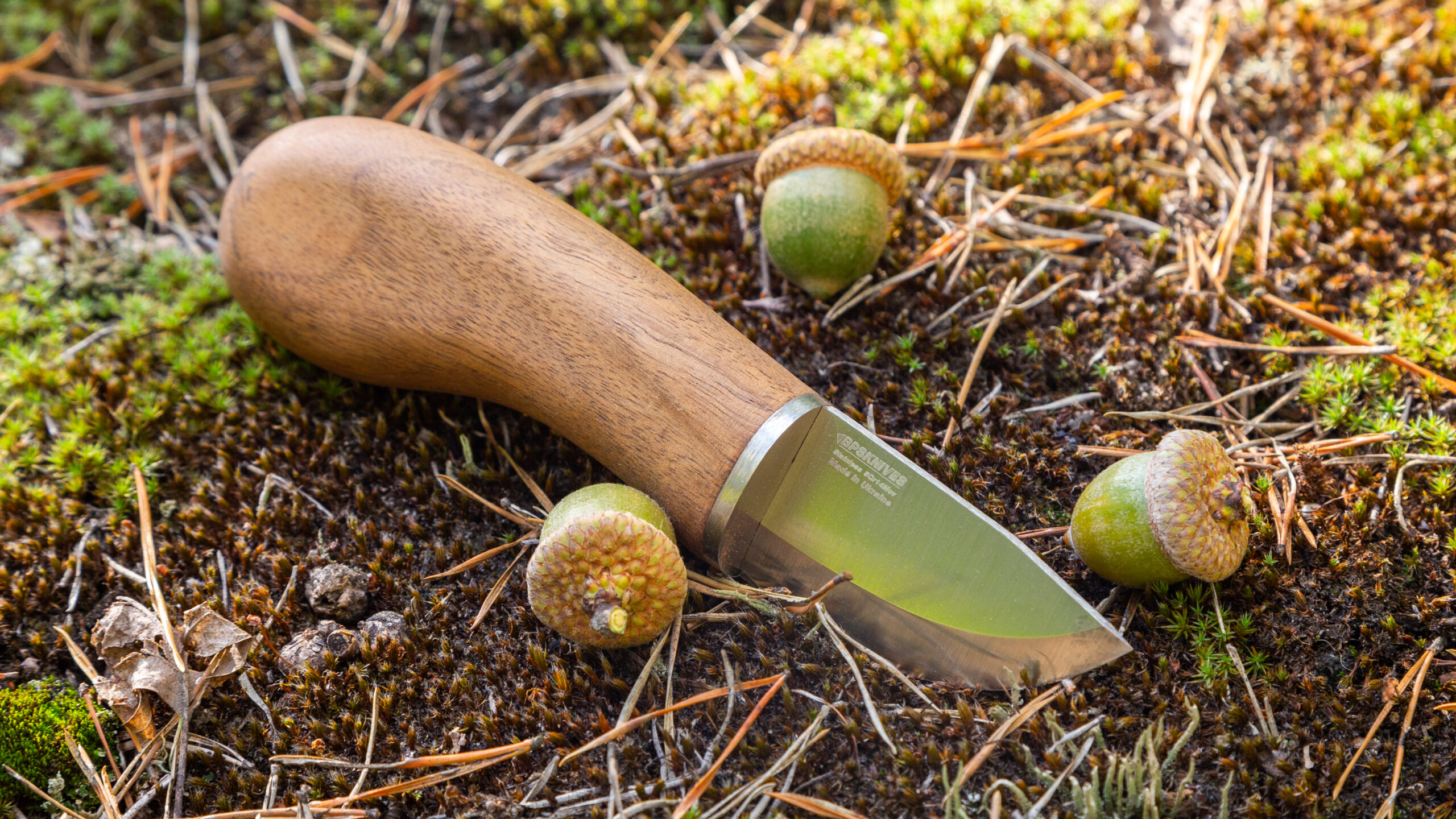
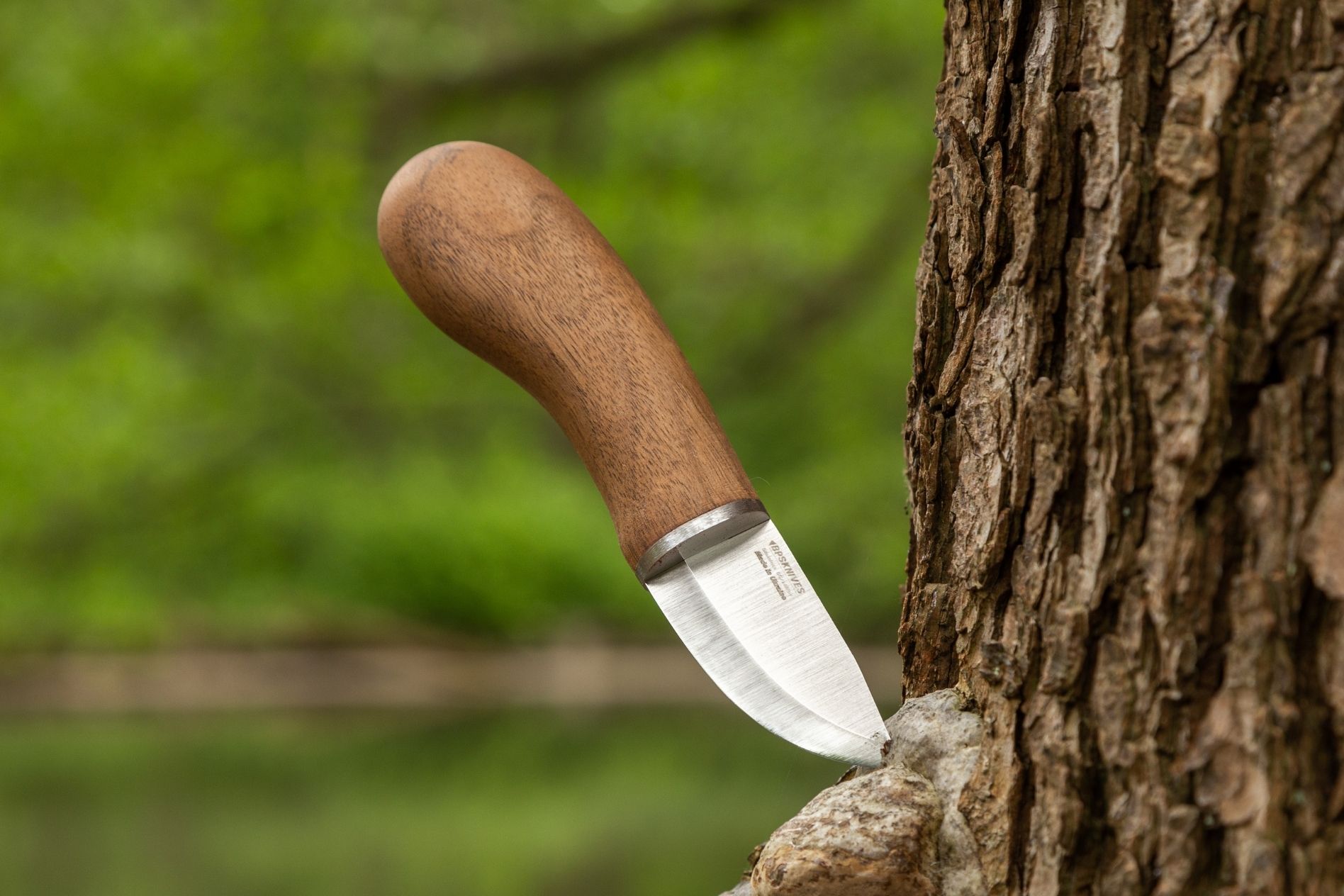
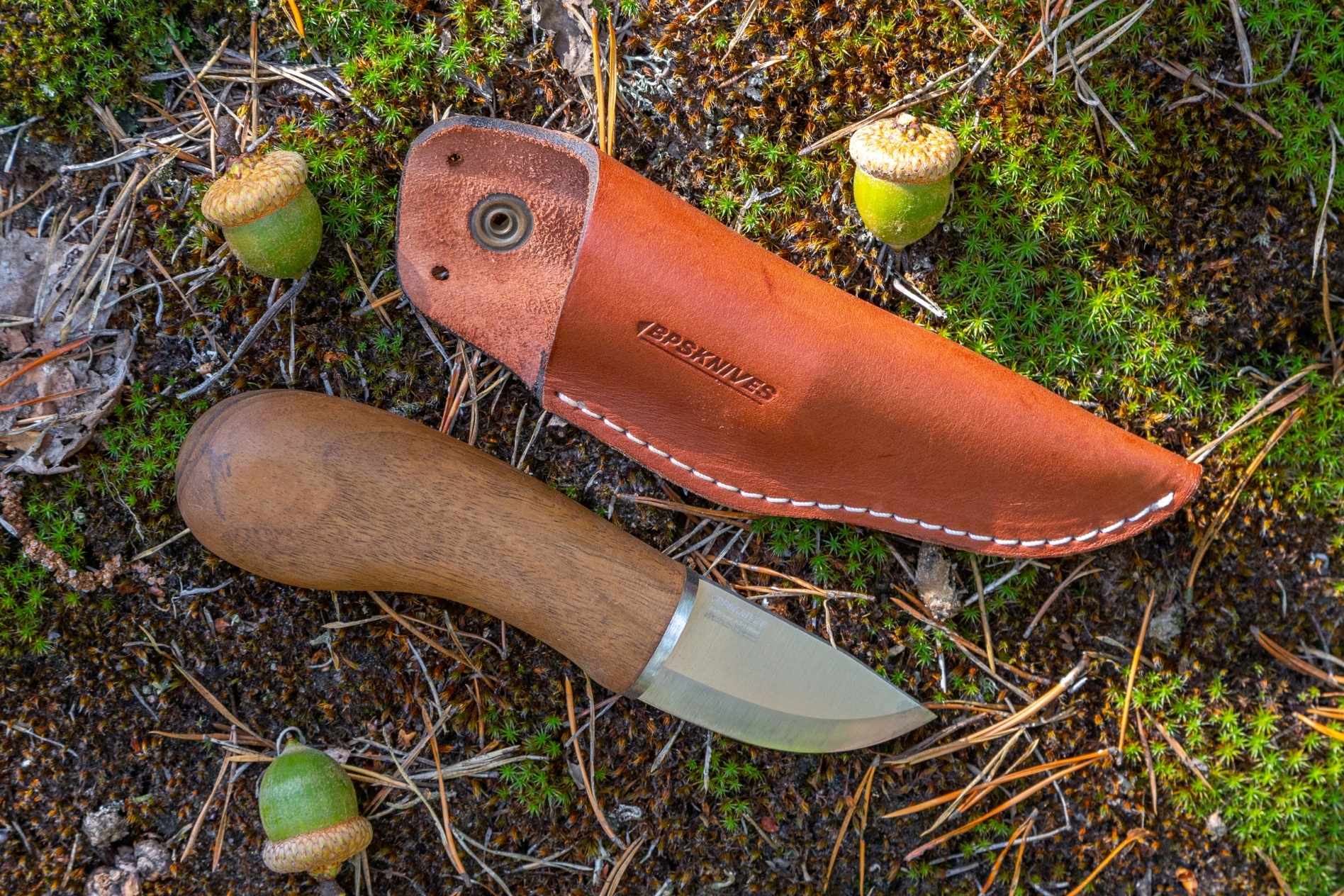
And behold! Our craftsmen have created a special cute mushroom knife that’s perfectly suited for mushroom foraging! We named it the MK1 SSH [review]. Its blade is made from 5Cr14MoV stainless steel with a hardness of 56–58 HRC. The handle is ergonomically shaped and crafted from walnut wood, giving the pocket mushroom knife a beautiful, classic look. But that’s not all—its compact size is a huge advantage: the overall length is just 165 mm, and it weighs a mere 95 grams. To top it all off, it comes with our signature natural leather sheath. Simply the best tool for even the pickiest mushroom forager! I’ll take two.
 Combined solutions (knife + tweezers, hook, etc.)
Best for: foragers who want an all-in-one tool.
Features: mushrooming knife combined with additional tools like tweezers or a hook, space-saving, convenient for quick access.
Example: Main Knives mushroom foraging knife – 7.5 cm stainless steel blade, brush for cleaning mushrooms.
What else should a mushroom picker have besides a knife
But a mushroom cutting knife alone isn’t enough! Every mushroom hunter should also have:
Hiking basket / grid
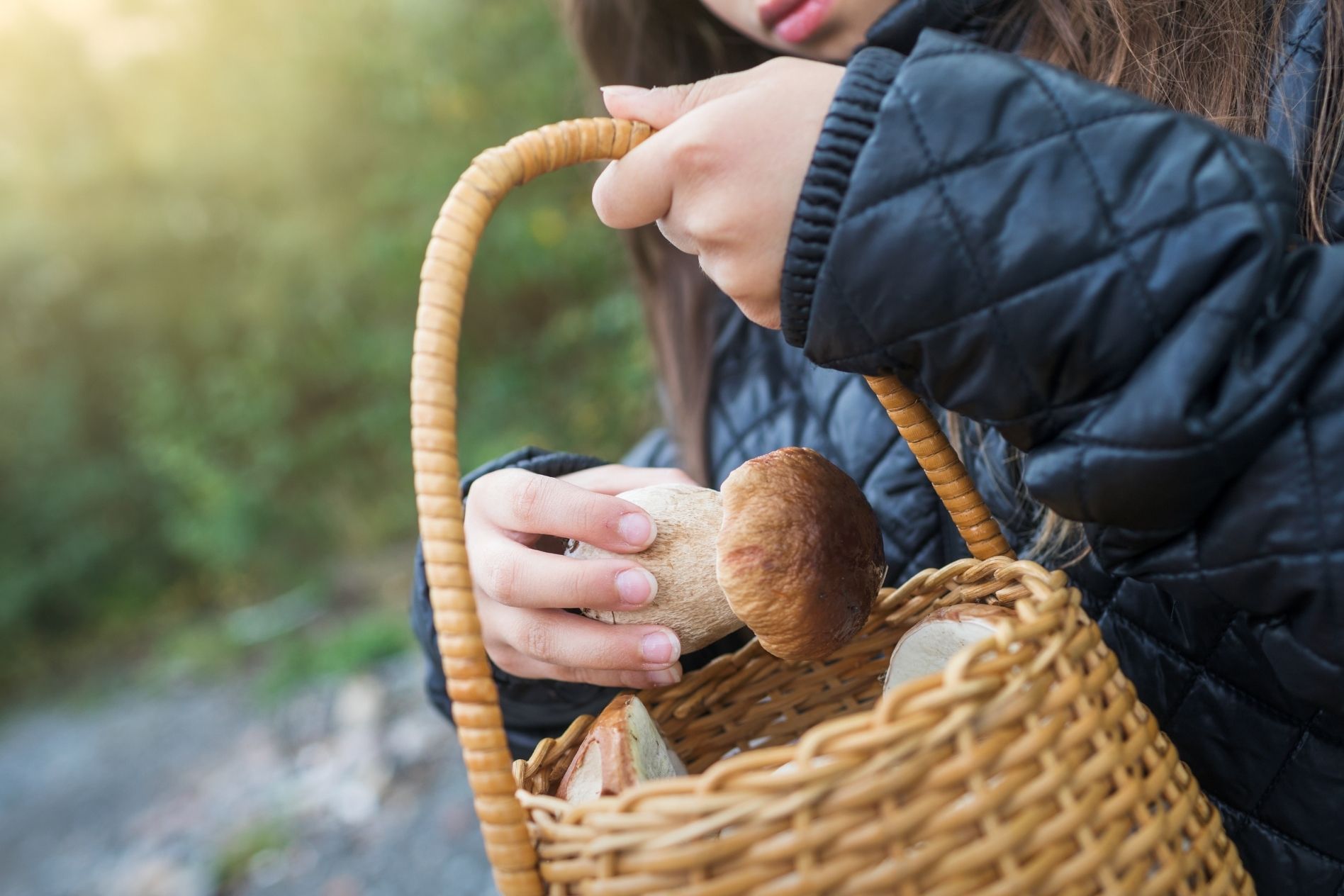
A traditional wicker basket or ventilated mesh container is ideal for collecting mushrooms. It allows air circulation, keeping mushrooms fresh and preventing them from becoming squashed or moldy. Avoid plastic bags, as they trap moisture and can quickly spoil your harvest.
 Flashlight (autumn days are short)
During autumn, daylight fades quickly. A compact flashlight or headlamp helps you navigate safely through the forest and find your way back before it gets dark. A headlamp is particularly useful since it keeps your hands free while wild mushroom picking.
Compass or GPS
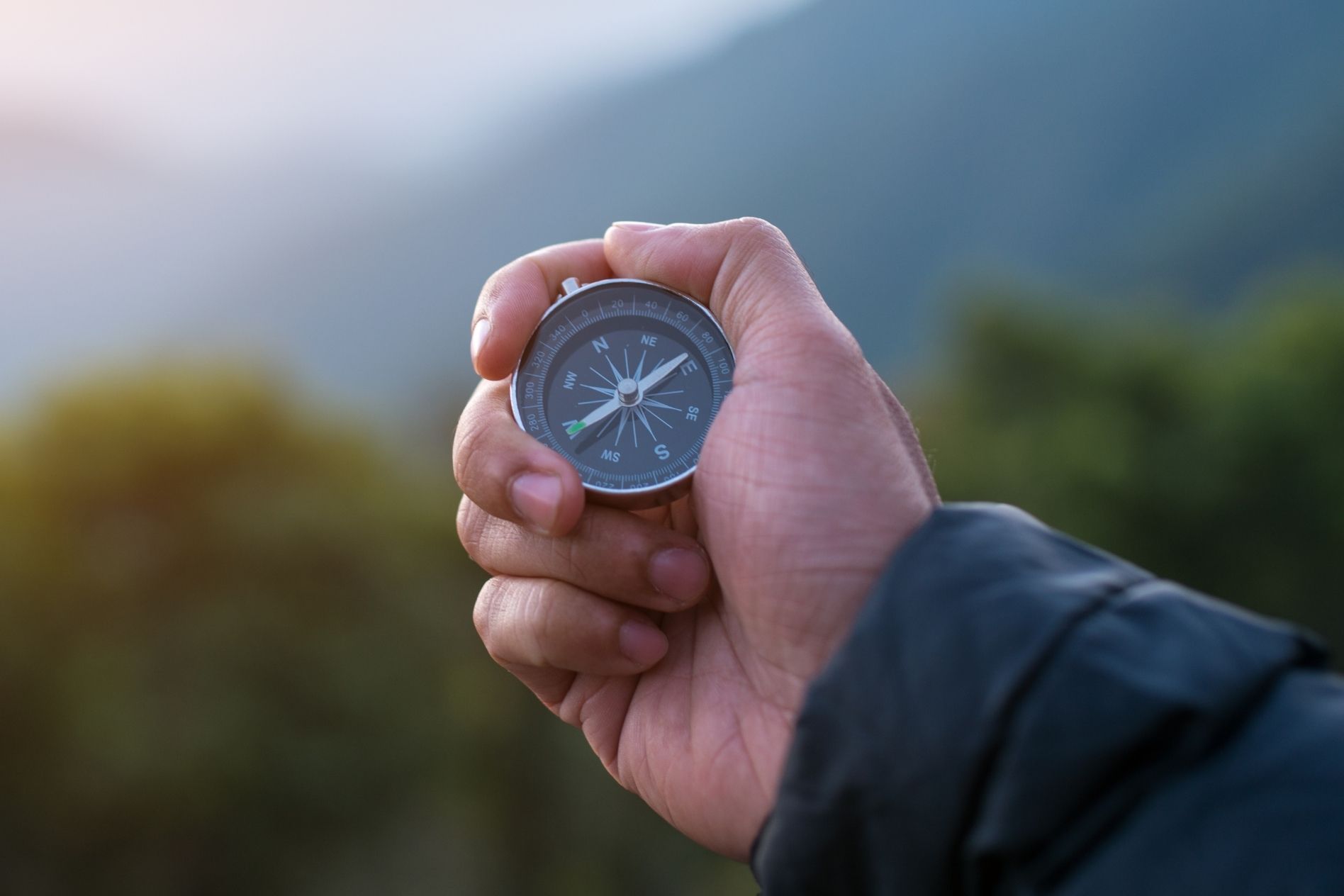
It’s easy to lose your sense of direction in dense woods. A reliable compass or GPS device ensures you can find your way back safely. While many foragers use smartphone apps, it’s wise to carry a traditional compass as a backup in case your phone battery runs out.
 Checking the weather and mushroom location maps
Before going out, always check the weather forecast to avoid unexpected rain or fog. Many modern foragers also use mushroom location maps and community apps that show recent finds and optimal growth areas, helping you plan your route efficiently.
Conclusion
That’s the deal. A high quality mushroom knife is a must-have for every forager. And where to get one? You already know — in our online store! We actually have a whole range of reliable, premium knives for every occasion: camping, hiking, hunting, fishing, and even survival. Then it’s time to head out — adventure awaits! See you soon, and here’s to many more exciting encounters!