
If we lift our gaze upward, beyond our atmosphere and stratosphere into space, what do you think we would see first? Solar systems, planets, black holes, or perhaps the bright glow of a quasar?
Well, not quite! The first thing we would actually see is a battle, the relentless struggle between Light and Darkness, between being and non-being. The battlefield of Light and Darkness doesn’t end with our beautiful, infinite Universe, these two continue to fight on our planet, in our souls, and in our minds.
Importance of a knife as a versatile survival tool
“Am I really on a knife website? Why are they writing about Light, Darkness, souls, and the Universe? What’s going on?!” you might ask. And I’ll answer you! We’re leading you to the point that the struggle and the battle are what our species has been engaged in since the very beginning of our existence. Dinosaurs, saber-toothed tigers (regular tigers too), wolves, bears, weather, low and high temperatures, forests, steppes, and precipitation—all of them tried hard to finish us off.
But they failed! We defeated them all. We persevered, survived, adapted, and rose to the top of the food chain. We became the masters of this world, and with God’s help, we will soon become the masters of new worlds that we will colonize. The entire Galaxy will bow to us!
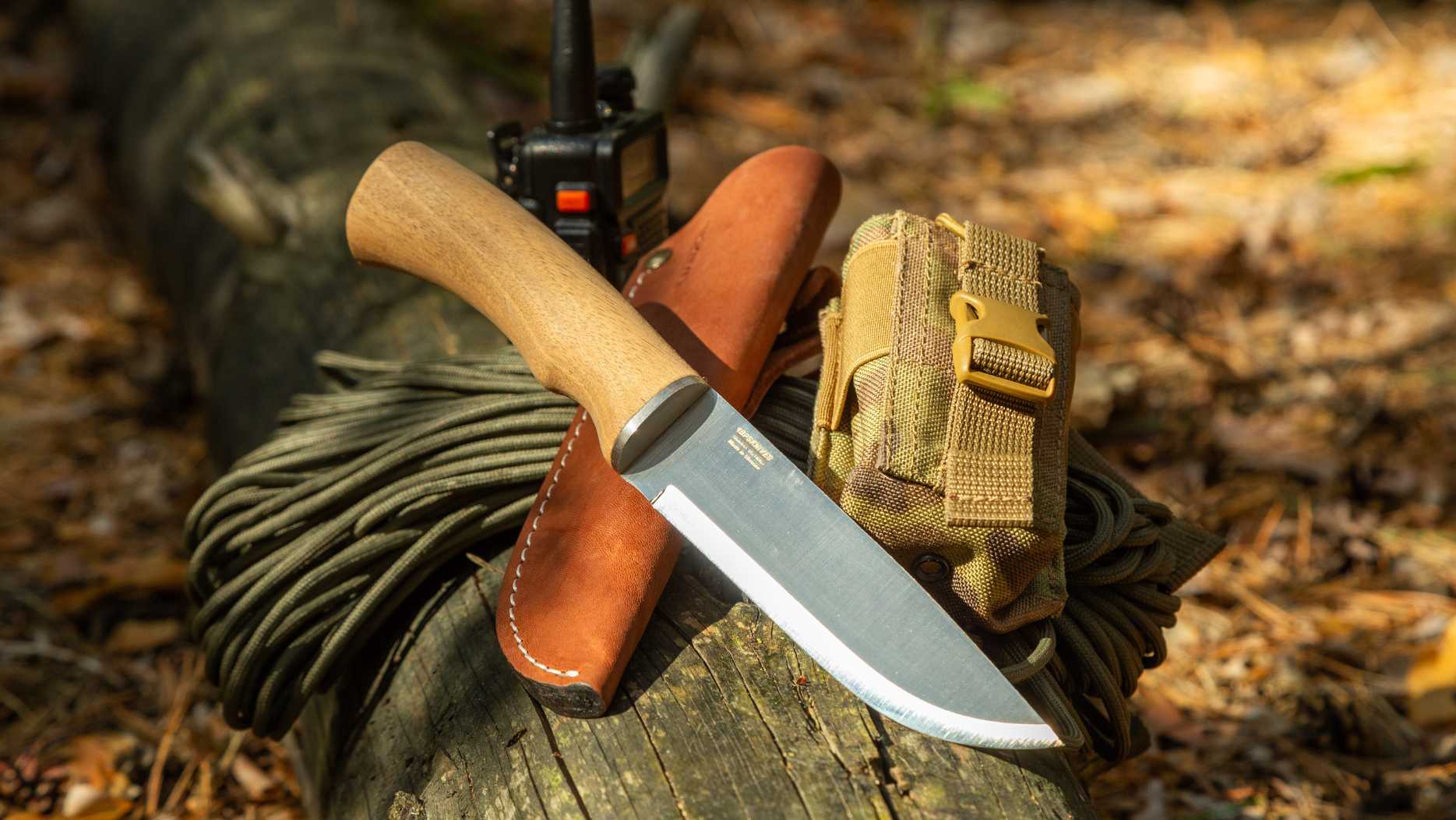
And all this time, in the past, present, and future, we were and we will be accompanied by our little, faithful helper, who started as bone, then bronze, and later was forged in steel. Its name is—The Knife!
Understanding the Multi-Functional Role of a Knife
Well-well! And what has the knife done to deserve such honor?
Cutting and Preparation
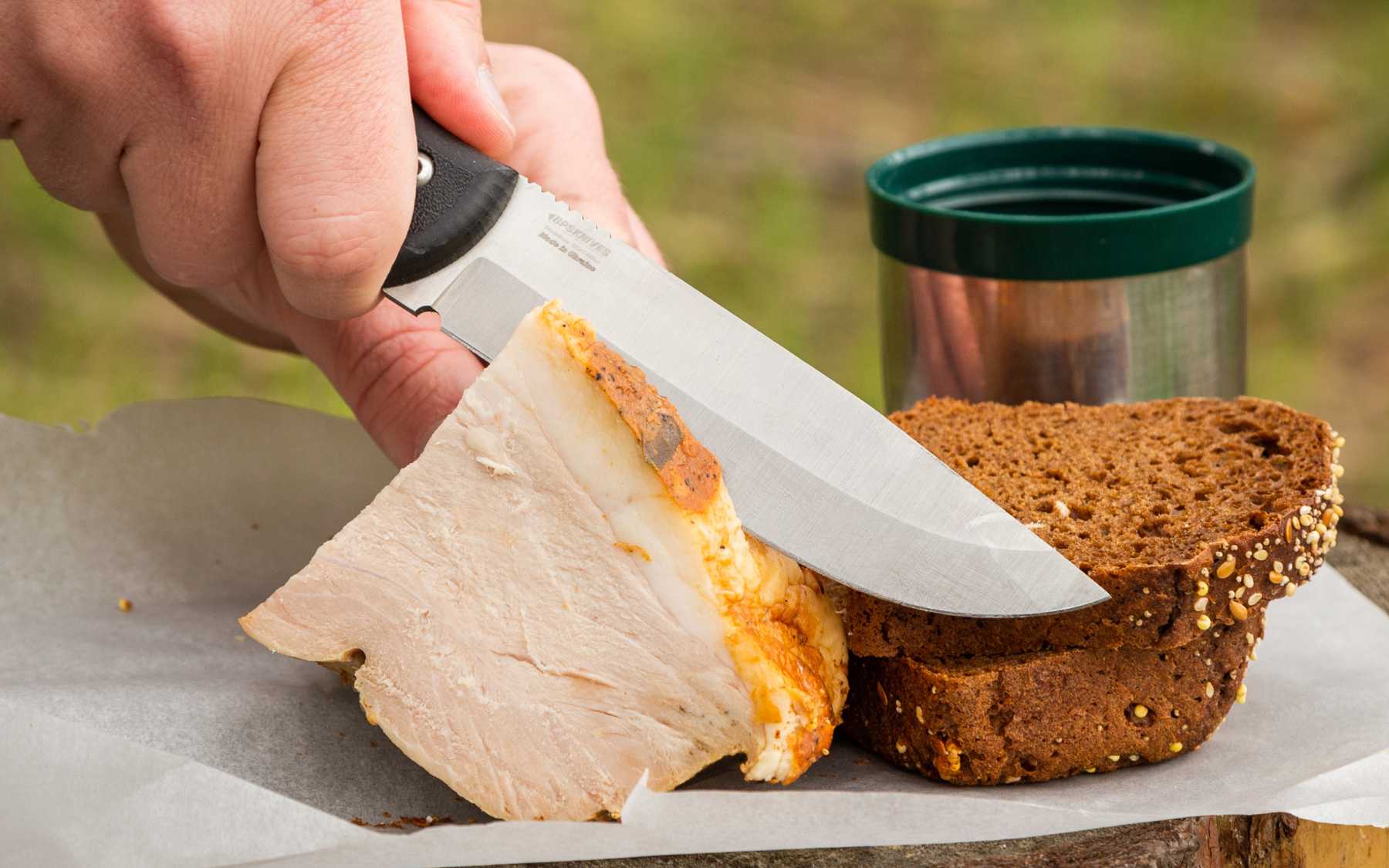
You won’t believe it, but the knife is primarily designed for cutting and piercing. And that’s always wonderful, especially when you need to skin an animal, gut a fish, slice food, cut ropes, and so on and so forth.
Crafting Tools and Shelter
Besides, a knife is central to creating a variety of makeshift tools in the wild or in a survival situation. Here are some key applications:
Carving & Shaping Wood
Whether you’re carving a spear, making notches for a shelter frame, or fashioning a wooden handle, a knife is ideal for shaping wood. You can use the knife to shave, slice, and carve pieces to create smaller tools like:
- Tent pegs: Shaped from sticks to secure shelter.
- Fishing spears: A sharp knife can help you carve and sharpen a branch to spear fish.
- Bow drill: A knife can shape the spindle and hearth for fire-starting by friction.
Processing Materials
A knife is invaluable for processing plant material, leather, bone, or even animal hides. You can create survival knife sheath. It can also help in cutting cords or ropes for binding things together.
Creating Primitive Tools
With some time and skill, a knife can be used to create more complex tools such as:
- Axes (by shaping larger pieces of wood or stone and fitting a blade).
- Scrapers or chisels (for removing bark or scraping hide).
Shelter Building
In a survival or wilderness setting, a knife is indispensable for shelter building. Here’s how it aids in crafting a shelter:
- Cutting Branches: A best rated survival knife can be used to cut or trim branches and saplings for use as structural supports for a shelter. This is particularly useful when creating lean-tos, A-frame shelters, or debris huts.
- Making Notches: When constructing a shelter with logs (e.g., in a log cabin frame), a knife can help create notches to interlock pieces of wood, improving structural stability.
- Tying & Securing Materials: A knife can be used to cut rope, vines, or cordage needed to tie branches together, as well as for trimming the excess material to ensure everything stays tight and secure.
- Creating Roof Coverage: You can use a knife to cut bark, leaves, or other vegetation to cover the shelter and provide weather protection. The knife allows you to prepare these materials more efficiently and precisely.
Fire Starting
Fire is the source of life. There was a time when humans didn’t know how to start a fire, and obtaining it was far from easy. A knife alone won’t start a fire ofcourse, but it plays an essential role in preparing the necessary materials.
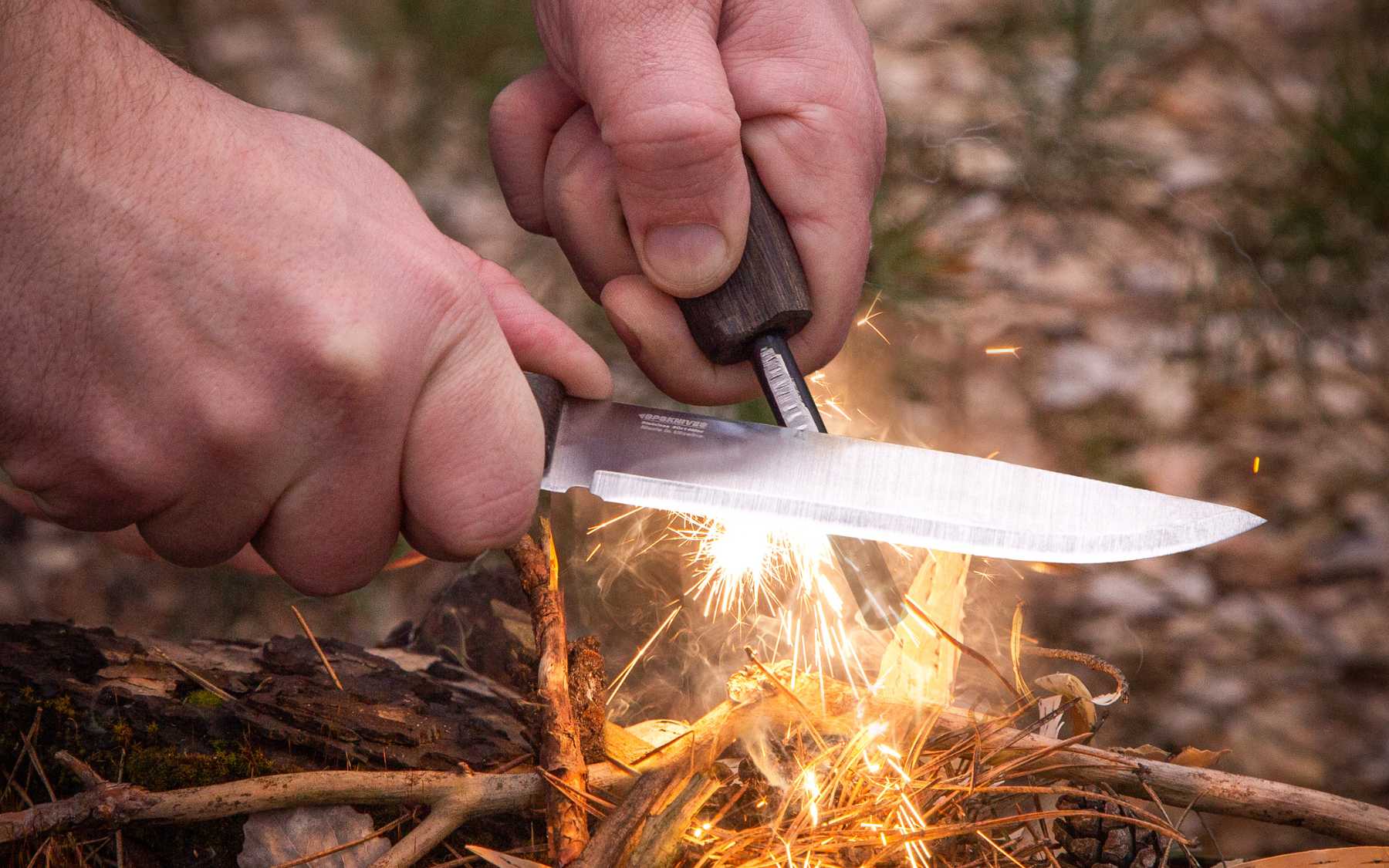
- Kindling Preparation: You can use a knife to shave wood into thin strips or shavings (e.g., from a softwood), which make excellent tinder and kindling. These small, thin slivers catch fire quickly and can be used to build up a flame.
- Fire Starter Kit Components: A survival knife with kit is necessary for making a bow drill (if you’re using the friction method) or preparing a firesteel striker. You can also create small, fine shavings of fatwood or dry bark to ignite a flame.
- Creating a Fireboard: If using the bow drill method, a knife is used to carve the fireboard (the piece of wood you will drill into) and spindle. The knife helps you to shape these materials precisely to create the friction needed to generate an ember.
- Spark Creation: In more advanced techniques, such as flint and steel, a knife can be used to strike the flint against steel to create a spark that ignites your tinder.
Owning a survival knife with firestarter is the best option.
Choosing the Right Survival Knife
As we’ve already established, a good knife at your belt is the key to survival in any, even the most hostile, environment. That’s why it’s crucial to choose it wisely! What is the best knife for survival?
Blade Material and Design
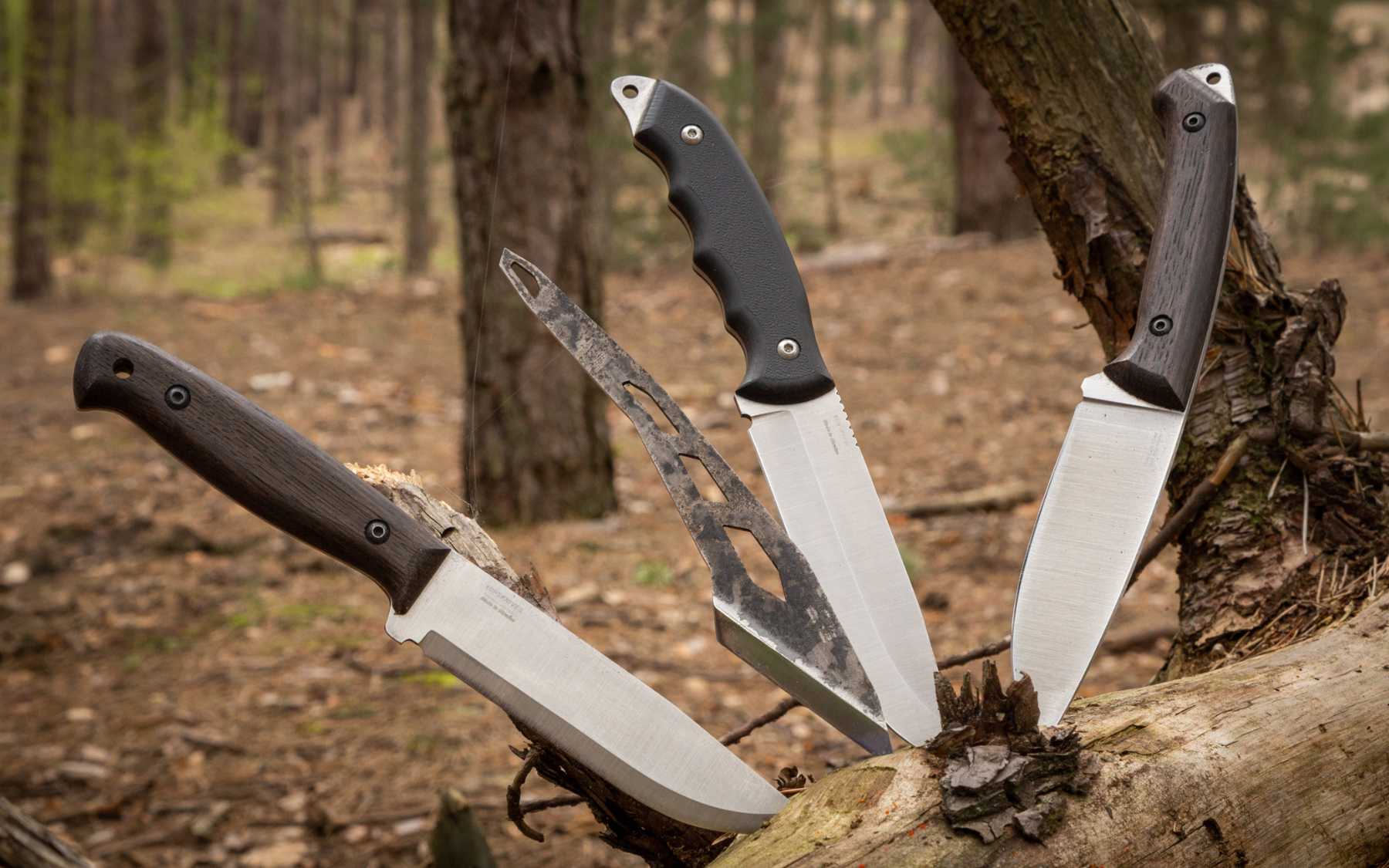
What is a good survival knife? The blade material of such knife determines its strength, edge retention, corrosion resistance, and overall durability. Here’s what you should consider:
a. Blade Materials
High Carbon Steel:
- Pros: Sharpens easily, holds an edge well, and is strong.
- Cons: Prone to rust and corrosion if not maintained properly.
- Best For: Those willing to maintain the blade and who prioritize edge sharpness and strength.
Stainless Steel:
- Pros: Highly resistant to rust and corrosion, more durable in wet or humid environments. Best option for surviving knife.
- Cons: Harder to sharpen compared to high carbon steel and may not hold an edge as well.
- Best For: Wet or coastal environments where rust resistance is crucial.
Tool Steel (e.g., 1095, D2, etc.):
- Pros: Tough, can take abuse without chipping, holds a good edge.
- Cons: Some grades may be more prone to corrosion, so regular maintenance is needed.
- Best For: Heavy-duty use where strength and edge retention are key.
Ceramic:
- Pros: Extremely sharp, holds an edge for a long time.
- Cons: Brittle, and can break or chip if misused.
- Best For: Lightweight, cutting-focused knives but not ideal for heavy tasks.
b. Blade Design
Straight Blade:
- Pros: Good for precision cutting and slicing.
- Cons: Not as effective for heavy chopping or batoning.
- Best For: Fine slicing and cutting tasks.
Drop Point Blade:
- Pros: Versatile and offers a balanced combination of strength and precision.
- Cons: Slightly less ideal for chopping compared to other designs.
- Best For: General-purpose survival knives, offering flexibility.
Clip Point Blade:
- Pros: Excellent for piercing and detailed work.
- Cons: Can be weaker at the tip and may break under heavy use.
- Best For: Hunting and tasks requiring precision.
Tanto Blade:
- Pros: Strong, durable tip that excels at piercing.
- Cons: Can be less versatile than other designs.
- Best For: Tactical or combat situations, where penetration is important.
Serrated Edge:
- Pros: Cuts through tough materials like rope, webbing, or wood more easily.
- Cons: Harder to sharpen and not as versatile for all tasks.
- Best For: Specialized cutting tasks where serration is useful.
c. Blade Thickness and Length
- Thicker Blades (e.g., 4mm to 6mm) are stronger and better for heavy tasks like chopping, batoning, or prying.
- Thinner Blades (e.g., 2mm to 3mm) are sharper, better for finer tasks like slicing and food prep.
- The ideal length typically ranges from 4 to 6 inches for a survival knife, offering a good balance between portability and usability.
Handle Comfort and Grip
The handle is where your hand will interact with the knife the most, so its design and materials are just as important as the blade itself.
a. Handle Materials
Wood:
- Pros: Comfortable, natural feel, and aesthetically pleasing.
- Cons: Can crack or warp over time with exposure to moisture.
- Best For: Traditional, aesthetic knives, but may need more care in harsh environments.
Rubber:
- Pros: Provides excellent grip, even in wet conditions, and tends to be more comfortable for extended use.
- Cons: Can wear down with heavy use and exposure to certain chemicals.
- Best For: Wet environments, where grip is crucial.
G-10 (Glass Reinforced Nylon):
- Pros: Extremely durable, lightweight, and offers a solid, non-slip grip.
- Cons: Harder than rubber, which may make it less comfortable for long periods of use.
- Best For: Tough environments where durability and strength are key.
Micarta:
- Pros: Offers a solid grip and is very durable; feels comfortable and warm in hand.
- Cons: Can get slick when wet unless textured.
- Best For: Tactical or bushcraft knives where a solid, natural feel is desired.
Paracord Wrap:
- Pros: Lightweight, customizable, and multi-functional (you can unravel it for use as cordage).
- Cons: Less comfortable for extended use without additional padding.
- Best For: Lightweight, survival-focused setups where versatility is more important than comfort.
b. Handle Design
- Ergonomics: The handle should fit comfortably in your hand and allow you to use the knife for long periods without discomfort or fatigue. Look for handles with curves, contours, or slight textures to provide extra comfort and reduce slippage.
- Texturing: Handles with textured surfaces (such as stippling or grooves) offer better grip, which is crucial in wet or slippery conditions.
- Guard/Finger Protection: A good survival knife handle should have some kind of guard or pommel to keep your hand from slipping onto the blade. This is especially important for safety during heavy chopping or batoning.
- Lanyard Hole: A hole at the base of the handle allows you to attach a lanyard for added security, preventing the knife from falling out of your hand during use.
Conclusion
A good knife will save your life more than once in the forest, steppes, mountains — anywhere that the hard road may take you! That’s why we eagerly await your visit to our online store, where you’ll find a professional survival knife worthy of you. With it, you’ll embark on many glorious adventures!