

Europe was once one of the centres of white man’s power. It was a melting pot where for centuries some of the best minds of mankind created cultural masterpieces, incredible inventions and philosophies. And here, in the crucible of many wars, the most famous traditional knives on the planet were born.
Introduction to the Cultural Significance of Knives
The cultural significance of knives cannot be overemphasised, they have accompanied man since our species could barely think and still look like a monkey walking on its hind legs. Through knives we can study the historical process and see how man’s mentality and needs have changed through history.
Traditional knives were used in ceremonies, they had a huge significance in mythology, were an indicator of the status of the owner and are still part of national costumes, like the dirk in the national costume of the Scots.
European Knife Traditions
So let’s take a look at the major knife cultures:
Scandinavian Knives
Who hasn’t heard of the badass seafarers from the North called Vikings! For 300 years they plundered and terrorised Britain and other neighbouring countries, were the first to discover America (yes, Columbus wasn’t the first) and blazed many trade routes. And of course they forged the beautiful traditional scandinavian knives that grace our eyes to this day. Here are the most famous of them:
Sax and Scramasax. A broad combat knife of the Germanic and Scandinavian peoples, widely used by the Vikings as an auxiliary weapon and a knife for domestic use. The blade can be up to 55 cm long, no more than 3 cm wide, but very thick at the point, about 1 cm. The blade is single-bladed, with a noticeable bevel from the point to the edge (false blade). The handle can be straight or curved, without a guard and at least 10 cm long. Saxes and skramasaxes were carried in a sheath behind the waist, in front at the lower abdomen or on the hip. In Viking graves such blades were found together with household knives. Due to the weight of the skramasax, stabbing blows were terrible with them in terms of strength, it also does a great job with household tasks. These hand forged scandinavian knives look awesome.
 Photo from viking-armoury.com
Finnish puukko. Originally puukko in Finnish was called veitsi, meaning simply “knife”. The word puukko was used to distinguish the national knife from other types of knives. Literally, puukko means “knife with a wooden handle” (“puu” means “wood” in Finnish). The blade is straight, of short length, usually shorter than the hilt, 60-100 mm, with a comparatively thick edge. In cross-section – wedge-shaped, sometimes with doles. The chamfers of the blade are usually relatively low, the cutting edge is formed by chamfers without chutes. The back of the blade is straight or slightly drooping (drop point), on some models there is a “pike” – bevelled edge, some hunting skinning varieties have a slightly upturned edge line (trailing point). Perfect for hunting, fishing, hiking and wood carving.
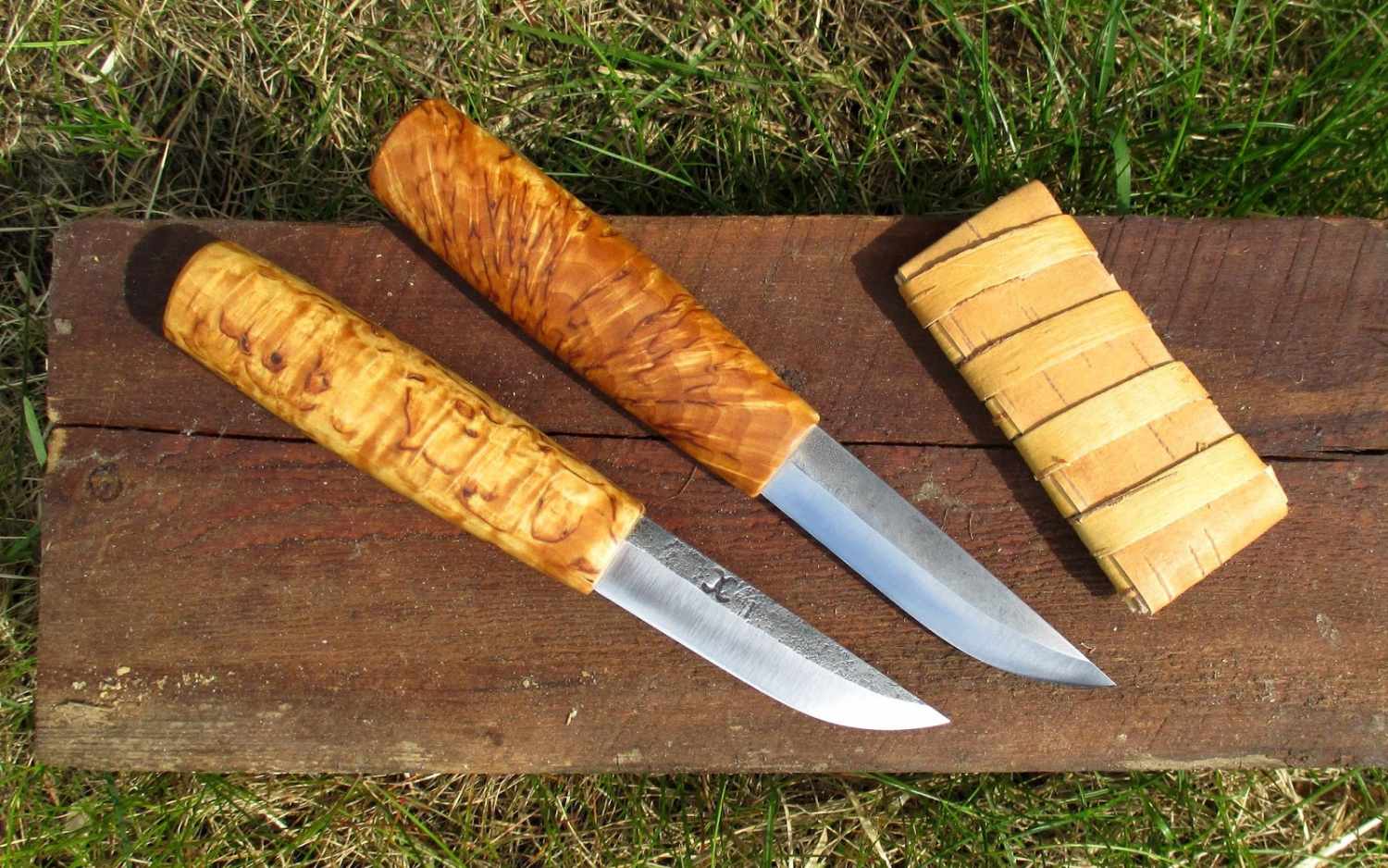 Photo from pyrypuukko.blogspot.com
Sami knife. A knife that is still used today by the Sami people. The Sami knife has a long, wide, and strong blade that is suited for light chopping tasks such as de-limbing, cutting small trees for shelter poles brush clearing, hunting tasks and is sometimes used as a substitute for an axe for chopping and splitting small amounts of firewood from standing dead trees-an essential ability when all dead and fallen wood is buried underneath many layers of snow or for combat. Typical Sami knives have a blade length ranging from 20 to 45 centimeters. Nice choice for fishing, hunting or hiking. One of the most universal scandinavian knife types.
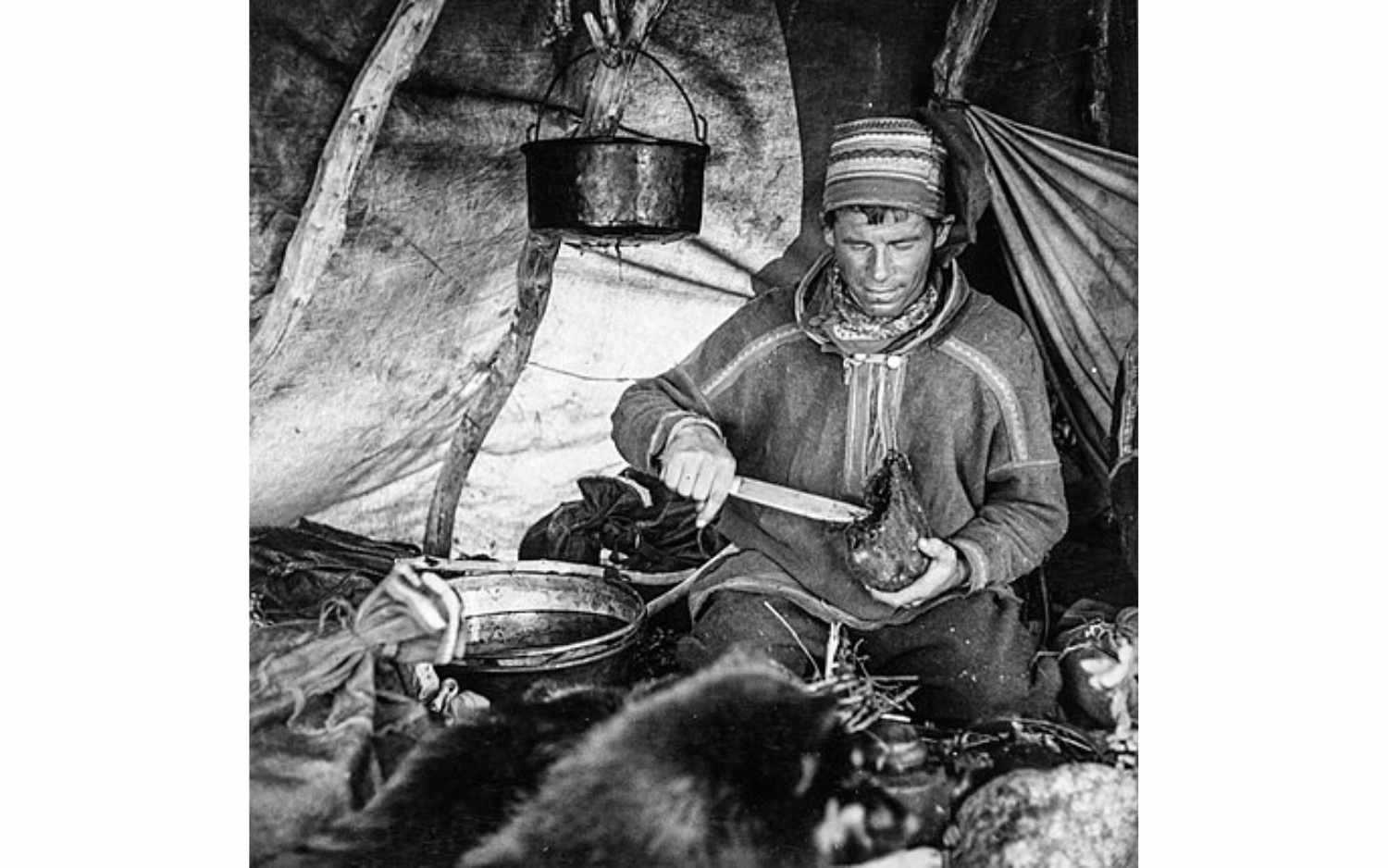 Photo from en.wikipedia.org
Mediterranean Knives
The Mediterranean is the cradle of many great nations such as the Roman Empire, the ancient Greek polises and ancient Egypt. Here rumbled truly grandiose events that wrote world history and determined the future for hundreds of years ahead. And how could it be without knives? These are some of the most famous:
The Pugio. The famous Roman legionary knife! With this knife Roman warriors walked steely footsteps across the expanses of ancient Europe, North Africa and Asia. Pugio had a steel double-edged blade 15-35 cm long, wide leaf-shaped. The centre rib running along the entire blade on a number of models gave strength and rigidity to the whole dagger. The handle was T-shaped and could be richly decorated with gold and silver inlay even for ordinary soldiers. It was used not only for camp chores, cooking and picking teeth, but was also used in combat. A great choice for lovers of history and all things beautiful!
 Photo from reliks.com
Navaja. A large Spanish folding knife, used as a weapon and as a household tool. The navaja originated because of the prohibition for commoners in Spain to carry long knives. According to other sources, the navaja is considered one of the oldest examples of folding knives still in production today, and its origins come from the Andalusian region of Southern Spain. The navaja has a locking device in the form of a spring on the side of the handle, which was released by means of a ring or lever, which is the ancestor of the backlock. There were semi-folding models, that is, with a blade longer than the hilt. The shape of the blade with a bevelled edge. The handle almost always has a characteristic curve at the end. Such a beauty!
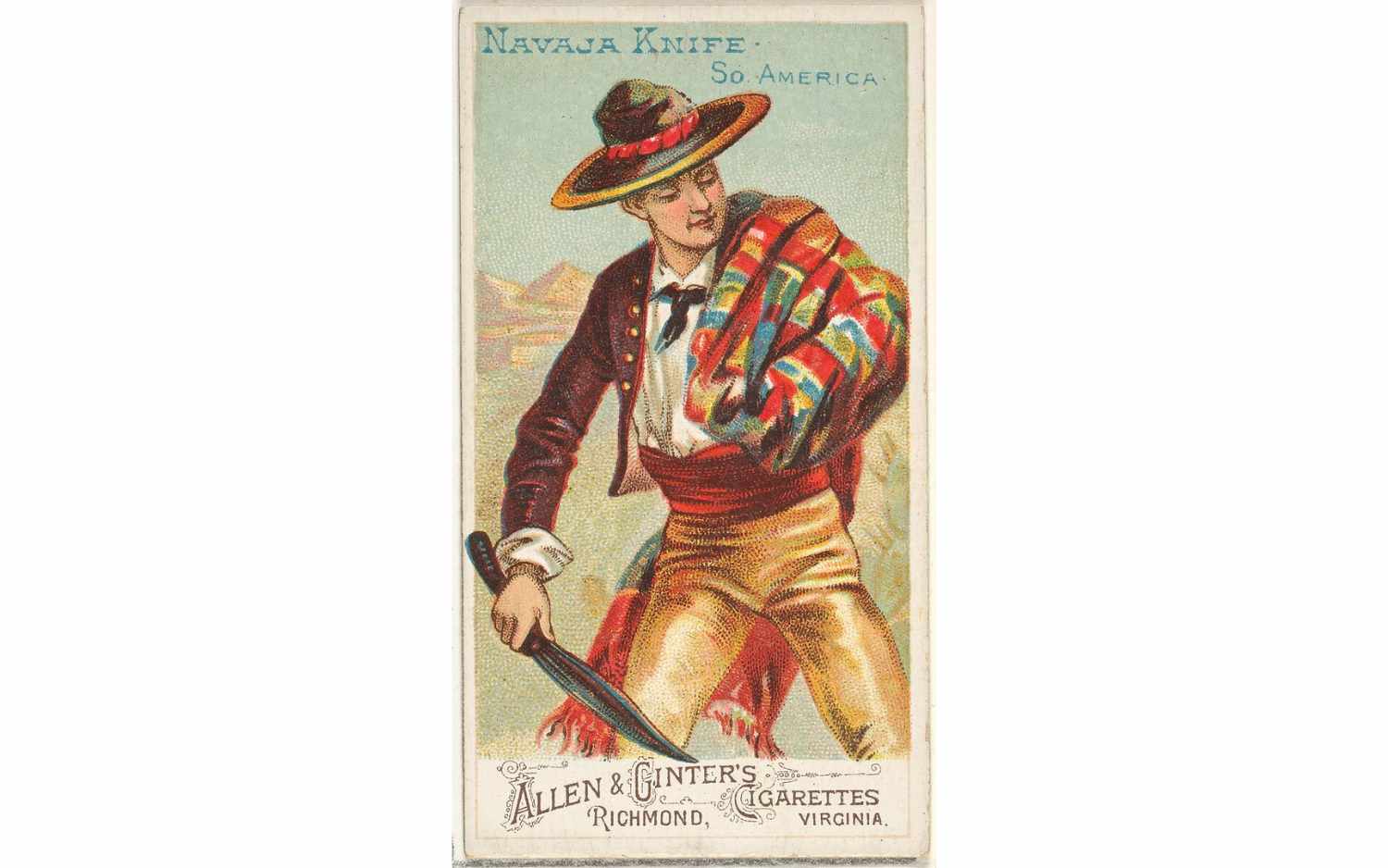 Photo from metmuseum.org
Western European Knives
The cradle of many philosophies, scientific breakthroughs and very cool knives! Here are just a few of them:
Swiss Knife. You won’t find a single person who doesn’t know what a Swiss knife is. In one small folding knife you have a screwdriver, a small saw, a can opener, a corkscrew, pliers and more in addition to the blade! From as far back as 1908 to the present day, it is a Swiss Army knife, used for household chores.
 Photo from australiangeographic.com.au
Scottish Dirk. Dirk is a Scottish dagger with a straight blade. It is a traditional attribute of Scottish national costume, and is also worn with the uniforms of Scottish regiments of the British Army and Commonwealth countries. It has a long straight (up to 50 cm) blade, designed for stabbing and cutting blows in close hand-to-hand combat. The handle is without a cross. The scabbard usually has 2 protruding sockets for a fork and a knife. Sometimes the blades of dirks were made from the fragments of Scottish palashes. This blade has always been a symbol of high position in society, as well as strength and courage. The handle is often decorated with carvings and ornaments, sometimes inlaid with precious stones or metals. The handle is often made of wood or antler.
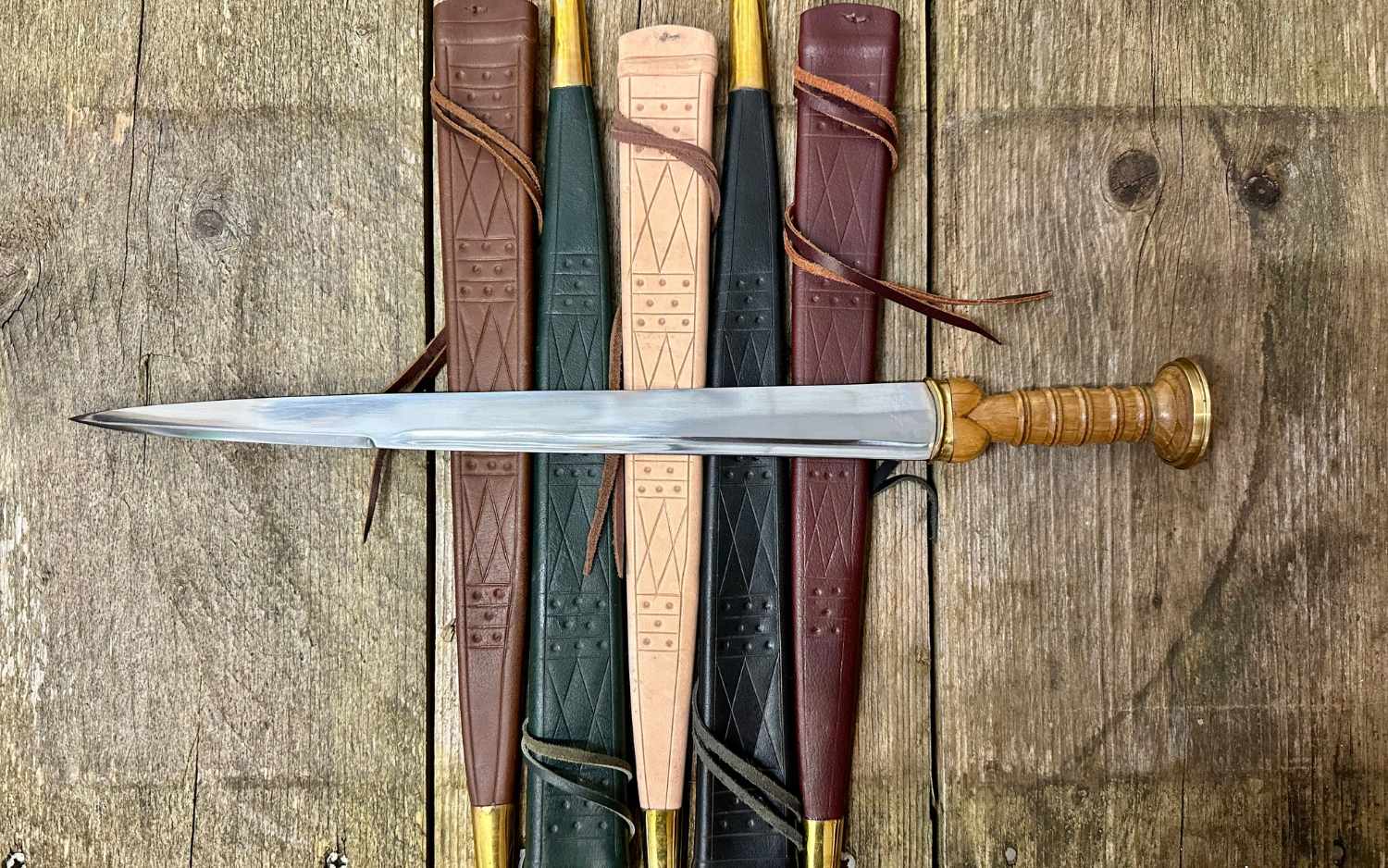 Photo from todcutler.com
Modern Influences and Globalisation in Knife Making
Now let’s move from ancient traditions to modern technology.
How Modern Technology Has Transformed Knife Making
Modern technology has significantly transformed knife making in several ways:
- Precision and Consistency: Computer-aided design (CAD) and manufacturing (CAM) technologies allow for precise and consistent shaping and cutting of knife materials, ensuring high-quality standards.
- Advanced Materials: Innovations in metallurgy and materials science have introduced new alloys and composite materials that enhance durability, sharpness, and corrosion resistance of knives.
- Laser Cutting and Engraving: Laser technology enables intricate cutting patterns and precise engraving on knife blades and handles, adding both aesthetic appeal and functional advantages.
- CNC Machining: Computer Numerical Control (CNC) machines automate and enhance the manufacturing process, ensuring uniformity in blade geometry and reducing production time.
- Heat Treatment: Controlled heat treatment processes using modern ovens and furnaces ensure blades achieve optimal hardness and toughness, enhancing their performance and longevity.
- Ergonomic Design: CAD software allows for ergonomic designs that optimise grip and comfort, making knives easier and safer to use for extended periods.
- Quality Control: Technologies such as X-ray inspection and automated testing ensure each knife meets specified standards before reaching the market, improving overall quality assurance.
- Customisation: Advances in technology have facilitated customisation options for customers, allowing them to personalise blade shapes, handles, and finishes according to their preferences.
These advancements have not only improved the functionality and aesthetics of knives but also expanded the range of possibilities for both manufacturers and consumers in the knife-making industry.
The Impact of Global Trade on Knife Design and Manufacturing
Global trade has significantly influenced knife design and manufacturing in several ways:
- Diversity of Materials: Global trade allows knife makers to access a wide range of materials. For example, high-quality steel from Sweden, Damascus steel from the Middle East, or handle materials like exotic woods from tropical regions. This diversity enables knife makers to experiment with different combinations, enhancing both functionality and aesthetics.
- Technological Advancements: Trade facilitates the exchange of technology and manufacturing techniques. Knife manufacturers can adopt advanced machinery and processes from countries leading in precision engineering, improving efficiency and quality control.
- Cultural Exchange: Different regions have unique knife traditions influenced by local needs and customs. Global trade encourages cultural exchange, leading to the adoption of design elements and ergonomic features that cater to diverse consumer preferences worldwide.
- Competitive Market: Increased global competition motivates knife manufacturers to innovate. They must offer unique designs or incorporate advanced features to stand out in the global market, benefiting consumers with more choices and better products.
- Supply Chain Efficiency: Global trade allows manufacturers to source components and materials globally, optimizing costs and ensuring consistent quality. This efficiency is crucial for meeting varying consumer demands across different markets.
- Legal and Regulatory Influence: Trade agreements and regulations impact knife design by setting standards for safety, materials sourcing, and environmental sustainability. Manufacturers must comply with these regulations to access international markets.
Overall, global trade has transformed knife design and manufacturing into a dynamic, interconnected industry, where innovation and cultural exchange thrive alongside technological advances and market competition.
Conclusion
We have sorted it all out now! The history of knife making in Europe is not only the history of technical achievements and economic development, but also the history of cultural influences that have shaped the diversity of styles and traditions of production. From the craftsmanship of the ancient Celts to the refined knives of the Renaissance and modern innovations in manufacturing, European knives never cease to amaze with their diversity and quality. The preservation and transmission of these traditions play a key role in preserving the heritage and cultural identity of the regions, continuing to inspire new generations of craftsmen and collectors around the world.