
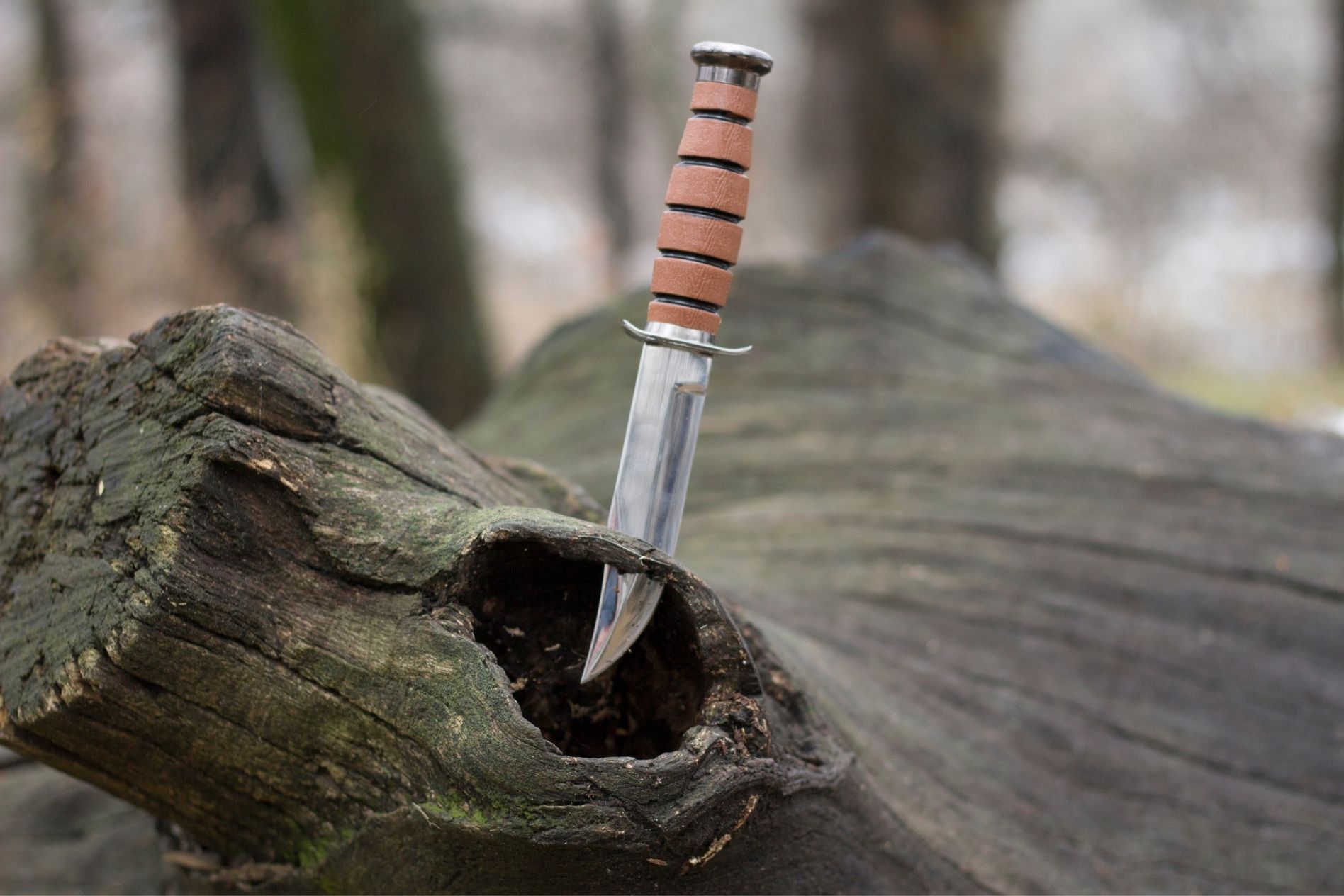
Many useful elements in the design of a knife did not appear by chance – they arose in response to real risks. One of these is the guard. When delivering a stabbing blow to a solid object without it, your fingers can slip off the handle and fall onto the blade. This is dangerous and can cause serious injury.
The role of knife guards in design and function
Our distant ancestors weren’t too happy with this state of affairs — not one bit. So, naturally, they set out to fix the problem. And thus, the guard was born — a simple yet brilliant invention that, in one form or another, is now found on countless knives. The guard protects your fingers from nasty cuts and also makes the grip more secure and comfortable. Over time, it evolved — from a basic crossbar made of bone or metal into intricate, often artistically crafted elements on combat blades. Warriors, blacksmiths, and hunters would shape the guard to fit specific needs: sometimes to shield the hand in battle, other times to provide better control when skinning game. Function met form — and both kept getting better.
Influence on Balance and Handling
The Guard as a Control Element
Knife finger guard (the barrier between the blade and handle) serves not only as a safety feature but also as a control point. It prevents the user’s hand from slipping onto the blade, especially in wet, dirty, or high-stress conditions. This improves user confidence and allows for controlled forceful work — whether that’s field dressing game, batoning wood, or performing tasks that involve repetitive motion or pressure.
Balancing the Knife
A knife’s balance point — the spot where its weight is evenly distributed — plays a crucial role in how it handles. Ideally, for an all-purpose or working knife, the balance should fall around the guard or slightly behind it on the handle. The guard itself can act as a stabilizing anchor, affecting the center of gravity and influencing how the knife behaves in hand:
- Combat knives: These require quick grip transitions and fluid maneuverability. A well-designed guard supports control and retention during dynamic use.
- Hunting knives: A larger or more prominent guard helps maintain a secure grip during field dressing or skinning, especially when gloves are involved or hands are slick.
- Survival and bushcraft knives: In this category, the balance often shifts forward (toward the blade) to aid in chopping or forceful tasks. The guard ensures safety during prolonged use under unpredictable conditions.
- Kitchen knives: In culinary tools, the presence or absence of a guard dramatically influences grip style. For example, a full bolster (guard) on a chef’s knife can hinder a “pinch grip,” whereas a partial or sloped bolster can assist in precision slicing while still offering hand protection.
Materials and Design Matter
The material and shape of the guard also affect balance and handling. A metal guard adds weight, which is useful for heavier-duty knives. Lighter materials, like polymer or G-10, reduce fatigue over long use. Ergonomic guards with finger contours or thumb ramps can enhance grip stability and reduce slippage, making detailed work easier and safer.
 Myths About Knife Guards
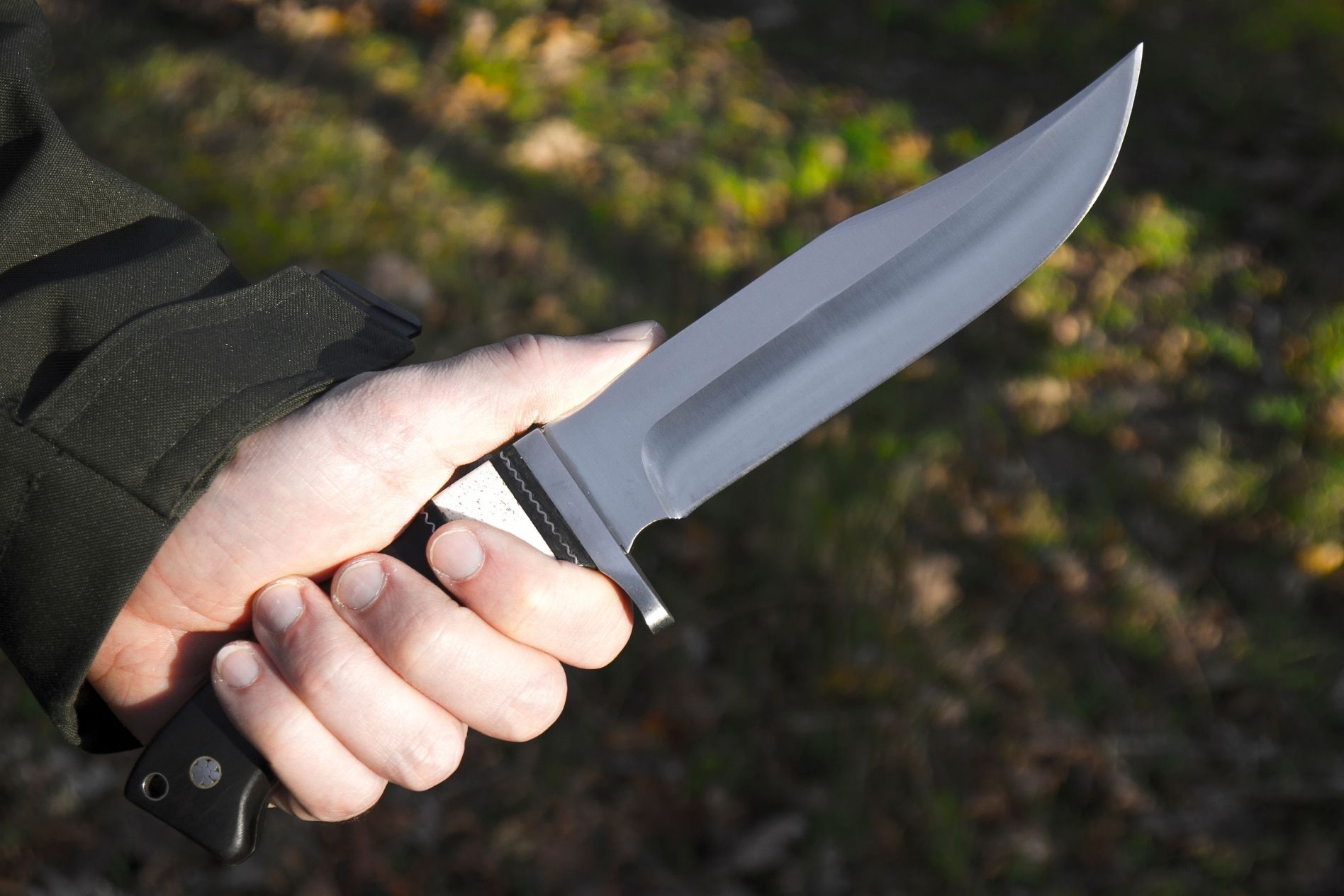
And of course, after thousands of years of knife use, it’s no surprise that a whole host of myths have sprung up around the guard!
Myth 1: “Only Combat Knives Need Guards”
While guards are essential in combat or coast guard knife, they serve a broader purpose in nearly all types of blades — including hunting, bushcraft, survival, and even kitchen knives. Anytime there’s a risk of the hand slipping toward the blade during use, a guard can improve both safety and control. Even minimalist knives may integrate subtle guards or finger choils for this very reason.
Myth 2: “Guards Ruin Knife Aesthetics”
Some collectors or knife purists believe guards break up the visual flow of knife guard designs. However, many high-end blades feature elegantly integrated guards that enhance rather than detract from aesthetics. From ornate guards on antique daggers to sleek bolsters in modern chef knives, functional beauty is entirely achievable.
Myth 3: “Knife Guards Are Obsolete Thanks to Better Grip Design”
Modern handle ergonomics, texturing, and materials have come a long way — but they don’t eliminate the need for guards. In high-pressure, wet, or fast-paced environments, even the best grip can fail. The best knife guards is a mechanical safety feature that complements grip design, not something replaced by it.
Myth 4: “The Bigger the Guard, the Better the Knife”
This is a common misconception, especially in survival or fantasy-style knives. Oversized guards can actually hinder performance by limiting hand mobility or making certain grips (like a choked-up pinch grip) impossible. A good guard is appropriately sized for the knife’s intended purpose — not just big for the sake of intimidation or aesthetics.
Myth 5: “Fixed-Blade Knives Always Have Guards — Folders Don’t Need Them”
While it’s true that many folding knives don’t have traditional guards, many modern folders incorporate integrated finger choils, flippers, or thumb ramps that serve a similar purpose. These features are designed to provide the same hand protection in a more compact or folding format. It’s a different approach to the same safety principle.
 Variations in Guard Design
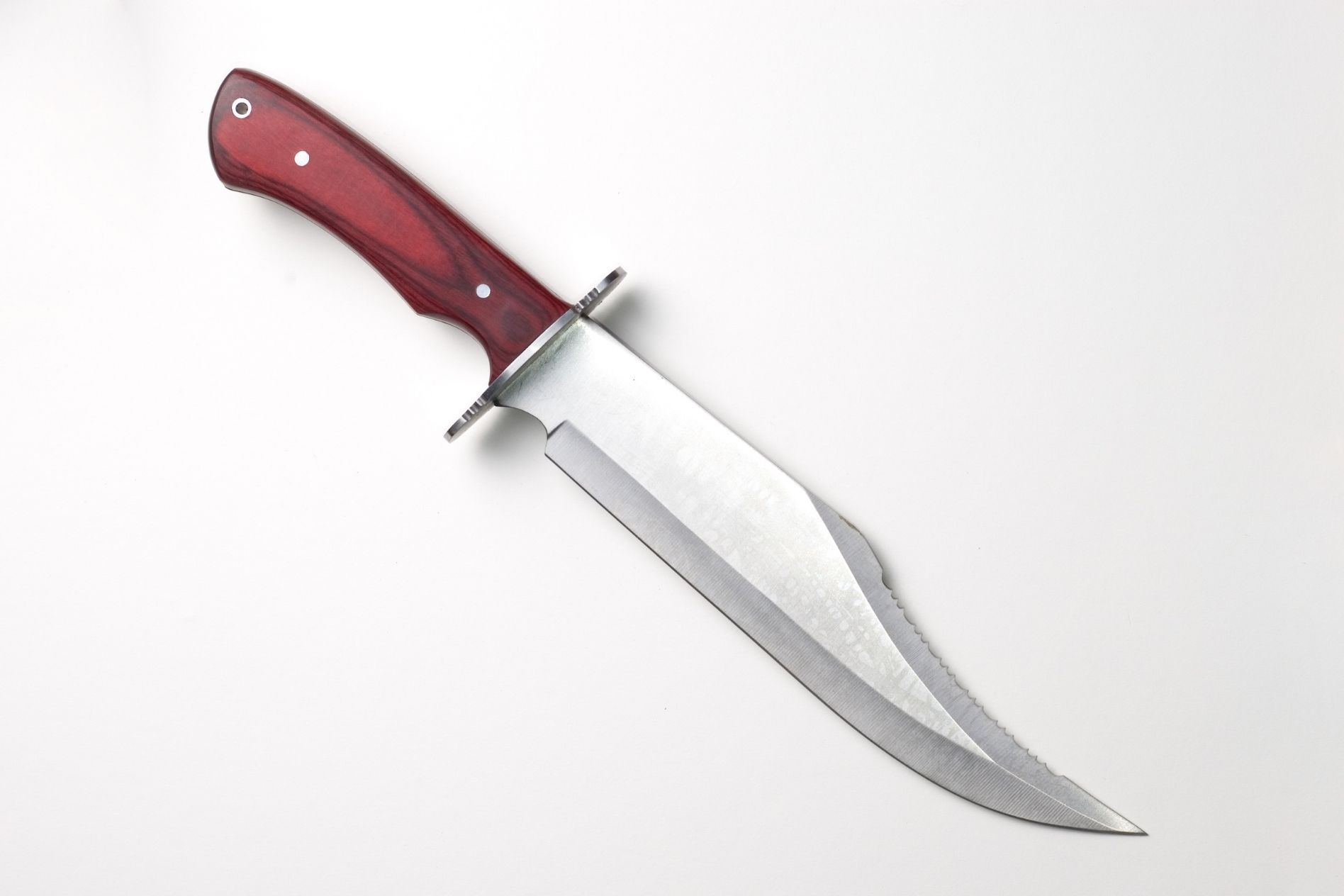
Knife guards are far from one-size-fits-all. Over centuries of development, different cultures and industries have produced a wide array of types of knife guards — each tailored to specific uses, grip styles, and aesthetic traditions. Understanding these variations helps knife users and collectors choose the right blade for the job, and appreciate the engineering behind it.
1. Crossguard
Description: A classic design featuring a bar perpendicular to the blade, extending on both sides of the handle.
Function: Prevents hand slippage and offers defensive capabilities in combat.
Commonly Found On: Medieval swords, daggers, Bowie knives, and traditional combat knives.
Notable Example: The historical knife design of Bowie knife, with its iconic brass crossguard.
2. Half Guard (Single-Sided Guard)
Description: A guard that only extends on the bottom side of the knife (the edge side), offering protection from downward slippage.
Function: Offers control and safety without obstructing thumb movement or complex grips.
Commonly Found On: Hunting knives, survival knives, and certain military blades.
3. Integral Guard
Description: Built directly into the tang or forged as part of the blade — not a separate component.
Function: Reduces weak points and enhances durability while maintaining a sleek, minimalist profile.
Commonly Found On: Custom knives and premium forged blades.
Notable Benefit: Seamless construction eliminates dirt traps and improves hygiene (valuable in kitchen knives too).
4. Sub-Hilt Guard
Description: A secondary guard located further down the handle to support a second finger.
Function: Enhances grip security during power cuts or thrusting motions.
Commonly Found On: High-end fighting knives, custom designs, and some large survival blades.
Drawback: Can interfere with certain grip styles or sheathing.
5. Bolster as Guard
Description: A thickened section of metal where the blade meets the handle, often without protruding edges.
Function: Acts as a partial guard while reinforcing blade stability and improving balance.
Commonly Found On: Chef’s knives, EDC folders, and folding knives.
Note: Many kitchen knives use the bolster instead of a full guard to allow for easy pinch gripping and controlled slicing.
6. Quillon
Description: An ornate, often curved crossguard element, especially in traditional or ceremonial blades.
Function: Offers both hand protection and aesthetic distinction.
Commonly Found On: Rapiers, ceremonial daggers, historical European and Middle Eastern blades.
Cultural Significance: Often reflects status, heritage, or martial tradition.
7. Flipper Tab / Finger Guard in Folding Knives
Description: A projection on the blade’s spine (flipper) or handle design that acts as a guard when deployed.
Function: Serves as a hand stop and opens the knife quickly with one hand.
Commonly Found On: Assisted-open knives and EDC blades.
Modern Innovation: Combines safety and speed in compact carry formats.
 Choosing a Knife with a Guard
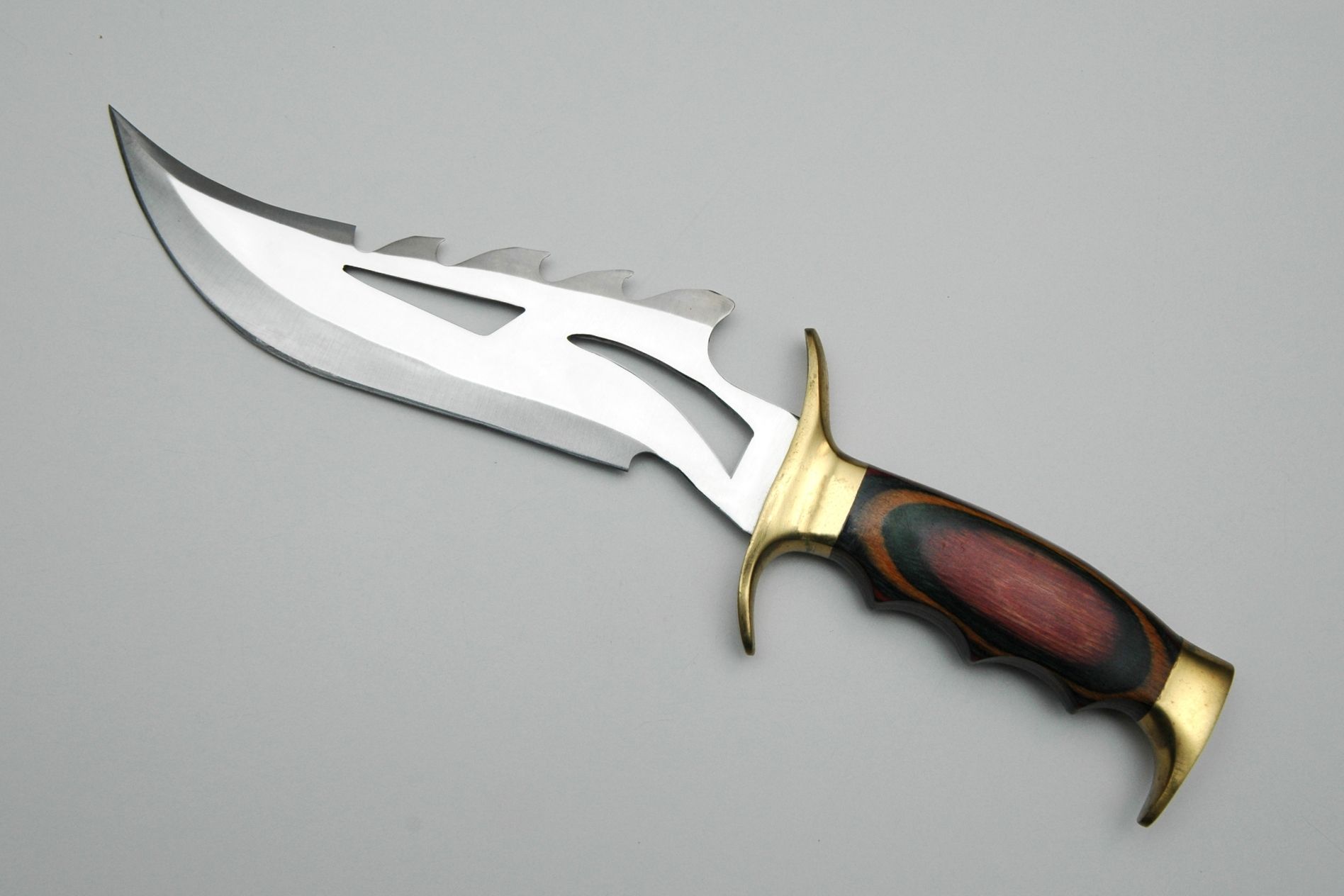
When choosing a knife with guard, many people focus on the blade material or overall aesthetics, but the design of the guard is just as critical—especially when it comes to comfort, safety, and how well the knife performs under real-world conditions.
The first and most important consideration is how you plan to use the knife. A blade meant for survival, outdoor tasks will benefit from a more prominent guard that prevents your hand from slipping forward during intense or heavy-duty use. In contrast, a kitchen knife often calls for minimal or no guard at all to allow for fluid, precise movements, especially if you prefer a pinch grip near the blade’s base. Folding knives and everyday carry options usually integrate subtle features like flipper tabs or finger choils that serve the same protective purpose in a more compact form.
Comfort is key when choosing a knife with guard. A guard should feel natural in the hand—it shouldn’t dig into your fingers, restrict your grip, or limit how you hold the knife during fine work. The right knife will allow for a firm, controlled grip while also offering enough protection to make you feel confident during use.
The materials and construction of the guard also matter. Some knife blade guards are forged as part of the blade itself, which improves durability and structural integrity. Others are separate components, attached to the handle, and can vary widely in quality. If the guard feels flimsy or poorly integrated, it’s a sign the knife may not hold up to demanding use.
Sheath compatibility is another factor to keep in mind. A large or unusually shaped guard might make it harder to draw the knife quickly or could interfere with how it’s secured. In situations where rapid access matters—such as in field environments—the relationship between the guard and the sheath becomes crucial.
Finally, while design and aesthetics do play a role, they should never override functionality. A beautifully crafted knife with an impractical guard might look impressive, but it won’t serve you well if it compromises your grip or slows you down. On the other hand, a clean, well-thought-out guard can blend seamlessly with the knife’s overall form, enhancing both appearance and performance.
In the end, the best way to choose is to hold the knife in your hand, if possible. Feel how the guard interacts with your grip, imagine using the knife in the tasks you’ll face most often, and trust your instincts. A good guard shouldn’t call attention to itself—it should quietly do its job, keeping you safe and in control.
Conclusion
And that just about wraps it up. Choose a knife with a guard that suits your needs. We’ve got a few great options in our store that could become your trusted companions on all your adventures.