
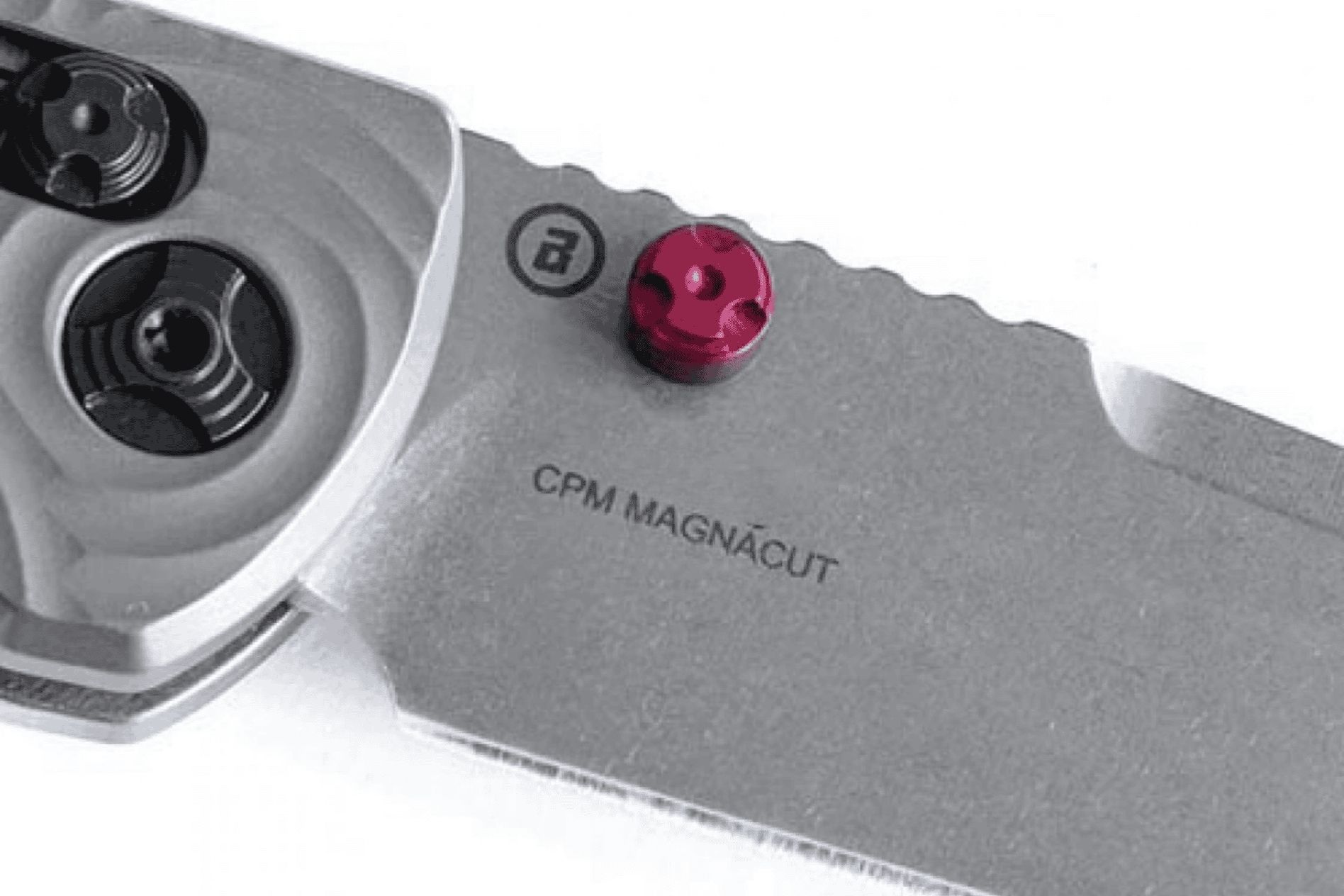
Throughout its long, fascinating, joyful—and sometimes not so joyful—history, humanity has been inspired by countless wonderful ideas and concepts. Eternal life, the perpetual motion machine, turning base metals into gold, reaching the speed of light, and so much more. One day, we will achieve all of this and live like demigods—free from illness and death, ruling over star systems and creating our own paradise both on Earth and in the cosmos. But sadly, that day won’t come tomorrow, or even the day after; there is still an overwhelming amount of work ahead. Yet in some areas, we’ve already made remarkable progress—metallurgy, for example. Just look at MagnaCut steel!
Why everyone is talking about MagnaCut
The best steel of our time—no more, no less! The King of Steels, the Cutting God! Or is it really? Let’s take a closer look.
What kind of steel is it and why did it become popular
MagnaCut is a powder metallurgy stainless steel designed by metallurgist Dr. Larrin Thomas, known for his research at KnifeSteelNerds.

Larrin Thomas
It was officially released by Crucible Industries in 2021. What sets MagnaCut apart is its balanced composition. Unlike many stainless steels that rely heavily on chromium carbides (which improve wear resistance but reduce toughness), MagnaCut minimizes chromium carbide formation while maintaining stainless levels of chromium in solution.
This allows the steel to deliver:
- Stainless performance comparable to top corrosion-resistant steels
- Wear resistance similar to high-end super steels
- Toughness exceeding many non-stainless tool steels
These qualities made it an immediate favorite among knife manufacturers looking for a versatile steel that performs well in everyday carry, outdoor knives, and even professional-use blades.
What is MagnaCut steel comparable to?
So why is this steel so special? MagnaCut stands out because it doesn’t rely on the traditional trade-offs of stainless steels. Here are some of its biggest advantages:
1. Exceptional toughness for a stainless steel
Many high-wear stainless steels (like S110V or M390) tend to be brittle. MagnaCut, however, offers toughness closer to carbon tool steels such as 3V—something previously unheard of in a stainless formulation.
2. High wear resistance without excessive brittleness
Its fine, well-distributed vanadium and niobium carbides give excellent wear resistance while avoiding large, crack-prone chromium carbides.
3. True stainless performance
With around 10–12% chromium in solution, MagnaCut achieves corrosion resistance comparable to steels like LC200N or Vanax in real-world use—far better than typical high-hardness steels.
4. Flexible heat treatment
MagnaCut responds extremely well to different heat treatments, allowing makers to tailor a blade for:
- Maximum toughness
- Maximum edge retention
- Balanced all-around performance
This makes it appealing for both production knives and custom makers who want to fine-tune their blades.
5. Real-world cutting performance
Users consistently report that MagnaCut:
- Is easier to sharpen than many super steels
- Holds a fine edge exceptionally well
- Resists chipping during hard use
- Handles outdoor environments, food prep, and EDC without rusting
In short, it brings “super steel” performance yet behaves more user-friendly than many traditional super steels.

How did the idea to create MagnaCut come about
The idea behind MagnaCut was born from a long-standing problem in knife metallurgy: stainless steels always required a compromise. If you wanted corrosion resistance, you usually lost toughness. If you wanted edge retention, you often sacrificed durability. Knife enthusiasts and manufacturers had learned to live with these limitations—until one metallurgist decided the trade-offs shouldn’t be inevitable.
Who invented MagnaCut steel (Larrin Thomas and his story)
So, when did magnacut steel come out? MagnaCut was invented by Dr. Larrin Thomas, an American metallurgist and the author of the well-known website KnifeSteelNerds. Larrin grew up around metallurgy—his father worked at Crucible Industries, the company behind many famous CPM steels such as S30V and S35VN. From a young age, he was surrounded by discussions about alloys, heat treatment, and steel behavior. After obtaining his PhD in metallurgical engineering, he combined academic expertise with decades of practical exposure to blade steel science.
His goal was never to chase hype. Instead, he approached steel design analytically: through research, testing, and in-depth metallurgical modeling. MagnaCut was the result of a long inquiry into whether stainless steel could avoid forming large chromium carbides, which are the main reason toughness and edge stability usually suffer in stainless alloys. The answer turned out to be yes—if you redesign the composition from the ground up.
What problems were there with other steels before
Before MagnaCut, the knife world relied on steels that were excellent in some areas but frustrating in others:
1. Stainless steels were never tough
Popular stainless steels (like M390, S110V, or S35VN) provide great corrosion resistance, but their toughness suffers because of large chromium carbides. These carbides make the blade more brittle and prone to chipping under heavy loads.
2. Tough steels were not stainless
CPM 3V, 4V, or tool steels like A2 and 1095 have outstanding toughness—but they rust easily. In outdoor and survival environments, this is a serious drawback.
3. Wear resistance often came at the cost of sharpenability
Ultra-high-carbide steels hold an edge for a long time, but sharpening them in the field is difficult and slow.
4. No single steel mastered all critical properties
Knife designers constantly had to choose:
- Stainless + wear-resistant, OR
- Tough + easy to sharpen, OR
- Long edge retention, OR
- Corrosion resistance

The purpose of developing MagnaCut
Eventually, all the issues mentioned above became so irritating that Thomas Larrin made a firm, unwavering decision: no matter what it took, he would create a truly universal steel—one that could serve as the foundation for equally universal knives and be free of those annoying drawbacks. And he actually did it!
Why is MagnaCut considered the best
Yes, MagnaCut is regarded as one of the best knife steels of our time nowadays, because it succeeds where previous stainless steels failed. It delivers an unprecedented combination of toughness, edge retention, and corrosion resistance—properties that are usually in conflict with each other.
Main advantages of MagnaCut
- Exceptional toughness for a stainless steel
MagnaCut is significantly tougher than M390, S35VN, and other common stainless steels. Its fine microstructure and minimized chromium carbides reduce brittleness and make the MagnaCut blade more resistant to chipping, especially during heavy outdoor use. - High edge retention with practical sharpening
Thanks to its vanadium and niobium carbides, MagnaCut maintains a sharp edge for a long time without reaching the extreme, hard-to-sharpen territory of steels like S110V. It strikes the perfect middle ground: long-lasting sharpness but still field-sharpenable. - Outstanding corrosion resistance
MagnaCut offers corrosion resistance close to specialized steels like LC200N and Vanax, outperforming most high-hardness stainless steels. This makes it ideal for humid environments, hunting, fishing, and food prep. - Flexible MagnaCut steel heat treat
Manufacturers can tune MagnaCut for different roles—higher toughness for survival knives or higher hardness for fine slicers—without sacrificing overall performance. - Versatility across knife types
From EDC folders to heavy-duty fixed blades, MagnaCut performs consistently well. This adaptability is rare in knife steels.
MagnaCut steel comparison with popular steels (M390, S35VN, etc.)
MagnaCut vs. M390
- Toughness: MagnaCut is significantly tougher
- Edge retention: Slightly lower than M390 but still excellent
- Corrosion resistance: Better than M390
- Sharpening: Easier than M390
Overall: MagnaCut is more balanced; M390 leans toward wear resistance.
MagnaCut vs. S35VN / S30V
- Toughness: Much higher than both
- Edge retention: Better
- Corrosion resistance: Much better
- Sharpening: Comparable or slightly easier
Overall: MagnaCut is superior in nearly every category.
MagnaCut vs. 3V
- Toughness: 3V is still tougher
- Corrosion resistance: MagnaCut wins dramatically
- Edge retention: Similar or better depending on heat treat
Overall: For outdoor knives in wet environments, MagnaCut is the smarter choice.
MagnaCut vs. Vanax
- Toughness: MagnaCut knives is tougher
- Edge retention: Slightly better
- Corrosion resistance: Vanax is still king
- Availability: MagnaCut is far more common
Overall: MagnaCut is more versatile; Vanax is specialized.
In which knives is MagnaCut currently used
As mentioned more than once already, this steel is practically perfect for MagnaCut survival knife and other knives meant to be used in harsh, punishing conditions and equally demanding work. Cutting branches, batoning firewood, camp chores, field dressing game—you name it. The only real limitation is that you probably shouldn’t try smashing rocks with it! From this miracle steel come exceptional knives for survival, camping, hunting, fishing, and even underwater use. Folding knife MagnaCut is great idea too!
How did MagnaCut influence the knife world
And of course, MagnaCut made a resounding impact worldwide, influencing everything it possibly could. How could it not?
How have approaches to knife making changed
- More stainless fixed blades
Before MagnaCut, tough survival knives were usually made from non-stainless steels like 3V or 1095. Manufacturers can create durable cpm MagnaCut fixed blade that also resist rust, expanding design possibilities. - Thinner geometry with fewer failures
Because MagnaCut is tougher than most stainless steels, knife makers can grind blades thinner for better cutting performance without increasing the risk of edge damage. - Greater variety in heat treatments
Makers now consistently experiment with different hardness levels (from ~60 to 64+ HRC) to match a knife’s purpose. This was harder to achieve safely with older stainless steels. - More confidence in premium stainless steels
MagnaCut restored trust in stainless options for demanding tasks. As a result, knives that previously “had to be carbon steel” can now be made in a corrosion-resistant premium stainless without sacrificing reliability. - New standards for “premium steel”
What was considered premium five years ago—M390, S35VN—now looks less impressive. MagnaCut raised expectations across the board.

Why are users willing to pay more for this steel
- Real-world performance you can feel
Users aren’t just buying a name—they experience fewer chips, longer edge life, and less rust. This creates a strong sense of value. - Reduced maintenance
Hunters, outdoor enthusiasts, and EDC users love that MagnaCut needs far less oiling, polishing, or careful storage. It’s a “use it anywhere” steel. - Longevity of the blade
A MagnaCut steel knife that stays sharp longer and resists wear extends its lifespan. People see it as an investment rather than a disposable tool. - Confidence in harsh environments
Whether it’s rain, sweat, food acids, or saltwater, MagnaCut simply holds up better. Users are willing to pay for that reliability. - Hype backed by science
Unlike many “super steels,” MagnaCut’s reputation comes from metallurgical research, not marketing. Enthusiasts trust the science behind it, and this trust increases the perceived value. - It became the new benchmark
When the entire knife community agrees that a steel offers top-tier balanced performance, people naturally accept higher prices—similar to how S30V once became the “standard premium steel.”
Conclusion
Such is this miracle steel. It’s definitely worth every penny! Don’t forget to check out our online store, where you’ll find amazing knives for every occasion: camping, hunting, fishing, survival, and EDC. The prices are simply magical. With that, I’ll take my leave—see you again soon! Until our next exciting encounter!