

Why doesn’t a samurai use an alarm clock? Because his inner sense of duty wakes him up at 5 a.m. and quietly reminds him: the path of a warrior begins with sunrise.
All fans of the land of the rising sun – rejoice! Today we will delve into the subject of your passion: Japan.
The Origins of the Tanto Knife
In the Middle Ages, samurai in Japan had a rather peculiar habit of killing each other over rice fields and committing seppuku on a whim. For such an exhilarating lifestyle, each samurai carried a set of weapons known as daishō (大大小), which included a long sword katana and a shorter sword wakizashi. In addition to these, they also carried a tanto! And today, we’ll be discussing this very knife.
The Emergence of the Tanto in Japan. What is a tanto knife?
The japanese tanto knife has been deeply embedded in Japanese culture since around 794 AD. This versatile tool was used by both men and women for self-defense, concealed carry, and unfortunately, for the act of seppuku, which many samurai held in high esteem.
The Role of the Tanto in Japanese Culture and Martial Arts
The original japanese tanto knife featured a single-edged blade ranging between 15 to 30 centimeters (6–12 inches) in length. Its size made it ideal for close-quarters combat and indoor confrontations, especially during the feudal era when personal defense and status symbols were intertwined. Over time, the tanto evolved in shape and craftsmanship, especially during the Kamakura period (1185–1333), which is often considered the golden age of Japanese swordsmithing.
Differences Between the Tanto and Other Traditional Japanese Blades (Katana, Wakizashi)
The most obvious and important distinction of the tanto compared to other Japanese blades is that it’s a knife, not a sword! So, what are tanto knives used for? The tanto is significantly shorter than the katana (typically 60–80 cm) and wakizashi (30–60 cm). It’s perfectly suited for close combat in tight spaces, such as indoors, where swinging a sword would be impractical and could result in the blade getting caught on the ceiling or walls.
Traditional tantos often have a straighter edge and a pointed tip designed specifically for piercing. Some feature the yokote line and a reinforced kissaki (tip), especially in the hira-zukuri and shobu-zukuri styles.
Also, the tanto was worn edge-up, often tucked into the obi (belt), and was both a practical weapon and a status symbol. The katana, by contrast, was a primary battlefield weapon, while the wakizashi served as a companion sword and symbol of samurai status.
 Design Features of Tanto Knives
Blade Shape and Its Unique Characteristics
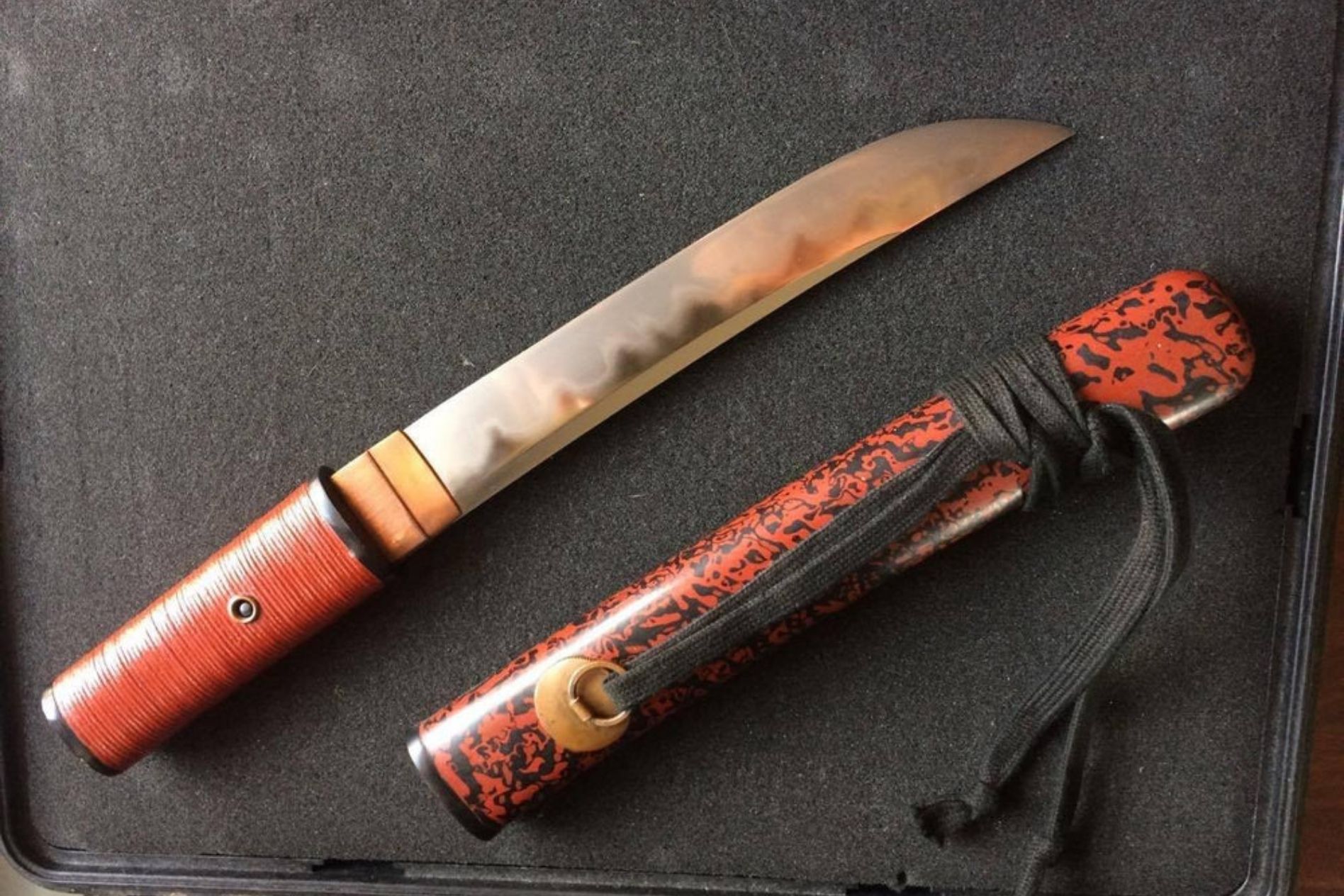
The traditional Japanese tanto is characterized by its short, single-edged japanese samurai blade, typically ranging from 15 to 30 centimeters in length. Its compact size and pointed tip made it ideal for thrusting and close-quarters combat. The most common blade geometry was the hira-zukuri style, which featured a flat grind with no ridge line, giving the blade a sleek and clean silhouette.
Other traditional styles included shobu-zukuri (a curved edge with no yokote line) and kanmuri-otoshi-zukuri (a lighter blade with partial grooving), each offering unique balance and cutting characteristics. A defining trait of the tanto was its reinforced tip, or kissaki, which was crafted for effective piercing, especially against armor or tightly wrapped fabric. The simplicity and strength of the design made the tanto a reliable and deadly tool in the hands of a skilled warrior.
Materials and Crafting Techniques of Traditional Tanto
Cinema and anime have done their dark work, and many people believe that medieval Japanese weapons (especially katanas) are ultimate weapons capable of slicing through rocks like butter. Unfortunately, this has little to do with reality!
In medieval Japan, there was a significant problem with the quality of steel; it was almost nonexistent. As a result, Japanese blacksmiths had to develop a unique sword-making technique to compensate for the low quality of available materials. It was precisely due to the scarcity of high-quality steel that the Japanese resorted to layered forging—stacking whatever iron and steel they could gather and repeatedly folding and reworking the material to achieve a more or less acceptable level of strength and flexibility. This gave birth to the famous katana-making technique, which combined a hard cutting edge with a softer, more flexible spine. This allowed the sword to be somewhat sharp and, at least, somewhat resilient to damage during strikes. Such swords were made for samurai, however, the weapons wielded by ashigaru or other common soldiers were prone to bending and breaking after just two or three strikes.
Of course, the blades crafted for shoguns, emperors, and the aristocracy were of much higher quality and have survived to this day. These exquisite pieces can be seen at weapon exhibitions in Japan and around the world. However, such swords and tantō were rare, handcrafted items and were rarely used in battle.
Today, however, everything has changed for the better. Japan now has access to high-quality steel! So, let’s take a closer look at how tantō are made in 2025 and what materials go into the making a tanto knife.
Materials Used in Traditional Tanto
1. Steel
The primary material used in the blade of a traditional tanto is high-carbon steel, often derived from traditional Japanese processes such as Tamahagane or Shirogami (White Steel).
- Tamahagane Steel: Tamahagane is made from iron sand, a process dating back to the Japanese tatara furnace. This steel is high in carbon and has varied properties that make it suitable for folding and forging, giving the blade its strength, flexibility, and sharpness.
- Shirogami (White Steel): Known for its purity and excellent edge retention, white steel is favored for its ability to take a very fine edge. It’s simpler in composition and tends to be harder than other steels, but more brittle.
- Aogami (Blue Steel): Although not traditionally used for tanto as much as for katana, aogami has been employed for its toughness and edge retention.
2. Handle (Tsuka) Materials
- Wood: Traditionally, the handle of the tanto was often made from wood like ho wood or shitan wood.
- Samegawa (Ray Skin): The handle was sometimes wrapped in ray skin (samegawa) to improve grip and add texture.
- Tsuka-ito (Handle Wrapping): The wooden core of the handle was typically wrapped with silk or cotton cord for added comfort and security. This wrapping is often seen in high-end tanto, as the wrapping adds to both the aesthetic and the practical aspect of handling.
3. Guard (Tsuba)
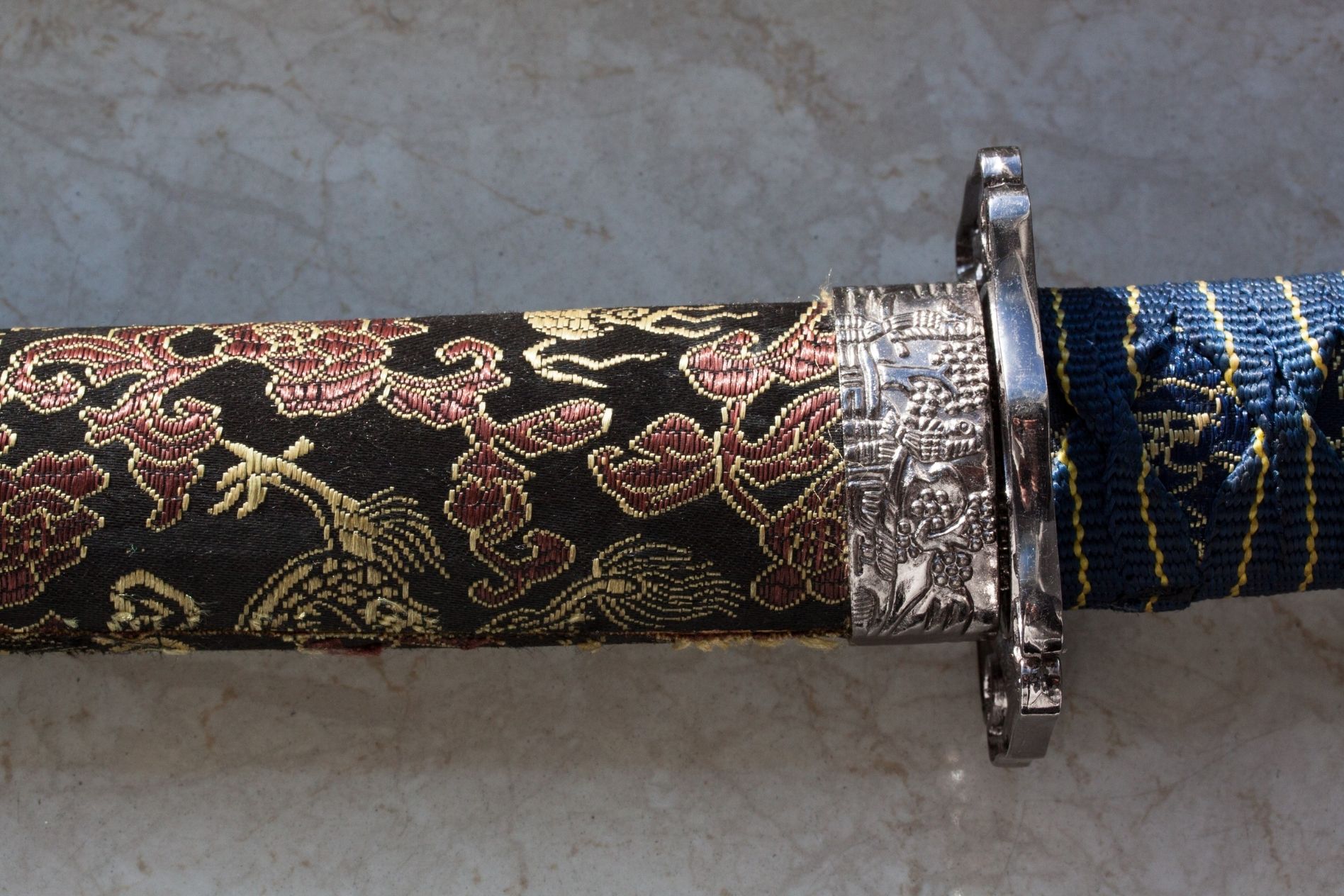
Unlike katana, traditional tanto generally does not have a guard, or tsuba. However, some tanto may have ornamental tsubas, often crafted from bronze or iron.
 4. Scabbard (Saya)
The scabbard of a tanto was traditionally made from wood and then lacquered to create a smooth and polished finish. Sometimes, buffalo horn or ivory would be used for fittings, with decorative touches like lacquerwork or gold inlay.
 Crafting Techniques
1. Forging
The process of crafting a tanto involves folding the steel, which is a technique borrowed from the construction of katana blades. This is done to remove impurities from the steel and also to create layers that enhance the blade’s strength and flexibility.
- Hada (Grain Structure): The forging process of folding results in a distinctive layered pattern, known as the hada. It is a hallmark of high-quality Japanese blades. The grains show the steel’s purity and folding quality.
- Differential Hardening (Yaki-ire): A traditional technique where the blade is heated, coated with clay, and then quenched in water. The thick clay layer creates a softer spine while allowing the edge to harden. This process is responsible for the characteristic hamon (tempering line), which not only contributes to the blade’s appearance but also its cutting ability.
- Polishing: After forging, tanto blades undergo an extensive polishing process, which involves several stages of grinding and polishing with stones of progressively finer grit. The purpose is to both sharpen the blade and bring out the natural beauty of the grain structure. The final result is often a mirror-like finish on the edge of the blade, while the surface of the blade is left with a textured, matte appearance.
2. Shaping the Blade
- Tanto Tip: The distinctive point of the tanto is called the kissaki. The traditional tanto has a triangular, straight-edged point, although certain variants may feature different angles or shapes (e.g., ko-ken or kissaki).
- Blade Curvature: Unlike the katana, the tanto typically has a straight blade or a slight curve (especially on longer tanto), though some styles feature more curvature.
3. Fitting and Finishing
The final stages of crafting a tanto involve carefully shaping and fitting the tang (the portion of the blade that fits into the handle) to ensure a perfect fit with the tsuka (handle).
- Signature (mei): Many tanto blades bear a mei, or signature, usually engraved on the tang. This was done by the smith to indicate the maker of the blade and was often a crucial part of identifying its origin and value.
- Tanto Fittings: When fitted with a guard or decorative fittings, these are often done in high-quality metalworking techniques, including carving, inlaying, and casting of precious metals like gold or silver.
Use of the Blade in Combat and Daily Life
In both combat and everyday life, the tantō was used just like any other knife in the world: for self-defense, opening envelopes, making sandwiches, and so on. The tanto’s short blade and piercing tip allowed it to target weak points in armor. Outside of combat, the tanto had ceremonial and symbolic roles. Over time, the tanto came to symbolize both the martial and aesthetic values of the samurai class—compact, refined, and deadly when needed!
Japanese tanto vs american tanto blade
There is such a thing as the American tanto by the way! The term “tanto” originally refers to a traditional Japanese dagger used by samurai. However, in the 20th century, a Western interpretation emerged — the American tanto — featuring a more aggressive blade geometry designed for tactical use. Despite sharing the same name, the two versions differ significantly in both design and functionality.
Distinctive Blade Profiles: Angular vs Curved Tip
The most obvious difference lies in the tip shape.
- Japanese tanto: has a fine, smoothly curved tip (yokote), ideal for precision thrusting and cutting.
- American tanto: features a sharp angular transition between the main edge and the tip — almost chisel-like in appearance. This geometry adds durability and strength at the tip.
The angular design of the American tanto enhances its piercing ability and tip strength but sacrifices the versatility of curved slicing found in the traditional Japanese form.
Cutting Performance and Tactical Functionality
- Slicing and versatility: The Japanese tanto, with its smooth curve, is better suited for fine tasks such as slicing fabric, rope, or performing precise cuts.
- Durability and penetration: The American tanto excels in tip strength and can handle hard use, such as piercing through tougher materials. It’s often found in tactical or military-grade japanese style tanto knives.
Modern knife makers frequently use the American tanto shape in everyday carry (EDC) and tactical knives, appealing to military personnel, first responders, and survival enthusiasts.
Which Tanto Fits Today’s Needs
Choosing between the Japanese and American tanto uses depends on your priorities:
- For collectors and history enthusiasts — the traditional Japanese tanto offers elegance, heritage, and craftsmanship.
- For tactical or utility use — the American tanto provides enhanced strength and modern practicality.
If you’re looking for a refined cutting tool with historical flair, go with the Japanese version. But if you need a tough, no-nonsense blade built for real-world challenges, the American tanto is likely the better choice.
 The Evolution of the Tanto in Modern Times
The tanto, a traditional Japanese blade, has experienced significant evolution in both design and usage over the centuries. Initially designed as a close-combat weapon, it has evolved into a versatile tool with applications spanning from self-defense to tactical and utility purposes. Today, tanto blades are found in a range of modern knives, from military-grade tactical tools to everyday carry (EDC) blades. Understanding its transformation requires a look at its roots in Japanese culture and how it has been adapted for contemporary needs.
How Japanese Traditions Influenced Modern Tanto Knife Design
While the traditional tanto’s curve is subtle, modern variations often incorporate the “chisel” or “flat” grind to enhance cutting power. The reinforced point of the tanto blade, often resembling a reversed triangle, is also a clear nod to the knife’s history of precision and piercing ability. Many modern tanto blades still use high-quality materials like carbon steel or Damascus steel, paying homage to Japan’s legacy of craftsmanship.
Use of the Tanto in Military and Tactical Knives
Military tanto knives blades have found a prominent place in military and tactical knives, particularly in the last few decades. Unlike traditional folding knives, which often feature curved blades, the tanto’s strong, reinforced tip is perfect for piercing through tough materials like body armor, fibrous ropes, or even car doors in certain rescue operations.
Modern tanto knives, such as the famous Cold Steel “Tanto,” have been designed with both practicality and toughness in mind. These knives are typically made with high-carbon stainless steel or composite materials, giving them an edge in both durability and corrosion resistance. Additionally, the flat grind and reinforced point are perfect for delivering powerful thrusts, making the tanto a favorite for soldiers and law enforcement officers who need a knife that can hold up under stressful, real-world conditions.
The evolution of the japanese made tanto knives into tactical knives reflects a growing need for specialized tools in the field. Features like non-reflective coatings, ergonomic handles, and integrated lanyard holes enhance the blade’s practicality in military operations. Modern tanto blades are often equipped with multi-functional purposes, including tasks like chopping, slicing, and piercing, making them versatile tools for combat scenarios and survival situations.
Popularity of the Tanto Among Collectors and EDC Enthusiasts
And of course, this japaness knife has been appreciated not only by military personnel but also by collectors and EDC enthusiasts. The former admire the tantō for its magical design and shape, while the latter appreciate its practicality and versatility. It’s a durable and reliable knife! Perfect for opening packages/boxes, cutting ropes or performing other general utility functions.
In recent years, tanto knives have become more widely available in smaller, compact sizes, making them even more accessible for EDC use. The modern market offers tanto blades in various configurations, including folding knives, fixed blades, and even multi-tools, catering to a broad range of preferences. As a result, tanto knives have earned their place as versatile and stylish tools in the world of everyday carry.
 Conclusion
This is the tantō knife! A blade with a rich history, both beautiful and functional—an excellent addition to any collection. Don’t forget to visit our online store, where your dream knife is waiting for you! Don’t miss out! We look forward to exciting encounters in the future.