

Stainless steel knives have become a part of our lives and whether in the kitchen, hunting or camping, they are always the solution to many difficulties and challenges. Let’s take a look at the top 5 best stainless steel for knives.
Key Factors to Consider When Choosing Stainless Steel
Stainless steel is inferior to high carbon steel in sharpness and cutting ability, who can argue? But stainless steel boasts outstanding corrosion resistance and durability. A knife made of such material will perfectly bear your journey in the mountains, forests and will resist rust and corrosion pretty well, the high chromium content in such a blade does its job.
VG-10
VG-10 (short for V-Gold #10) is a steel alloyed with cobalt and molybdenum, which is highly resistant to corrosion.
This material was specially developed by Takefu Special Steel Co., Ltd. (Japan) for the needs of the knife industry. It is used in the production of knives of such famous Japanese brands as Tojiro, Mcusta, Mikadzo, and is also used in the manufacture of some models of knives from world brands such as Spyderco, Cold Steel, Camillus, Fällkniven, Browning. It is a good material for a stainless steel knife set in your kitchen. Rockwell hardness rating – 58-61 HRC.
Properties and Composition
The composition of VG-10 can vary from manufacturer to manufacturer, but typically includes approximately:
- Carbon (C): 1%
- Chromium (Cr): 15%
- Cobalt (Co): 1.5%
- Molybdenum (Mo): 1%
- Vanadium (V): 0.2%
- Manganese (Mn): 0.5%
- Phosphorus (P): 0.03%
- Silicon (Si): 0.4%
- Sulphur (S): 0.03%
Pros and Cons
Pros of VG-10:
This steel has high durability, stays sharp for a very long time, is easy to machine, shape and it responds well to heat treatment for an optimal combination of hardness and flexibility.
Cons of VG-10:
Knives made from VG10 steel can cost more compared to some other options, due to their high hardness, which requires some experience and skill to sharpen, especially if the blade is significantly dull. Despite their durability, they can be vulnerable to damage from hard knocks or misuse.
To avoid corrosion and maintain quality, VG10 steel requires regular maintenance, including cleaning and drying after use.
N690
N690 is a high-alloy stainless steel that is widely recognised for its unique properties. This material was developed and manufactured by Bohler-Uddeholm, an Austrian company known for its high quality steels. It’s not the best steel for a knife of the World, but it’s very high quality. Rockwell hardness rating – 58-60 HRC. Great example from BPS Knives – Aura.

Properties and Composition
Composition:
- Carbon (C): 1.07%
- Chromium (Cr): 17%
- Molybdenum (Mo): 1.10%
- Vanadium (V): 0.10%
- Cobalt (Co): 1.50%
- Manganese (Mn): 0.40%
- Silicon (Si): 0.40%
- Phosphorus (P): 0.40%
- Sulphur (S): 0.015%
Pros and Cons
Pros of N690:
N690 is highly durable and knives made from this material remain sharp even after prolonged use. Impressive cutting ability goes hand in hand with easy sharpening.
Cons of N690:
The process of making knives from N690 can be difficult due to its specific properties, which can affect the cost and complexity of production. Although N690 is corrosion resistant, knives made from this material still require regular maintenance to maintain its properties and appearance. In some conditions of use, N690 can wear faster than some other steels, requiring more frequent sharpening.
5Cr14MoV
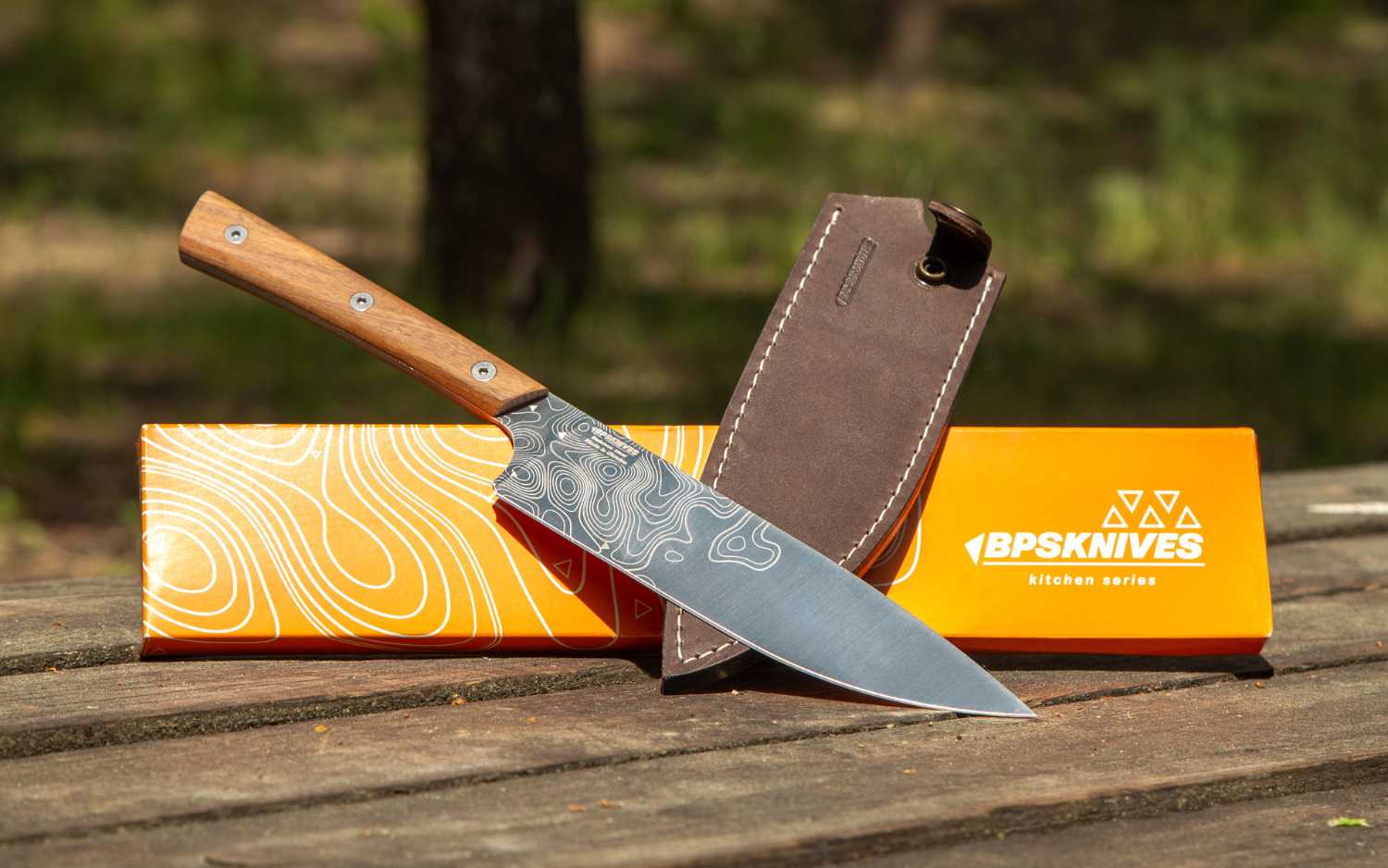
5Cr14MoV is a type of stainless steel containing 14-15% chromium, which provides nice resistance to corrosion. In addition, this steel contains molybdenum and vanadium to improve durability and resistance to wear. This material is not the best steel in terms of performance, but its pleasant price makes it one of the most affordable materials available. Rockwell hardness rating – 55-57 HRC. A prime example of a knife made from this steel is our designer kitchen knife – Rosemary.
Properties and Composition
The stainless steel properties of 5Cr14MoV includes the following elements:
- Carbon (C): 0.5%
- Chromium (Cr): 14-15%
- Molybdenum (Mo): 0.6%
- Vanadium (V): less than 0.1%
- Manganese (Mn): less than 1%
- Silicon (Si): less than 1%
- Phosphorus (P) and Sulphur (S): Usually present in small amounts as impurities, their content is minimal.
Pros and Cons
Pros of 5Cr14MoV:
Thanks to its high chrome content, knives made from 5Cr14MoV are resistant to corrosion, making it an ideal choice for use in high humidity or salty environments. It will also delight you with its easy sharpening and excellent cutting ability, knives made from this material are versatile for different types of tasks, for example it is perfect for camping kitchens. And all this splendour is available at a more than pleasant price.
Cons of 5Cr14MoV:
However, it is not without its flaws! Compared to some other steels, 5Cr14MoV has a relatively low hardness, which can cause the blade to lose sharpness quickly. Also, under conditions of heavy use, some knives made of 5Cr14MoV can show signs of wear and deformation. To avoid this, these knives need regular maintenance.
AUS-8
AUS-8 (also known as Aichi AUS-8 or AUS-8A) is a Japanese stainless steel that is widely used in the manufacture of knives and other tools. Rockwell hardness rating – 58-60 HRC.
Properties and Composition
AUS-8 is a stainless steel containing:
- Carbon (C): 0.75%
- Chromium (Cr): 14%
- Molybdenum (Mo): 1%
- Manganese (Mn): 0.49%
- Silicon and minor impurities of other elements: 0.46%
Pros and Cons
Pros of AUS-8:
Knives made from this steel are easy to sharpen, have enough durability for most everyday tasks, and like all stainless steel knives – resists corrosion and rust very well.
Cons of AUS-8:
As always it’s not without its minuses. Compared to some other steels, AUS-8 can lose sharpness faster and require more frequent sharpening. Also, a knife made of this steel can not boast special durability, so no chopping branches and the like, we warned you.
440C
Here we come to the legendary 440C, which, thanks to its durability and hardness, is one of the best knife steels on the planet. A good knife steel with a nice quality-price ratio. Rockwell hardness rating – 58-60 HRC.
Properties and Composition
Composition:
- Carbon (C): 0.95-1.20%
- Chromium (Cr): 16.00-18.00%
- Manganese (Mn): 1.00%
- Silicon (Si): 1.00%
- Phosphorus (P): 0.040%
- Sulphur (S): 0.030%
Pros and Cons
Pros of 440C:
As mentioned above, 440C has excellent hardness and durability with superior cutting ability and sharpness retention. And just as importantly, this steel is very affordable.
Cons of 440C:
Compared to some other stainless steels, 440C can be slightly less resistant to corrosion, especially when exposed to harsh chemical environments.
Final Thoughts
So we’ve talked about the five top steels for knives. Choosing steel is the most important step, after this the case for small – purchase a knife worthy of you, which will serve you well for many and many years.