

Steel is the heart of any knife, because it determines the blade’s strength, durability, reliability, and overall performance. Choosing the right steel is crucial — if your knife turns out to be low‑quality junk and fails at the worst possible moment, it could cost you your health or even your life.
What is knife steel and why is it important
Knife steel is the metal alloy used to make a blade. It’s typically a combination of iron, carbon, and additional elements such as chromium, vanadium, molybdenum, or nickel. Each element—and the way the steel is heat-treated—changes how the blade behaves.
Steel matters because it directly influences a knife’s performance. The right steel determines how sharp the knife can get, how long it stays sharp, how tough it is, and how well it resists rust. In other words, the steel is the foundation of the knife’s durability, usability, and overall quality.
Types of knife steels
Knife steels can be grouped into several major categories:
1. Carbon Steel
- High carbon content
- Very sharp edge and great edge retention
- Easier to sharpen
- Less corrosion resistance—can rust or patina without care
- Common examples: 1095, 52100, White Steel, Blue Steel

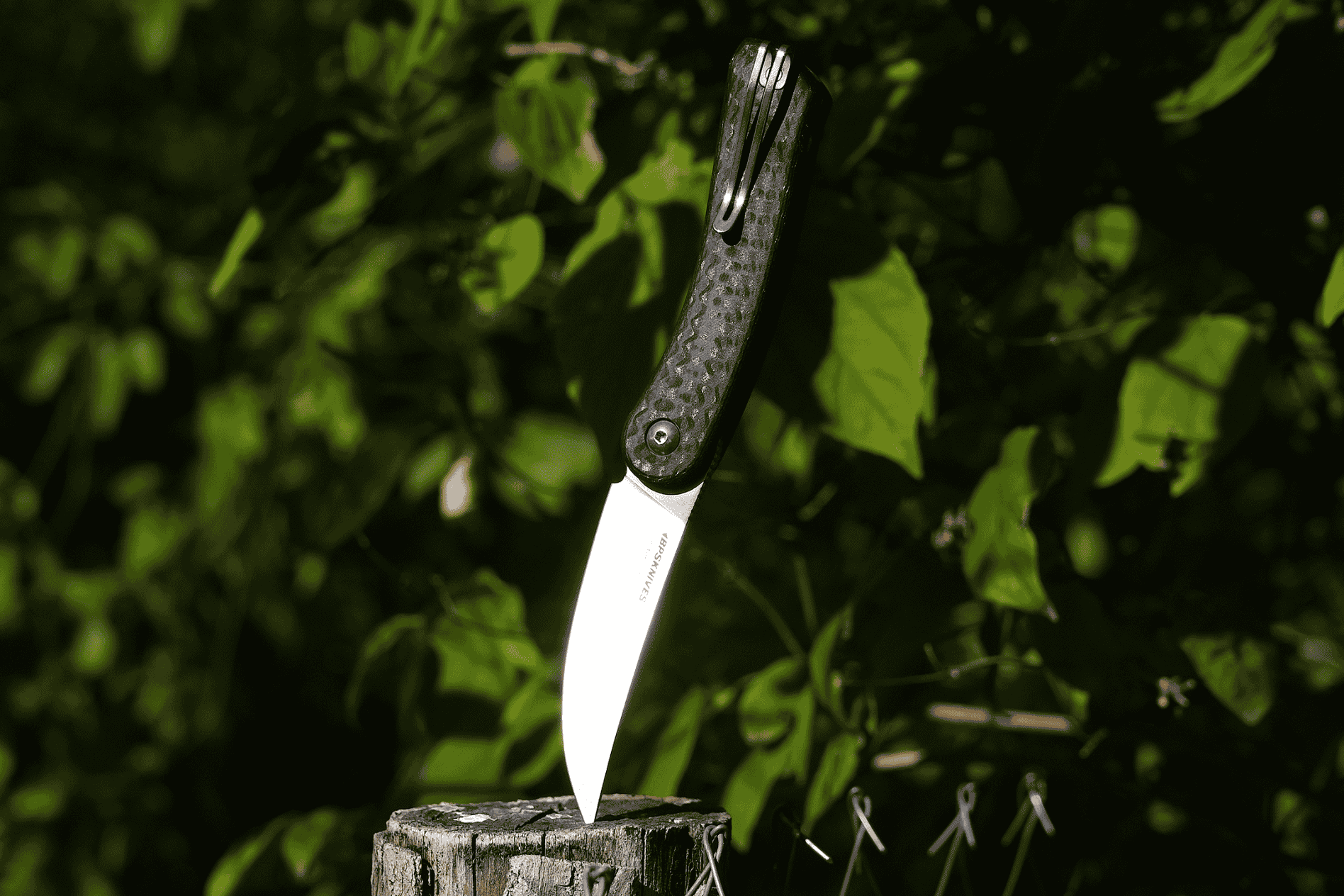
2. Stainless Steel
- Contains at least ~13% chromium
- Resists rust and staining
- Often slightly harder to sharpen but easier to maintain
- Common examples: 440C, VG-10, AUS-8, 14C28N
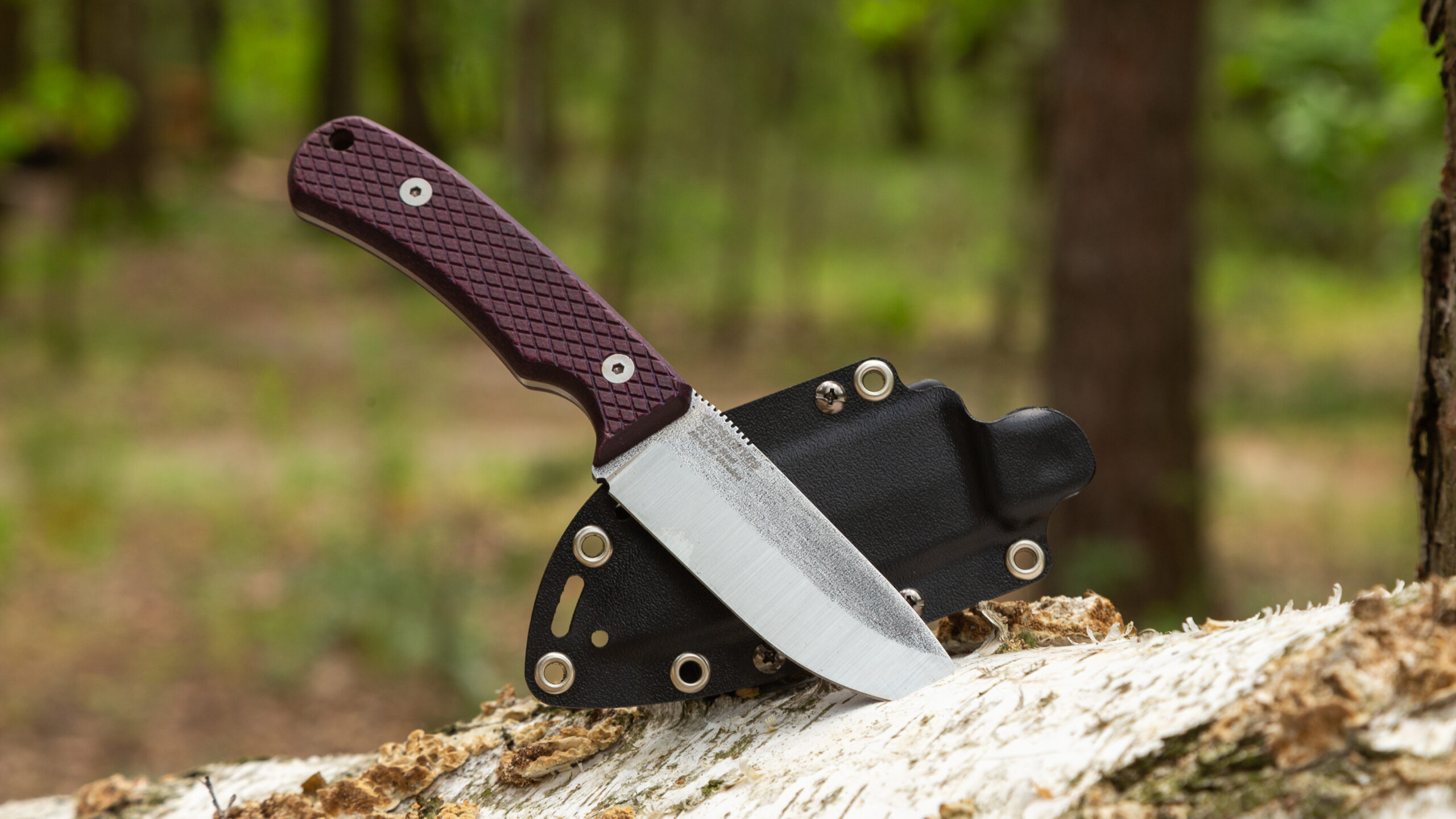
3. Tool Steel
- Designed for high wear resistance and toughness
- Often used in high-end or heavy-duty knives
- Can be semi-stainless depending on chromium content
- Common examples: D2, M4, CruWear, A2
4. Powder Metallurgy (PM) / Particle Metallurgy Steel
- Produced using advanced manufacturing for extremely uniform structures
- Excellent edge retention and toughness
- Generally higher cost
- Common examples: S30V, S35VN, S45VN, CPM-3V, Magnacut
What does steel affect in everyday use
Steel affects several key aspects of how a knife feels and performs:
1. Sharpness and Sharpening Ease
Some steels take a razor edge easily, while others require more effort and specific sharpening tools.
2. Edge Retention
Higher-end steels can maintain sharpness for much longer, reducing how often you need to sharpen.
3. Corrosion Resistance
If you use your knife in humid or wet environments—or cut acidic foods—steel with high chromium content prevents rust.
4. Toughness
A tough steel resists chipping or breaking during hard use, like chopping, prying, or outdoor tasks.
5. Maintenance Requirements
Carbon steels need more cleaning and oiling, while stainless steels are more forgiving.
1. MagnaCut – the universal leader
Is CPM magnacut a good knife steel? You bet! MagnaCut (officially CPM MagnaCut) is one of the most advanced knife steels ever created. Designed by metallurgist Dr. Larrin Thomas, it delivers an exceptional balance of properties—combining high toughness, excellent corrosion resistance, and top-tier edge retention. This rare mix makes it one of the most versatile and high-performing steels currently available in knives of all kinds.
Magnacut steel comparison. Why is this steel still #1
MagnaCut remains the leading choice for premium knives because it excels in several critical areas simultaneously:
- Outstanding corrosion resistance
Unlike many high-performance steels, MagnaCut resists rust extremely well—even in saltwater or humid conditions.
- Exceptional toughness
It handles hard use, batonning, and impact far better than most steels with similar edge retention.
- High edge retention
Thanks to its finely tuned carbide structure, MagnaCut stays sharp a long time while still being easier to sharpen than ultra-hard steels like Maxamet or S110V.
- Balanced performance
Instead of being specialized in just one property, MagnaCut delivers a rare all-rounder profile, making it suitable for almost every knife category.
In which knives is MagnaCut used
Knives made from this steel are truly exceptional, capable of handling extreme stress in any environment. Whether it’s hunting, fishing, everyday carry, camping, hiking, survival — or even combat — these blades deliver. Their outstanding strength lets you tackle any task, from simple food prep to splitting wood and serious bushcraft work.
Who is MagnaCut steel suitable for
As follows from everything above, these knives are an excellent choice for hikers, campers, fishermen, hunters, survivalists, homemakers — and even military personnel. In other words, a knife made from this steel is a tool that truly suits everyone.

2. CPM 20CV – the standard of long-lasting cutting
What is cpm 20cv? It is a premium powder metallurgy stainless steel known for exceptional edge retention and corrosion resistance. It is chemically very similar to Bohler M390 and CTS-204P, forming a family of high-performance steels celebrated for durability and slicing performance. If you want a knife that stays sharp for a long time with minimal maintenance, 20CV is one of the most reliable choices.
Main advantages of CPM 20CV
So, how good is cpm 20cv steel? The advantages are countless:
- Outstanding edge retention
20CV stainless steel contains high levels of vanadium and chromium carbides, giving it excellent wear resistance and long-lasting sharpness—even during heavy or repetitive cutting.
- Excellent corrosion resistance
Its high chromium content provides strong protection against rust, staining, and moisture exposure.
- High hardness potential
Knives in 20CV typically reach high HRC ratings (around 59–63), which increases cutting performance and edge stability.
- Smooth, clean cutting feel
Many users appreciate the steel’s ability to maintain a refined, precise edge over long periods, especially in EDC and slicing-focused tasks.
- Well-established, proven performance
20CV has been used for years in premium knives, so its heat treatment and real-world results are well understood and consistent.
Disadvantages of CPM 20CV steel
But there’s a fly in the ointment — it wouldn’t be complete without one:
-
Lower toughness compared to newer steels
While 20CV is hard and wear-resistant, it is not as tough as MagnaCut or CPM-3V and may chip under hard impact or prying.
-
More difficult to sharpen
The high carbide volume makes sharpening slower and more demanding—especially for beginners or those without diamond stones.
-
Heat treatment sensitive
To perform at its best, 20CV requires precise heat treatment. Poorly treated blades may feel brittle or lose edge stability.
-
Not ideal for heavy batoning or abuse
Its strengths are slicing and corrosion resistance—not survival-level durability.
Who is CPM 20CV steel suitable for
Knives made from this steel perform exceptionally well in the kitchen and as everyday carry tools. They can also handle moderate outdoor tasks, like setting up camp while camping or hiking. However, it’s best to avoid heavy-duty woodwork or batoning with them.

3. S45VN – an improved classic
What is s45vn steel? It is a modern evolution of the well-known S35VN steel, created by Crucible Industries. While S35VN became legendary for its balance of toughness, corrosion resistance, and easy maintenance, S45VN pushes the formula further. It offers better edge retention, improved corrosion resistance, and refined overall performance, making it a next-generation option for premium everyday carry and outdoor knives.
What’s new compared to S35VN
S45VN introduces several key improvements over S35VN, offering higher edge retention thanks to additional chromium and nitrogen that form stronger carbides, better corrosion resistance due to its slightly increased chromium content, and a small boost in hardness potential, reaching around 60–62 HRC compared to the typical 58–60 HRC of S35VN. At the same time, it maintains easy sharpening despite its performance gains and preserves toughness comparable to S35VN, keeping it well-suited for everyday use without becoming brittle.
Advantages of S45VN
-
Excellent all-around balance
Best s45vn knife has a strong edge retention, good toughness, and high corrosion resistance making it one of the most well-rounded steels available.
-
Very corrosion-resistant
Perfect for humid environments, food prep, or knives that see regular moisture.
-
Easy to maintain
It sharpens fairly easily compared to steels like 20CV, S90V, or M4.
-
Stable and predictable performance
Knife makers appreciate that S45VN blade steel heat treats consistently and performs reliably across different knife types.
-
Great for EDC slicing tasks
Its edge stability and wear resistance make it ideal for daily cutting, from packaging to light outdoor use.
In which knives is S45VN used
This steel is perfect for crafting an excellent EDC knife or a hiking knife — folding knives, light-duty blades, and similar tools.

4. M398 – super-hard premium steel
This top steel M398 isn’t called premium for nothing! Here’s why:
Features M398
- Powder metallurgy steel with a highly uniform structure and an extremely high carbide content, giving it exceptional edge retention.
- Very high carbon and vanadium levels, forming hard vanadium carbides that dramatically increase wear resistance.
- Excellent corrosion resistance thanks to its high chromium content.
- High hardness, often reaching 62–65 HRC when properly heat-treated.
- Good dimensional stability and polishability, making it suitable for precision knives.
Disadvantages of M398
But, as always, it’s not without its drawbacks:
– Lower toughness than simpler steels — it can be more prone to micro-chipping if used for hard impacts or aggressive tasks.
– Difficult to sharpen because of its extremely hard carbides; requires diamond or CBN stones for efficient sharpening
– High cost, both for the steel itself and for knives made from it.
– Overkill for everyday light tasks, where simpler steels can perform equally well with easier maintenance.
Who is a knife made of M398 steel suitable for?
– Users who need extreme edge retention, such as those who cut abrasive materials or work for long stretches without sharpening.
– EDC enthusiasts looking for a premium, high-performance blade with long-lasting sharpness.
– Collectors and custom-knife fans who appreciate modern powder steels and top-tier performance.
– Outdoor users and hunters who value corrosion resistance and cutting longevity — as long as they don’t need heavy batoning or prying.
– Knife makers who want to build a high-end blade with outstanding wear resistance and premium performance characteristics.

5. Vanax SuperClean is the king of stainless steel
And finally, a stainless steel fit for a king! Why a king? See for yourself:
Main advantages of Vanax SuperClean
– Outstanding corrosion resistance — among the best of all knife steels. Vanax superclean knives are nearly immune to rust, even in saltwater environments.
– High toughness for a stainless powder steel — significantly tougher than many high-carbide “super steels.”
– Very good edge retention, due to its nitrogen-based alloy design that forms extremely fine, hard nitrides instead of brittle carbides.
– Excellent stability and reliability in real-world use — less prone to chipping than many premium steels.
– Easy maintenance — minimal risk of staining or pitting and generally a forgiving steel in day-to-day conditions.
Disadvantages of Vanax SuperClean
But it’s not all sunshine and rainbows:
- High price, both as raw steel and in finished knives — it’s one of the most expensive stainless steels available.
- Not as extreme in wear resistance as ultra-carbide steels like M398, Maxamet, or K390 — though still excellent for most users.
- Sharpening can be slower than with simpler steels, because of its hardness, though it’s still easier to sharpen than vanadium-heavy steels.
- Limited availability — fewer manufacturers produce knives in Vanax, making it harder to find compared to mainstream steels.
Who is a knife made of Vanax SuperClean steel suitable for?
– Outdoor and marine users who need maximum rust resistance (fishing, boating, coastal environments).
– EDC users wanting a premium blade that balances toughness, edge retention, and corrosion resistance without being overly brittle.
– Cooks and food-prep enthusiasts who want stainless performance with minimal maintenance and excellent cutting longevity.
– Professionals who work in humid, corrosive, or dirty conditions and need a reliable, chip-resistant knife.
– Collectors and steel aficionados who appreciate cutting-edge metallurgy and rare high-performance steels.

Comparison table

Conclusion
The choice is yours! Weigh all the pros and cons carefully, grab the knife of your dreams, and full speed ahead – adventures awaits! And of course, you already know where to find amazing knives at unbeatable prices — right here in our online store. We offer a huge selection of premium-quality knives for every occasion, along with all the accessories you could need, all at incredible prices. See you soon!