

Are there any fans of Aladdin’s adventures? If you are, then dance, because today is your day – we’ll tell you about middle east knives!
Overview of the rich knife-making heritage in the Middle East
They say the Arabs invented algebra, the fascinating instrument known as the astrolabe, essential for ancient astronomy and navigation, and the knives necessary for both daily living and self-defense in a region historically marked by many conflicts. Moreover, these remarkable knives became essential tools in crafting the delicious and flavorful dish known as shish kebab.
Historical Context of Middle Eastern Knives
There have been quite a few colossal events in the middle east! Persian conquests, Babylonian prosperity and the Crusades! The Middle East was a real crucible, a melting pot of many interesting cultures. All this led to the development of metallurgy and blacksmithing, which in turn led to some of the best blades on the planet!
The earliest history knife in the Middle East dates back to the Stone Age, with simple flint or obsidian blades used for cutting, hunting, and food preparation. The Middle East, as the cradle of civilization, saw the development of metallurgy around 3000 BCE, with the advent of copper and bronze tools. These early metal knives were primarily used by the Sumerians, Akkadians, and other early Mesopotamian cultures.
As civilizations advanced, so did knife technology. By the time of the ancient Egyptians, knives were often used for ceremonial purposes as well as for daily tasks. The Egyptians made elaborate ritual knives with intricately designed handles, sometimes including animal-shaped pommels, and these knives were often associated with the gods and used in religious ceremonies.
Perhaps one of the most iconic developments in the history of Middle Eastern knives is the advent of Damascus steel (around 500 CE), which was used to make blades that were both extremely strong and beautifully patterned. The Damascus technique involves folding and forging high-carbon steel, which results in a blade with distinctive swirling patterns. This method was perfected in the Middle East, particularly in the region around modern-day Syria, India, and Persia.
Damascus steel was renowned for its sharpness, durability, and ability to hold an edge, making it highly sought after. The city of Damascus in Syria became famous for producing some of the finest swords and knives, and this material became synonymous with quality weaponry. This tradition of craftsmanship persisted for centuries and influenced the design of many knives and blades used by the Ottoman Empire, Persian Empire, and other Middle Eastern powers.

Notable Types of Traditional Knives
So let’s take a look at some of the most famous knives of Middle East:
Khanjar
Origin: Middle East (also seen in South Asia and North Africa).
Description: The original khanjar knife is a type of curved dagger, typically with a double-edged blade, and is often associated with the Arabian Peninsula, Persia, and India. Its blade can be slightly sickle-shaped, tapering toward the point. The hilt is usually ornately designed, often with a distinctive “T” or “S” shape, and it is sometimes accompanied by a scabbard adorned with intricate designs.
Cultural Significance: The khanjar is historically linked to ceremonial and combat use. In many cultures, it is considered a symbol of honor, power, and prestige, arabs gladly used khanjar knife in the army in medieval times. It is frequently worn by high-ranking individuals and has appeared in numerous artistic depictions.
Usage: It was often used as a close-quarters combat weapon but was also part of traditional dress, especially in regions like the Arabian Peninsula, India, and the Maghreb.

Jambiya
Origin: Arabian Peninsula, particularly the Gulf States (Saudi Arabia, Yemen, Oman)
Description: The jambiya is a distinctively curved, single-edged dagger with a short blade, typically between 30 to 40 cm in length. The handle is often made from materials like wood, bone, or horn, and the pommel may be decorated with metals like silver or brass. The blade usually has a pronounced curve that enhances its effectiveness in slashing motions.
Cultural Significance: The jambiya holds great cultural and social importance, especially in Yemen and Saudi Arabia. It is often passed down through generations, and its presence is a symbol of masculinity, social status, and tradition. In some countries, the jambiya is worn as part of a traditional dress, especially for special occasions or ceremonies. You can find tactical jambiya knife nowadays even!
Usage: The jambiya was traditionally used for self-defense and combat but is now more of a ceremonial item, modern jambiya knife often being displayed in homes or worn during formal events.
 Photo from www.shibam.com
Shamsheer
Origin: Persia (modern-day Iran)
Description: The shamsheer is a type of curved sword, typically longer than a dagger or knife but often used in similar close combat situations. The blade is usually single-edged, with a gentle curve and a slightly pointed tip, making it ideal for slicing and thrusting. The hilt of the shamsheer often has a distinctive “T” or “D” shape, and it may be adorned with precious metals or stones.
Cultural Significance: The shamsheer has been associated with Persian warriors and nobility for centuries. It symbolizes both martial prowess and artistic craftsmanship, as the making of shamsheers often involved intricate forging techniques. They are historically linked to Persian and Mughal empires.
Usage: Used in battle and warfare, the shamsheer was effective for slashing in cavalry combat. Its design was optimized for rapid, fluid movement rather than heavy strikes. It has also become a symbol of Persian heritage and is often seen in artworks and traditional Persian designs.
 Photo from www.reddit.com
Other Regional Variants
Bichwa (or Bichuwa)
- Origin: India, but also found in parts of the Middle East
- Description: The bichwa is a small, double-edged dagger with a slightly curved blade. It has a distinctive, often exaggerated point, making it ideal for thrusting. The hilt is typically simple but may be adorned with metal fittings. The blade is usually between 10-30 cm long.
- Cultural Significance: While it is often associated with South Asian cultures, it was also used in the Middle East during various periods of trade and conquest. The bichwa has a reputation as a concealed weapon, favored for its ability to be easily hidden and used in close quarters or assassination.
- Usage: The bichwa is a stealth weapon, designed primarily for stabbing or thrusting. It was used by both warriors and assassins, with some of its earliest appearances in the courts of the Mughal Empire.
 Photo from www.globalinch.org
Kris (Keris)
- Origin: Southeast Asia (but influenced the Middle East due to cultural and trade exchange)
- Description: The kris is a wavy-bladed weapon, with an iconic S-shaped curve. It is typically made of high-quality steel, and the blade is often decorated with intricate patterns (called “pamor”) created through a process of folding the metal during forging. The hilt is often ornately carved, sometimes from wood, ivory, or bone, and is designed for a comfortable grip.
- Cultural Significance: While the kris is more commonly associated with Southeast Asia, particularly Malaysia, Indonesia, and the Philippines, it influenced many parts of the Middle East due to trade and cultural exchange. The kris is often considered not just a weapon but a spiritual object with mystical properties.
- Usage: The kris was used for close combat, with its distinctive curved blade designed for slashing and thrusting. It was also often worn as part of traditional ceremonial attire, especially among nobility.
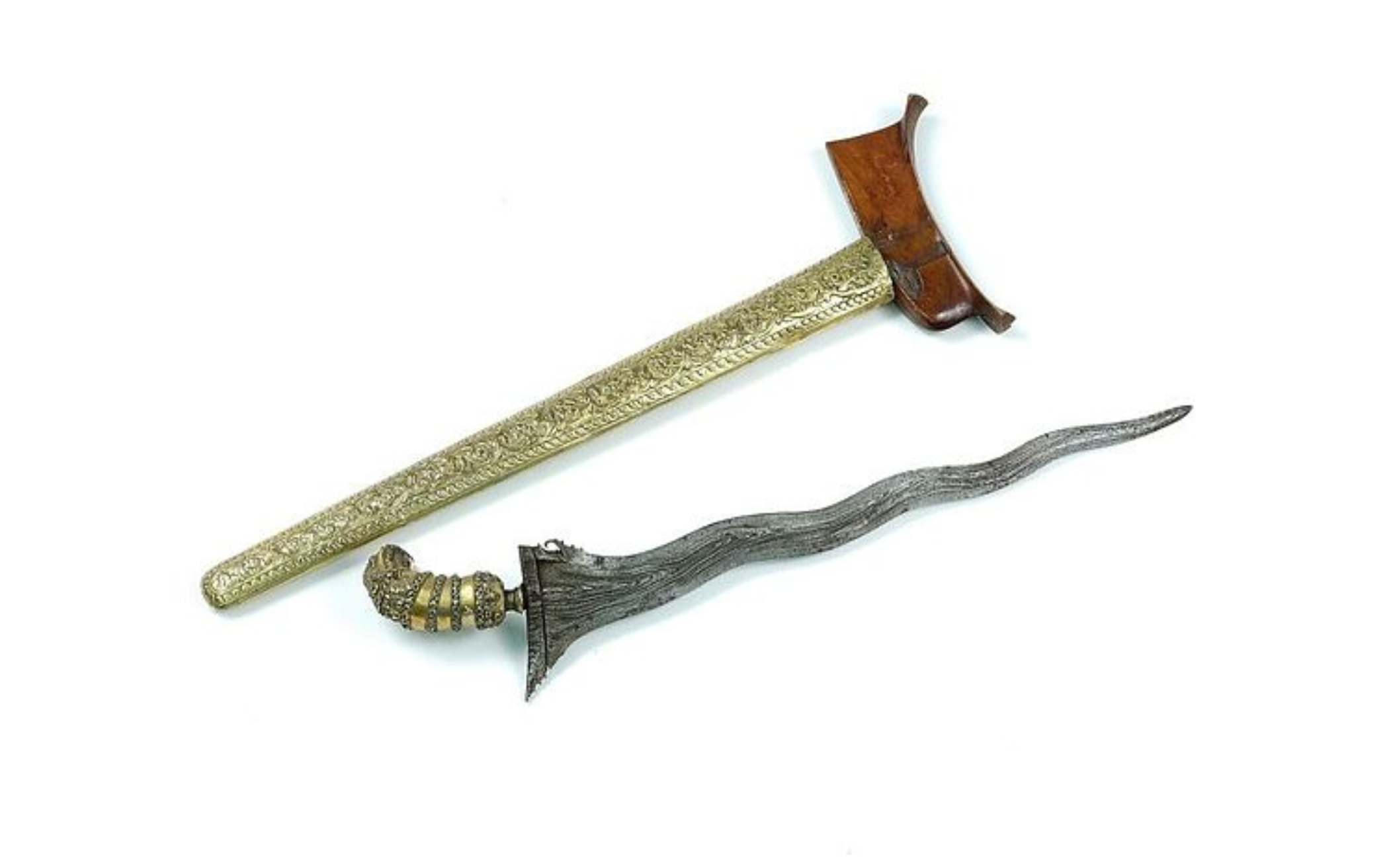 Photo from en.wikipedia.org
Craftsmanship and Materials Used
Now let’s break down what all this beauty is made of!
Traditional Crafting Techniques
The creation of Middle Eastern knives is an intricate process that involves several stages, from forging the blade to shaping the handle and adding decorative elements. Common techniques include:
a. Forging and Blade Making
- Damascus Steel: Historically, one of the most renowned blade-making techniques in the Middle East is the forging of Damascus steel, known for its strength and distinctive patterns. The steel is made by folding and welding layers of iron and steel, creating a blade that is both resilient and visually striking. The technique is a closely guarded secret in many parts of the region.
- Pattern Welding: This technique is similar to Damascus steel, where multiple layers of steel are forged together and then twisted or folded to create a patterned blade. The pattern in the steel often has symbolic significance and is one of the hallmarks of Middle Eastern craftsmanship.
- Hand Forging: Traditional methods of hand-forging remain important, where blades are shaped using hammers and anvils, allowing the blacksmith to control the blade’s flexibility, hardness, and sharpness.
- Heat Treating: After the blade is forged, it undergoes a heat treatment process, which involves heating the blade to high temperatures and then cooling it rapidly (quenching), followed by tempering to adjust hardness and flexibility.
b. Handle Making
- Carving and Shaping: Traditional handles are often hand-carved from wood, bone, or horn, providing a secure and ergonomic grip. The handle is shaped to fit comfortably in the hand and often features intricate carvings or inlays.
- Metalwork: Many knives also incorporate metalwork, such as brass, copper, or silver, in the form of pommels, crossguards, and other embellishments. These are often crafted by skilled artisans using techniques like casting, engraving, and repoussé (hammering metal from the reverse side).
- Inlays and Gilding: Handles may be inlaid with precious materials such as ivory, mother-of-pearl, or semi-precious stones. Gold leaf or silver inlays might also be used for decorative purposes, particularly in ceremonial daggers.
c. Blade Sharpening
- Middle Eastern knives are traditionally hand-sharpened, sometimes on natural stones, ensuring an edge that is razor-sharp. Sharpening is considered a delicate art, particularly for knives that will be used for precise tasks, such as butchering or food preparation.
Materials and Decor
The materials used for crafting Middle Eastern knives are chosen for their durability, beauty, and symbolic significance.
a. Blades
- Damascus Steel: As mentioned, this is the most prized material, famous for its strength and stunning patterns. Historical Damascus steel (also called Wootz steel) was known for its superior ability to hold a sharp edge and its resistance to rust.
- High Carbon Steel: High carbon steel is commonly used for its ability to hold a sharp edge, though it requires more care to avoid rust.
- Stainless Steel: In modern times, stainless steel is sometimes used for its resistance to corrosion, although it is less traditional than high-carbon steels.
b. Handles
- Wood: Various types of wood are used, including walnut, ebony, and olive wood. Wood is favored for its durability and the ability to be intricately carved. Olive wood, in particular, holds cultural significance in the Middle East, symbolizing peace and resilience.
- Bone and Horn: The handles are sometimes crafted from camel bone, rhinoceros horn, or buffalo horn. These materials are valued for their strength and unique textures.
- Ivory: Though less commonly used today due to conservation efforts, ivory has historically been used for handle inlays, particularly in more luxurious knives.
- Metals: Silver, copper, and brass are often used in the pommel and crossguard of ceremonial daggers like the khanda or janbiya. Gold leaf and silver inlays are used for further embellishment.
c. Decorative Materials
- Gemstones: In some high-end knives, you may find inlays of turquoise, lapis lazuli, or other semi-precious stones, which add a touch of opulence and color to the weapon.
- Leather: Leather is commonly used for knife sheaths, particularly in more utilitarian knives. The leather may be embossed or dyed with intricate designs to enhance the overall aesthetic.
- Bone and Ivory Inlays: These materials are often used for their fine grain and ability to be intricately carved.

Modern Influence and Conservation
When something traditional, developed over centuries collides with modern technology, it is always very interesting, because it is a mix of tradition and innovation after all! While these knives retain deep cultural significance, their design, materials, and manufacturing processes have evolved significantly. Today, Middle Eastern knives are both beautiful heirlooms and highly functional tools, meeting the demands of modern use while preserving the legacy of ancient craftsmanship.
Material Innovation
- Traditional Middle Eastern knives, such as the Khanjar (a curved dagger) or Jambiya (a curved knife worn on a belt), were typically made from high-carbon steel, often with distinctive patterns created through folding or forging processes similar to those used in Damascus steel. The modern influence has introduced new materials like:
- Stainless steel: Offering better corrosion resistance and easier maintenance, stainless steel has become popular, especially for knives used in cooking and everyday tasks.
- Ceramic blades: While less traditional, ceramic materials have found their way into some modern Middle Eastern knives, offering sharpness and edge retention while being lightweight and rust-resistant.
- High-tech alloys: New alloys like VG-10, SG2, or Powdered Metallurgy Steel are used in premium knives. These materials are often more durable, maintain sharper edges longer, and are resistant to rust or corrosion, which was an issue in the past due to the hot, humid climates in parts of the Middle East.
Ergonomics and Design
- Handle designs: Modern ergonomics have influenced the design of knife handles. Traditionally, handles were often simple, focusing on utility, but modern influences have introduced more ergonomic, comfortable designs that can improve grip and reduce hand fatigue. Materials such as micarta, G10, carbon fiber, and rubberized composites provide enhanced grip and comfort.
- Hybrid designs: Modern designs have sometimes combined traditional shapes with contemporary features, such as folding mechanisms or quick-release locking mechanisms, while maintaining the aesthetic of traditional Middle Eastern blades.
Globalization of Style
- Western influences: There has been an increased fusion of Western knife styles, particularly from countries like Japan, Germany, and the U.S., with traditional Middle Eastern blade forms. For example, the use of flat-ground blades, a feature popularized by Western kitchen knives, has become more common in modern Middle Eastern knives.
- Multi-functional designs: Modern consumers in the Middle East may seek knives that serve multiple purposes. For example, knives designed for both ceremonial and utilitarian purposes, such as Jambiya-style knives with modern additions like sheaths designed for everyday carry (EDC) or even survival kits.
Custom and Collectible Knives
- Rise of custom knives: The demand for personalized, high-end knives has led to the proliferation of custom knife makers in the Middle East, combining traditional patterns, historical designs, and modern materials and techniques.
- Cultural revival: There’s also been a resurgence in the production of traditional Middle Eastern knives for collectors and enthusiasts. High-end smiths and artisans are increasingly using modern tools to recreate historical designs with greater precision, often improving the fit and finish to meet contemporary standards.

Conclusion
That’s how remarkable the Middle East is! Visit our online shop to find knives with excellent designs. Our knives are crafted with care and precision, ensuring quality and reliability. We look forward to seeing you again!