

The axe is one of the oldest tools of war and labor in world history, and for thousands of years, it has been a favorite of many people. And not without reason, because with it, you can chop down a tree, build a longship, and do many other things!
Brief discussion on the importance of selecting the right axe for specific needs
When choosing the best camping axe for traveling, it’s important to consider the specific needs of your journey, the environment you’ll be in, and how much weight you’re willing to carry. Different types of axes are designed for different tasks, so selecting the right one can make a significant difference in your experience!
Types of Axes for Traveling
Over the thousands of years, humans have invented many types of axes, here are just a few of them:
Hatchet
A hatchet is a small, one-handed axe, often used for chopping small wood or clearing brush. It is good for camping, hiking, or any outdoor adventure where space and weight are a concern. If you need something portable, functional for basic camp tasks, and can be used with one hand, a hatchet is your bro. When comparing a hatchet vs a small axe, it’s worth mentioning that an axe is typically larger, featuring a longer handle and a heavier head.
Key Features:
- Lightweight and compact
- Can be easily stored in a backpack or attached to gear
- Useful for cutting firewood, small branches, and camp-related tasks

Camping Axe
A slightly larger axe, designed for more serious camping and outdoor activities where you may need to do more substantial wood chopping or clearing. It is ideal for car camping, base camps, or longer wilderness trips. If you have more space (like in a vehicle or at base camp) and need to process more wood or tackle bigger tasks, this is a great choice, a nice option for your axe travel kit.
Key Features:
- Larger blade and longer handle (axe travel size around 20-24 inches)
- Great for splitting firewood and handling larger tasks
- Still portable, but heavier than a hatchet or backpacking axe

Survival Axe
A versatile camping gear axe designed for tough survivalists and various survival tasks, often incorporating additional tools like a hammer, pry bar, or knife blade on the back of the head. Good for survival situations, bushcraft, or emergency preparedness. If you’re looking for a well-rounded, multi-tool option that can handle a variety of outdoor tasks beyond just chopping wood, a survival axe is an excellent choice.
Key Features:
Multi-functional (may include a hammer or knife)
Compact and portable
Generally lightweight but still able to chop and split
Splitting Maul
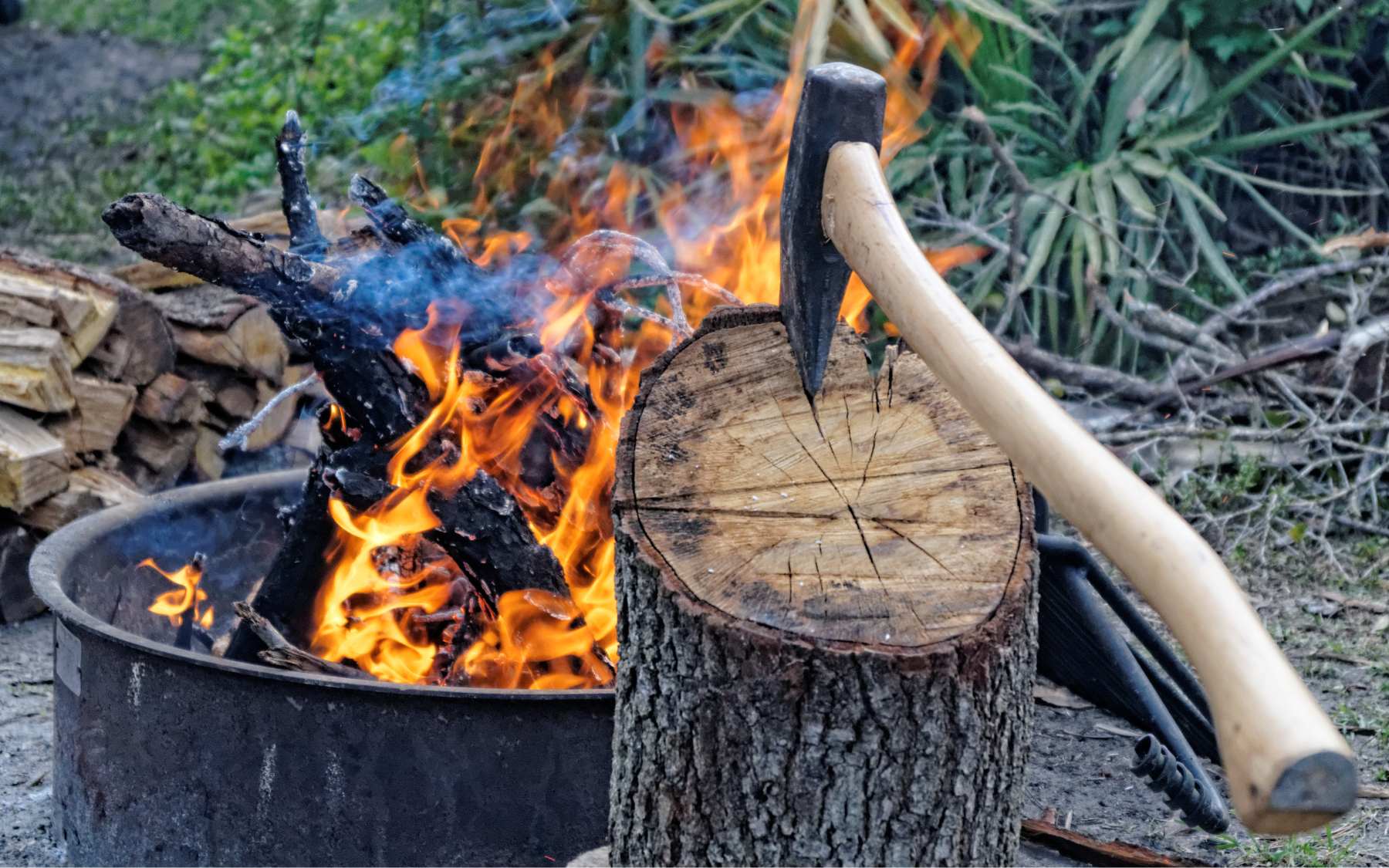
A heavy, specialized axe designed for crushing blows, meant for splitting wood rather than cutting it. The head is broader and heavier than that of a felling axe, and it is often used for splitting logs along the grain. Nice for wood gathering and splitting firewood. If your primary need is to split logs into firewood or kindling, this is the axe to choose. A heavy, specialized axe designed for crushing blows, more suitable for splitting wood than felling trees.
Key Features:
- Heavy, with a broad head designed for splitting
- Long handle for more leverage
- Often has a wider blade that wedges apart logs

Tomahawk
The legendary throwing axes of the Indians! It was these axes that the Vikings, who discovered the American continent in the XI century, and later Europeans from the XVI to the XIX century, met with their faces. A small, lightweight axe, now commonly used for throwing, self-defense or light woodcutting. Good for light-duty tasks, outdoor recreation (throwing), and self-defense.
Key Features:
- Small, easy to carry
- Often used for throwing, which can be a fun and functional activity
- Simple design with a light head

Key Considerations When Choosing an Axe
When choosing the axe of your dreams, you should pay attention to:
Weight and Portability
Lightweight axe is easier to handle for smaller tasks or for those who need to carry the axe over long distances (e.g., hiking or camping). A lighter axe will fatigue the user less quickly.
A heavier axe offers more cutting power and is better suited for larger jobs such as felling trees or splitting large logs. However, it can be more tiring to use for extended periods.
Blade Material and Sharpness
The axe has remained so remarkable throughout these millennia because there’s no real need to splurge on high-quality steel like D2 or H1, even one made from budget steel will have a crushing strike force and acceptable durability.
But if you’re not a penny-pincher and don’t mind spending a bit more, consider:
High Carbon Steel
Pros:
- Sharpness and Edge Retention: High carbon steel takes a very sharp edge and holds it well, which is ideal for cutting tasks that require precision.
- Durability: It is tough and can withstand repeated impacts without cracking or chipping.
- Easily Sharpened: High-carbon steel is relatively easy to sharpen when compared to stainless steel.
Cons:
- Corrosion: High-carbon steel is prone to rusting if not properly maintained (i.e., keeping it dry and oiled).
- Brittleness: While it is strong, it can be brittle under extreme stress, especially if the heat treatment is not done correctly.
Stainless Steel
Pros:
- Corrosion Resistance: Stainless steel does not rust as easily as high-carbon steel, which makes it ideal for wet or humid environments (like coastal or rainy areas).
- Low Maintenance: It requires less care in terms of rust prevention.
Cons:
- Edge Retention: Stainless steel tends to dull faster than high-carbon steel, which means it might need more frequent sharpening.
Forged Steel
Pros:
- Durability: Forged steel is known for being extremely strong and resistant to deformation.
- Toughness: A good forging process can make the blade very tough and able to handle heavy-duty tasks like chopping through thick logs or felling trees.
Cons:
- Weight: Forged steel blades can be heavier, though this depends on the design. Sometimes the weight can make the axe more difficult to use for extended periods.
Carbon Steel with Alloy Additives
Pros:
- Improved Performance: Some axes use alloys, such as vanadium or molybdenum, to enhance edge retention, toughness, and overall performance.
- Durability: These alloys increase resistance to wear and improve the steel’s resistance to corrosion and impact.
Cons:
- Cost: Steel alloys with these additives tend to be more expensive.
Sharpness
Captain Obvious states that the sharper the axe, the better it handles chopping wood of any hardness! So you should keep it sharp.
Key Points About Sharpness
Edge Geometry (Grind):
The grind refers to how the blade is shaped during manufacturing and sharpening. Common grinds include:
- Flat Grind: Produces a strong, durable edge and is easier to maintain. Ideal for heavy-duty tasks like splitting or chopping.
- Convex Grind: Typically used for axes designed for felling or finer tasks. This grind maintains sharpness for a longer period.
- Hollow Grind: Provides an extremely sharp edge but may wear down more quickly, especially in demanding tasks.
Primary Bevel Angle:
The angle of the bevel (the edge of the blade) affects how sharp the blade can be.
- 30-35 degrees: A steeper angle, ideal for splitting or chopping, where durability is important.
- 25-30 degrees: Common for general-purpose axes (e.g., felling trees), providing a good balance between sharpness and durability.
- 20-25 degrees: A finer edge for tasks that require precision or cutting through softer woods.
- 15-20 degrees: For very fine, sharp edges but prone to dulling faster in heavy-duty tasks.
Initial Sharpness:
- Most quality axes come pre-sharpened, but some may have a slightly duller edge out of the box, especially cheaper models. It’s important to touch up the blade before extensive use.
Edge Retention:
- A sharp edge that maintains its sharpness through regular use is key. High-carbon steel blades often excel in edge retention, but even with the best steel, regular maintenance (sharpening) will be required, especially for axes used in rugged conditions.
Maintaining Sharpness
Sharpening Methods:
- Sharpening Stones (Whetstones): The most common and effective method for maintaining a sharp edge. Use a coarse stone for initial sharpening and a fine stone for honing.
- Axe Files: A specialized tool for sharpening axes, files can help touch up the edge between full sharpenings.
- Cartridge or Honing Tools: These provide quick fixes for minor edge dulling and can be handy on the go.
- Electric Sharpeners: These can be used for frequent, heavy-duty maintenance but may remove more material than hand sharpening, affecting the blade’s longevity.
Regular Maintenance:
- Keeping the blade clean and dry is essential for preventing rust and maintaining the edge. When storing the axe, wiping the blade with an oily rag (mineral oil, for example) can help prevent moisture-related corrosion.
Handle Design and Material
Traditional axe handles are often made from hickory, ash, or oak, which are good looking, durable, shock-resistant, and have a good balance of strength and flexibility. Wood handles can be more comfortable, but they may require more maintenance and are susceptible to wear and breakage. A timeless classic!
Fiberglass is more durable and resistant to impact than wood. These handles are often lighter, though they can feel less natural or ergonomic.
Steel handles are extremely durable and resistant to breaking but are heavier than wood or fiberglass. Composite handles combine the best of both worlds, offering durability and strength with less weight than steel.
Exploring the Bush Axe from BPS Knives
What a stroke of luck, because we have an excellent camping axe made right here! Allow us to introduce the good camping axe Bush Axe CSH! And don’t let its modest 9.5-inch size fool you — little pigeons can carry great messages, as they say! Its blade is made from 1066 carbon steel, with a hardening of 57-59 HRC, meaning this axe has high durability and maintains its edge even during the toughest tasks. The Scandi grind sharpening ensures the blade can chop wood of any hardness with ease.
The classic, stylish, and ergonomic handle is crafted from walnut wood, providing a firm grip that doesn’t slip. Moreover, the shape of the handle helps deliver precise and powerful strikes.
As a nice bonus, we include our signature sheath made of natural leather, which not only protects the blade but also adds a touch of elegance to its wearer.
This small camping axe is the perfect choice for camping, hiking, and survival.

Conclusion
That’s how it is! The axe has been a universal tool for all occasions for millennia, and it should be in every home and every family. Without a second thought, visit our online-store, grab our Bush Axe CSH, and you’ll chop through every challenge that comes your way! Amen.