

I hope you’re a fan of ‘just-in-case’ knives and minimalism—because today we’re diving into the world of skeleton knives!
What is a skeleton knife and why is it attracting attention
A skeleton type knife is a fixed-blade knife with a stripped-down handle—either entirely absent or made from a minimal metal frame—so the “skeleton” of the knife is exposed. So what’s the point of a knife like this? It doesn’t exactly look comfortable to hold—let alone to cut with. The thing is such design removes bulk and reduces weight, making it easy to carry while still providing a functional cutting edge.
The appeal lies in its balance between simplicity and practicality: there’s no excess material, no flashy components—just steel and purpose. Because it’s compact and discreet, it’s finding a home in the pockets and packs of people who value readiness without being weighed down.
Popularity among travelers, urbanites and EDC (Every Day Carry) fans
No wonder this kind of blade has become so popular! Travelers appreciate skeleton knives for their portability—they slip easily into a bag, a boot, or onto a belt without adding much weight. Urbanites like them for discreet utility: opening packages, small repairs, or quick food prep without drawing too much attention. For EDC enthusiasts, the metal skeleton hand knife checks multiple boxes: it’s light, durable, and quick to deploy, all while being visually distinctive. Its minimalist look appeals to those who see gear as both a tool and a personal style statement!
Trend towards lightweight and functional tools
Lately, there’s been a clear trend away from oversized, ultra-tactical knives. Today, people want mobility, compactness, and versatility—and the skeleton knife fits that bill perfectly! They offer full fixed-blade strength without the bulk, making them ideal for everyday use, hiking, camping, or emergency kits. Minimalism isn’t just about aesthetics—it’s about efficiency. Fewer materials mean lower weight, easier cleaning, and fewer points of failure.
This makes skeleton knives both practical and fashionable for today’s mobility-focused lifestyles!
The main design secrets that make skeleton knives light
The true superpower of skeleton knives lies in their featherweight feel—achieved through a clever mix of smart engineering and minimalist design. Every single gram is shaved off with purpose, without sacrificing durability or cutting performance. And of course, we couldn’t just sit this one out—we created our own skeleton knife: the Kiridashi CSH [link]!
Once upon a time, the kiridashi was a go-to tool for Japanese schoolchildren, master carpenters, and many others. Now, it’s your turn! True utility skeletonknife, crafted from premium high-carbon 1066 steel with a hardness of 57–59 HRC, this blade comes complete with our signature genuine leather sheath. Wear it around your neck or on your belt. Use it for woodworking, camp chores, or any small cutting tasks you come across in the wild. It’s the perfect addition to your EDC kit—practically made for it!
Awesome skeleton neck knife also.
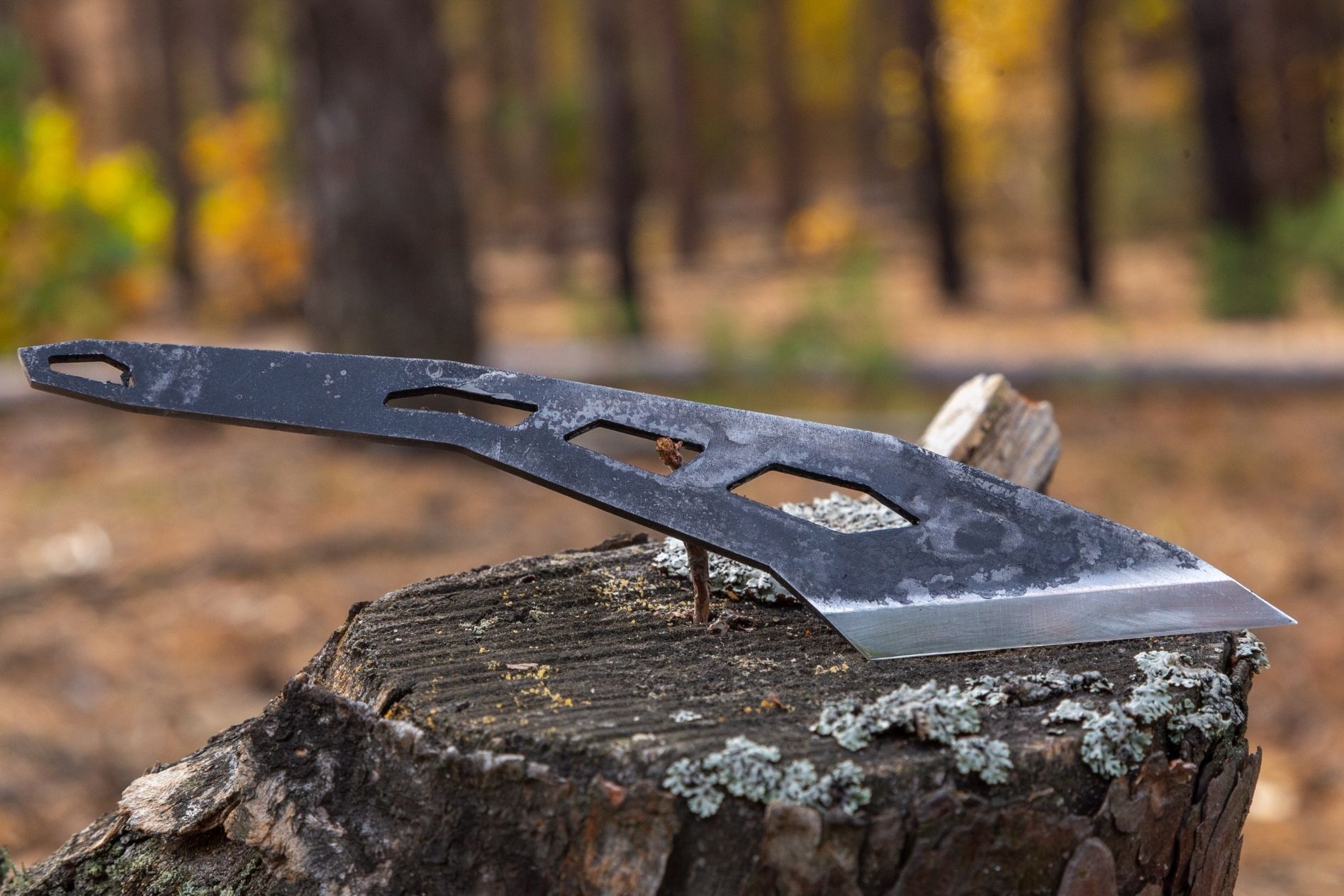 Open and frame skeleton knife hand design
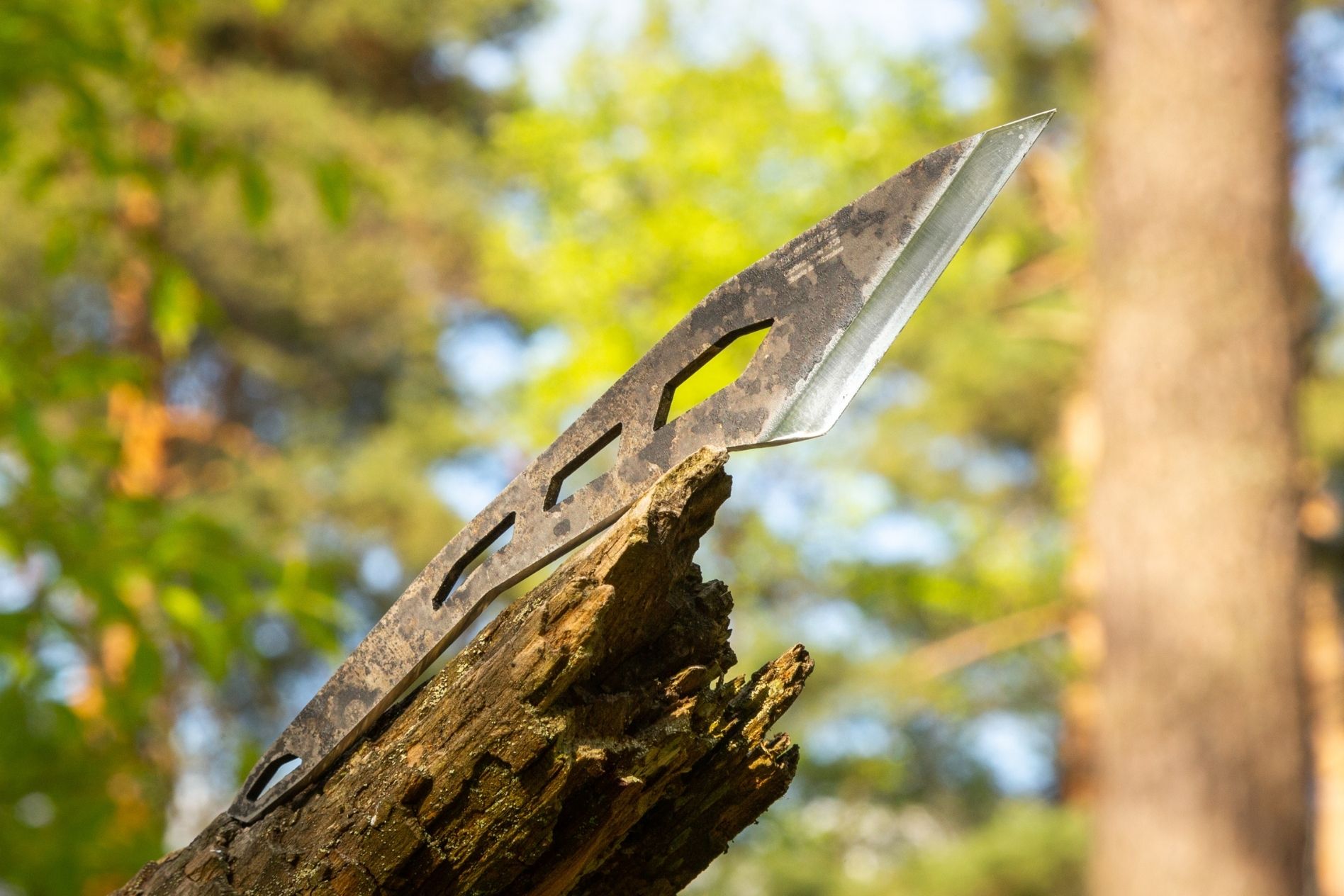
One of the most defining features of a skeleton knife is its open handle construction. Instead of full slabs of wood, micarta, or G-10 covering the tang, the metal frame is either left bare or features large cutouts. This drastically reduces weight while giving the knife a distinctive, industrial look. The reduced handle mass also improves balance, making the blade feel quicker in hand. Plus, open handles are easier to clean and less prone to trapping dirt or moisture—an advantage in outdoor or survival situations.
Use of modern lightweight materials
While many skeleton little knives are made entirely from steel, modern designs increasingly incorporate advanced alloys and composite materials. High-performance stainless steels like CPM-S35VN or Sandvik 14C28N offer excellent strength-to-weight ratios. Some models even integrate titanium or carbon fiber elements for further weight reduction without compromising rigidity! These materials also improve corrosion resistance, meaning the knife remains functional and low-maintenance even after heavy use in challenging environments.
Thin but strong blades
Skeleton knives often feature slimmer blade profiles compared to traditional fixed blades. By using high-strength steels, designers can make blades thinner while retaining the rigidity and edge retention needed for demanding tasks. The result is a blade that slices efficiently, reduces fatigue during prolonged use, and contributes to the knife’s overall low weight. This “less is more” philosophy is a hallmark of skeleton knife engineering—cutting away anything that isn’t essential to performance.
 Advantages of lightweight skeleton knives in use
Skeleton knives have some clear advantages:
Reduced fatigue during prolonged carrying and use
These knives weigh next to nothing, meaning you won’t get tired of carrying them! Whether on your belt, in your backpack, or in your hand, a skeleton knife barely pulls you down. Even during extended cutting tasks, your hand stays fresh, your grip stays firm, and control remains precise.
Speed and maneuverability during work
A lightweight blade responds faster to your hand’s movements—perfect for situations where fine, precise cuts are key. You get increased maneuverability and sharper control over every slice.
Disadvantages and limitations of skeleton knives
Of course, they’re not without their drawbacks:
Less versatility for heavy tasks
Unfortunately, a skeleton knife simply isn’t built for tough, heavy-duty work like batoning or cutting through very hard materials. The lack of a full, solid handle and the thinner blade profile put clear limits on what it can handle.
Vulnerability to certain types of loads
Skeleton knives don’t cope well with side loads or excessive twisting of the blade. Using one as a pry bar or screwdriver is a quick way to ruin your tool—and your day.
Not all models are suitable for extreme conditions
Not every skeleton knife is ideal for extreme environments. In cold weather or when working in gloves, the lack of handle scales can make gripping uncomfortable. The open design also provides less protection against slippage.
 Who are skeleton knives suitable for
Overall, these hand held knives aren’t for everyone—but in the right hands and situations, they shine!
Tourists and travelers
For hikers, backpackers, and globe-trotters, every gram in their gear matters—they’re already hauling a lot of weight on their backs! That’s why many prefer skeleton knives: ultra-light, compact knives, easy to slip into a backpack or pocket, and versatile enough to handle a variety of camp tasks—from slicing food to making small field repairs.
Urbanists and owners of EDC knives
For the same reasons, this EDC mini knife is a favorite among urbanites and anyone who prefers to always be ready for anything. It’s just perfect for EDC kits!
Minimalist utility knife lovers
Minimalists will also appreciate its pure functionality without any unnecessary details. No heavy handle scales, no decorative extras—just a blade and handle in a knightly simple and honest form.
Conclusion
That’s the skeleton knife in a nutshell—simple, minimalist, ultra-light, and compact. A perfect choice for any EDC setup! And you won’t forget to check out our online store, right? It’s a true paradise for camping, hiking, and hardcore survival enjoyers. See you soon!