
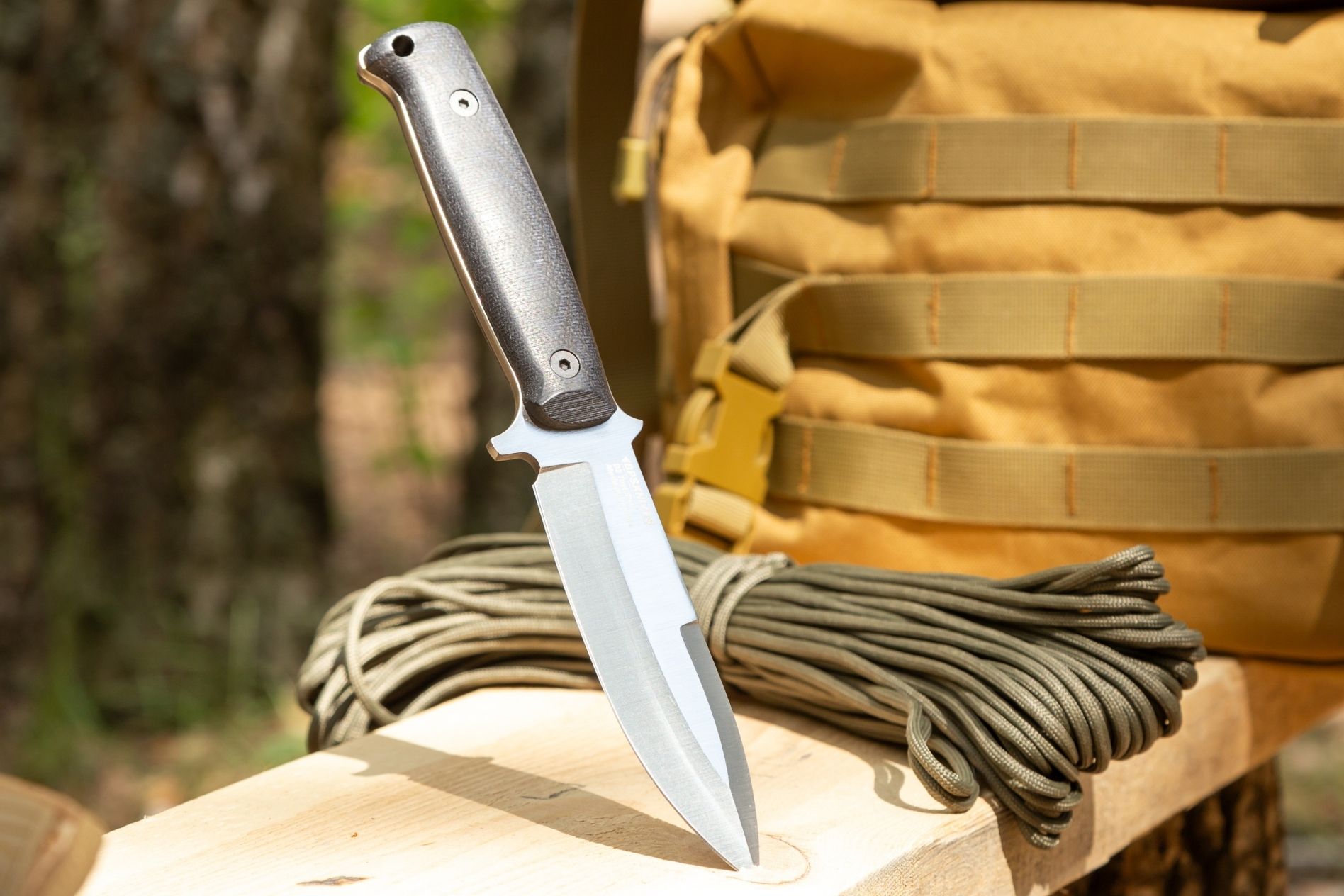
For a couple million years, when we’ve reached for blades, axes and other tools, our instinct has whispered, “take the big one — oh yeah!” It’s hard to argue with the appeal of a classic Bowie: just looking at that hulking cleaver gets the pulse racing with lust. There’s something delicious about the weight of it in your hand. But what if we told you a heavy knife is always a good thing?
A massive knife – practicality or exaggeration?
Of course — heavy knives can be incredibly practical: they’re ideal for batonning firewood, chopping branches, cleaving meat from bone, slicing dense fruits and vegetables, and generally excel at camp tasks. But weight brings trade‑offs!
What is blade bulk and why does it cause stereotypes
“Blade bulk” means the amount of material in the blade’s cross-section and overall profile — thickness at the spine, width, grind geometry, and length all contribute. Bulk influences:
- Moment of inertia: heavier, thicker blades keep moving once they’re in motion (good for chop, bad for precision).
- Edge robustness: more steel behind an edge resists chipping and holds up to lateral stress.
- Balance point: added mass shifts balance toward the blade, changing handling dynamics.
Stereotypes arise because visible mass is an easy signal: big equals strong, thin equals fragile. That’s an over-simplification. A thin high-carbon steel blade with the right heat treat and geometry can be tougher and sharper for cutting than a thick, poorly ground stainless slab.
How knife weight can affect efficiency and comfort of use. What are big knives useful for?
Efficiency
- Chopping & batoning: heavier blades deliver more energy per strike, so the cut may require fewer downward strokes. This is energy-efficient if your body can handle repeated heavy strikes.
- Slicing: lighter blades with thin distal taper and tuned grinds slice more efficiently — they minimize drag and need less force per cut.
- Control tasks (paring, filleting, fine carving): excess mass reduces fingertip control and increases the chance of overcutting.
Comfort & fatigue
- Heavier knives tire your wrist, forearm, and shoulder faster — especially in repetitive tasks (e.g., dicing vegetables, long prep sessions).
- A heavy, blade-forward balance stresses different muscles than a more handle-balanced knife; some users prefer one over the other, but fatigue accumulates either way if mismatched to the job.
- Handle ergonomics and grip technique can mitigate weight, but not eliminate the extra energy cost.
Safety
- Greater momentum makes the knife harder to stop if you slip or miss the target.
- A fatigued user is more accident-prone; heavier knives accelerate fatigue.
Which tasks do not require a heavy knife
- Precision slicing (sashimi, deli cuts, carpaccio, thinly sliced vegetables)
- Paring, peeling, and trimming
- Filleting fish
- Everyday kitchen prep where speed & low fatigue matter (dicing onions, mincing herbs) Big cooking knive is required for meat and bones though.
- Fine woodworking/carving and detailed fieldcraft
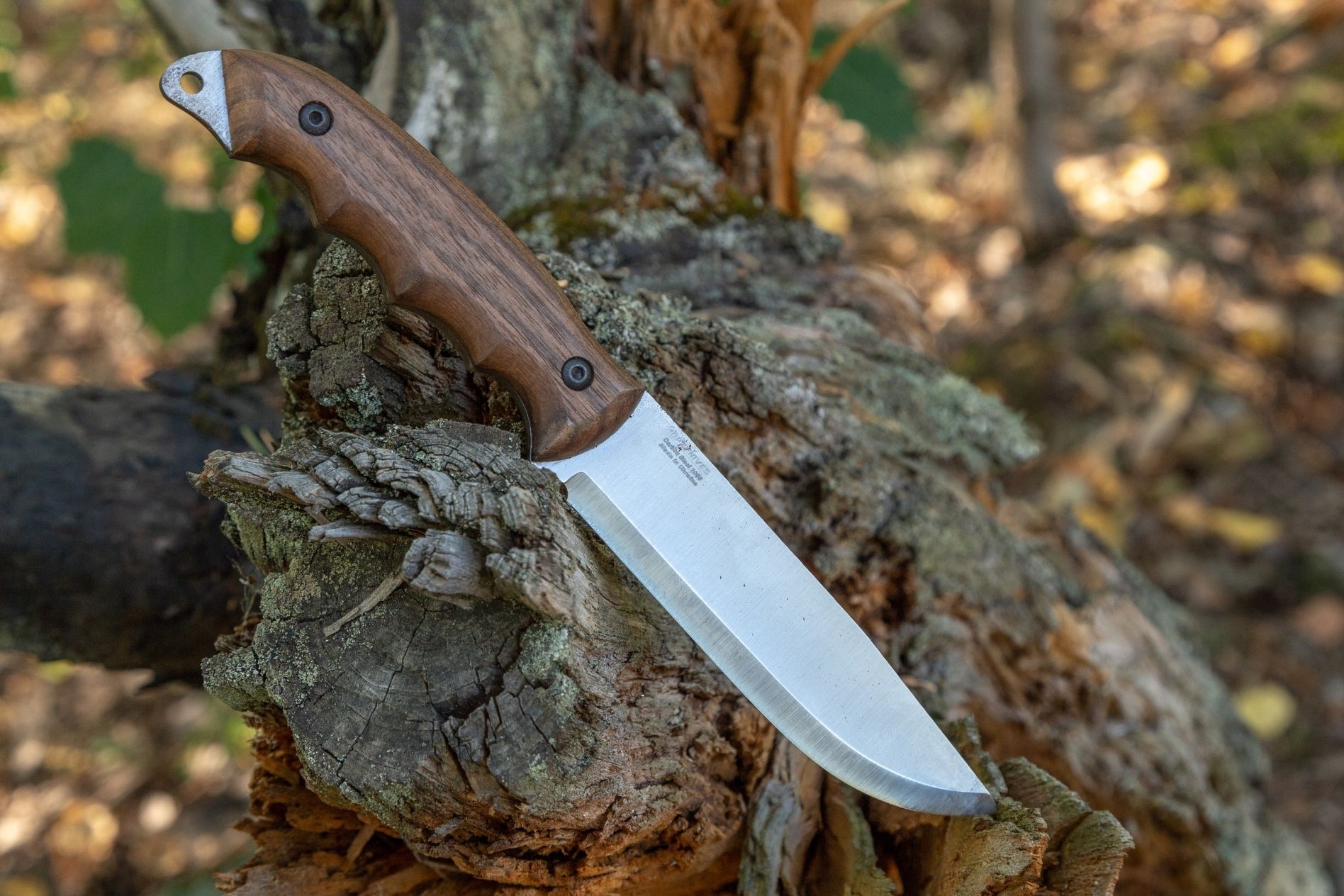 Myths about using big knives
And of course, no discussion would be complete without the myths and tall tales:
Myths 1: The heavier the knife, the more durable it is
A heavy, huge blade doesn’t automatically mean it’s reliable. Reliability comes down to steel quality, heat treatment, correct blade geometry, and tang design — for example, a full‑tang construction is generally far stronger than a narrow “rat‑tail” tang. A well-crafted thin blade made from high-quality steel can outlast a thicker, heavier blade made from poor material. In fact, overly heavy knives made with low-grade steel can chip, warp, or dull just as quickly — sometimes faster — than well-made lighter blades!
Myths 2: A heavy knife will always be effective and cutting
Effectiveness in cutting isn’t just about force — it’s about efficiency. Really big knives can power through dense materials by using momentum, but they often struggle with precision and clean slicing. Heavier knives can:
- Wedge or split rather than cleanly slice
- Cause tearing or bruising in delicate foods
- Be harder to control in small or detailed cuts
Meanwhile, lighter knives with thin, sharp edges can glide through food or material with less effort and far cleaner results. That’s why chefs often favor lighter knives for speed and finesse.
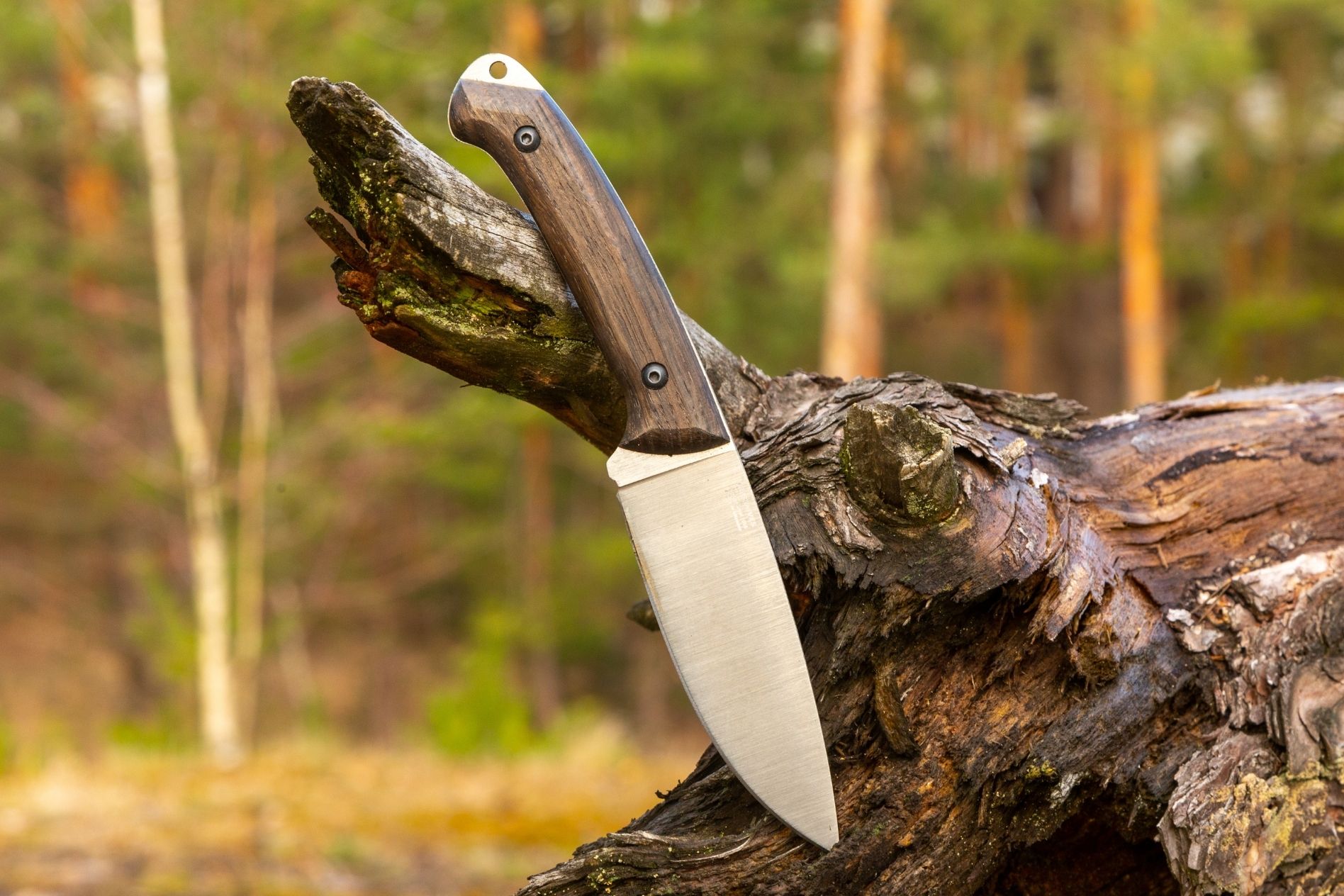 Myths 3: Only a heavy knife guarantees high stability when working with hard materials
Heavier knives can feel more stable due to their mass, but stability is more about balance, grip, and technique than just weight. For hard materials (like thick vegetables, dense meat, or wood), you need:
- A strong, rigid spine
- Proper edge angle and geometry
- Good handle ergonomics to manage torque and stress
Plenty of mid-weight or even lighter knives with proper spine thickness and grind handle tough jobs just as well — or better — than oversized, unwieldy blades.
Myths 4: A giant knife is better suited for all types of tasks
One-knife-to-rule-them-all sounds appealing, but no knife is truly universal, and a massive blade is one of the least versatile types. For example:
- Kitchen prep? A lighter chef’s knife, santoku or jumbo knife is more agile.
- Precision carving? A heavy blade will overcut or lack control.
- Fish or game processing? Flexibility and finesse matter more than mass.
Heavy blades shine in specific roles like splitting, batoning, and chopping — not across all tasks.
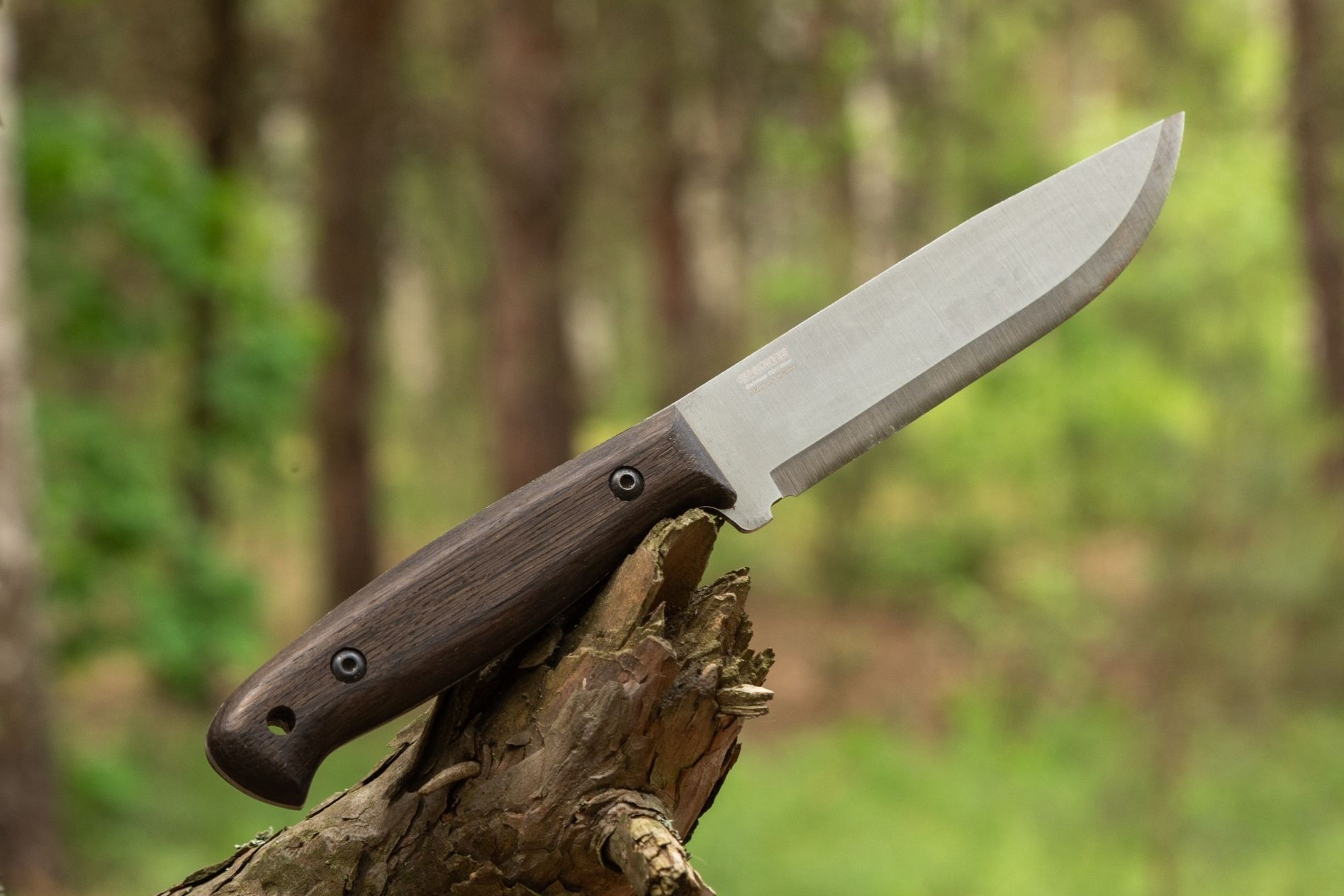 Myths 5: Heavy knives are more comfortable for long-term use
At first glance, a heavy knife might feel more solid and reassuring in the hand — the kind of tool you can “trust.” However, over extended periods of use, that extra weight often becomes a liability rather than a benefit. Long prep sessions, repeated cutting motions, or detailed tasks can quickly lead to wrist and forearm fatigue when using a heavy blade. What truly determines comfort over time isn’t sheer mass, but a combination of good balance, ergonomic handle design, and how naturally the knife moves with your hand. In many cases, a well-balanced medium or lightweight knife will allow you to work longer, with more precision and less strain. So while a heavy knife might feel powerful at first, it rarely offers lasting comfort in real-world, long-duration use.
Factors that are actually important when choosing a knife
So how do you choose the right knife? What should you really be looking for?
Weight vs. balance: why balance is more important than weight
While weight can affect how a knife feels, balance determines how it performs in your hand. A well-balanced knife feels like a natural extension of your arm — you don’t have to fight gravity or adjust your grip constantly. It gives you control during both powerful and delicate cuts.
An unbalanced knife, regardless of whether it’s heavy or light, can quickly lead to fatigue, uneven cuts, and even accidents. For example, a blade-heavy knife can make tip work or precision slicing awkward, while a handle-heavy knife can reduce cutting power during chopping. In contrast, a well-balanced knife distributes its weight evenly between the handle and the blade, letting you move with precision and confidence.
Blade material: steel and its effect on knife performance
Steel is the soul of the blade — it’s the material that defines the knife’s core characteristics: will it be strong, reliable, durable, corrosion-resistant, and so on. There’s a vast range of steels out there, each with its own set of strengths and weaknesses:
- High-carbon steel: Sharpens easily and takes a razor edge, but can rust without proper care.
- Stainless steel: More resistant to corrosion, but may require more effort to sharpen or maintain edge performance.
- Tool and powdered steels: Often offer a great balance of toughness, edge retention, and corrosion resistance.
Choosing the right steel depends on how you plan to use the knife and how much maintenance you’re willing to perform! In any case, steel quality has a far greater impact on performance than just the weight of the blade.

Why blade length and shape are more important than its mass
The length and shape of a knife’s blade determine how it interacts with the material you’re cutting. For example, a long, narrow blade is ideal for slicing, while a shorter, curved blade offers more control for tasks like peeling or carving. The right shape and length allow you to work efficiently and safely, adapting to different cutting techniques.
Relying on mass alone can limit your versatility. A heavy, thick blade might be good for chopping through bones or wood, but it would be completely impractical for filleting a fish or slicing ripe tomatoes. In contrast, a well-designed blade with the right geometry allows for clean, controlled cuts, regardless of how thick or heavy it is.
Blade shape also affects tip control, slicing motion, and knuckle clearance — all critical elements that impact real-world usability far more than raw weight.
How to choose the right knife for specific tasks
Now, let’s talk about how to choose a knife tailored to your specific needs:
For kitchen knives: what is more important – weight or shape?
In the kitchen, shape and blade geometry are far more important than weight. The shape of the knife determines how it moves through food, what cutting techniques it’s best for, and how comfortable it is to use over time. For example:
- A chef’s knife with a curved belly supports rocking cuts for herbs and vegetables.
- A huge Santoku knife or nakiri has a flatter edge, ideal for push-cutting and chopping.
- A paring knife is small and nimble, perfect for fine detail work.
- A fillet knife is long and flexible, designed for delicate slicing and working around bones.
While some chefs like a bit of heft for chopping tougher ingredients, a lighter, well-balanced knife allows for faster, more precise work with less fatigue. A heavy kitchen knife may help with forceful tasks like splitting squash or cutting through bone, but for 95% of kitchen prep, shape and edge profile matter more than mass.
For camping knives: when is a massive knife an advantage, and when is it a burden?
Extreme conditions call for a knife that’s ready for anything, so having a hefty, heavy duty bushcraft knife won’t hurt! With it, you’ll be able to baton firewood, chop branches for the campfire, strip bark from trees, cleave bones from fresh-caught wild boar, and tackle other heavy-duty tasks. When you’re out in the wild, a heavy knife is definitely in its element!

For working and universal knives: optimal weight and balance
When it comes to EDC (Everyday Carry), utility, or work knives, the key is finding the right balance between durability, ease of carry, and all-day usability. These knives are often used for:
- Cutting rope, cardboard, plastic, or fabric
- Opening packages or boxes
- Light maintenance or tool work
- Occasional outdoor or food-related use
Here, weight should be low to moderate — even the best heavy duty survival knife can become annoying in a pocket or on a belt, and can lead to fatigue if used often. More important is:
- Balance: The knife should feel stable and responsive.
- Blade geometry: A versatile edge with a fine point and flat or slightly curved belly handles the widest range of tasks.
- Handle ergonomics: Comfort over long use matters more than size or thickness.
A well-designed universal blade doesn’t need to be a massive knife — it needs to be reliable, easy to control, and comfortable to use repeatedly.
Conclusion
That’s the gist of it! As you can see, a big, heavy knife is almost always cool and powerful — but it’s not always the right tool for every job. It’s perfect for heavy tasks like batonning, chopping branches, and cutting through meat and bone, but less suited for delicate work like fish cleaning, preparing small game, cooking, or wood carving. And you know what? Our online store has knives of all shapes and sizes for literally every occasion! Definitely worth checking out. That’s all for now — catch you again soon!