
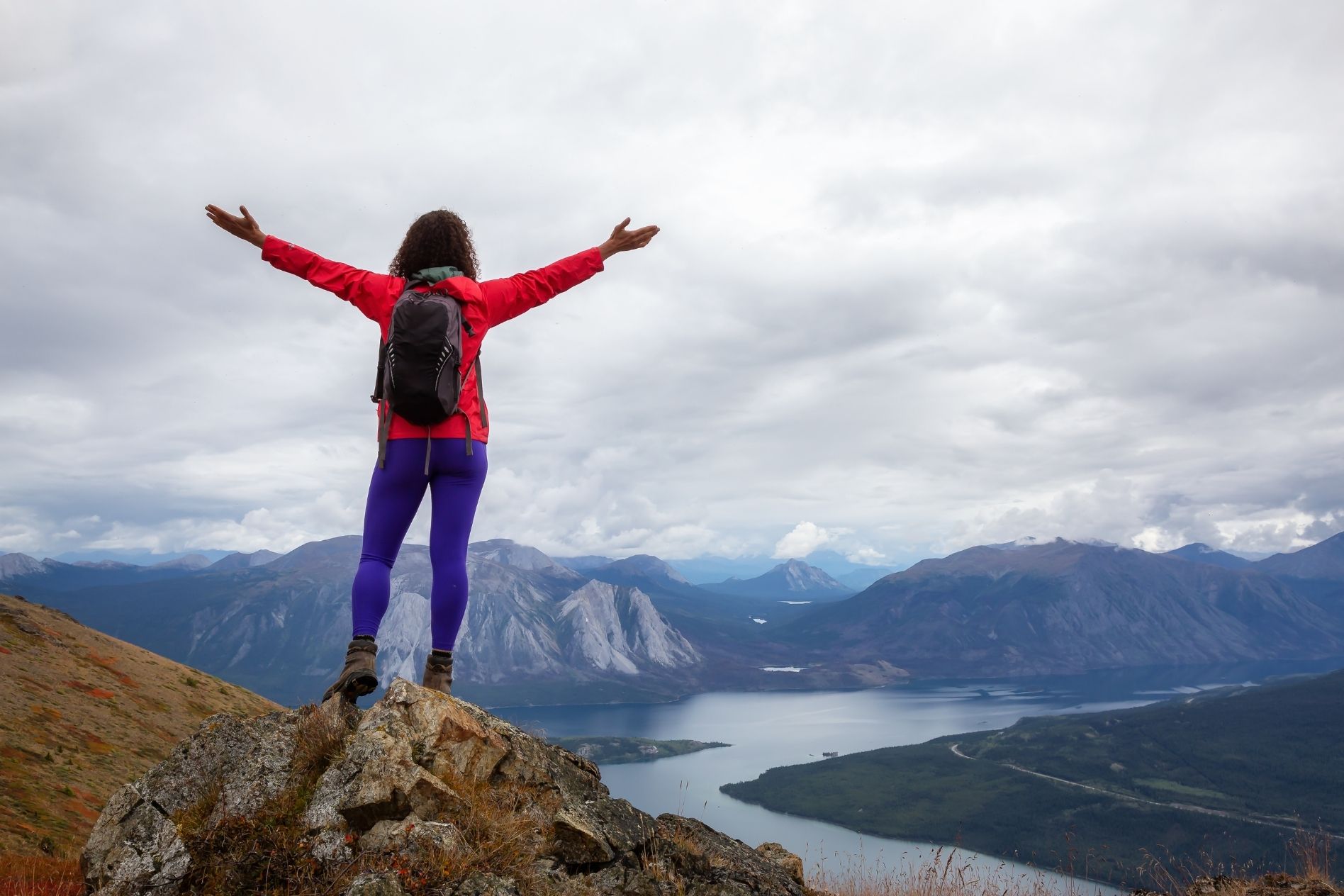
For once, the weather outside is wonderful, the sun is shining brightly and everything. That means it’s the perfect time to rush toward vivid experiences! It’s hiking time.
General Principles of Preparing for a Hike
Let’s figure out what’s what make easy first day hike:
How to Choose a Route for Your First Hike. Hiking recommendations.
What is hiking? Hiking is walking in nature, usually on trails or in the mountains, for exercise or enjoyment. So when choosing a route, first and foremost, go by your level of physical fitness! If your only workouts are quick sprints from the couch to the fridge and back, then it’s better to start with flat, easy hiking trails that go through fields and forests — leave the mountains for later in that case. Besides that:
- Distance: Start with short routes — typically under 5–10 km (3–6 miles) — so you can finish comfortably in a few hours. You can bring a walk distance time calculator with you.
- Elevation gain: Even a short hike can feel strenuous if there’s a steep climb. Look for gentle terrain and avoid high-altitude areas for your first outing.
- Trail conditions: Check recent reports (if available) to ensure the trail is open, dry, and not obstructed by fallen trees or snow.
- Accessibility: Choose a location close to home or within easy reach, preferably with cell coverage and access to help if needed.
- Loop vs out-and-back: Loop trails offer more variety, but an out-and-back may feel more predictable and easier to manage for beginners.
Weather and Seasonality. How long to hike?
Never underestimate the weather. Conditions can change quickly in nature, especially in mountainous or forested areas. What to check:
- Forecast: Use a reliable local weather app or service and pay attention to temperature, wind, precipitation, and UV index.
- Seasonal factors:
○ Spring: Trails may be muddy or flooded from snowmelt. Watch for ticks.
○ Summer: Longer days and clearer trails, but be wary of heat, dehydration, and thunderstorms.
○ Autumn: Cooler temps and beautiful foliage — but also shorter daylight hours and sudden cold snaps.
○ Winter: Requires special gear and knowledge. Even easy trails can become dangerous.
Always pack for slightly worse weather than forecasted. Layers, rain protection, and sun protection are essential year-round.
Group or Solo?
If you’re not a misanthrope or a sociopath, then why not go for a walk with some hike company? On the other hand, a solo hike might turn out to be even more enjoyable and rewarding — no one and nothing will distract you from the stunning views and fresh air, and you won’t have to politely smile and pretend you’re having a great time with people you’d rather not be with. But if something extreme happens, you’ll have no one to rely on but yourself — no one will save you or help you if things go wrong. The choice is yours!
 Check Your Gear Before You Go. What do you need when you go hiking?
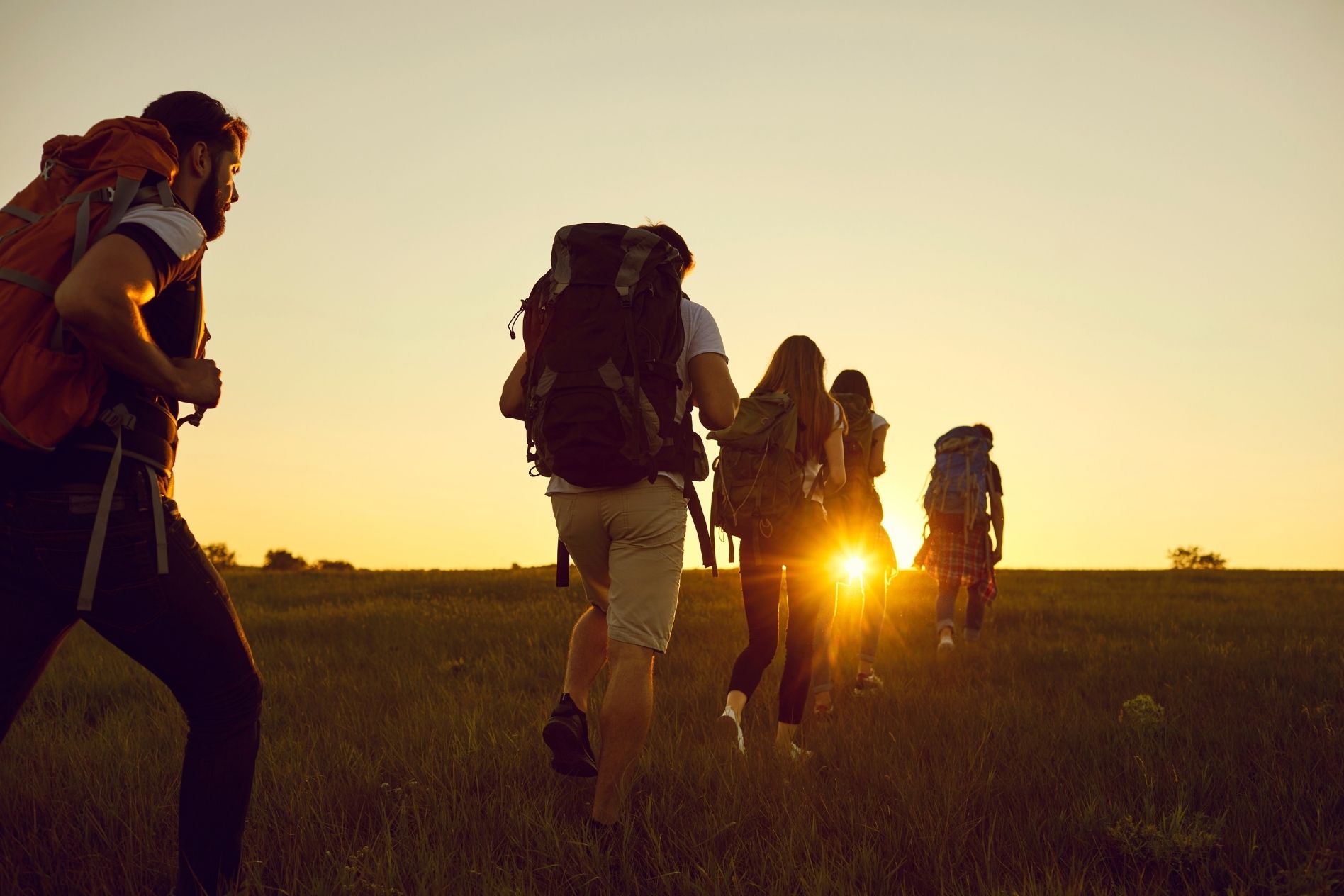
Don’t wait until you’re halfway into the wilderness to realize your flashlight doesn’t work or your boots are too tight. A gear check should be part of every trip preparation — no matter how short the hike.
Basic gear checklist for a day hike:
- Clothing: Moisture-wicking base layers, insulating mid-layer, wind/rain jacket, comfortable hiking boots.
- Navigation: Map, compass, GPS device, or reliable offline app.
- Water: At least 1 liter per person for every 2 hours of hiking. Water purification tablets or filters if refilling from natural sources.
- Food: Snacks with good energy-to-weight ratio (nuts, bars, dried fruit).
- Safety and tools: basic first aid kit, multitool/knife, whistle, flashlight/headlamp with spare batteries.
- Other essentials: Sunscreen, insect repellent, hat, trekking poles if needed, trash bag to pack out all waste.
Test unfamiliar gear (especially shoes, backpack, water systems) before the hike — ideally during a short walk around your neighborhood or park.
 Top 5 Tips for Your First Hike
That’s all clear — and here are a couple more tips while we’re at it:
Tip 1 — Don’t Overload Your Backpack
Sure, you could cosplay a pack camel — but do you really need that? Your spine, unfortunately, isn’t made of titanium. Take only the essentials:
– Water
– Snacks
– First aid kit
– Weather-appropriate clothing
– Navigation tools
Leave behind the “just-in-case” extras unless they’re critical for safety. Aim to keep your pack under 10–15% of your body weight for a day hike.
 Tip 2 — Bring Tested and Trusted Gear
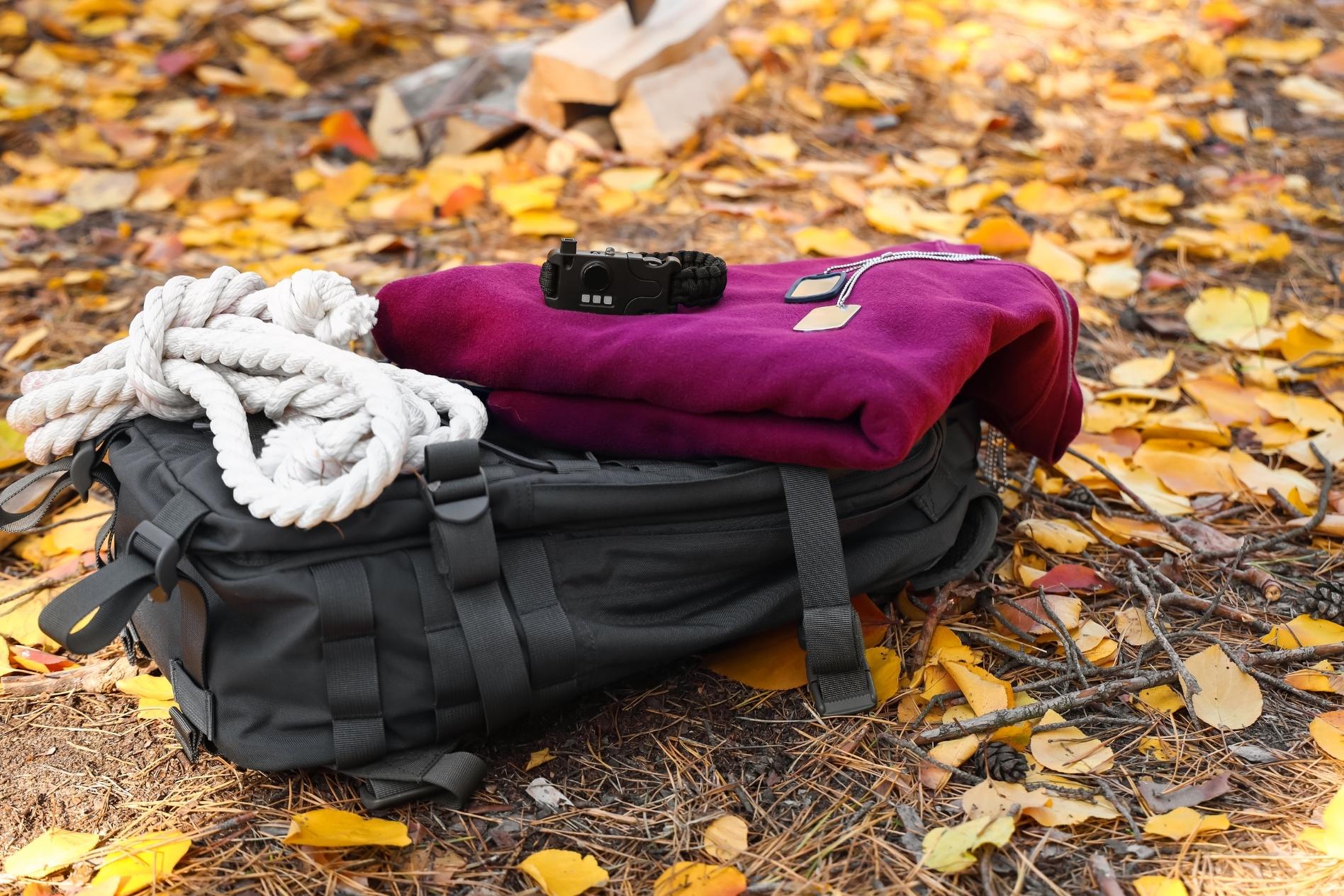
Never hit the trail with brand-new, untested gear. That includes shoes, backpack rucksack hiking, water bottles, and even clothing layers. What looks good in a store might rub, leak, or break after just a few hours on the trail!
Before your hike:
- Wear your hiking footwear on short local walks
- Try on your backpack fully loaded
- Make sure your rain jacket actually keeps water out
Familiar gear means fewer surprises and a much more comfortable hike.
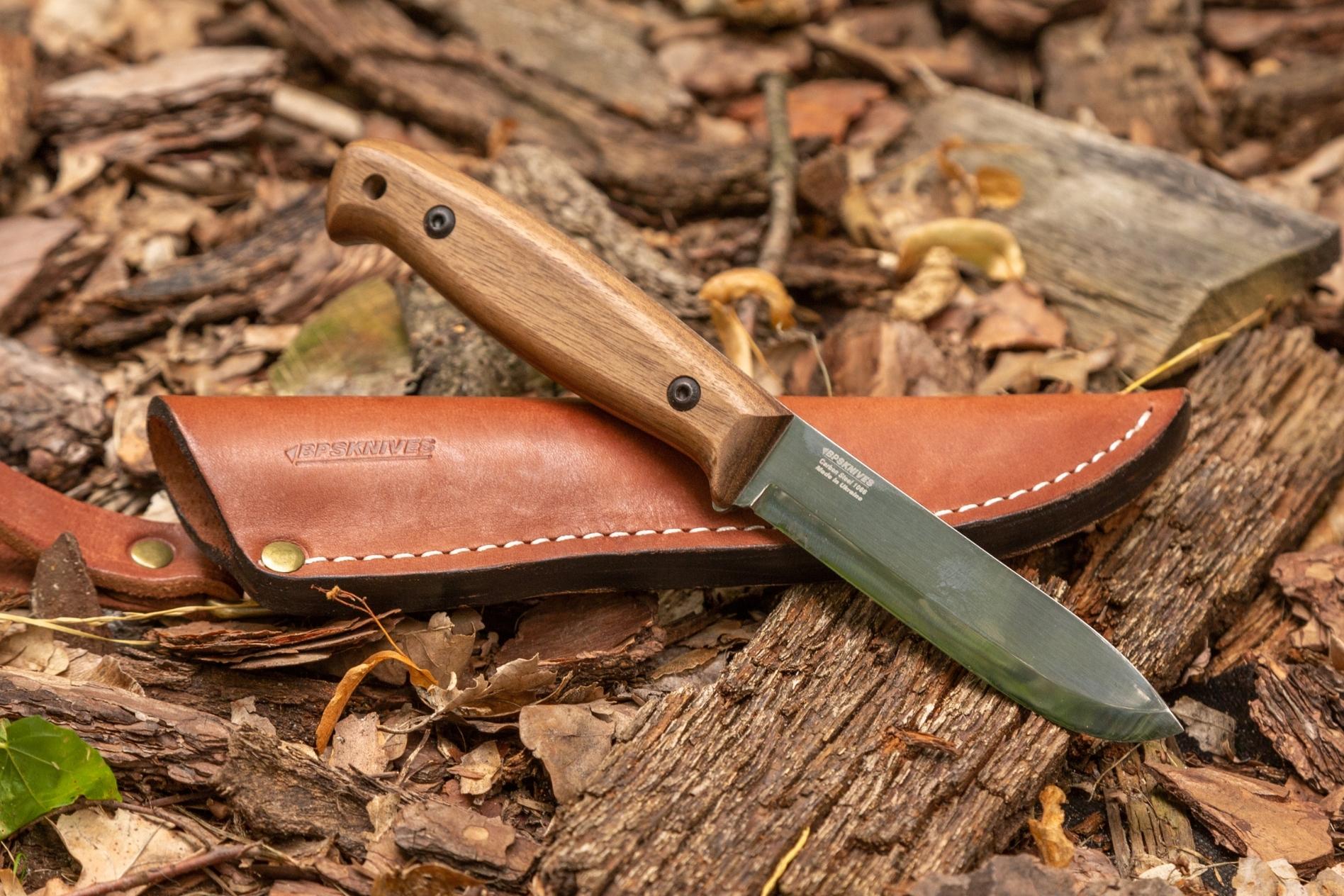
But most importantly — what kind of adventure goes without a reliable, durable knife? Exactly, none. So allow us to introduce our pride and joy: the BS2FT knife [Review].
This blade is made from high-carbon 1066 steel with a hardness of 57–59 HRC. The handle is crafted from walnut wood, and it comes with our signature genuine leather sheath. What does all that mean? It means this knife can handle whatever you throw at it — whether it’s slicing up food or chopping branches for a campfire.
 Tip 3 — Train in Advance
Even an “easy” hike can feel challenging if your body isn’t ready. Start preparing at least a couple of weeks in advance with regular walks, stairs, or light cardio. Focus on:
- Building endurance (brisk walking, hiking local trails)
- Strengthening legs and core (squats, lunges, planks)
- Practicing with a loaded backpack if possible
This isn’t about becoming an athlete — it’s about making sure you can enjoy the trail instead of suffering through it.
Tip 4 — Don’t Skimp on Footwear
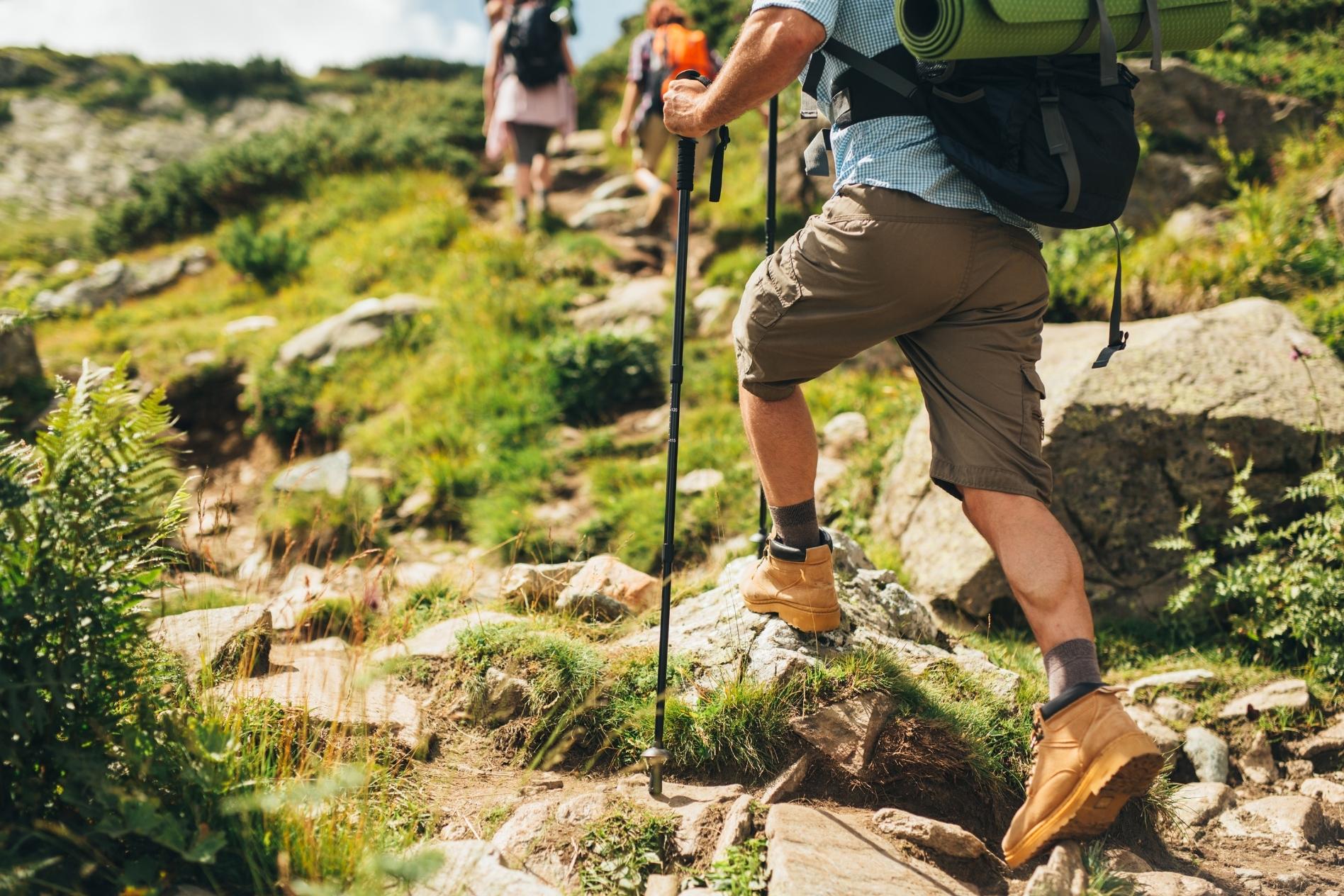
Don’t be stingy when it comes to your gear — especially your footwear! Your shoes are the only thing standing between your feet and a bloody mess. Walking in uncomfortable, low-quality, or ill-suited shoes won’t just make the hike miserable — it’ll tear your feet apart. So you better to invest in a good pair of hiking shoes or boots that:
- Fit well with room for your toes
- Are broken in before the hike
- Offer grip, support, and protection for the terrain
Also: don’t forget proper socks — synthetic or wool, not cotton!
 Tip 5 — Prepare Mentally for Challenges
Never forget that plans can easily and suddenly go to hell! The weather can turn bad, a seemingly well-planned route might lead you into the middle of nowhere, someone could trip and break a leg — just be ready for anything! Mental preparation is just as important as physical:
- Expect discomfort at some point — and know that it’s temporary
- Focus on the journey, not the distance
- Stay positive and flexible
A resilient mindset will help you adapt, stay safe, and still enjoy the experience, even when things don’t go perfectly.
Conclusion
And most importantly, clear all the clutter from your mind and ENJOY the stunning natural views. To take your experience to the ABSOLUTE next level, be sure to visit our online store — you’ll find everything you need for hiking, camping, and survival there! With that, allow us to sign off. Until the next exciting meeting with you!