
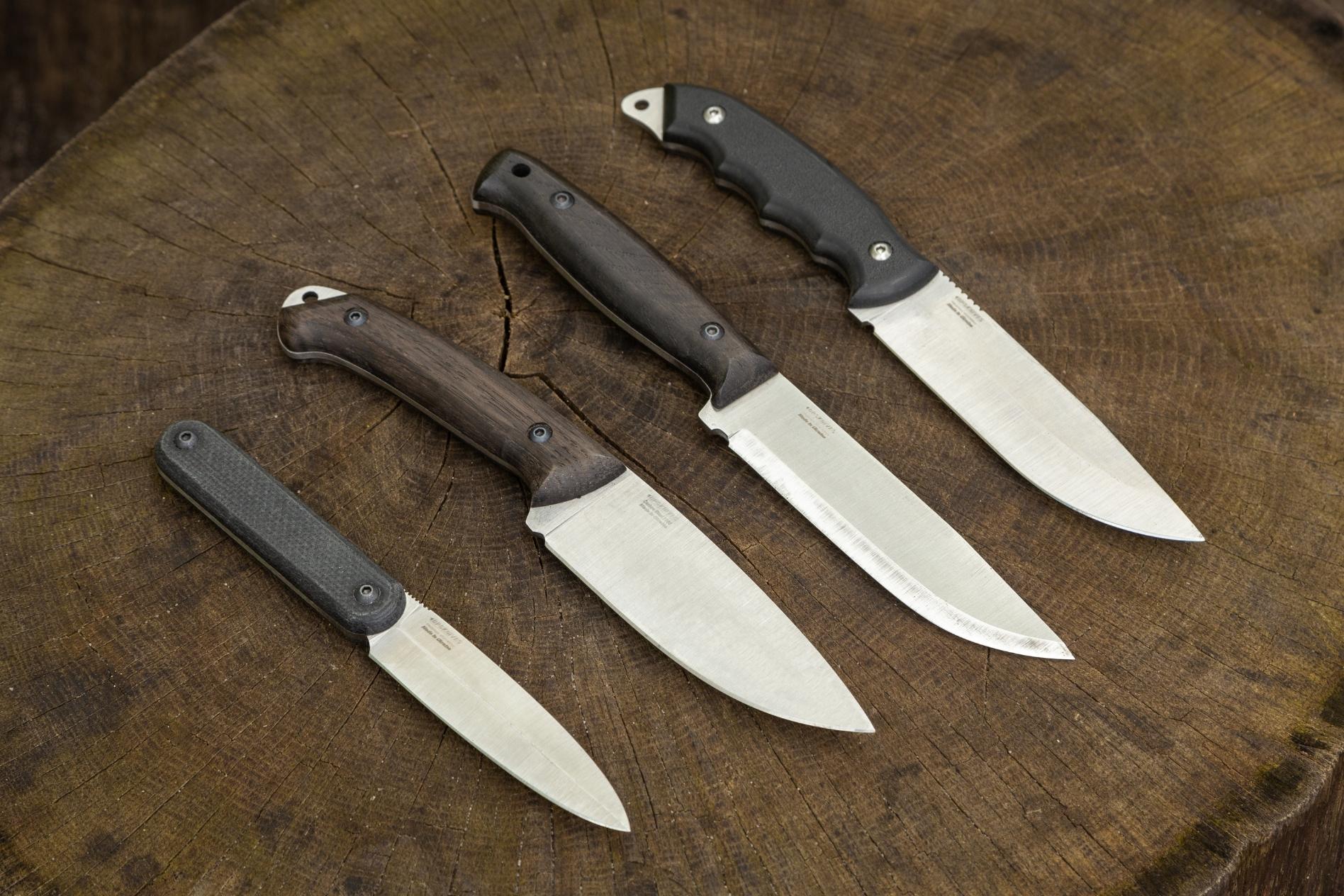
Anyone who has ever faced a survival situation will tell you—without a knife, you’re as good as lost. But not just any knife will do. You need a blade that can withstand moisture, resist corrosion and rust, and is tough enough to even split wood when needed.
How steel properties affect knife performance, durability, and maintenance
And as everyone knows, the properties of the steel you choose directly affect the performance of your knife. These characteristics determine whether the blade can handle woodwork, resist moisture and dirt, and how long the edge will stay sharp. Choosing the right knife blade steel types is always a matter of balancing trade-offs between different qualities. Understanding the differences in knife steel comparison is important!
Key Factors to Consider in Knife Steel
1.Hardness (HRC)
Hardness is measured on the Rockwell scale (usually HRC for knives). Higher hardness improves edge retention but can make the steel more brittle. Lower hardness improves toughness and makes the knife more forgiving but may reduce edge retention.
Example: CPM-S110V is very hard and holds an edge well but is more brittle and harder to sharpen.
2. Toughness
Toughness refers to a steel’s ability to absorb impact without chipping or breaking. This is especially important for heavy-duty, outdoor, or survival knives.
Example: 5160 and CPM-3V are steels known for high toughness.
3. Edge Retention
This indicates how long a knife maintains a sharp edge during use. It is often a trade-off with toughness. High edge retention is ideal for everyday carry (EDC), culinary, and professional use.
High edge retention: S90V, S110V; Moderate edge retention: VG-10, AUS-8.
4. Corrosion Resistance
This determines how well a steel resists rust and staining, especially in humid or wet environments. Stainless steels (with 13% or more chromium) are usually more resistant.
High resistance: LC200N, H1;
Moderate: VG-10, 440C; Low: D2, O1.
5. Ease of Sharpening
Some steels are easier to sharpen than others. Generally, steels that hold an edge for a long time are harder to sharpen. Softer steels may dull more quickly but are easier to maintain.
Easy to sharpen: 1095, 420HC;
Hard to sharpen: S90V, Maxamet.
6. Steel Composition and Alloying Elements
- Carbon (C): Increases hardness and edge retention
- Chromium (Cr): Improves corrosion resistance
- Vanadium (V): Enhances wear resistance and grain structure
- Molybdenum (Mo): Adds strength and corrosion resistance
- Cobalt (Co): Increases hardness and stability
 Recommended Steel Types for Survival Knives
Now, let’s take a look at some of the best survival knife steel for survival!
1095 High Carbon Steel
This is a traditional high-carbon steel that has been a staple in the knife-making world for decades. 1095 carbon knives contain approximately 0.95% carbon, this steel is known for its outstanding toughness and edge retention, especially under harsh conditions. It can be easily sharpened in the field with basic tools, making it ideal for long-term survival situations where access to sharpening equipment may be limited. Because of its relatively simple composition, 1095 is also highly responsive to proper heat treatment, which allows manufacturers to fine-tune its hardness and resilience. However, its biggest drawback is its poor corrosion resistance. Since it lacks significant chromium content (which provides rust resistance in stainless steels), it can rust quickly if not properly maintained. Frequent oiling and careful drying after use are essential to prolong its lifespan.
Best for: Bushcraft, camping, wilderness survival, and heavy-duty use where maintenance is manageable.
D2 Tool Steel
When choosing a knife, one of the most important decisions you’ll make is whether to go with stainless steel vs carbon steel! And what a stroke of luck—there exists steel that is not only incredibly strong but also highly resistant to rust and corrosion. Yes, it’s D2 tool steel review time! D2 is a high-carbon, high-chromium tool steel known for its exceptional wear resistance and edge retention. Originally developed for industrial tooling, D2 has found its place in high-performance survival knives thanks to its semi-stainless properties and ability to hold an edge through repeated use on tough materials like wood, rope, and even bone. D2 contains about 12% chromium, which is just below the threshold for classification as a true stainless steel. This means it offers better corrosion resistance than steels like 1095 but still requires some maintenance in wet or humid environments. This steel rightfully earns its place at the top knife steels 2025 list!
About the Beta (β) Phase:
In metallurgical terms, the “beta” phase typically refers to a phase found in certain alloy systems, such as titanium alloys, where the microstructure includes body-centered cubic (BCC) structures. While D2 knife steel doesn’t contain a formal beta phase in the same sense, it does feature a complex microstructure with dispersed carbide particles, primarily chromium carbides. These carbides are extremely hard and are responsible for the steel’s excellent wear resistance and ability to retain a sharp edge for extended periods. Understanding these phases helps explain why D2 behaves so differently from simpler steels: it sacrifices a bit of toughness and ease of sharpening for superior longevity.
Best for: Long-term cutting tasks, EDC survival knives, and users who prioritize edge retention.
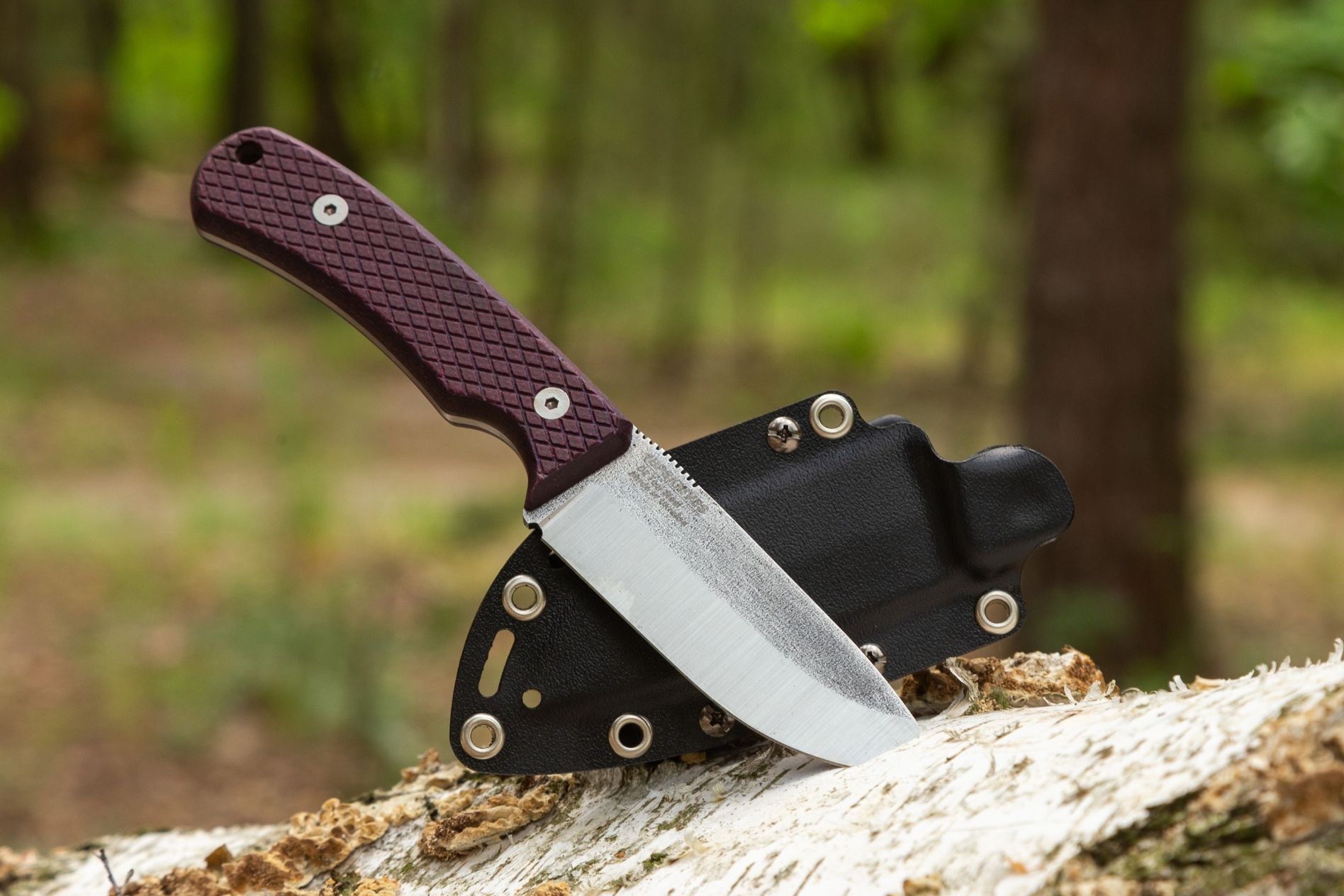
And you know what? We’ve crafted a knife from this exceptional steel — and we call it Beta. It’s our pride and joy!
The blade boasts a Rockwell hardness of 60–61 HRC, and the handle is made from durable Micarta. This knife is sharper than a razor and tough as Excalibur!
 AUS-8 Stainless Steel
AUS-8 is a Japanese stainless steel widely used in mid-range knives. With a well-balanced composition that includes carbon, chromium, molybdenum, and vanadium, AUS-8 offers a solid compromise between corrosion resistance, toughness, and ease of sharpening. Although AUS-8 doesn’t hold an edge as long as high-end steels like S30V or D2, it is remarkably easy to sharpen, even in the field. It performs reliably in wet environments and is less prone to rusting than carbon steels, making it a practical choice for those who prioritize low maintenance. Manufacturers can also enhance its performance through cryogenic treatment, which refines the grain structure for improved edge retention. One of the most durable knife steels!
Best for: All-purpose survival knives, especially in humid or marine environments where rust is a concern.
S30V Stainless Steel
S30V is a premium powder metallurgy stainless steel developed by Crucible Industries specifically for high-performance knife blades. It contains high amounts of vanadium and carbon, which form hard vanadium carbides within the steel. These carbides dramatically enhance edge retention and wear resistance, making S30V one of the best steels available for cutting-intensive tasks. S30V also offers excellent corrosion resistance, thanks to its 14% chromium content, and it maintains sharpness longer than most conventional steels. However, this performance comes at a cost—literally and practically. S30V is more expensive, and its high hardness can make sharpening more difficult, especially without proper tools or experience, truly one of the best survival knife materials.
Best for: High-end survival knives, professional outdoor gear, and users who want maximum performance with minimal sharpening.
440C Stainless Steel
440C is a high-carbon stainless steel that has long been used in knife-making due to its good balance of hardness, wear resistance, and corrosion resistance. It contains approximately 1.2% carbon and 17% chromium, which allows it to take a razor-sharp edge and resist rust effectively.
While it doesn’t offer the same edge retention as modern powder steels like S30V, it performs admirably in general-use scenarios and is relatively easy to maintain. Proper heat treatment is crucial for unlocking its full potential; a well-treated 440C blade can outperform many cheaper stainless steels. It is a popular choice for budget-conscious users who still want a reliable and durable blade.
Best for: General outdoor use, mid-range survival knives, and users looking for a low-maintenance steel at a reasonable price.
Conclusion
Now you know how to choose the right steel for your knife — the smart way! Each type of steel we’ve covered has its own strengths, weaknesses, and ideal uses. Choose wisely, and your blade will serve you faithfully for decades — ready to conquer the stars right alongside you. And don’t forget to stop by our online store! Your dream blade is already waiting for you, along with everything you need to care for it — all at truly marvellous prices. Until our next exciting meeting!