
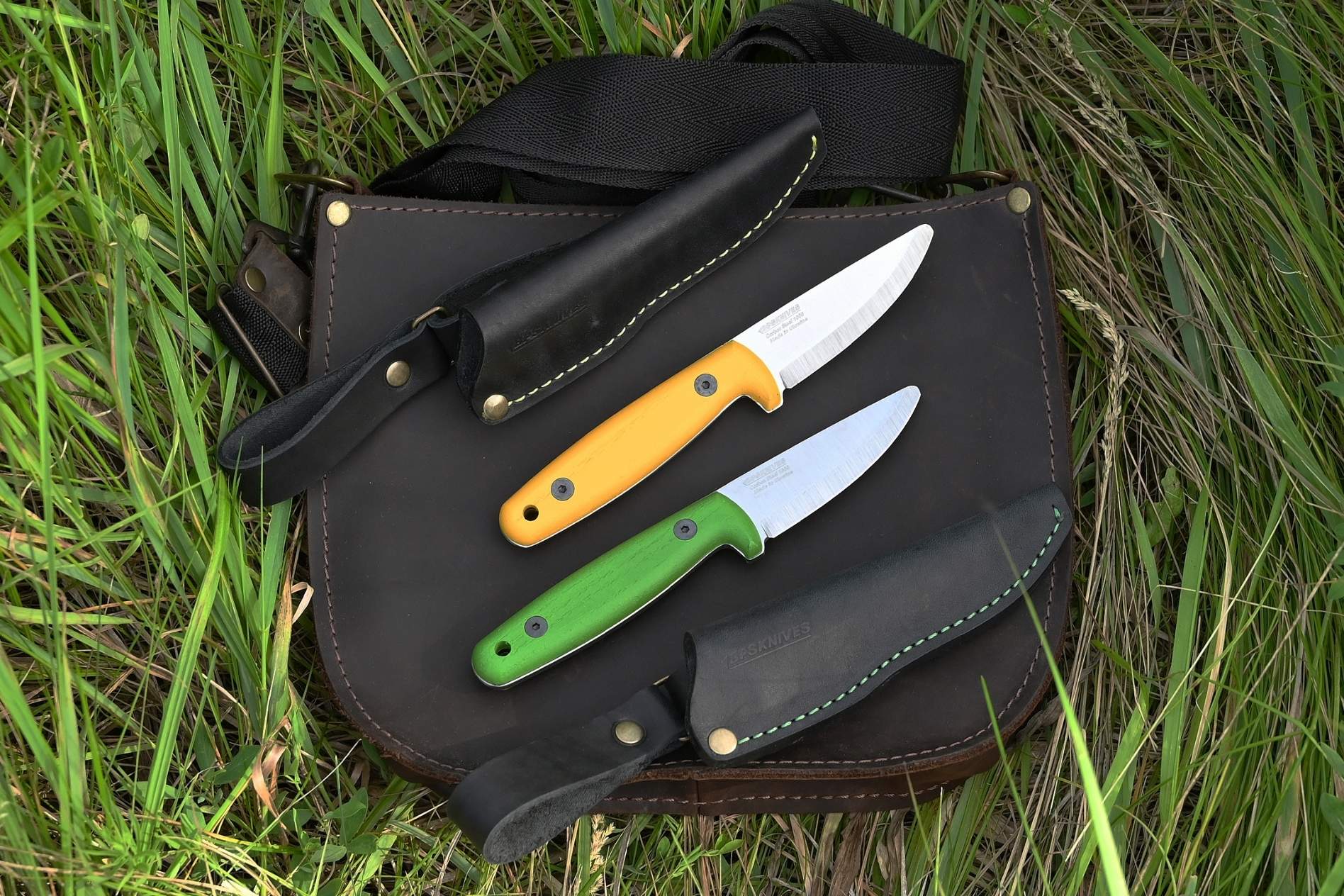
Remember how your child smiled on his first day of school during the assembly? And how excited he was when he got his first gaming console — the one you gave him for his birthday as he was growing up. Well, it looks like it’s time for another milestone: his very first knife.
Why Choosing the Right Knife Matters
But it’s not enough to just type “my first knife” into the search bar and buy the first knockoff that pops up! Not just any knife will do — choosing the right one is essential to make sure your child’s first experience with a blade is a truly positive one. After all, this is the knife they’ll use to learn how to cook, set up camp, master basic survival skills. It should inspire them, motivate them, and feel like something truly special.
Consequences of a Poor Choice
Giving a child the wrong type of first edge knife can lead to:
- Injury: A blade that’s too sharp, too dull, or too large can be dangerous.
- Frustration: A poorly designed knife may be hard to grip or control, discouraging learning.
- Fear or anxiety: A negative first experience can make children fearful of using tools in the future.
- Poor technique: Using an inappropriate knife can result in bad habits that are hard to correct later.
Safe Blade Shape
Knives specifically designed for kids often feature a curved, non-pointed blade to balance functionality with safety. Avoid sharp, pointed knives until your child has gained significant experience and confidence.
Rounded Tip — Less Risk of Injury
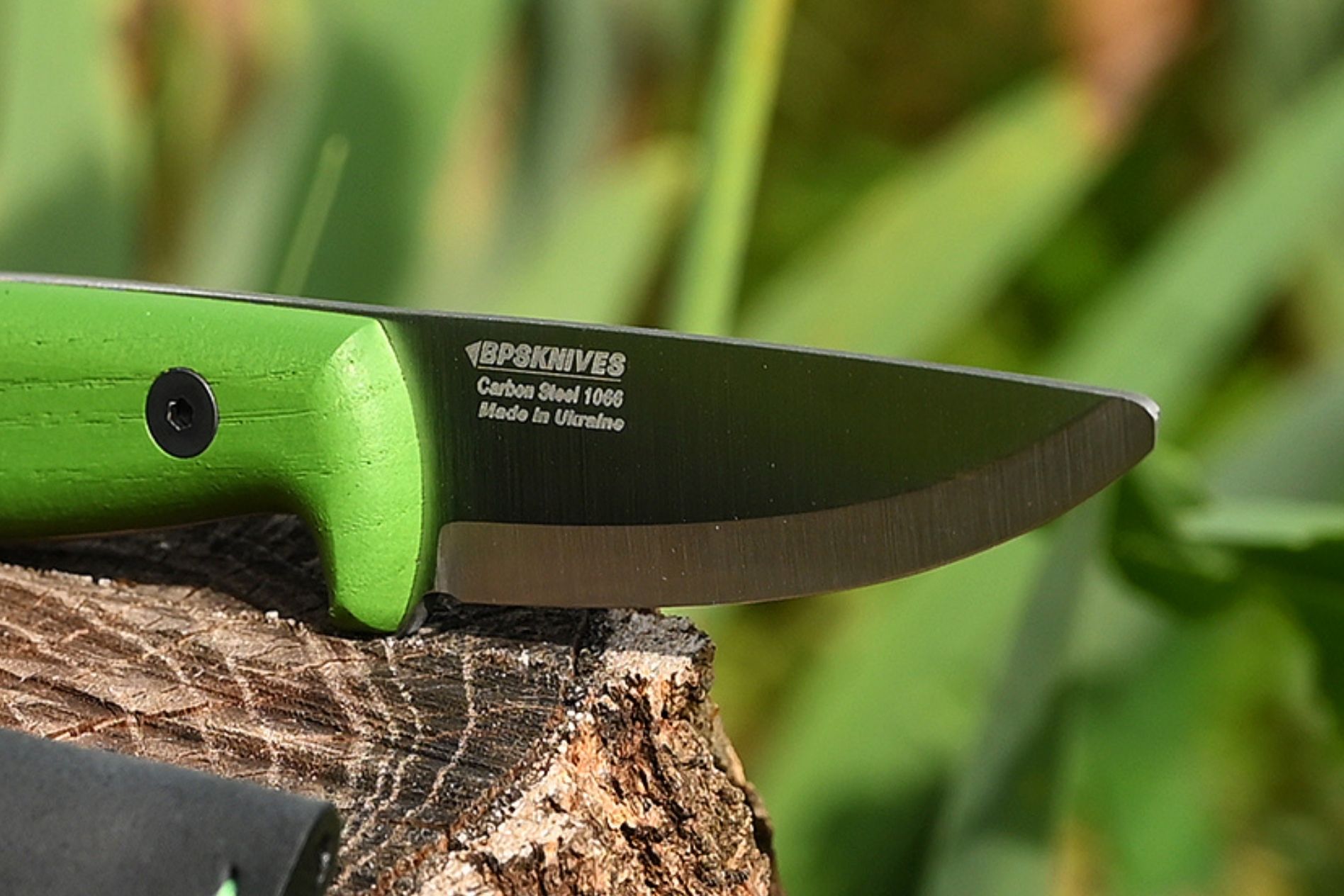
One of the most important safety features to look for in a child’s first knife made is a rounded tip, also known as a blunt tip. Unlike traditional knives with sharp, pointed ends, rounded tips are designed to minimize the risk of puncture wounds — one of the most common and dangerous types of injuries, especially for beginners.
Children are still developing hand coordination and spatial awareness, so a pointed knife can easily slip and cause an accident, especially if they’re reaching for something or lose grip. A knife with a rounded tip eliminates the sharp point altogether, making it much safer to use in real-world situations like chopping soft fruits, spreading butter, or cutting through soft foods like cheese or boiled vegetables.
This doesn’t mean the entire blade is dull — the cutting edge can still be sharp enough to do the job. The goal is to reduce danger from slips or improper angles. Some child-safe knives even pair a rounded tip with a slightly serrated edge to improve cutting ability while maintaining safety.
 Which Steel to Choose
So, we’ve figured out the tip — now let’s talk about the heart of any knife: the steel. It’s the most important part, after all. Let’s take a look at some of the best options out there.
Stainless Steel 5Cr14MoV
Key Benefits:
- High corrosion resistance
- Easy to sharpen
- Holds edge reasonably well
This stainless steel is one of the best all-around choices for a beginner’s knife. It offers excellent corrosion resistance, meaning it won’t rust easily even if a child forgets to dry it after washing. It’s also relatively soft compared to premium steels, making it easy to sharpen at home without professional tools. While it may not hold its edge as long as high-end steels, it provides a solid balance of safety, usability, and low maintenance—perfect for kids who are still learning.
Best for: Parents who want a low-maintenance, worry-free knife that still performs well for most beginner tasks.
Carbon Steel 1066
Key Benefits:
- High strength and flexibility
- Excellent cutting ability
- Easy to hone with a basic sharpening stone
Carbon steel 1066 is known for its razor-sharp cutting edge and edge retention. It’s also very easy to sharpen, especially with a simple honing stone, making it a great steel to teach sharpening techniques. However, this steel requires more care—it can rust if not dried or oiled properly, and it may develop a patina over time.
If you’re looking to instill a sense of respect and responsibility toward tool care from the beginning, this is a great choice. However, be aware that younger children likely won’t be able to maintain the knife themselves, so you’ll need to take on the care responsibilities at first.
Best for: Parents who want to teach tool responsibility and plan to supervise both knife use and maintenance.
Sandvik 12C27
Key Benefits:
- High purity and consistency
- Good rust resistance
- Retains sharpness very well
Sandvik 12C27 is a high-quality stainless steel developed in Sweden, often used in Scandinavian outdoor and bushcraft knives. It offers a great combination of sharpness retention and corrosion resistance, and it’s known for being very pure, which means it sharpens cleanly and predictably. This makes it a good step up from more basic stainless steels.
It’s slightly harder than 5Cr14MoV, which means it may be a bit more difficult to sharpen, but it holds its edge longer, reducing the need for frequent maintenance.
Best for: Parents looking for a higher-performance steel that still offers good rust resistance and doesn’t require the care that carbon steel demands.
Choosing a handle
And what about the handle? It’s just as important. A good handle ensures not only comfort during use, but also the safety of the person using the knife.
Non-Slip Materials
Key materials to look for:
- Rubberized inserts
- Textured polymers (like G10 or FRN)
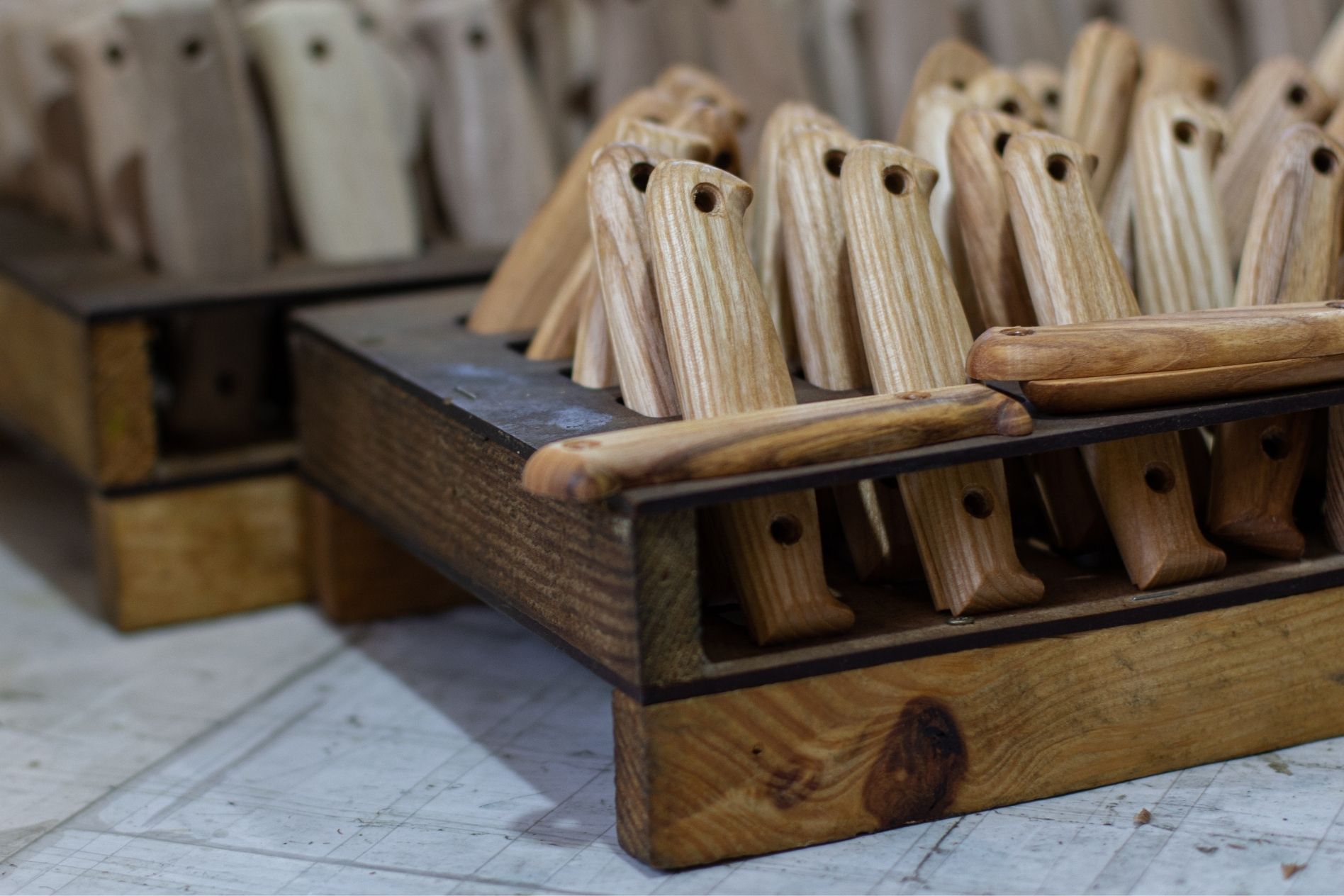
- Treated or rough-finished wood
Children’s hands are smaller and often less coordinated, which makes grip security critical. A handle made with non-slip materials ensures that even if the knife gets wet or greasy (which it often will during cooking or outdoor activities), the chance of accidental slips is minimized.
Rubberized grips or textured synthetic handles provide excellent traction and are often used in knives designed for young or novice users. Some treated woods also offer a tactile feel, but they must be properly finished to prevent splinters and maintain durability.
 Ergonomic Shape
Key features to look for:
- Curved contours that fit a child’s hand
- Finger guards or built-in finger grooves
- Balanced weight distribution
An ergonomic handle is designed to fit naturally in the hand, reducing strain and improving control. For children, the shape should be smaller and rounder, allowing them to wrap their fingers around it comfortably. Some child-specific knives include molded finger grooves or partial guards that guide proper hand placement and keep fingers from slipping onto the blade.
In addition, a well-balanced craft knife for kids — not too blade-heavy or handle-heavy — helps children develop safe cutting techniques without awkward movement or instability.
Reliable Sheath
Now let’s talk about the sheath! It isn’t just a storage accessory — it’s an essential safety feature, especially for kids. A well-designed sheath protects the blade, prevents accidental cuts, and teaches the child to handle the knife responsibly. When choosing a sheath for a child’s first knife, focus on durability, safety, and usability.
Material
Two common and reliable sheath materials:
- Leather – Traditional, durable, and natural
- Polymer (plastic or Kydex) – Lightweight, waterproof, and secure
Leather sheaths are popular for their classic appearance and long-lasting quality. They tend to feel more premium and are gentle on the blade edge. However, they may absorb moisture and require some care (like occasional oiling). For a child, they can be a good option if paired with regular adult supervision.
Polymer sheaths (especially molded ones like Kydex) offer excellent blade retention and resistance to moisture, making them ideal for active outdoor use or environments where the knife may get wet. They’re also easier to clean and usually more resistant to wear and tear from everyday use.
 Mounting Options
Important mounting options to consider:
- Belt loop – Classic, simple, and reliable
- Clip-on attachment – Quick access and versatile placement
- Neck or pack mount – Lightweight and good for hiking or outdoor use
For kids, the sheath should allow easy and safe access, but also keep the knife securely in place during movement. A belt loop is often the safest and most stable option, especially for young beginners — it keeps the knife close to the body and is easy for adults to monitor.
Some modern sheaths come with modular attachments, allowing the knife to be worn on a backpack strap or even carried around the neck. While these can be convenient for older or more experienced children, they’re best introduced once the child has demonstrated consistent safe behavior.
Size and Weight
The physical dimensions and weight of a knife play a huge role in how comfortable and safe it is for a child to use. A knife that’s too large, heavy, or unbalanced can lead to poor technique, quick fatigue, or even accidents. When selecting the first camping knife for a kids, look for a model that matches their hand size and strength.
The Knife Shouldn’t Tire the Child’s Hand
Children have smaller, less muscular hands, so the knife should be light enough to control easily, but still sturdy enough to feel like a real tool. A knife that’s too heavy can cause hand fatigue quickly, leading to sloppy or unsafe handling. On the other hand, a knife that’s too light might feel like a toy and encourage careless behavior.
As a rule of thumb:
- The kids chopping knife should feel balanced in the child’s hand — not blade-heavy or handle-heavy
- The grip should be narrow enough for their fingers to wrap around it without strain
- The overall length should be proportionate, typically 5–7 inches total (2–3 inch blade) for most young beginners
- When introducing children to camping tools, the first camping knife with finger hole for kids offers both control and confidence for safe handling.
Keep in mind that a tired hand is an unsafe hand. If your child loses focus or grip strength after just a few minutes of use, the knife is probably too big or too heavy for them.
Bonus: What to Get Along with the Knife
We’ve covered the knife itself thoroughly, great! But remember, it also needs to be properly maintained and serviced from time to time. And this is something you should teach your child as well. The best knife for teen EDC isn’t just about the blade — it’s about ease of use, everyday practicality, and responsible carry.
Small Maintenance Kit
For cases like this, our skilled craftsmen have created an excellent knife sharpening set called STONES2PCS. It’s the perfect choice for those first steps in knife sharpening, and your child will easily learn this art. They might even teach you a few tricks along the way!
Why it matters:
- Teaches basic maintenance skills like honing and sharpening
- Helps the child develop respect for tools and their upkeep
- Simple stones are safe and forgiving, ideal for beginners
 Book or Poster with Basic Knife Skills
Teaching kids about knife safety can start with curiosity — like wondering who made the first knife and why it became such an essential tool. Having a visual or written guide reinforces what you’re teaching and gives the child something they can refer to independently. A child-friendly book or illustrated poster with basic knife skills is a perfect companion to their knife.
What to include:
- Safe grip positions (claw grip, pinch grip)
- How to cut common foods (bananas, carrots, cheese)
- Knife safety rules (cut away from yourself, keep fingers tucked)
- Simple, confidence-building projects (cutting soft fruit, slicing bread, whittling a stick)
Choose age-appropriate resources — ideally with big, colorful visuals, step-by-step instructions, and fun, engaging language. Laminated posters can even go on the kitchen wall or be taken outdoors.
Conclusion
Now you know where to start. Head over to our online store — it’s the perfect place to get a kids’ knife at a great price.
Still have questions? Feel free to reach out — we’ll explain everything clearly and simply.
See you soon, and happy exploring!