

Your child has already had their first day of life, their first day at home, their first sleep, first step, first day at kindergarten, first day at school… This list is as endless as it is meaningful! And somewhere in between the first day of school and the first day of university, it’s time for another important first — their first knife.
Should You Give a Child a Knife
Hopefully, you didn’t overdose on the word “first” — it showed up ten times in a row above. But hey, moving on. At this point, some might reasonably ask: should you even be giving a child a knife at all? What if they hurt themselves?
But don’t stress too much. The earlier you teach your child how to handle a knife properly and safely, the better. After all, humans have been relying on knives for a couple of million years now — it’s practically in our DNA.
Development of Independence and Skills
Giving a child the opportunity to use a knife is not just about cutting food—it’s about developing autonomy. When children are allowed to participate in real-life tasks, such as helping prepare meals, they feel a sense of ownership and contribution. These experiences nurture their self-esteem and give them a taste of what it means to be capable and trusted.
Tasks like slicing bananas or cutting soft vegetables under supervision are excellent entry points. Children quickly realize that their actions have direct, meaningful outcomes. Over time, this leads to a more confident and independent mindset. They begin to see themselves as competent individuals, not just passive recipients of adult care. In addition, teaching children to use a knife safely builds habits of caution, focus, and responsibility—skills that extend far beyond the kitchen.
Motor Skills, Thinking, Calm Attitude Towards Tools
Using a knife requires a level of physical control that challenges and refines a child’s fine motor skills. Holding the knife correctly, applying just the right amount of pressure, and coordinating movements all contribute to developing dexterity and precision. These skills are foundational not only for cooking but for writing, drawing, and other everyday activities.
Beyond the physical benefits, knife use promotes cognitive development. Children must think carefully about what they are doing, plan their movements, and anticipate results. This level of engagement strengthens concentration and decision-making skills.
Importantly, being introduced to a knife in a calm, structured environment teaches children to view tools with respect rather than fear. Instead of seeing knives as dangerous and forbidden, they learn that outdoor tools are part of life—useful when handled with care and responsibility. This helps demystify such objects and lays the groundwork for a healthy, mature relationship with all types of tools and equipment. So just buy kids knife, it is very advisable for your child.
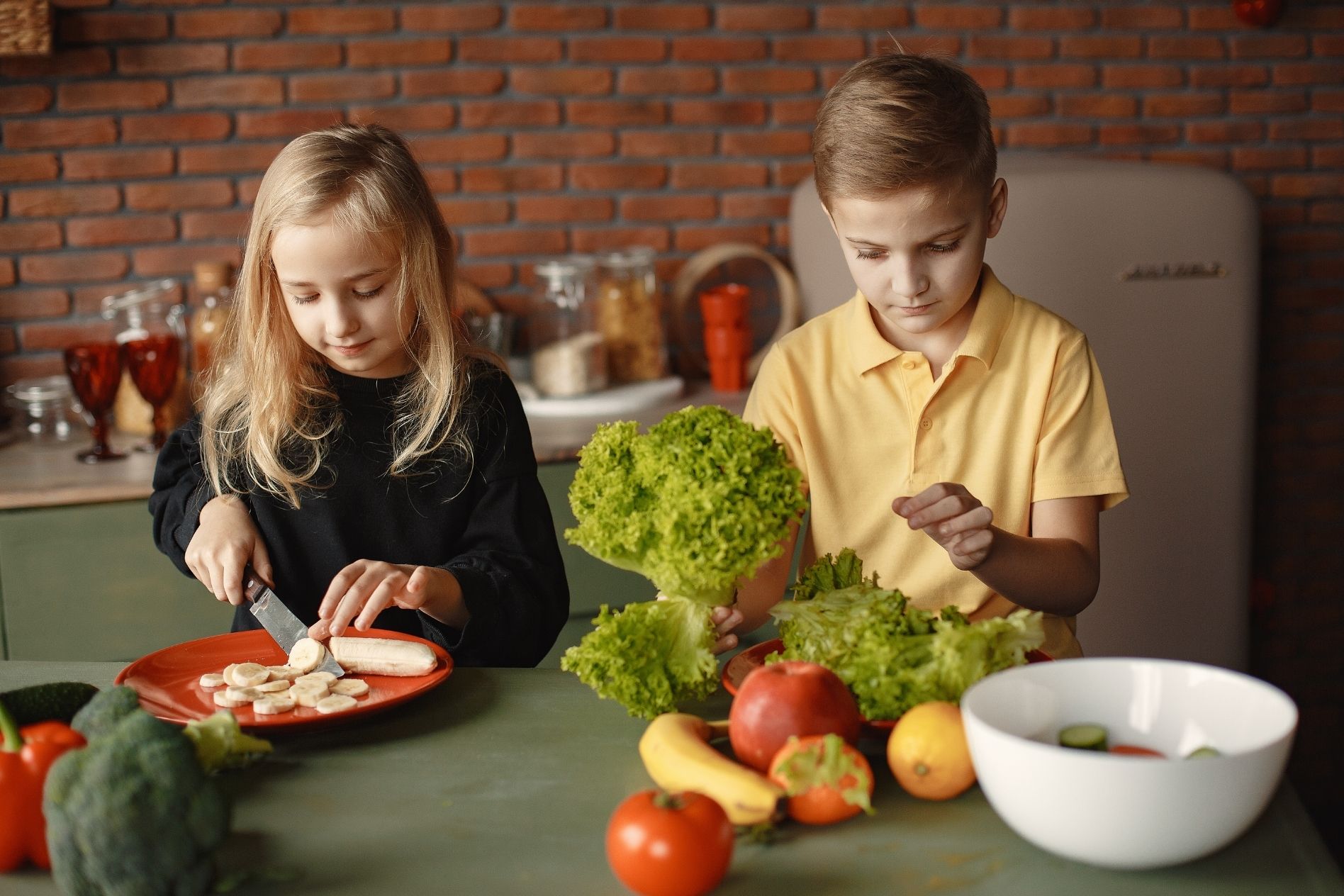 Rules for the First Acquaintance with a Knife
That’s clear. But when should you start — at what point can you say that a child is ‘ready’ for a knife?
Signs That a Child Has Already “Grown Up” to Tools
Average age for first knife is around 7-10 years old. Before placing a knife in a child’s hands, look for these signs of readiness:
- Motor Skills and Coordination: The child can handle scissors or similar tools with care and precision. A safe child knife is the perfect tool to help young chefs learn kitchen skills while minimizing the risk of injury.
- Awareness of Danger: They understand that knives are not toys and can articulate why they must be used carefully.
- Following Instructions: They reliably follow rules and respond to guidance without repeated reminders.
- Interest in Helping: The child shows curiosity in food prep, whittling, or crafting and asks to participate.
If your child demonstrates these traits, it may be time to start teaching knife safety.
Rules of Behavior
To ensure safety and build good habits, establish these foundational rules:
- Knife Use Only with Permission: The child must always ask an adult before using a kids knife for cutting.
- Proper Grip and Posture: Teach them how to hold the knife securely and cut away from the body.
- Focus and No Distractions: Emphasize the importance of full attention while using the knife—no talking, playing, or multitasking.
- Designated Cutting Areas: Always use a safe, clean, flat surface with appropriate lighting.
- Respect for the Tool: The knife is a useful tool, not a toy.
Where Is It Better to Learn: at Home or in Nature
Start introducing your child to a knife at home. In a calm, comfortable setting, you can methodically and clearly teach them the basics of knife handling and safety rules.
After that, you can move on to the fun part — teaching your child how to use a bushcraft knife outdoors. There, they’ll get to practice useful and engaging skills like building a shelter out of branches and moss, setting up a fire pit, splitting wood with a knife, and so on.
 How to Make this Experience Unforgettable
And don’t turn knife training into some boring, pointless nonsense. Teach it in a fun, engaging way that actually captures your kid’s interest!
Ideas for Parents – How to Make the Event Important
Here are some thoughtful ways to elevate the moment:
- Create a Small Ceremony: Present the knife (sized appropriately for children) in a simple, meaningful way. Wrap it, give a short speech, or mark it as a “rite of passage.”
- Personalize the Tool: Let the child decorate the handle, engrave their initials, or give the knife a name. This creates ownership and responsibility.
- Storytelling: Share your own memories of using a knife for the first time, or tell a story of how it’s a traditional tool passed down through generations. Tell a couple of epic Viking sagas, quote something from Dune (they were all obsessed with knives there for obvious reasons), or just share a story where a knife saved someone’s life!
- Photo or Journal Entry: Capture the moment with a photo or help your child write about it in a journal to revisit later.
A Joint Adventure is the Best lLesson
Learning becomes truly memorable when it takes the form of a shared adventure. Instead of simply teaching rules and techniques, parents can turn a child’s first experience with a knife into a meaningful and exciting event, like camping for beginners. A short hike or a picnic creates the perfect setting to introduce basic skills in a relaxed and engaging way. In nature, children feel more confident and see the immediate purpose of what they’re learning—whether it’s slicing fruit for a snack, preparing sticks for a campfire or using bushcraft gear!
One of the most powerful approaches is to take on a small project together, like carving a wooden spoon or completing a first scout assignment. These activities require patience and focus, but they also offer a deep sense of pride and accomplishment. The key is to go slowly, stay present, and celebrate each step along the way. These are the kinds of moments that turn into lifelong memories. When planning outdoor adventures with your little ones, don’t forget to pack a safe and durable kids knife to teach them basic survival skills in a fun and secure way.
Conclusion
It’s as easy as pie! The earlier you teach your child how to use a knife, the better it will be for both them and you. And do you know where the best place is to buy your little one their first blade? Of course, it’s our online store, where you’ll find amazing, best first knife for kid, and the prices are irresistibly attractive! See ya, until our next exciting meeting!