
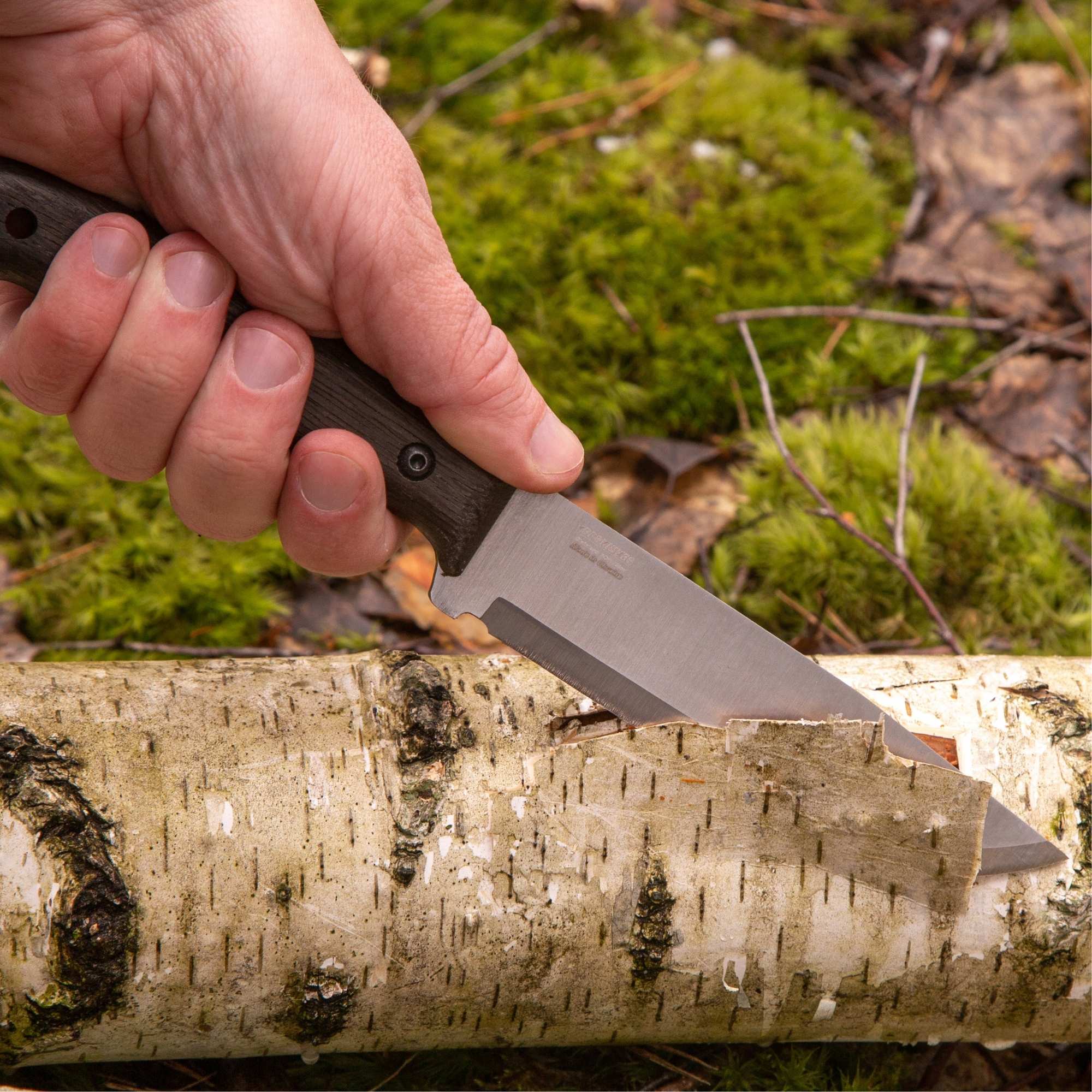
Do you remember the legend of Excalibur? The legendary sword was so strong and powerful that it could cleave knights in full armor in half or pierce through stone. Well, among knives, there’s something like its own ‘Excalibur’ – the toughest and most reliable one, capable of handling even the heaviest tasks, like chopping wood. Its name is the full tang knife!
The importance of knife construction in outdoor settings
Of course, we can’t promise you invincibility in battle or a blinding shine that dazzles your enemies, but the full tang knife is exactly the type of tool you’ll want to take with you on the toughest expeditions and even conquests. In the wild, a good blade makes all the difference. With it, you’ll start a fire, build shelter, butcher game, and do a lot more to survive — it could even save your life! So, what are full tang fixed blade knives?
What is full tang knives
A full tang knife is built from a single piece of metal that extends from the tip of the blade all the way through the handle. The handle itself is made by attaching scales or grip material to either side of that metal core. This construction gives the knife a huge advantage in terms of strength and reliability, especially in outdoor or survival settings.
Advantages of Full Tang Knives in the Wilderness
Because the blade and handle are one solid unit, full tang knives can handle a lot of abuse. You can split wood by batoning, pry with the blade, or use the handle to hammer without worrying about the knife snapping where the blade meets the grip. Even if the handle scales break off, you still have a fully functional piece of steel you can wrap with paracord or cloth and keep using. A good camping knife feature!
Another big plus is control. A full tang knife usually has better weight balance, which makes it easier to handle when you’re carving, feathering sticks, or doing detailed work. It feels more solid in hand and gives you confidence when you’re relying on your gear to perform.
Visually, you can usually spot a full tang knife because the metal is exposed along the spine and bottom of the handle. They’re typically fixed blades, not folding, and have a slightly heavier feel due to the solid steel construction.
For anything from building shelters to food prep, or even self-defense in the wild, a full tang knife is just more dependable. If you’re heading into the outdoors and need a tool that won’t fail, full tang is the way to go. It is best knife for hiking and camping!
Practical Applications of Full Tang Knives
Full tang knives are designed for serious use, and their construction makes them particularly suited for a wide range of outdoor and survival tasks. In real-world scenarios, the strength and reliability of a full tang knife often make it the go-to tool when other gear fails or isn’t available.
One of the most common applications is wood processing. A full tang knife can be used for batoning, where you split logs or branches by striking the spine of the blade with another piece of wood. This kind of impact would quickly destroy a weaker knife, but full tang models can take it. Along the same lines, they’re ideal for carving, shaving, kindling, or making feather sticks for fire starting, because they offer great control and won’t flex under pressure.
In shelter building, these knives come in handy for cutting and shaping branches, notching wood for joining pieces, or stripping bark. You can also use the pommel of some full tang knives to hammer in tent stakes or bash through ice, depending on the design of a handmade camping knife.
For food prep, their solid build helps when breaking down game or fish in the field. Whether it’s gutting, skinning, or slicing meat, a well-balanced, sharp full tang knife makes the job cleaner and safer. Their toughness also means you won’t hesitate to use them for more rugged tasks, like chopping through small bones or hard vegetables.
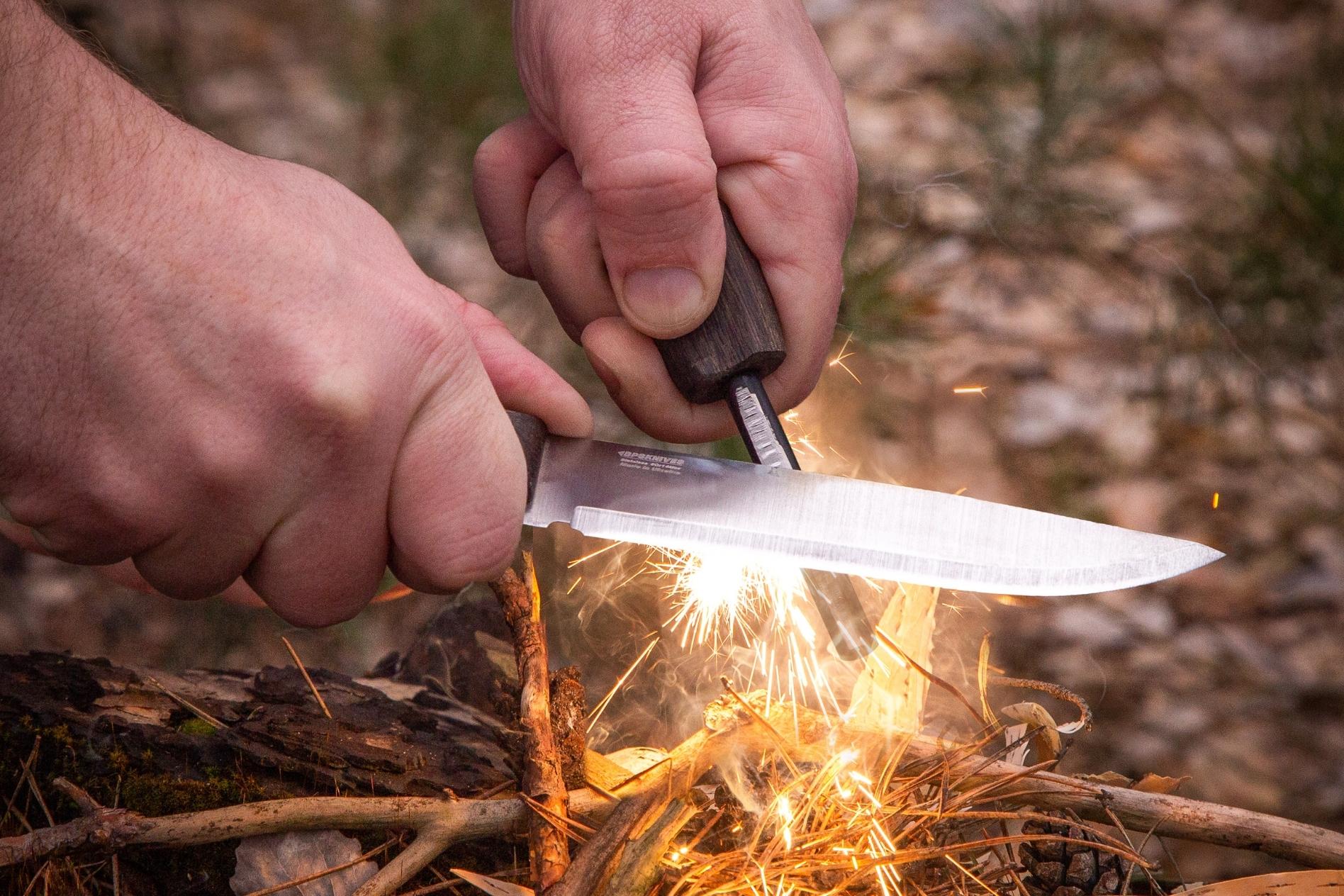
They’re also valuable for tool-making and crafting. You can use them to carve wooden utensils, make traps, or fashion spears and other primitive tools. Since full tang knives are sturdy and dependable, they’re often used to strike ferro rods for fire-starting, and the flat spine of many models is designed specifically with this in mind.
In emergencies, a full tang knife might serve as a pry bar, a screwdriver, or even a digging tool if there’s nothing else available. It’s not ideal for those uses, of course, but the best survival bushcraft knife can handle them without breaking is what makes it so valuable in the wild.
Whether you’re hiking, camping, hunting, or dealing with survival situations, the practical applications of a full tang knife are nearly endless. It’s one of those tools that earns its place in your pack by being useful in dozens of ways—and dependable when it matters most.
Selecting the Right Full Tang Knife for the Wild
And most importantly, how do you choose the right full tang blade for your thrilling and bone-crushing adventures? It’s actually not that complicated:
-
Blade Length
4″ to 6″ is the most versatile for bushcraft and general outdoor use. Shorter blades (under 4″) are better for fine tasks like carving. Longer blades (over 6″) are more suitable for chopping or self-defense but can be less precise and heavier.
-
Blade Thickness & Grind
Thicker blades (4–5mm) are better for heavy-duty tasks like batoning or prying. Thinner blades (2.5–3.5mm) offer better slicing performance.
Grind types:
- Scandi grind – Excellent for wood carving and easy to sharpen in the field.
- Full flat grind – Great for slicing and food prep.
- Convex grind – Strong and durable, good for heavy use, but harder to sharpen.
Steel Type
- High Carbon Steel (e.g., 1095) – Tough, easy to sharpen, holds an edge well. Requires oiling to prevent rust.
- Stainless Steel (e.g., S30V, 14C28N) – More resistant to corrosion, better for wet conditions. May be harder to sharpen.
- Tool Steel (e.g., D2, CPM-3V) – Excellent wear resistance, balanced toughness. Good for extended use in rough conditions.
Handle Material & Ergonomics
- Micarta – Tough, grippy even when wet.
- G10 – Durable, lightweight, resistant to weather and chemicals.
- Rubberized or textured handles – Great grip and shock absorption.
- Wood – Comfortable and traditional, but can wear faster in harsh environments.
Look for a handle that fits your hand well and won’t slip when wet or cold.Sheath Quality
- Kydex – Rigid, weather-resistant, holds the knife securely.
- Leather – Classic look, durable, but needs maintenance.
- Nylon – Lightweight and flexible, often found on budget knives.
Consider carry style: dangler sheaths move with your leg (better for mobility), while high-riding sheaths keep the knife close to the waist for easier access.Environment & Intended Use
- Bushcraft – Look for a Scandi grind, 4–5″ blade, high carbon steel.
Our pick: Bushmate 2.0 – a classic Full Tang knife made from high-carbon steel. It features a wooden handle and a sheath made of genuine leather. The perfect companion for those who practice bushcraft in its finest traditions.

- Hiking/Ultralight – Smaller, lighter blade, stainless steel for low maintenance.
Our pick: B1 SSHF – a lightweight yet reliable tool, perfectly suited for backpacking trips. Its compact design won’t weigh down your gear, while the stainless steel blade ensures long-term durability with minimal maintenance.

- Survival/Heavy Use – Thicker blade, durable steel (like CPM-3V), solid sheath system.
Our pick: Raven SSH – a knife built for extreme conditions. With its Full Tang construction, stainless steel blade, and secure locking system, the Raven SSH can handle tough tasks and won’t let you down when it matters most.

Conclusion
Brevity is the soul of wit, so that’s really all there is to it. You’re now fully prepared to choose the perfect full tang knife for your adventures (or misadventures), and determination fills you, even overflows! The rest is easy — just visit our online store, and LO AND BEHOLD, you’ll find an incredible blade at an MINDBLOWING price, one that could very well become a family heirloom. Onward-onward, adventures await!