

The thrill of the hunt has been exciting our species for hundreds of thousands of years. Whether it’s with a spear, a bow or a gun, it’s an unforgettable experience! The morning forest, a pack of hunting dogs scurrying in search of prey, the smell of gunpowder and the rumble of shots have given rise to many masterpieces of fine and literary art, and how many tales are told by hunters about how they shot a huge bear LIKE THIS. And of course, at all times a little helper accompanied a man on a hunt! His name is Hunting Knife.
Introduction to Hunting Knives in 2024
Contrary to popular belief, hunting knives are rarely used as a weapon. It is mainly used for skinning. In addition, such a knife is actively used when setting up a camp or camping site, because there is often a need to cut branches for a tent, grass for a shelter, slice meat for cooking or even chop firewood for lack of an axe.
The modern hunting knife is the crowning achievement of evolution. Its main purpose is to cut. As a result, the balance is usually shifted towards the handle.
What Makes a Great Hunting Knife?
If you want to get a really cool blade in your knife collection, we are happy to tell you what it takes! Namely:
- Good steel. You shouldn’t skimp here, because quality steel makes the blade strong, less prone to rust and durable. If you want an extremely sharp blade, carbon steel is your choice. And if you hunt mainly in harsh conditions, it is better to choose quality stainless steel, high chromium content allows the blade to resist rust perfectly.
- Blade Shape and Size. A good hunting knife often has a blade that is between 3 to 6 inches long, with a shape suited for skinning, slicing, and general cutting tasks. Common blade shapes include drop point, clip point, and skinning blades.
- Comfortable handle. A hunting knife should fit comfortably in your hand, and the handle should provide a secure and comfortable grip, even when it’s wet. Materials like wood, rubber, or synthetic composites are popular for their durability and grip. However, if you want to look STYLISH, the handle can be made of bone or animal horn for example, and don’t forget to engrave something cool on it.
- Tang. For a hunting knife the best option is a full tang. A full tang knife refers to a type of knife where the blade extends all the way through the handle to the base, forming the core of the handle itself. This design provides strength and stability to the knife, making it more durable and less likely to break or separate at the handle. Full tang knives are often preferred for their robustness and are commonly used in hunting knives, survival knives, and some kitchen knives where durability and strength are important factors. You can check out our hunting knives for sale, we have a lot of nice full tang knives.
- A good sheath is also important. Hunting knives with sheath are protected against aggressive environments, ready for safe and convenient carry. It should be durable, secure, and ideally designed for easy access. Be stylish and splurge on a good handmade leather sheath, or if you are extremely pragmatic, an ABS plastic sheath will do too.
Trends and Innovations in 2024
In 2024, trends and innovations in hunting knives focus on several key areas:
- Material Advancements: There’s a continued trend towards using high-performance materials like carbon fiber, titanium, and advanced stainless steels for a knife blade. These materials offer durability, lightweight properties, and corrosion resistance.
- Ergonomic Designs: Manufacturers are increasingly focusing on ergonomics to improve comfort and handling during prolonged use. This includes better handling shapes, textures, and balance.
- Multi-functionality: Many hunting knives now come with additional features such as built-in tools (screwdrivers, bottle openers), fire starters, or integrated sharpeners to enhance utility in the field.
- Improved Blade Technology: Advances in blade technology include better edge retention, ease of sharpening, and specialized knife blanks coatings or treatments for enhanced durability and performance in various conditions.
- Customization Options: There’s a growing demand for customizable knife and hunting knife cases, where hunters can choose blade shapes, handle materials, and even engraving options to personalize their tools.
- Compact and Lightweight Designs: Hunters often prefer knives that are easy to carry and don’t add unnecessary weight to their gear. Compact designs that fold or have slim profiles are gaining popularity.
- Environmental Sustainability: As awareness grows, there’s a shift towards more sustainable manufacturing practices and materials sourced responsibly.
These trends reflect a blend of traditional craftsmanship with modern technological advancements, catering to the evolving needs and preferences of hunters.
Top Hunting Knives from BPS Knives
And most importantly, we have a wide selection of hunting knives that even “Crocodile” Dundee would be impressed with!
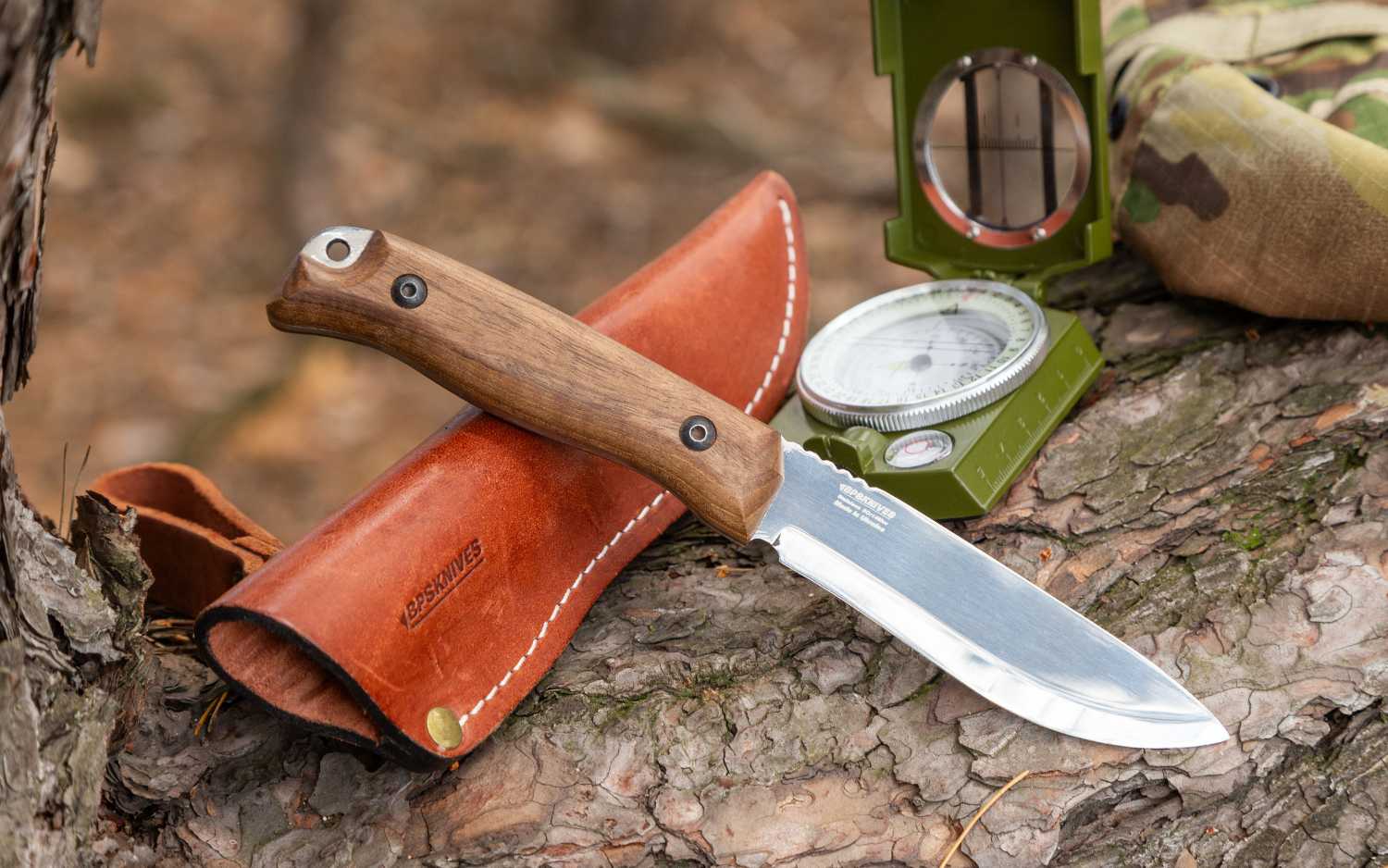
HK6 SSH
This knife is versatile and will fulfil any task! Full-Tang design, 5cr14mov stainless steel blade, hardened to HRC 57-59, comfortable handle made of walnut wood does its job. This blade is great aid when hunting, camping or building a campsite, it can also be used as a kitchen knife. The handle of the knife is made of durable walnut wood, coated with Danish oil to form a reliable moisture-repellent coating, which in turn allows the handle not to be afraid of moisture and dirt.

HK5 CSH
This model is also versatile! It is perfect for hunting, hiking, picnics with friends and even wood cutting! This knife has a neat blade shape, which makes it versatile in use, and the convenient shape of the handle with gouges for the fingers allows the knife to lie confidently and securely in the hand. The blade is made of 1066 carbon steel, hardened to 57-59 HRC. The sharpening type is Scandi grind, which makes it easy to work with wood of any level of hardness and at different temperatures. Since the blade of the HK5 CSH is made of carbon steel, it should be washed well and wiped dry after use, this will protect your knife from corrosion. Also comes with a nice leather scabbard.

HK1 SSH
Here we have a durable, hard-wearing and rust-resistant knife! It is made of 5Cr14MoV steel, hardening 56-58 HRC. Stainless steel 5Cr14MoV is a type of martensitic stainless steel that contains chromium, molybdenum, and vanadium as its main alloying elements. It is often used in the production of knives and other cutting tools due to its good corrosion resistance, high hardness, and edge retention. So you can take it with you on your toughest adventures, it won’t let you down.
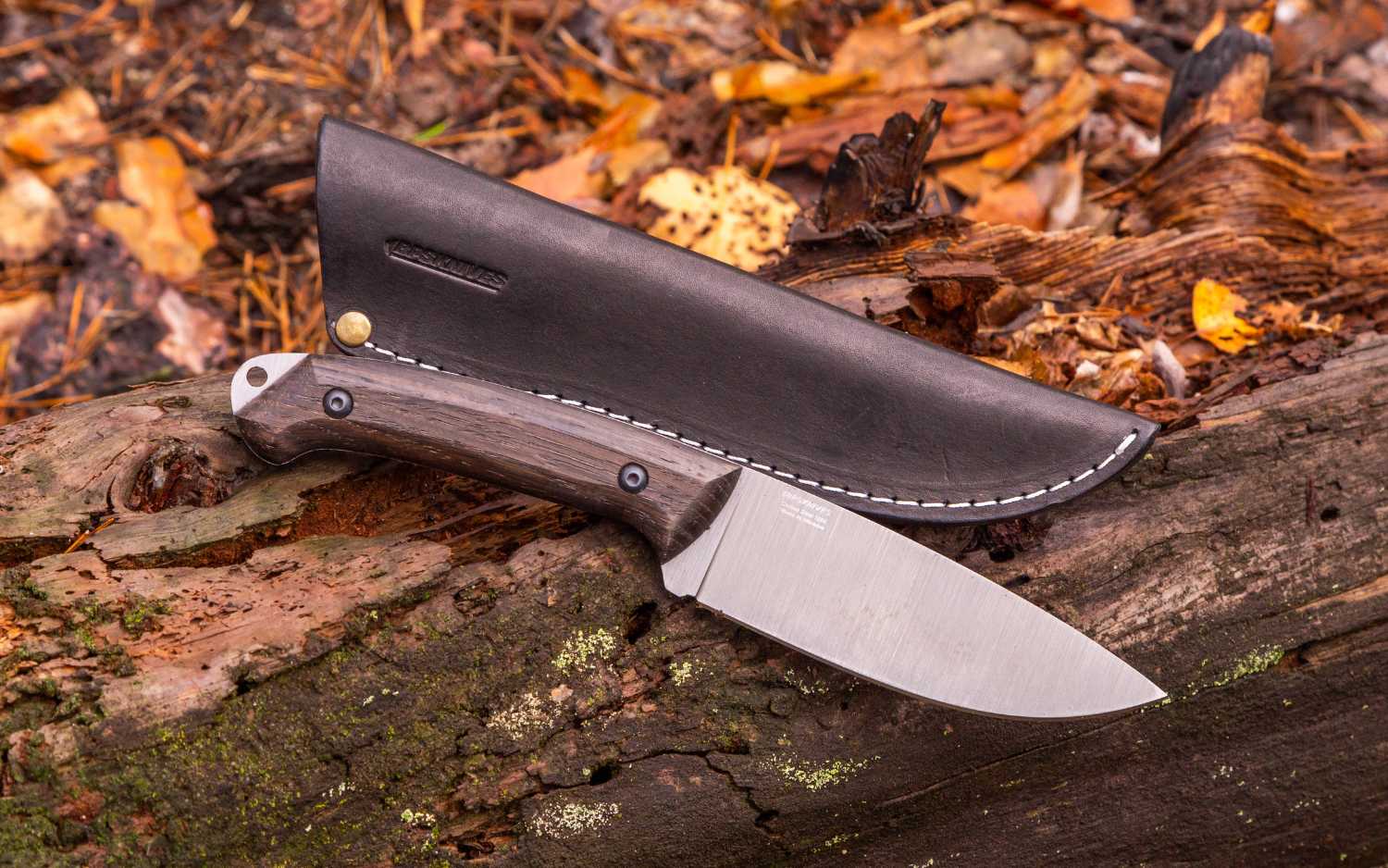
Savage CSH
Elegant, concise and compact, this hunting knife has a neat blade shape, which makes it versatile in use, and the full tang design is more durable and reliable. It is made of high Carbon Steel – 1066, it’s hardness is 57-59 HRC. Excellent choice for hunting, fishing, hiking or picnic.
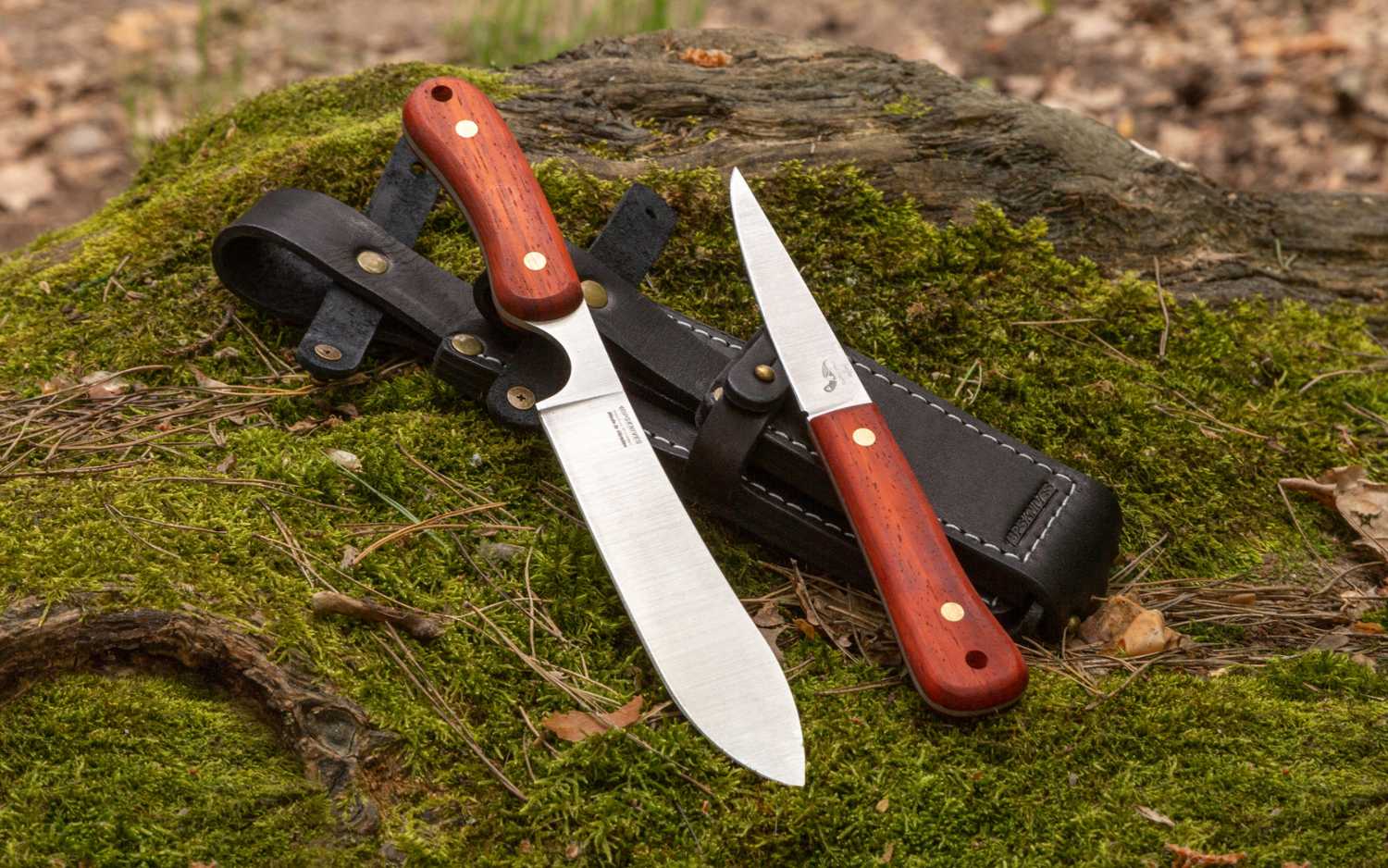
Hunter Set FP
Well-well, what do we have here? A whole set of 2 hunting knives, a real hunting Daishō! The stainless steel blades, forged from high-quality 5Cr14MoV stainless steel, deliver outstanding performance in the field. With a hardness rating of 56-58 HRC, these blades provide exceptional edge retention and durability, ensuring they can withstand the toughest hunting tasks. Choose between two versatile options: the longer version with a total length of 245 mm and a blade length of 130 mm, or the more compact version with a total length of 190 mm and a blade length of 90 mm. Both options feature blade thicknesses of 2.6-2.8 mm and 1.6-1.8 mm respectively, enabling precise and efficient cutting performance.
How to Choose the Right Hunting Knife for You
Eyes run away with so many options to choose from! Let us help you make the right choice!
Assessing Your Needs
Clearly decide what you want your hunting knife for! It can be designed for:
- Field Dressing. A knife for field dressing should have a fixed blade for strength and durability, with a sharp point for precision cuts.
- Skinning. A skinning knife often has a curved blade to help separate the skin from the meat.
- General Use. For tasks like cutting rope or branches, a versatile blade with a sturdy build is ideal.
- Versatile tasks. A knife that can handle all tasks. Remember, however, that any versatile tool will always perform worse than a highly specialised tool.
Budget Considerations
- Under $50: Basic models, often folding knives. Suitable for occasional hunters.
- $50-$100: Better materials and craftsmanship. Suitable for regular hunters.
- $100-$200: High-quality steel, ergonomic designs, and durable handles. Suitable for avid hunters.
- Over $200: Premium knives with exceptional materials and craftsmanship. Suitable for professional hunters or collectors.
Recommendations for Different Hunting Scenarios
Choosing the right hunting knife depends on various factors, including the type of hunt, the environment, and the specific tasks you’ll be performing. Here are some recommendations for different hunting scenarios:
Hunting for small prey (rabbits, squirrels or birds)
- Recommended Knife: Small, lightweight, and with a fine point.
- Blade Type: Fixed or folding with a drop point or clip point blade.
- Blade Length: 2.5 to 4 inches.
- Material: Stainless steel for easy maintenance.
- Features: Sharp edge for precise cuts, comfortable handle for detailed work.
Deer Hunting
- Recommended Knife: Medium-sized, durable, and versatile.
- Blade Type: Fixed blade with a drop point for skinning and gutting.
- Blade Length: 3.5 to 5 inches.
- Material: High carbon stainless steel for durability and edge retention.
- Features: Non-slip handle, gut hook (optional) for easier field dressing.
Hunting for large prey (Elk, Moose, Bear, Boar)
- Recommended Knife: Large, robust, and strong.
- Blade Type: Fixed blade with a drop point or clip point.
- Blade Length: 5 to 7 inches.
- Material: High carbon stainless steel for toughness.
- Features: Full tang for extra strength, ergonomic handle for a firm grip, and possibly a gut hook.
General Care and Maintenance Tips for Hunting Knives
Proper care and maintenance of hunting knives are essential to ensure their longevity and performance. Here are some general tips:
Cleaning
- After Each Use: Clean the blade with warm water and mild soap to remove any blood, dirt, or debris. Avoid soaking the knife as it may damage the handle or blade.
- Dry Thoroughly: Make sure to dry the knife completely after cleaning to prevent rust and corrosion. Use a soft cloth to wipe it down.
Sharpening
- Regular Sharpening: Keep the blade sharp by regularly sharpening it using a whetstone, sharpening rod, or a knife sharpener. A sharp knife is safer and more effective.
- Proper Technique: Maintain a consistent angle while sharpening, typically around 20 degrees, to ensure an even edge.
Storage
- Sheath Storage: Store the knife in a dry sheath when not in use. Avoid storing it in a leather sheath for long periods, as leather can retain moisture and cause rust.
- Dry Environment: Store the knife in a dry place to prevent moisture buildup, which can lead to rust and corrosion.
Lubrication
- Blade Oil: Apply a light coat of blade oil or a corrosion inhibitor to the blade to protect it from rust. Use food-safe oil if you use the knife for processing game.
- Moving Parts: For folding knives, apply a small amount of lubricant to the pivot points to ensure smooth operation.
Handle Care
- Wood Handles: Treat wooden handles with mineral oil or wood conditioner to prevent cracking and drying out.
- Synthetic Handles: Clean synthetic handles with mild soap and water. Avoid using harsh chemicals that could damage the material.
General Tips
- Avoid Hard Surfaces: Do not use the knife on hard surfaces like metal or stone, which can dull or chip the blade.
- Use for Intended Purposes: Use the knife only for its intended purposes. Avoid using it as a pry bar, screwdriver, or for other tasks that could damage the blade.
- Regular Inspection: Regularly inspect the knife for any signs of damage or wear. Address any issues promptly to prevent further damage.
Additional Tips
- Safe Handling: Always handle the knife safely, using appropriate cutting techniques to avoid injury.
- Professional Maintenance: Periodically, have the knife professionally maintained, especially if it has complex features or is used frequently.
By following these care and maintenance tips, you can ensure your hunting knife remains in excellent condition and serves you well for years to come.
Conclusion
That’s it! Now you will choose the right hunting knife for you, after such a detailed guide it is impossible to make a mistake. Go ahead, the prey is waiting!