
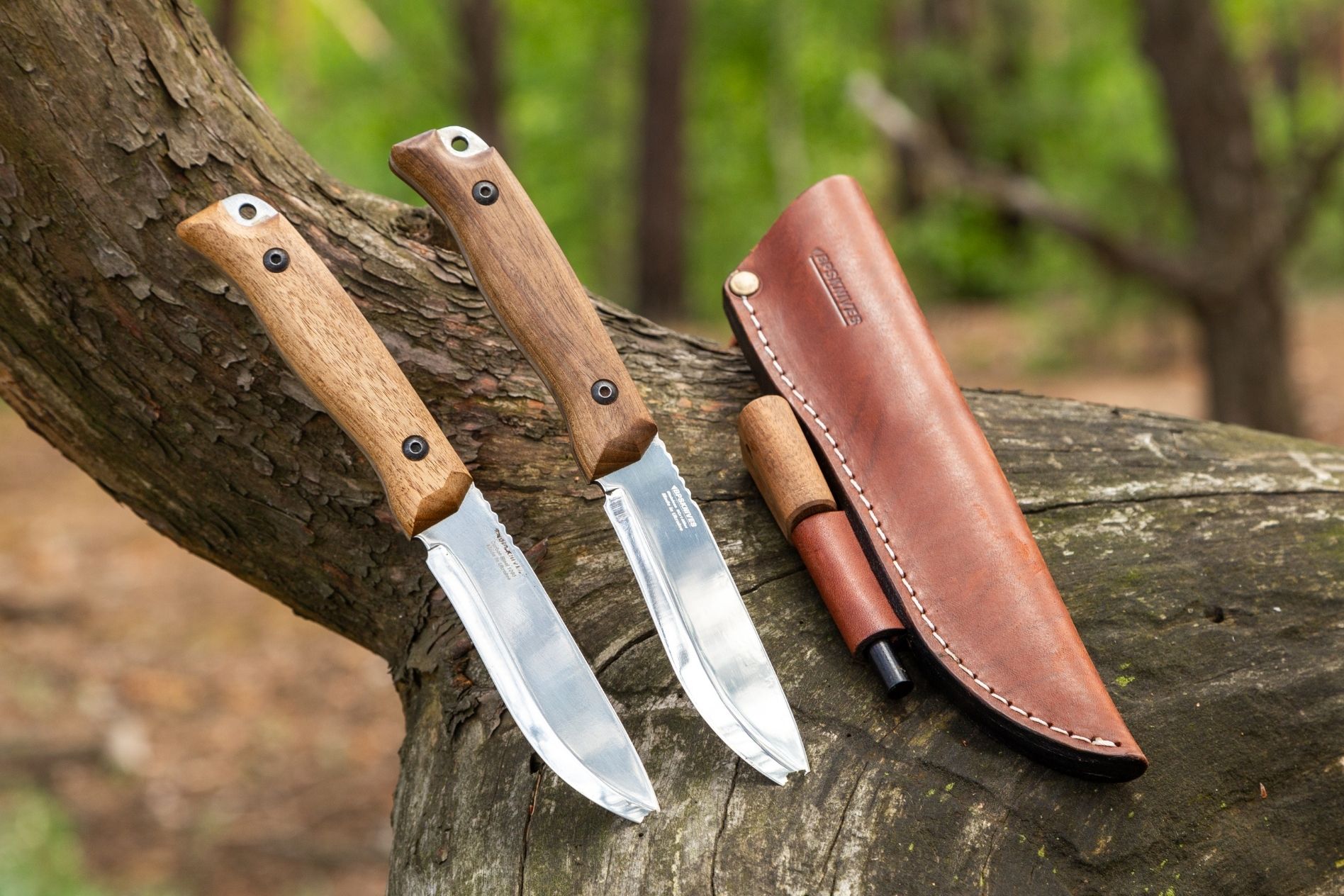
There are countless ways to have a great time outdoors — from a peaceful picnic on the edge of the forest to adrenaline-pumping attempts to survive a blizzardy night in the tundra. And for every type of adventure, there’s a perfect knife designed for the task!
The essential role knives play in outdoor activities
Even during a simple picnic in the park, you might need a knife to cut food. And when it comes to surviving in the mountains during bad weather, a knife becomes even more essential — it can help you start a fire or build a shelter to stay warm. In any outdoor adventure, a knife is a key tool for both safety and comfort.
Understanding Your Outdoor Needs
So, to choose the right outdoor edge knives, you first need to figure out what kind of activity you’re planning — and where it’s going to take place.
Types of Outdoor Activities
Let’s start our camp knives reviews! Different outdoor pursuits require different knife features:
- Camping: Look for a versatile fixed-blade knife that can handle food prep, kindling, and basic camp tasks.
- Hiking & Backpacking: A lightweight folding knife may be ideal to reduce pack weight while still offering utility.
- Hunting & Fishing: Opt for a fillet blade for processing game or cleaning fish.
- Bushcraft & Survival: You’ll need a full-tang, durable knife capable of batonning wood, carving, and more demanding survival tasks.
Frequency and Environment of Use
How often and where you use your knife influences what kind of blade and materials you’ll need:
- Rare Use: A budget-friendly knife with moderate durability might be sufficient.
- Frequent Use: Invest in a high-quality steel blade with a comfortable, ergonomic handle.
- Wet or Humid Environments: Choose corrosion-resistant materials like stainless steel and synthetic handles.
- Cold Weather: Look for a knife with a textured, non-slip grip and materials that perform well in freezing temperatures.
 Key Features to Look for in Outdoor Knives
Blade Material
- High Carbon Steel: Holds a sharp edge exceptionally well and easy to sharpen, but requires maintenance to prevent rust.
- Stainless Steel: More resistant to rust and corrosion, ideal for wet environments, though it may need more frequent sharpening. Usually used for more cheap outdoor knives.
- Tool Steel (e.g., D2): Offers a good balance of toughness, edge retention, and corrosion resistance.
Blade Shape
- Drop Point: Versatile and strong, good for general outdoor tasks.
- Clip Point: Fine tip for detailed work, but more prone to breaking.
- Tanto Point: Strong and angular, often used in tactical situations.
- Scandi Grind: Great for bushcraft tasks like carving and feathering wood.
Blade Length
- 3–5 inches: Best for most outdoor tasks like food prep and carving.
- 5–7 inches: Suitable for heavier tasks like batoning wood or chopping, but may reduce precision.
Blade Thickness
- Thinner blades (under 3 mm): Better for slicing and fine work.
- Thicker blades (3–5 mm): More durable and suited for large outdoor knives and heavy-duty use like prying and splitting.
Full Tang Construction
- A full tang (the blade extends through the handle) adds significant strength and reliability, especially in survival and heavy-use scenarios, it is the best outdoors knives option.
Handle Material and Ergonomics
- Common materials include micarta, G-10, rubber, and wood. Choose based on grip comfort and environmental durability.
- Ensure the handle is comfortable, secure in hand, and functional in wet or gloved conditions.
Sheath Quality
- Sheaths come in materials like kydex, nylon, or leather.
- Look for secure retention, durability, and ease of carry (belt or MOLLE compatibility).
Additional Features
- Serrations (Serrated blade): Useful for cutting rope or synthetic materials, though harder to sharpen.
- Lanyard Hole: Useful for securing the knife.
- Finger Guard or Choil: Provides better safety and control.
Intended Use
- Camping/Backpacking: Prioritize compactness and weight.
- Bushcraft: Focus on strength, edge control, and wood processing capability.
- Survival: Emphasize durability and multi-functionality.
- Hunting: Prefer blades suited for skinning and processing game.
 Types of Outdoor Knives
And now we’ve finally reached the fun part — what kinds of outdoor knives are out there? When choosing an outdoor edge knives set, it’s important to understand the different types available and how each is suited to particular tasks and environments. The two primary categories are fixed blade knives and folding knives, each with its own strengths and weaknesses.
Fixed blade knives are rightfully considered the best type of knives due to their solid, non-folding construction. The blade is permanently exposed and often extends through the entire length of the handle—a feature known as full tang construction. This makes them incredibly strong and suitable for heavy-duty tasks like batoning wood. Fixed blades are preferred in survival, bushcraft, and hunting situations where strength, durability, and dependability are crucial. They are also easier to clean and maintain, especially when used in muddy or wet conditions.
In contrast, folding knives, also known as pocket knives, are compact and convenient to carry. The blade folds into the handle, making the knife smaller and more discreet. While not as robust as fixed blades, folding knives are ideal for light- to medium-duty tasks such as food preparation, carving, or general camp chores. Their portability makes them a popular choice for everyday carry and backpacking, where weight and space are important considerations.
Another important category is the survival knife, which is specifically designed for emergency and wilderness survival situations. These knives are typically large, fixed-blade, and built to handle a wide range of tasks—from building shelter and processing firewood to self-defense and food preparation. Many survival knives include additional features such as partially serrated edges, fire-starting rods, or hollow handles for storing small survival items. Their versatility makes them a core piece of gear for anyone venturing into remote or unpredictable environments.
For more specialized wilderness work, particularly in forests and woodlands, bushcraft knives are the tool of choice. These are medium-sized fixed blade knives, often with a Scandi grind, which allows for precise control while carving, shaping wood, or making feather sticks for fire starting. The emphasis here is on fine control and reliability in a natural, hands-on setting.
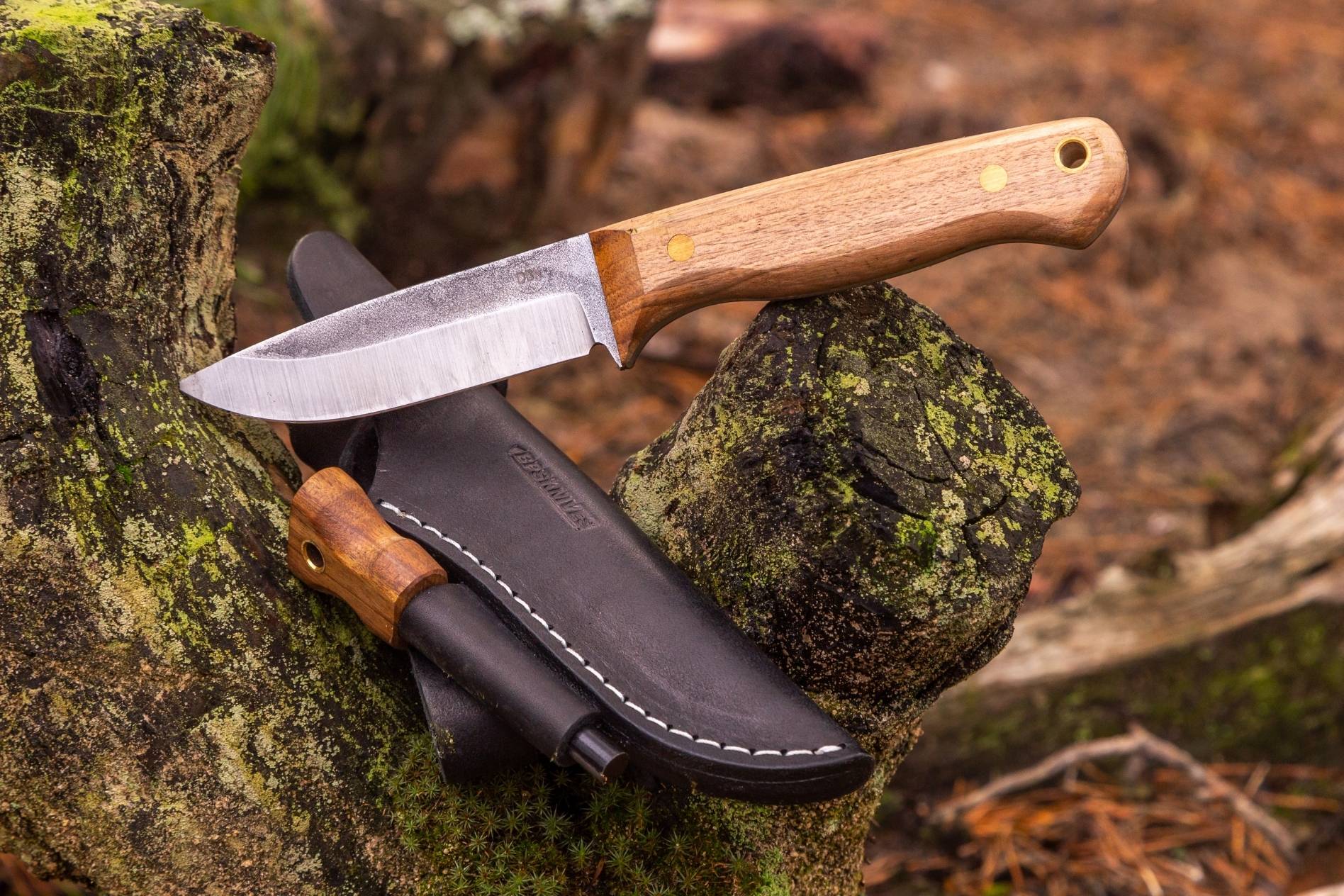 Hunting knives are designed specifically for field dressing and processing game. These knives tend to have a curved blade with a sharp point. While they may not be as versatile as survival knives, they excel in tasks related to game preparation.
Another category worth mentioning is multi-tools or Swiss Army knives. While not designed for heavy-duty tasks, these knives combine blades with a variety of tools like screwdrivers, scissors, bottle openers, and saws. Their compact form and utility make them useful for campers and hikers who value versatility over raw strength.
In certain environments, especially tropical or overgrown areas, machetes and large choppers are essential. These long-bladed knives are designed to clear brush and even split wood. Though too large for fine tasks, their ability to handle heavy chopping makes them indispensable in the right setting.
Finally, neck knives are small fixed-blade knives designed to be worn around the neck on a cord or chain. They are lightweight, easy to access, and typically used for light-duty cutting or as backup knives. Their simplicity and speed of access make them useful in both urban and wilderness settings.
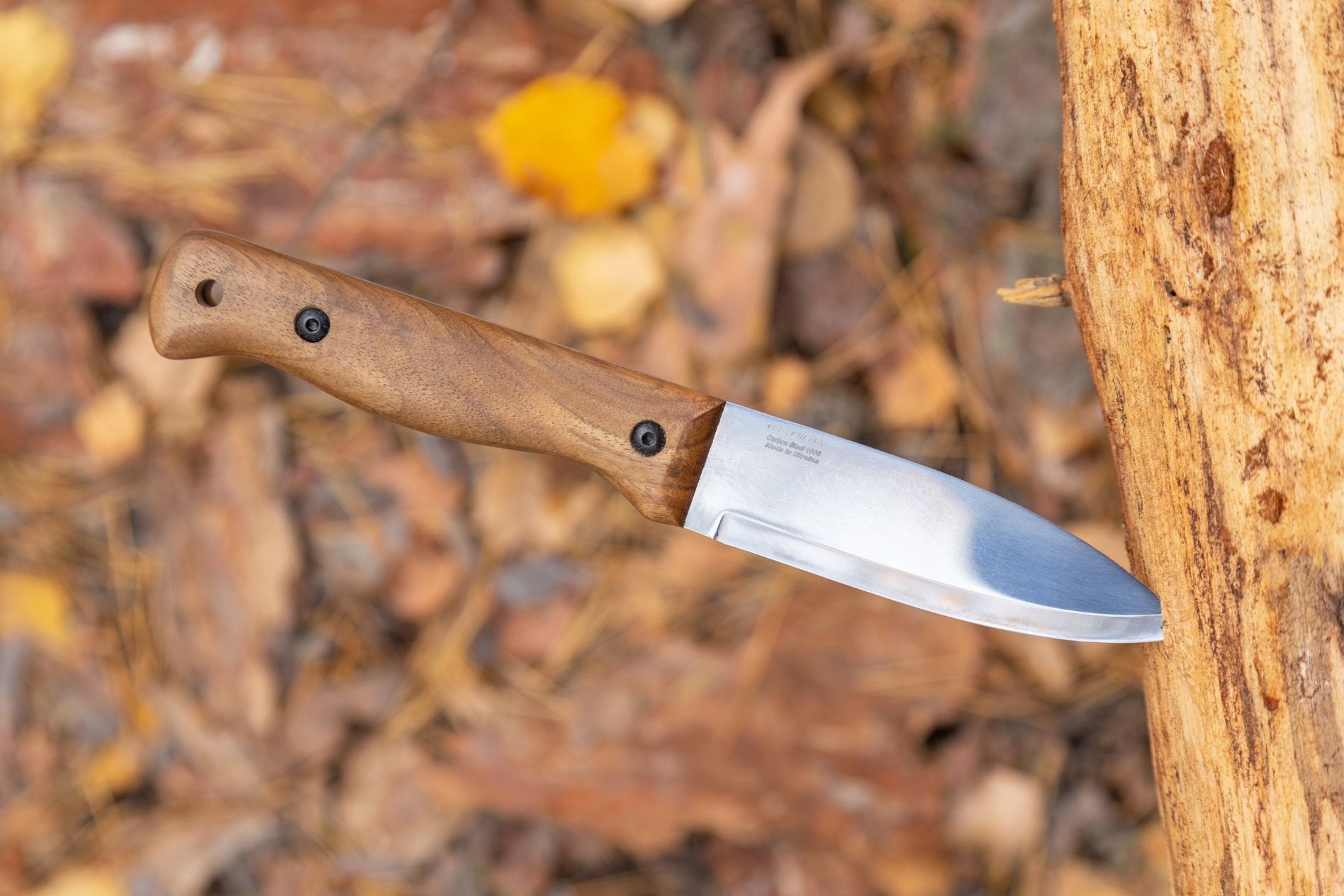
With so many types of knives for so many different tasks, it’s easy to get overwhelmed. And guess who makes the best outdoor knives? We’ve created a universal knife that can handle just about anything, anytime, anywhere. Meet our pride and joy: the BK06 CSH (Check it out here) This blade is crafted from 1066 carbon steel, with a hardness rating of 57–59 HRC and a classic Scandi grind. The handle is made of walnut wood, treated with Danish oil for added durability and a premium feel. What does all that mean for you? It means the BK06 is strong, reliable, and perfect for all your camp tasks — from food prep to feather sticks and beyond. It’s also resistant to moisture, corrosion, and rust, making it a trustworthy companion in all kinds of weather. Just one note: don’t use it to split logs — it’s not built for batoning.
 Conclusion
So there you have it — choose your knife wisely, based on your needs, and it’ll serve you well for years to come. Now go ahead and dive into our online store — we’ve got blades for every taste and every budget. See you out there!